Encyclopaedia
InvertebrateTerrestrialEasy
©AI Generated·Proprietary
Cavipes Land Hermit Crab
Coenobita cavipes
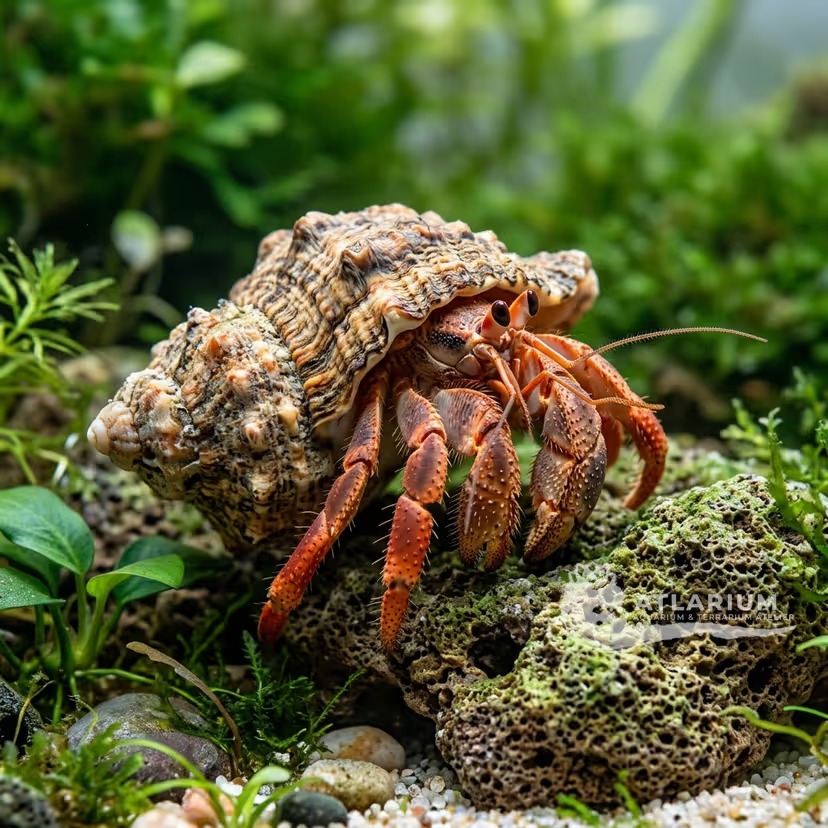
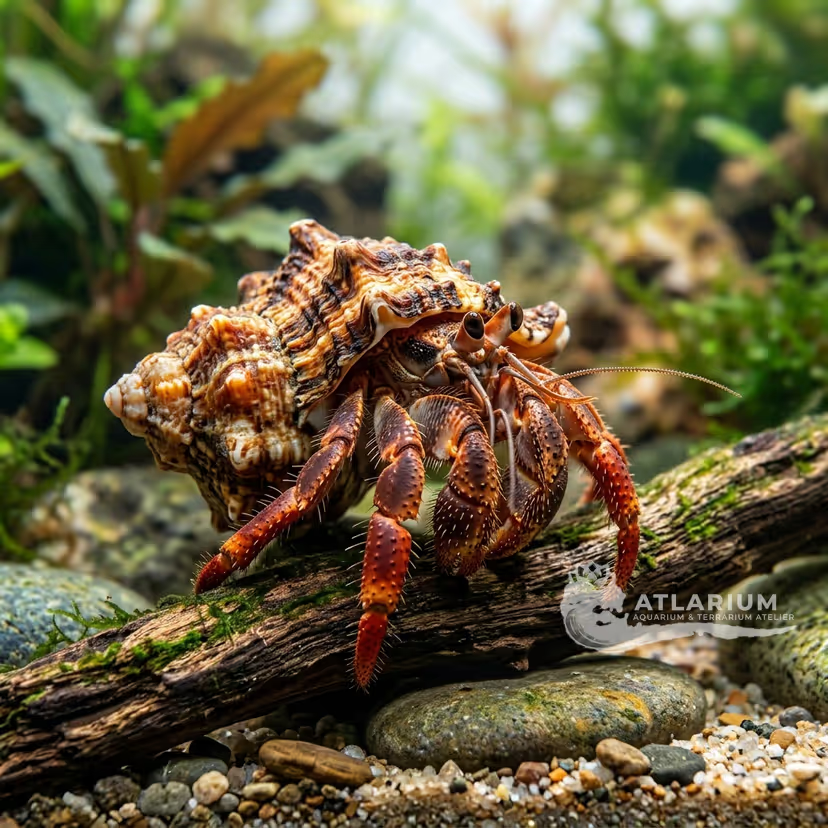
A terrestrial land hermit crab distributed in the Indo-Pacific, characterized by a calm temperament, brown or olive colors, and a preference for humid mangrove environments.
Class:Malacostraca
Order:Decapoda
Family:Coenobitidae
Genus:Coenobita
Species:Coenobita cavipes
Share
Check out Cavipes Land Hermit Crab on Atlarium
Environment
Terrestrial
Minimum group
>= 3
Species description
Geographical Origin and Habitat: Widely distributed along the tropical coastlines of the Indo-Pacific, including East Africa, Indonesia, the Philippines, southern Japan, Malaysia, and Polynesia. It primarily inhabits coastal forests, mangrove swamps, and areas near estuaries where humidity is consistently high.
Taxonomy: Belongs to the class Malacostraca, order Decapoda, family Coenobitidae, and genus Coenobita. Described by Stimpson in 1858. It is a land-dwelling hermit crab that has adapted to breathe atmospheric air using modified, moistened gill chambers.
Social Behavior: A social and peaceful species. They must be housed in groups of three or more to ensure natural social behaviors. Primarily nocturnal, they spend the daytime hiding in damp caves or burrowed in the substrate. They are avid climbers.
Coloration and Sexual Dimorphism: Body color ranges from dark brown and grayish-purple to olive green and dull red. They possess elongated eyes and dark brown eyestalks. No external sexual dimorphism is visible unless the crab is completely removed from its shell.
Care, breeding and tankmates
Tank Setup: Requires a high-humidity terrarium (referred to as Tank Setup). A glass tank of at least 80 liters (20 gallons) with a secure, tight lid is necessary. The substrate must consist of a moist mix of sand and coco fiber, 15-20 cm deep, to allow safe burrowing for molting. Provide climbing branches and extra shells.
Diet and Feeding: Omnivorous and scavenger. Feed a varied diet including fresh fruits, vegetables, dried leaves (oak or catappa), dried shrimp, fish, and calcium sources like cuttlebone. Avoid processed foods with chemical preservatives.
Water Quality: Two separate, shallow water dishes must be provided: one with chlorine-free freshwater and one with marine saltwater. Keep ambient relative humidity between 75% and 85% and temperatures at 24-28°C (75-82°F).
Compatibility and Tankmates: Highly compatible with other terrestrial hermit crabs of similar sizes. Do not house with predatory animals or in a fully aquatic setup, as they cannot swim and will drown.
Aquarium Breeding: Extremely difficult. Mating happens on land, but the female must deposit the eggs into saltwater. The larvae develop as marine planktonic zoea and require specialized marine culture systems to survive.
Risks and Diseases: Suffocation due to dry air (humidity below 75%) is the primary cause of death. Molting is a critical period; the crab will bury itself for several weeks, and disturbing them during this time can be fatal.
Geographic Origin and Distribution
Widely distributed along the tropical coastlines of the Indo-Pacific, including East Africa, Indonesia, the Philippines, southern Japan, Malaysia, and Polynesia. It primarily inhabits coastal forests, mangrove swamps, and areas near estuaries where humidity is consistently high.
Origin
Tropical oceans and reefsAfrica and MadagascarSouth and Southeast AsiaEast Asia
Invertebrate profile
- Diet
- No verified data available
- Ecological role
- No verified data available
- Life expectancy
- No verified data available
- Adult size
- No verified data available
- Jump risk
- No verified data available
- Shock sensitivity
- No verified data available
- Calcium and minerals
- No verified data available
- Molting
- No verified data available
- Reproduction
- No verified data available
- Compatibility & tankmates
- No verified data available
Image gallery
Licensed images linked to the species or, when marked, to the closest representative taxon.
Related species
Recommendations grouped by close relatives, companion choices, and similar care.