Encyclopaedia
InvertebrateTerrestrialEasy
©AI Generated·Proprietary
Ecuadorian Hermit Crab
Coenobita compressus
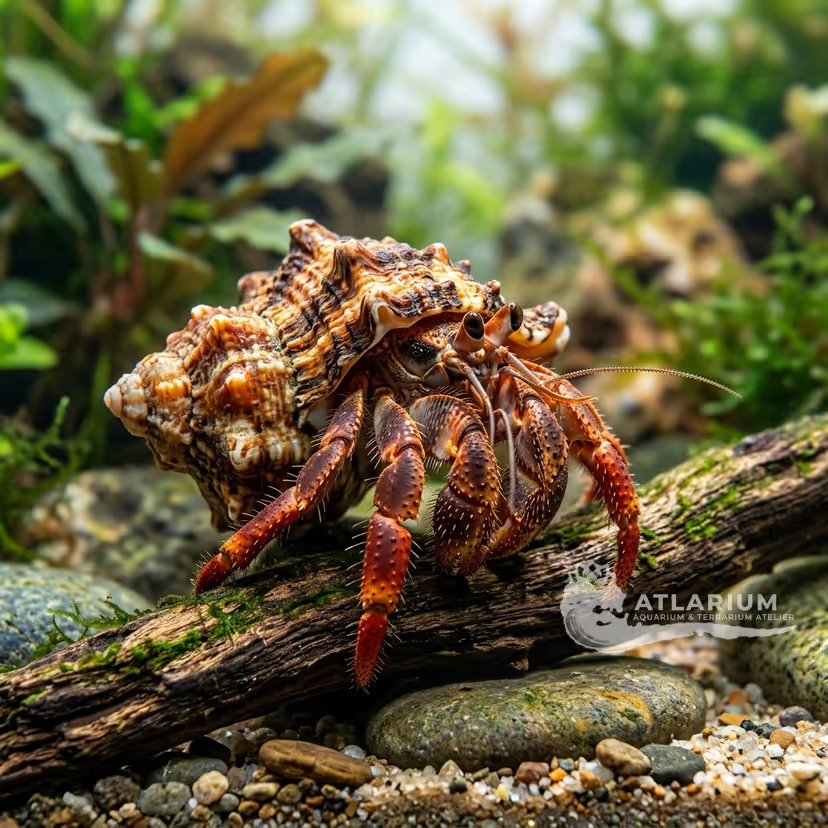
A small terrestrial land hermit crab native to the Pacific coast of the Americas, famous for being one of the fastest, most active, and skilled climbing species.
Class:Malacostraca
Order:Decapoda
Family:Coenobitidae
Genus:Coenobita
Species:Coenobita compressus
Share
Check out Ecuadorian Hermit Crab on Atlarium
Environment
Terrestrial
Minimum group
>= 3
Species description
Geographical Origin and Habitat: Native to the Pacific coast of the Americas, ranging from southern Mexico through Central America (including Costa Rica and Panama) down to Ecuador and northern Peru. It inhabits the supralittoral zone of sandy beaches, coastal dunes, and forest edges close to the ocean.
Taxonomy: Belongs to the class Malacostraca, order Decapoda, family Coenobitidae, and genus Coenobita. Commonly known as the Ecuadorian hermit crab or Pacific hermit crab. It is a terrestrial species adapted to breathing atmospheric oxygen through modified gills.
Social Behavior: Highly social, active, and gregarious. They must be kept in groups of three or more. They are primarily nocturnal but can be active during the day. Known for being exceptional climbers and significantly faster than other land hermit crab species.
Coloration and Sexual Dimorphism: Color varies based on age. Juveniles are often bluish-grey or olive green, while adults develop shades of brown, tan, grey, or dull orange. They have distinctive comma-shaped eyes. Sexual dimorphism is not externally visible unless the crab is fully out of its shell.
Care, breeding and tankmates
Tank Setup: Requires a dry terrarium (referred to as Tank Setup). A glass enclosure of at least 60 liters (15 gallons) with a tight-fitting lid is essential. Substrate must be a moist mix of play sand and coconut fiber at least 15 cm deep to allow for burrowing and molting. Provide climbing branches and extra shells.
Diet and Feeding: Omnivorous scavengers. Offer a varied diet of fresh fruits, vegetables, seeds, leaf litter, dried shrimp, fish, and a source of calcium like cuttlebone. Avoid commercial foods containing preservatives or copper.
Water Quality: Must be provided with two shallow dishes of water: one dechlorinated freshwater and one marine saltwater (using marine salt, not table salt). Relative humidity inside the tank must be kept at 70-85% with temperatures between 24-28°C (75-82°F).
Compatibility and Tankmates: Peaceful when kept with other terrestrial hermit crabs of similar sizes. Do not house with aggressive crabs or other animals. Never place them in a fully submerged aquatic environment.
Aquarium Breeding: Extremely rare and difficult. While mating occurs on land, the female must deposit the eggs into ocean water, where the larvae undergo a complex marine planktonic development phase before returning to land.
Risks and Diseases: Suffocation and death due to low humidity (below 70%), which dries out their gills. Molting stress is also a major risk; hermit crabs bury themselves to molt and must never be dug up or disturbed during this process.
Geographic Origin and Distribution
Native to the Pacific coast of the Americas, ranging from southern Mexico through Central America (including Costa Rica and Panama) down to Ecuador and northern Peru. It inhabits the supralittoral zone of sandy beaches, coastal dunes, and forest edges close to the ocean.
Origin
Tropical oceans and reefsExtra-Amazon South AmericaCentral America and CaribbeanNorth AmericaEurope, Mediterranean, and West Asia
Invertebrate profile
- Diet
- No verified data available
- Ecological role
- No verified data available
- Life expectancy
- No verified data available
- Adult size
- No verified data available
- Jump risk
- No verified data available
- Shock sensitivity
- No verified data available
- Calcium and minerals
- No verified data available
- Molting
- No verified data available
- Reproduction
- No verified data available
- Compatibility & tankmates
- No verified data available
Image gallery
Licensed images linked to the species or, when marked, to the closest representative taxon.
Related species
Recommendations grouped by close relatives, companion choices, and similar care.