Encyclopaedia
InvertebrateTerrestrialEasy
©AI Generated·Proprietary
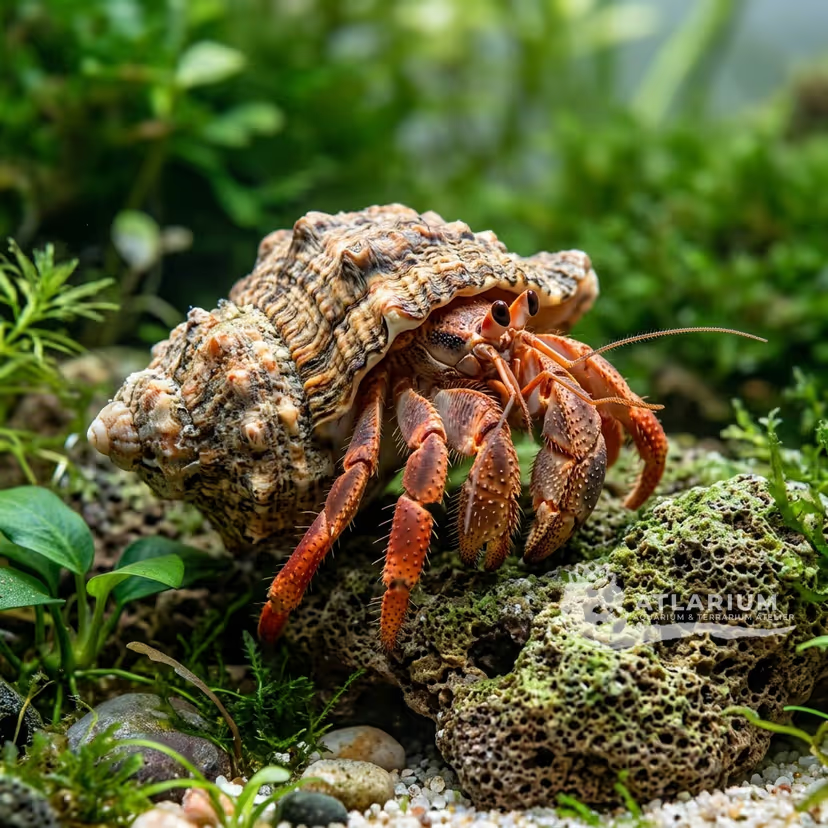
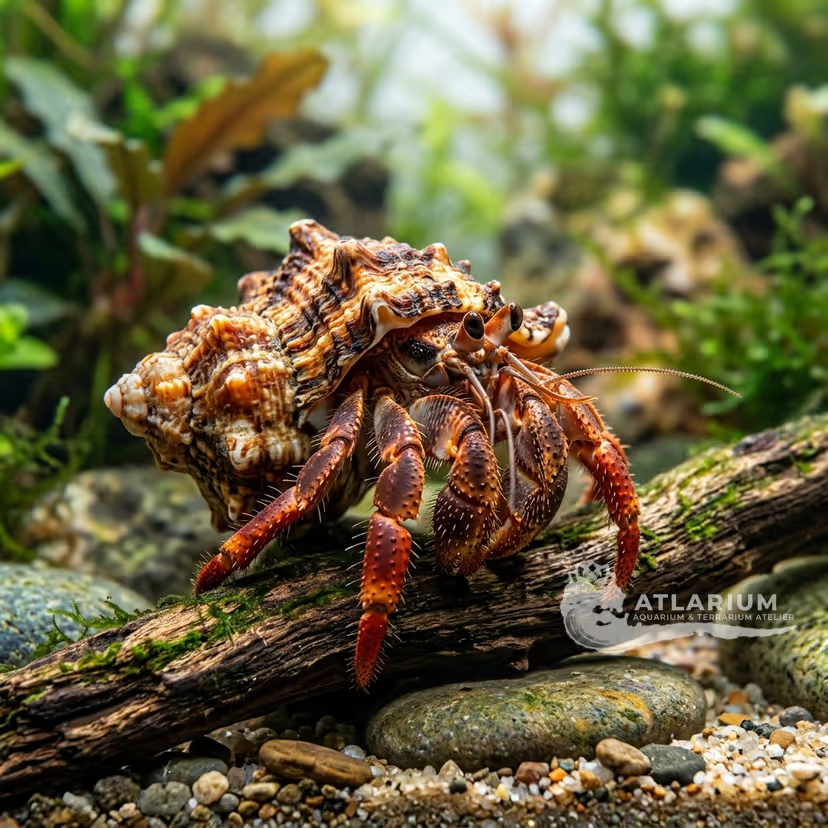
Australian Land Hermit Crab
Coenobita variabilis
A small terrestrial land hermit crab endemic to Australia, known for its hardiness, preference for Babylonia or Nerita shells, and highly variable coloration.
Class:Malacostraca
Order:Decapoda
Family:Coenobitidae
Genus:Coenobita
Species:Coenobita variabilis
Share
Check out Australian Land Hermit Crab on Atlarium
Environment
Terrestrial
Minimum group
>= 3
Species description
Geographical Origin and Habitat: Endemic to the coastal regions of northern Australia, from Western Australia to Queensland. Settles on sandy beaches, estuaries, and adjoining shrublands. They are highly adaptable, often found in coastal scrublands and mangrove swamps. They utilize microhabitats created by tidal logs and rocks.
Taxonomy: Member of the family Coenobitidae. A medium-sized species adapted to holding ocean water inside its shell to keep its gills moist. Grows to about 4-6 cm. They are known locally in Australia as 'crazy crabs' due to their active and inquisitive nature. The genus Coenobita includes several closely related species.
Social Behavior: Very active and gregarious. Forms large beach-dwelling groups to forage. In terrariums, they are highly active, constantly climbing and digging. They exhibit a strong preference for shells with round openings, which fit their body shape. They will test empty shells by rolling them around.
Coloration and Sexual Dimorphism: Body color is highly variable: pale cream, grey, sandy tan, or light blue. Often displays dark vertical stripes on the leg segments. No visible external sexual dimorphism. Their coloring can darken or lighten depending on diet, humidity, and the lighting of their habitat. The claws often feature lighter markings at the tips.
Care, breeding and tankmates
Tank Setup: Requires a dry terrarium with at least 4-6 inches of fine sand substrate to allow burrowing and molting. Provide climbing branches, rocks, and various replacement shells. Add climbing structures like cork bark and driftwood to maximize usable surface area. Avoid resin decors that have sharp edges.
Diet and Feeding: Opportunistic omnivore. Eats fresh fruits (banana, mango), vegetables, dried insects, fish meat, and specialized pellets. Cuttlebone must be provided to supply calcium. Offer small amounts of animal protein, such as freeze-dried shrimp, once or twice a week. Fresh fruits like mango and coconut are highly favored.
Water Quality: Dry setup with relative humidity kept at 70-80%. Provide two shallow water dishes: one with dechlorinated fresh water, and one with marine salt water. The crab must be able to submerge. Maintain a stable room temperature, as extreme cold can cause the crabs to go into shock. Use a thermostat to control heating elements.
Compatibility and Tankmates: Keep only in terrariums with other land hermit crab species. Coexists peacefully in large groups of its own or related species (Coenobita). Keep them in groups of at least three, as they are highly social and thrive in colonies. Ensure there are enough shells for all members.
Aquarium Breeding: Extremely difficult. Larval development involves a marine zoeal phase that requires open ocean conditions and specialized planktonic foods to survive. Recreating the tidal movements is essential to stimulate egg release in captive setups. Marine water parameters must match natural Australian coastlines.
Risks and Diseases: Fast dehydration and death if humidity drops below 70%. Molting failure if the substrate is dry or shallow. Avoid any copper-based chemical treatments. Check for signs of limb loss, which is often a symptom of extreme environmental stress. Ensure the terrarium has proper top ventilation.
Geographic Origin and Distribution
Endemic to the coastal regions of northern Australia, from Western Australia to Queensland. Settles on sandy beaches, estuaries, and adjoining shrublands. They are highly adaptable, often found in coastal scrublands and mangrove swamps. They utilize microhabitats created by tidal logs and rocks.
Origin
Australia, New Guinea, and Oceania
Invertebrate profile
- Diet
- No verified data available
- Ecological role
- No verified data available
- Life expectancy
- No verified data available
- Adult size
- No verified data available
- Jump risk
- No verified data available
- Shock sensitivity
- No verified data available
- Calcium and minerals
- No verified data available
- Molting
- No verified data available
- Reproduction
- No verified data available
- Compatibility & tankmates
- No verified data available
Image gallery
Licensed images linked to the species or, when marked, to the closest representative taxon.
Related species
Recommendations grouped by close relatives, companion choices, and similar care.