Encyclopaedia
InvertebrateTerrestrialIntermediate
©AI Generated·Proprietary
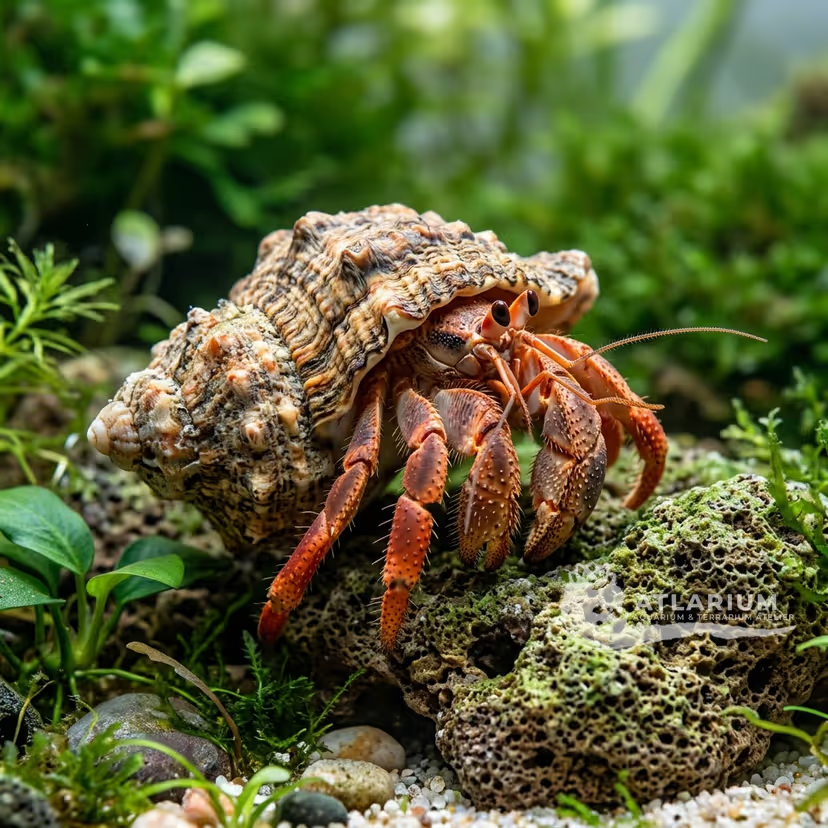
Okinawa Blueberry Hermit Crab
Coenobita purpureus
A stunning terrestrial hermit crab from Japan featuring spectacular blueberry-blue coloration. Highly social and active climbers, they require high humidity and both fresh and saltwater pools.
Class:Malacostraca
Order:Decapoda
Family:Coenobitidae
Genus:Coenobita
Species:Coenobita purpureus
Share
Check out Okinawa Blueberry Hermit Crab on Atlarium
Environment
Terrestrial
Minimum group
>= 3
Species description
Geographical Origin and Habitat: Coenobita purpureus is endemic to southern Japan, specifically the Ryukyu Islands, including Okinawa. It inhabits coastal sandy beaches, dune areas, and the margins of coastal forests. As a terrestrial hermit crab, it spends its entire adult life on land, returning to the sea edge only to spawn. It prefers humid environments sheltered by coastal vegetation, rocks, and logs that protect it from dehydration and intense heat.
Taxonomy: This species belongs to the family Coenobitidae, which contains all land hermit crabs. It is distinguished from other members of the genus Coenobita by its specific antennal structure, robust walking legs, and modified abdomen designed to grip the interior of gastropod shells. The left claw is significantly larger than the right, functioning as an operculum to block the shell opening when the crab retreats inside.
Social Behavior: It is highly social and gregarious, living in large colonies in the wild. During the day, they shelter together under damp leaf litter or bury themselves in the sand to conserve moisture. At night, they emerge to forage and climb actively on coastal rocks and branches. Keeping them in groups of three or more is highly recommended to promote natural social behavior and reduce stress.
Coloration and Sexual Dimorphism: Juveniles start with a pale cream or greyish coloration, but as they mature, they develop a spectacular, deep blueberry-blue or violet-purple color across their legs, claws, and carapace. There is no visible external sexual dimorphism; females possess small pleopods on the left side of their soft abdomen to hold eggs, which are only visible when the crab partially emerges from its shell.
Care, breeding and tankmates
Tank Setup: A terrestrial terrarium (commonly called a "crabitat") of at least 80 to 100 liters is required for a small group. The substrate is critical: it must be a minimum of 15 cm deep, consisting of a damp mix of playsand and coconut fiber (moistened to sandcastle consistency) to allow safe burrowing for molting. Provide climbing branches, cork bark hiding places, and plenty of empty Turbo shells.
Diet and Feeding: They are opportunistic omnivores. Their diet in captivity should be varied and include fresh fruits (apples, bananas, coconut), leafy greens, carrots, dehydrated hermit crab food, dried shrimp, calcium powder, and crushed eggshells. Avoid foods containing preservatives or pesticides. They also enjoy dry oak or catappa leaves, which provide beneficial tannins.
Water Quality: Although terrestrial, they require constant access to two water dishes: one for dechlorinated freshwater and one for saltwater (mixed using marine aquarium salt, not table salt). The air humidity must be kept between 70% and 80% through regular misting, and the temperature should range from 24°C to 28°C. A hygrometer and thermometer are essential for monitoring.
Compatibility and Tankmates: Can be safely housed with other land hermit crab species of the genus Coenobita. They should not be kept with predatory reptiles, amphibians, or large insects. They are completely peaceful but should not be housed with aggressive tankmates that could disturb them during their vulnerable molting phases.
Aquarium Breeding: Breeding in captivity is extremely difficult and rarely achieved. Mating occurs on land, but the female must deposit the eggs into saltwater. The larvae develop through marine planktonic stages (zoea) before metamorphosing into megalopae and transitioning to land, a complex process requiring specialized marine larval tanks and live microfeeds.
Risks and Diseases: The main threat to their health is a failed molt due to low humidity or dry substrate. During molting, the crab burrows underground for several weeks; disturbing them at this stage can be fatal. They are also highly sensitive to chemicals, aerosol sprays, chlorine in tap water, and copper surfaces.
Geographic Origin and Distribution
Coenobita purpureus is endemic to southern Japan, specifically the Ryukyu Islands, including Okinawa. It inhabits coastal sandy beaches, dune areas, and the margins of coastal forests. As a terrestrial hermit crab, it spends its entire adult life on land, returning to the sea edge only to spawn. It prefers humid environments sheltered by coastal vegetation, rocks, and logs that protect it from dehydration and intense heat.
Origin
Cosmopolitan or introducedNorth AmericaEast Asia
Invertebrate profile
- Diet
- No verified data available
- Ecological role
- No verified data available
- Life expectancy
- No verified data available
- Adult size
- No verified data available
- Jump risk
- No verified data available
- Shock sensitivity
- No verified data available
- Calcium and minerals
- No verified data available
- Molting
- No verified data available
- Reproduction
- No verified data available
- Compatibility & tankmates
- No verified data available
Image gallery
Licensed images linked to the species or, when marked, to the closest representative taxon.
Related species
Recommendations grouped by close relatives, companion choices, and similar care.