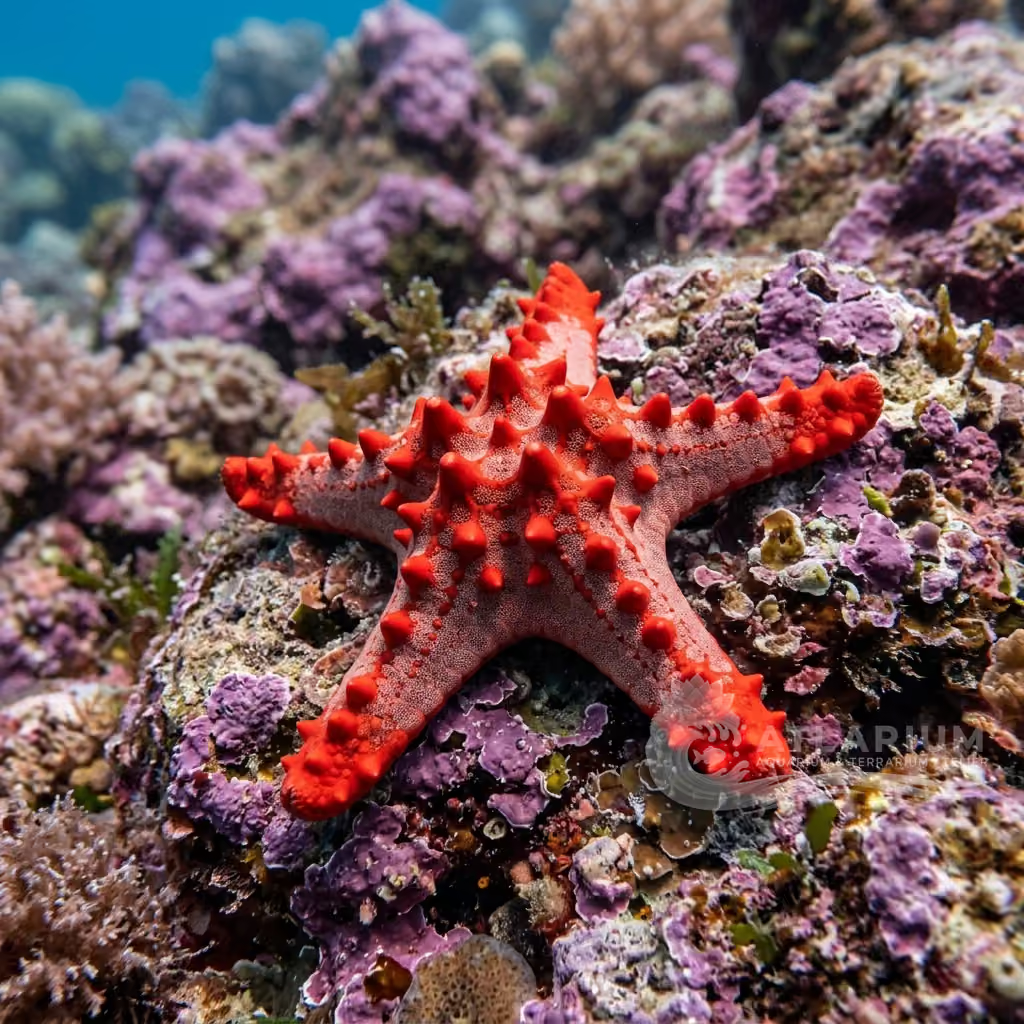
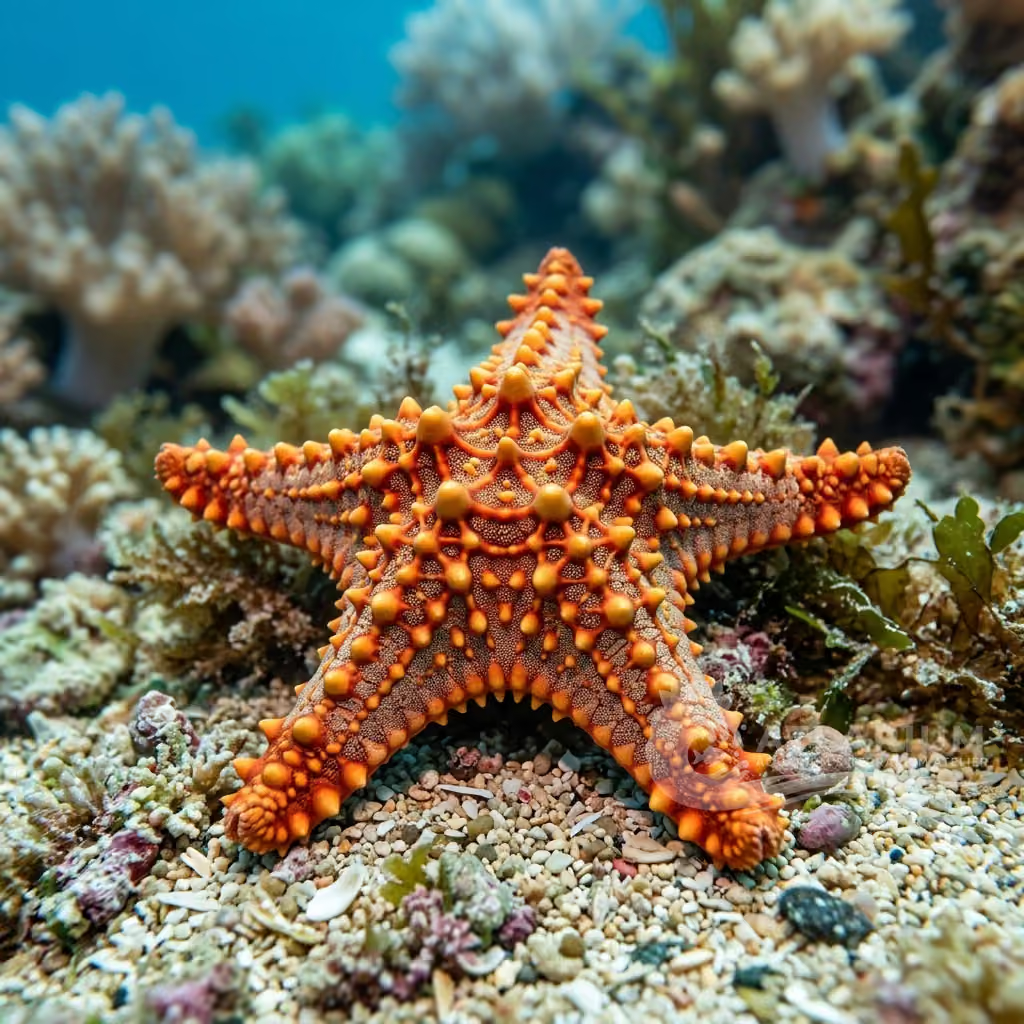
Sand Sifting Starfish
Archaster typicus
A peaceful detritivorous starfish from the Indo-Pacific that burrows through the aquarium sand bed, meticulously keeping it aerated and free of waste.
Water Temperature
22 - 26 °C
pH Value
8.1 - 8.4
Water type
Marine
Invertebrate type
Starfish
Adult size
12 cm
Minimum group
>= 1
KH
8 - 12 dKH
Ecological role
Detritivore
Copper sensitivity
High

Species description
Geographical Origin and Habitat: Archaster typicus is widely distributed throughout the tropical Indo-Pacific region. It is commonly found from the East African coast and Madagascar, across the Indian Ocean to the Philippines, Indonesia, southern Japan, northern Australia, and Fiji. It inhabits shallow sandy tidal flats, seagrass meadows, and protected coral lagoons, typically occurring from the intertidal zone down to depths of about 15-20 meters.
Taxonomy: This starfish belongs to the class Asteroidea, order Valvatida, and family Archasteridae. It is distinguished from other sea stars by its highly specialized ability to burrow quickly into sand. It features a flattened body with five tapered arms lined with robust tube feet. Adults reach a total diameter of approximately 10 to 15 centimeters.
Social Behavior: A peaceful, solitary invertebrate that is strictly detritivorous. It spends most of its time buried beneath the surface of the sand. Through its constant movement, it stirs, aerates, and cleans the substrate, which prevents the formation of toxic anaerobic pockets. It poses no threat to any other tank inhabitants.
Coloration and Sexual Dimorphism: The coloration is cryptic, ranging from light grey to sandy brown with darker mottled patterns that provide camouflage against the seabed. The dorsal surface is covered in small, blunt spines. There is no external sexual dimorphism; males and females are identical and can only be differentiated during spawning.

Care, breeding and tankmates
Tank Setup: Requires a well-established marine aquarium of at least 150 liters (approx. 40 gallons). The presence of a fine, soft sand bed (at least 5 to 8 centimeters deep) is absolutely mandatory. Bare-bottom tanks or setups with coarse crushed coral are completely unsuitable and will lead to the animal's death. Secure rockwork directly to the bottom glass pane.
Diet and Feeding: A detritivore that feeds on detritus, uneaten fish food, microalgae, bacteria, and small organisms living in the sand. In very clean or newly set-up tanks, they can easily starve. Supplement their diet by placing small pieces of frozen shrimp or sinking algae wafers near them in the sand bed.
Water Quality: Demands stable marine parameters: water temperature between 22°C and 26°C, pH between 8.1 and 8.4, specific gravity between 1.023 and 1.025, and KH between 8 and 12 dKH. They are extremely sensitive to copper treatments (which are lethal) and rapid changes in salinity. Perform a slow drip acclimation of at least 1-2 hours.
Compatibility and Tankmates: Completely reef-safe. It does not bother corals, clams, or other peaceful invertebrates. Avoid keeping it with starfish predators such as pufferfish, triggerfish, boxfish, and Harlequin Shrimps (Hymenocera picta), which will actively feed on it.
Aquarium Breeding: Breeding in home aquariums is rare but has been documented. They exhibit a unique pseudocopulation behavior where the male climbs onto the female, aligning their arms, followed by the simultaneous release of eggs and sperm into the water column. The larvae go through a complex planktonic stage.
Risks and Diseases: The primary risk is starvation due to lack of organic matter in the substrate. They are highly susceptible to osmotic shock during introduction or from rapid salinity drops, which can cause tissue necrosis (loss of limbs). Any sign of disintegrating arms suggests poor water quality or severe malnutrition.

Geographic origin and distribution
Archaster typicus is widely distributed throughout the tropical Indo-Pacific region. It is commonly found from the East African coast and Madagascar, across the Indian Ocean to the Philippines, Indonesia, southern Japan, northern Australia, and Fiji. It inhabits shallow sandy tidal flats, seagrass meadows, and protected coral lagoons, typically occurring from the intertidal zone down to depths of about 15-20 meters.
Origin
Tropical oceans and reefsAfrica and MadagascarSouth and Southeast AsiaEast AsiaAustralia, New Guinea, and Oceania

Invertebrate profile
- Diet
- Detritivore
- The diet of Archaster typicus typically consists of organic detritus, microalgae, or specific planktonic particles. In a home aquarium, they constantly forage along the substrate or rockwork looking for nourishment. Supplemental feeding with specialized invertebrate pellets or liquid foods may be necessary. Ensuring a varied and nutritious diet will promote vibrant colors and long-term health. Overfeeding should be avoided to maintain optimal water quality.
- Ecological role
- Detritivore
- In the wild, Archaster typicus plays a crucial role in maintaining the balance of its native ecosystem. They often act as natural cleaners, breaking down waste materials and unconsumed food. Their constant movement helps aerate the sand bed and prevent the buildup of toxic gases. By managing algae growth, they create space for slow-growing corals and sponges to thrive. A balanced aquarium ecosystem relies heavily on their diligent cleaning efforts.
- Adult size
- 12 cm
- Jump risk
- No
- Shock sensitivity
- High
- This invertebrate is highly sensitive to rapid fluctuations in water parameters. Sudden changes in temperature, salinity, or pH can cause severe osmotic shock and death. A slow and careful acclimation process, preferably drip acclimation, is absolutely necessary. Maintain stable aquarium conditions through regular monitoring and automated top-offs. Avoid performing excessively large water changes at once.
- Calcium and minerals
- Medium
- Proper calcium levels are absolutely vital for the structural integrity and growth of this species. They continuously extract calcium carbonate from the water to build their shells, skeletons, or protective tubes. Maintaining calcium levels between 400 and 450 ppm ensures they remain healthy. It is also important to balance alkalinity and magnesium alongside calcium supplementation. Regular testing is required in heavily stocked reef aquariums.
- Molting
- Yes
- If applicable to its morphology, this invertebrate undergoes periodic molting to facilitate growth. During the molting process, the organism becomes extremely vulnerable to predation and stress. It is crucial to provide ample hiding spaces, such as caves or crevices, where they can retreat safely. Do not remove the discarded exoskeleton, as they often consume it to quickly replenish essential minerals. Disturbing them during this delicate phase can lead to fatal complications.
- Reproduction
- Oviparous
- Reproduction in the home aquarium is often challenging and rare for many invertebrate species. Most require highly specific environmental triggers, such as temperature shifts or lunar cycles. The resulting larvae usually have a prolonged planktonic stage, making them difficult to rear. Specialized food sources like phytoplankton are needed to sustain the offspring. Consequently, most specimens available in the hobby are wild-caught or professionally aquacultured.
- Compatibility & tankmates
- Community
- Compatibility varies largely based on the specific species and tank mates. They are generally peaceful but can fall prey to aggressive or predatory fish. Ensure they are housed with calm tank mates that will not nip or harass them. Research individual species requirements to avoid territorial disputes. Always monitor new additions carefully to ensure harmonious interactions.

Related species
Recommendations grouped by close relatives, companion choices, and similar care.