Queen coris
Coris formosa
The Queen Coris undergoes a dramatic transformation from a bright orange juvenile to a majestic, intricately patterned adult. It demands massive aquariums, deep sand beds, and secure rock structures.
Wassertemperatur
23 - 28 °C
pH-Wert
8.1 - 8.4
Wassertyp
Meerwasser
Tankfüllstand
Alle Ebenen
Erwachsenengröße
60 cm
Mindesttankvolumen
>= 800 L
Mindestgruppe
>= 1
KH
8 - 12 dKH

Artbeschreibung
Geographical Origin and Habitat: Coris formosa is native to the tropical waters of the Indian Ocean, ranging from East Africa and the Red Sea to Sri Lanka. It primarily inhabits coral reef edges, rubble areas, and coastal lagoons with deep sandy bottoms at depths of 2 to 30 meters, where it continuously searches for food in the sand.
Taxonomy and Morphology: Belonging to the family Labridae and the genus Coris, this fish features a robust and elongated body with thick lips and strong, protruding teeth designed to crush invertebrate shells. It reaches a significant size, with adults capable of growing up to 35-40 cm in total length.
Social Behavior: Active, diurnal, and solitary. It becomes highly territorial and aggressive as it matures, especially towards other wrasses or similar-looking fish. During the day it searches for food on the bottom, often turning over rocks and shells. It burrows completely into the sand bed to sleep at night.
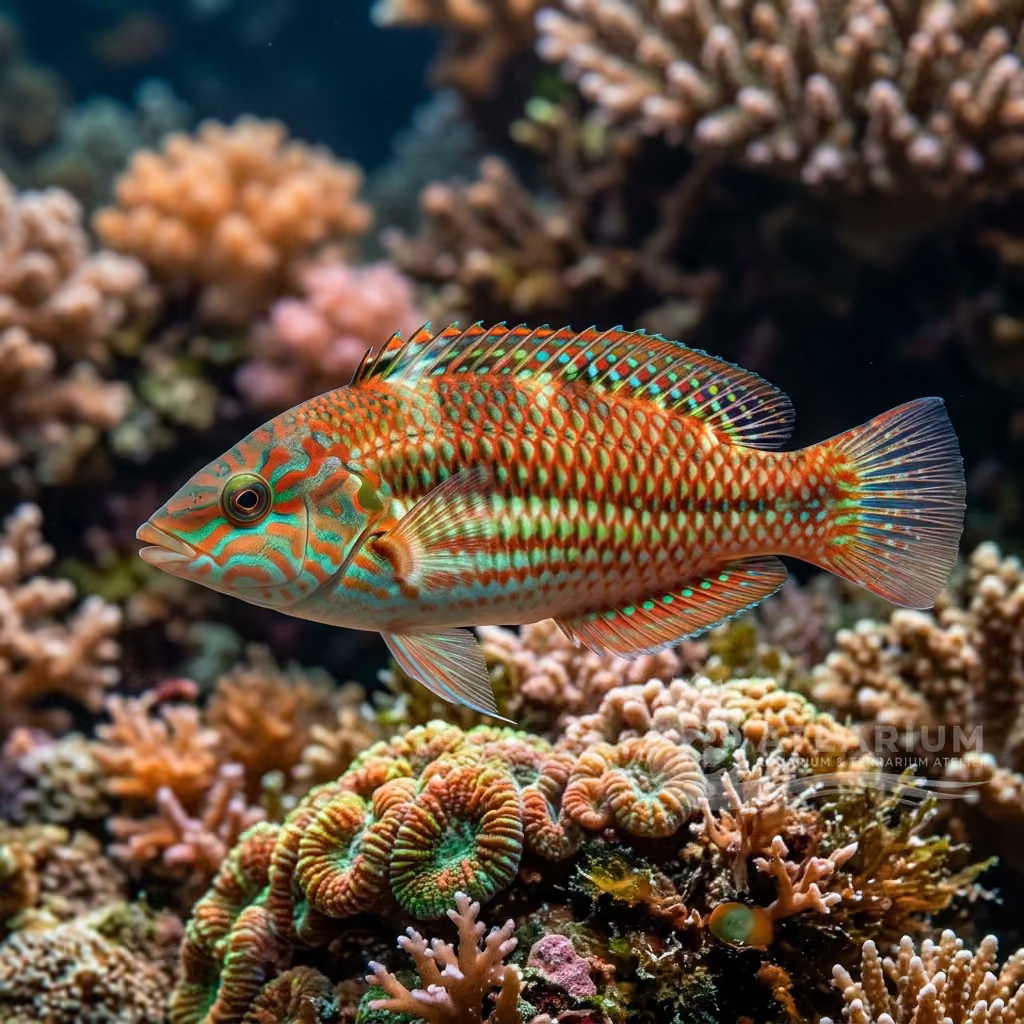
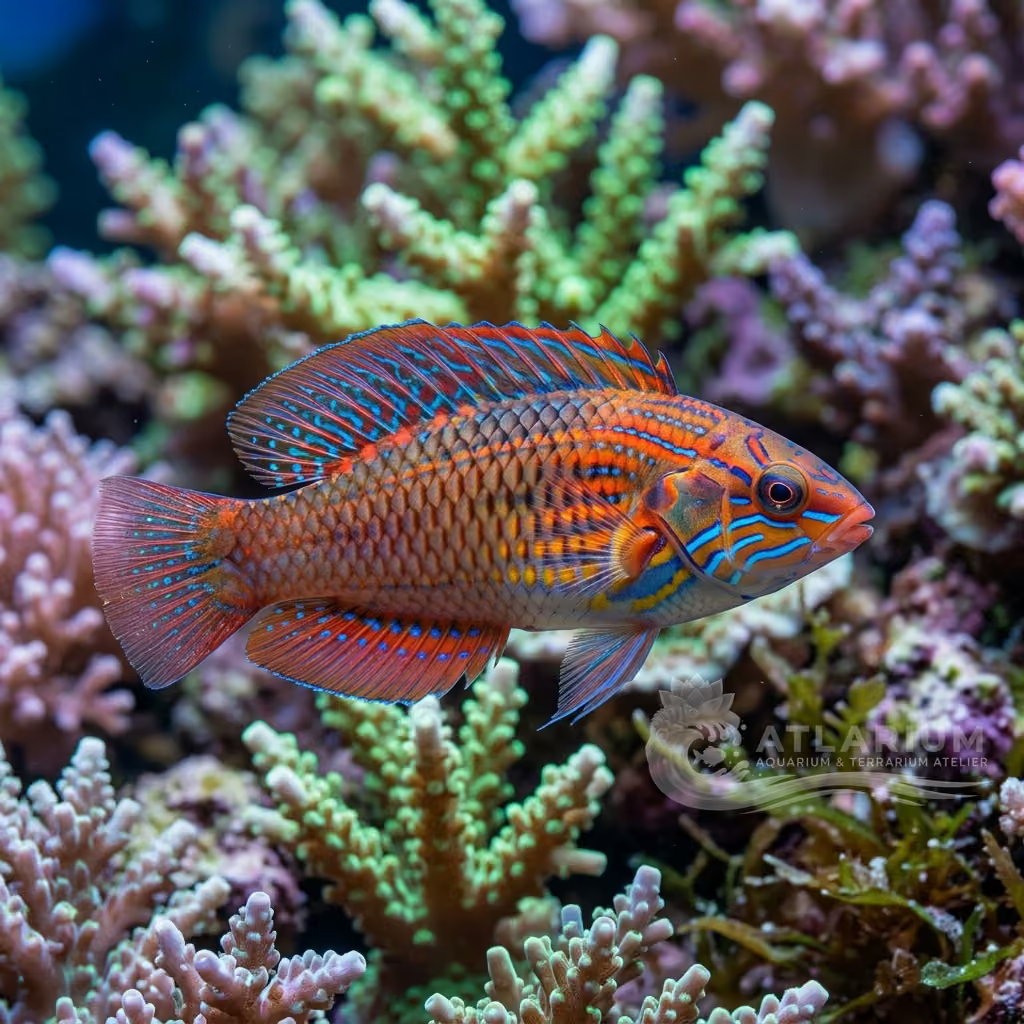
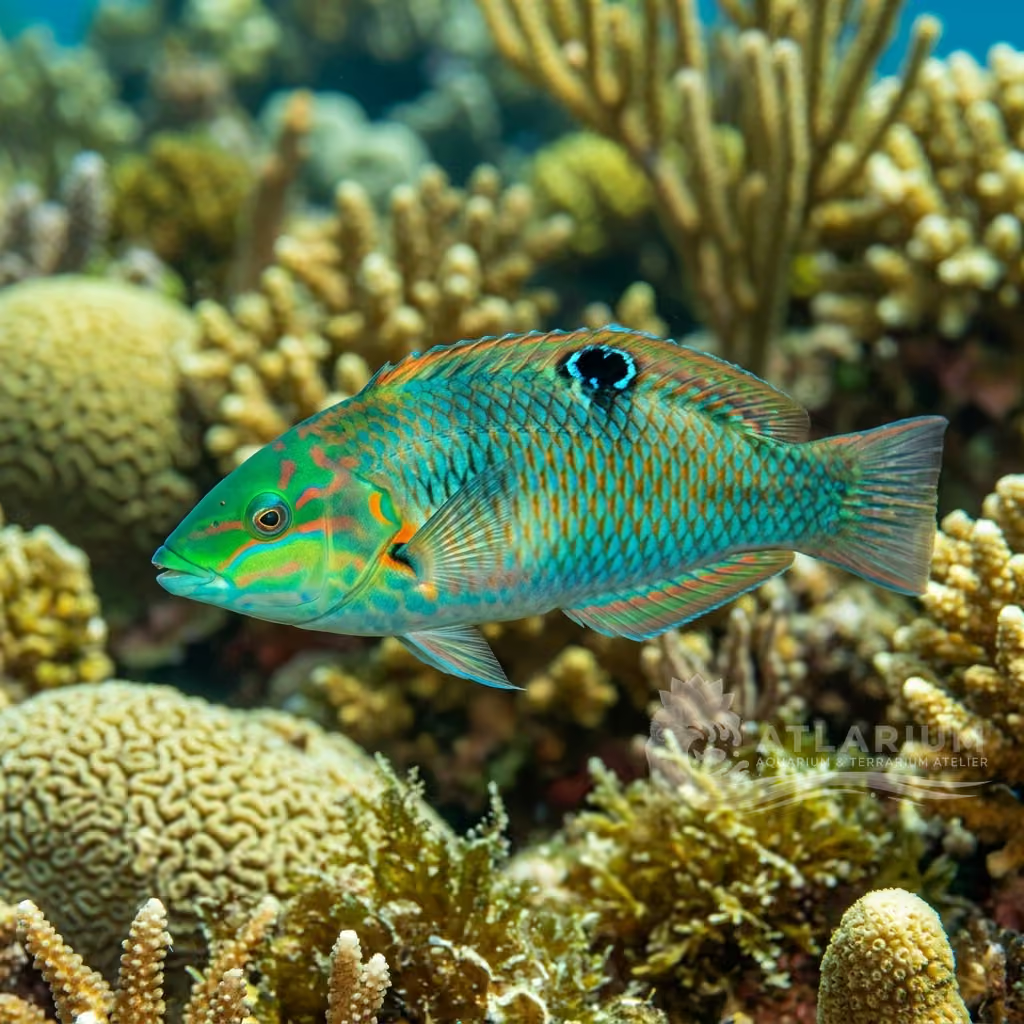
Coloration and Sexual Dimorphism: Displays an extraordinary color metamorphosis: juveniles are bright orange-red with large, black-edged white spots on the back (mimicking clownfish). Adults lose this look, developing a greyish-blue or olive body covered in small dark spots, with blue-green stripes on the head and a red tail.

Pflege, Zucht und Mitbewohner
Aquarium Setup: Requires a very large aquarium of at least 500-600 liters (approx. 130-160 gallons) for adult specimens. A soft sand bed of at least 10-12 cm deep is essential to allow natural burrowing behavior. Rockwork must be securely anchored, as the fish will actively flip rocks to find hidden prey.
Diet and Feeding: Carnivorous, specializing in hard-shelled invertebrates. In the wild, it eats mollusks, sea urchins, crabs, and snails. In captivity, feed a variety of meaty foods such as whole shrimp with shell, clams, mussels, krill, and mysis. It will also accept large high-quality sinking carnivore pellets.
Water Quality: Keep reef parameters stable: temperature 24-27°C (75-81°F), pH 8.1-8.4, and specific gravity 1.022-1.025. Powerful filtration and an efficient protein skimmer are required to handle the heavy biological load produced by this large species and to keep nitrates and phosphates low.
Compatibility and Cohabitation: Not reef-safe with mobile invertebrates, as it will quickly consume ornamental shrimps, snails, crabs, and urchins. It is compatible with large, robust fish such as tangs, triggerfish, groupers, and large angelfish. It does not harm corals, though it may disturb them while searching for food.
Aquarium Breeding: Breeding in home aquariums has not been documented due to the immense swimming space required for their courtship. In the wild, they are pelagic spawners, with males displaying to females before rising together to release their eggs and sperm into the open water column.
Risks and Diseases: They are strong jumpers, so a secure lid on the aquarium is mandatory. They can suffer mouth and skin abrasions if the sand is too coarse or sharp. Susceptible to marine ich (Cryptocaryon) if stressed by poor water conditions or if the sand bed is allowed to accumulate too much organic waste.

Geografische Herkunft und Verbreitung
Coris formosa is native to the tropical waters of the Indian Ocean, ranging from East Africa and the Red Sea to Sri Lanka. It primarily inhabits coral reef edges, rubble areas, and coastal lagoons with deep sandy bottoms at depths of 2 to 30 meters, where it continuously searches for food in the sand.
Ursprung
Tropische Ozeane und RiffeAfrika und MadagaskarSüd- und Südostasien

Fischprofil
- Temperament
- Aggressive
- Semi-aggressive and very active. Can outcompete slow fish for food. May harass passive species.
- Diät
- Carnivore
- Carnivorous diet consisting of meaty foods. Feed mysis shrimp, chopped seafood, and high-quality pellets. Variety is essential for color maintenance.
- Lebenserwartung
- 5-10 years
- Erwachsenengröße
- 60 cm
- Geschlechterverhältnis
- Solitary
- Keep one male per tank. Multiple females can be kept in large systems. They can change sex from female to male.
- Fütterungsfrequenz
- Twice daily
- Feed them two to three times daily. They are aggressive eaters. Ensure shy tank mates get enough food.
- Bioload
- Extreme
- These wrasses have a moderate to high bioload. They are very active and eat constantly. Efficient mechanical and biological filtration is needed.
- Fluss
- Strong
- They enjoy strong water currents. Good flow helps keep the water well oxygenated. This mimics their natural surge zones.
- Sprungrisiko
- Yes
- They are notorious jumpers when startled. A tight-fitting mesh lid is absolutely mandatory. Any small gap can lead to escape.
- Reproduktion
- Oviparous
- Rarely bred in the home aquarium. They are pelagic spawners. Males are often terminal phase females.
- Kompatibilität & Tankkameraden
- Not reef safe
- Can be aggressive towards small invertebrates. May flip over snails and crabs. Larger species will eat ornamental shrimp.
- Tankfüllstand
- All levels
- Very active in the middle and lower levels. They require a deep sand bed to bury themselves at night. They will constantly patrol the rockwork.

Wissenschaftliche Modelle & Parameter
FishBase
Zugang zu den offiziellen wissenschaftlichen Daten der Art
FishBase v25.04Daten synchronisiert am: 15.06.2026
- Trophäenniveau
- 3,8 ± 0,26 se
- Belastbarkeit
- Mittel (1,4 - 4,4 Jahre)
- Phylogenetische Einzigartigkeit (PD50)
- 0.5
- Bayessche Längen-Gewichts-Beziehung
- a = 0.00977, b = 3.07
- AnfälligkeitMäßige Anfälligkeit (44 / 100)

Verwandte Arten
Empfehlungen gruppiert nach nahen Verwandten, Auswahl von Begleitern und ähnlicher Betreuung.