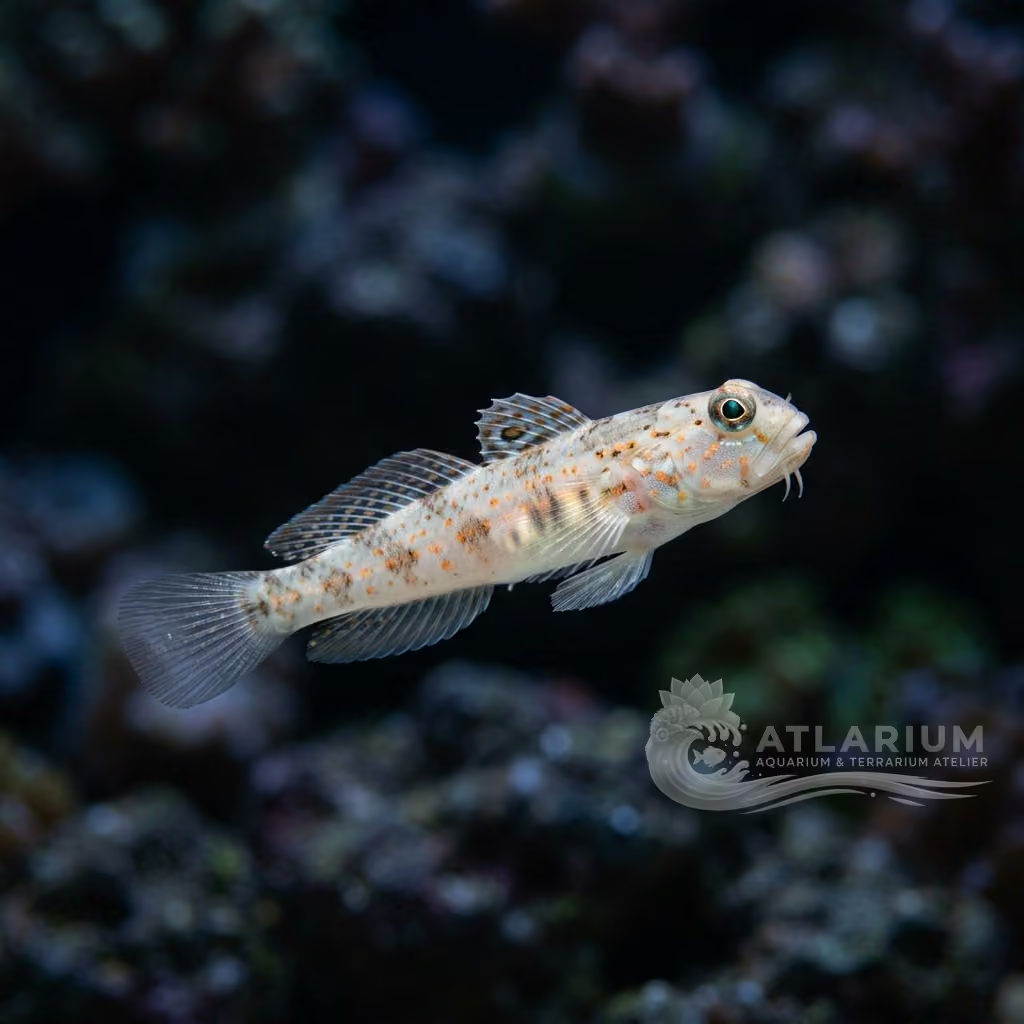
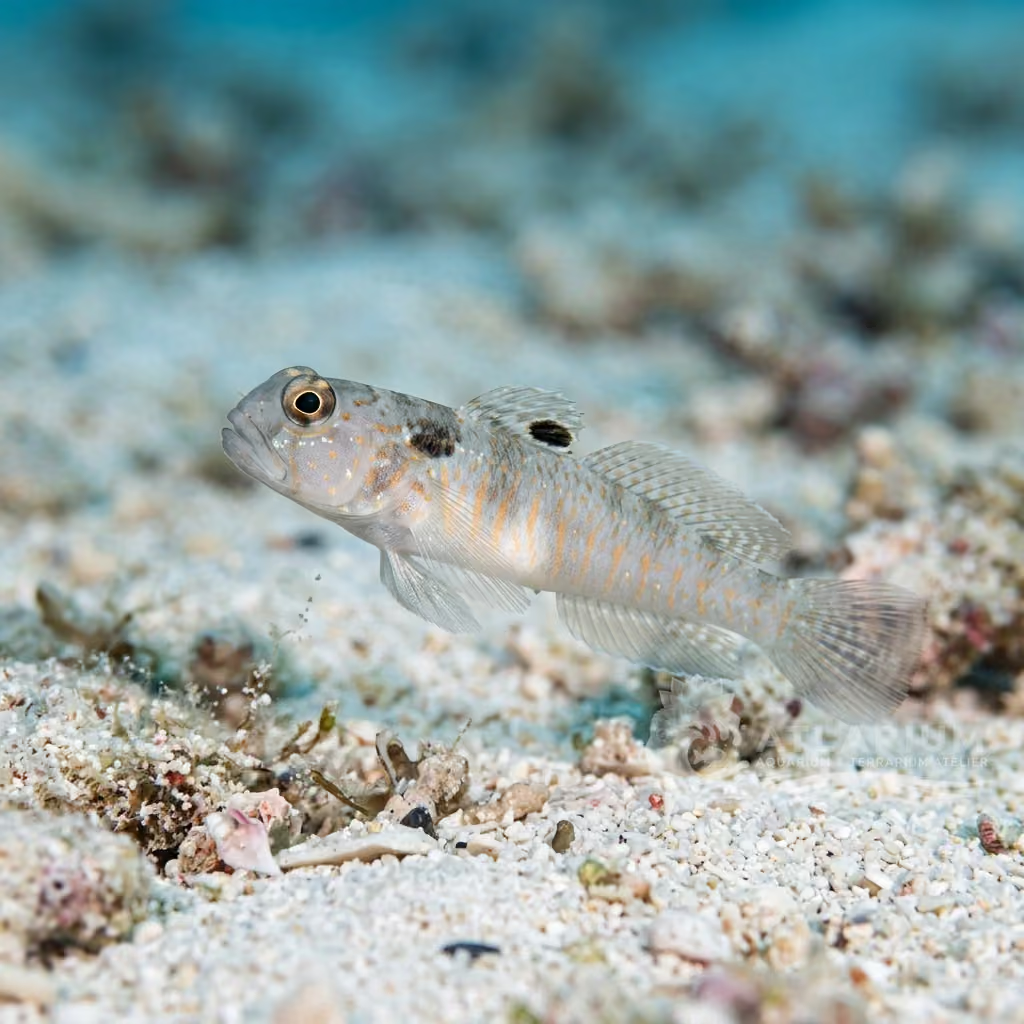
Multilineate Coral Goby
Gobiodon multilineatus
An olive-green nano goby adorned with pale stripes, strictly tied to small-polyp stony corals. It fiercely defends its coral home but ignores other species.
Wassertemperatur
24 - 28 °C
pH-Wert
8.1 - 8.4
Wassertyp
Meerwasser
Tankfüllstand
Unten
Erwachsenengröße
3,5 cm
Mindesttankvolumen
>= 40 L
Mindestgruppe
>= 1
KH
8 - 12 dKH

Artbeschreibung
Geographical Origin and Habitat: Native to the Western Pacific, including the Ryukyu Islands of southern Japan, the South China Sea, and the Chesterfield Islands. It inhabits sheltered lagoons and outer reef slopes at depths ranging from 8 to 66 meters.
Taxonomy and Morphology: Belongs to the Gobiidae family, genus Gobiodon. Features a deep, laterally compressed body that lacks scales. Instead, it is covered in a bitter, toxic mucus that deters predators. It is very small, reaching a maximum length of 3.5 cm.
Social Behavior: Lives singly or in monogamous pairs within the branches of specific host corals. Highly territorial towards conspecifics, defending its selected coral head from intruders, yet entirely peaceful towards other fish species in the tank.
Coloration and Sexual Dimorphism: Body is typically olive-green to brownish, adorned with several thin, pale blue or light green vertical and horizontal stripes on the head and body. No visible external dimorphism; they are bi-directional hermaphrodites.

Pflege, Zucht und Mitbewohner
Aquarium Setup: Suitable for nano-reefs of at least 50 liters (approx. 13 gallons). It is essential to provide live or high-quality replica small-polyp stony (SPS) corals, particularly Acropora, which serve as its primary habitat, shelter, and resting platform.
Diet and Feeding: Carnivorous. In captivity, feed multiple times daily with tiny foods such as copepods, rotifers, baby brine shrimp, and fine frozen mysis. They will also consume high-quality powdered marine foods and micro-granules once acclimated.
Water Quality: Keep standard reef parameters: temperature 24-27°C (75-81°F), pH 8.1-8.4, and specific gravity 1.022-1.025. Excellent filtration and low nitrate/phosphate levels are necessary to maintain both the fish and its host corals in good health.
Compatibility and Cohabitation: Peaceful and reef-safe. It does not bother other fish, except for other Gobiodon species if they are not a mated pair. It is an excellent inhabitant for peaceful nano reef aquariums alongside other non-aggressive micro-reef fish.
Aquarium Breeding: Can spawn in home aquariums. The pair will clean a small patch of coral skeleton near the base of an Acropora branch to deposit their sticky eggs. The pelagic larvae are tiny and require specialized live micro-algae and rotifer cultures to raise.
Risks and Diseases: Starvation is a major risk if kept with fast, aggressive feeders. Prone to marine ich (Cryptocaryon irritans). Because it lacks scales, it is highly sensitive to chemical treatments; avoid copper-based medications if possible.

Geografische Herkunft und Verbreitung
Native to the Western Pacific, including the Ryukyu Islands of southern Japan, the South China Sea, and the Chesterfield Islands. It inhabits sheltered lagoons and outer reef slopes at depths ranging from 8 to 66 meters.
Ursprung
Tropische Ozeane und RiffeOstasien

Fischprofil
- Temperament
- Territorial
- They are completely peaceful, preferring a totally sedentary lifestyle over active swimming. They will sit completely motionless, observing the tank, waiting for a meal to drift by. Their calm demeanor makes them a joy to observe in a micro reef.
- Diät
- Carnivore
- They are strict carnivores that thrive on a diet of very small zooplankton. Frozen baby brine shrimp, newly hatched artemia, and cyclops are highly recommended. Finely crushed pellets may be accepted once they are properly acclimated.
- Lebenserwartung
- 1-5 years
- Erwachsenengröße
- 3.5 cm
- Geschlechterverhältnis
- Pair
- They have the unique ability to undergo bi-directional sex changes to form pairs. Keeping a single specimen or a bonded pair is the most successful approach. Adding multiple individuals to a small tank will result in localized territorial squabbles.
- Fütterungsfrequenz
- Twice daily
- Offer them tiny morsels of food one to two times every single day. Because they do not swim actively to forage, direct target feeding is often required. Ensure they get their share before faster fish consume all the food.
- Bioload
- Low
- The bioload contribution of the Multiline coralgoby is exceedingly small. They are perfect candidates for nano aquariums with very limited biological filtration capacity. Their waste output is negligible compared to almost any other marine fish.
- Fluss
- Strong
- They favor areas with very gentle to moderate, non-turbulent water flow. Intense flow will physically dislodge them from their preferred perches among the coral branches. Gentle currents deliver small food particles right past their waiting mouths.
- Sprungrisiko
- No
- Reproduktion
- Oviparous
- Captive breeding is possible and has been documented by dedicated nano reef hobbyists. They strip a small section of coral tissue to securely lay their adhesive eggs. The incredibly small larvae require specialized culturing of tiny live foods to survive.
- Kompatibilität & Tankkameraden
- Peaceful
- They are remarkably peaceful and completely ignore other species in a community tank. They must be kept with equally small and docile tankmates to avoid being eaten. They are completely safe to house with all types of corals and shrimp.
- Tankfüllstand
- Bottom
- They are almost always found perched in the upper or middle sections of the reef. They absolutely require branching SPS corals or similar artificial structures to feel secure. They lack a swim bladder and cannot hover in the water column.

Wissenschaftliche Modelle & Parameter
FishBase
Zugang zu den offiziellen wissenschaftlichen Daten der Art
FishBase v25.04Daten synchronisiert am: 15.06.2026
- Trophäenniveau
- 3,2 ± 0,4 se
- Belastbarkeit
- Hoch (weniger als 15 Monate)
- Phylogenetische Einzigartigkeit (PD50)
- 0.5
- Bayessche Längen-Gewichts-Beziehung
- a = 0.01023, b = 3.01
- AnfälligkeitGeringe Anfälligkeit (10 / 100)

Verwandte Arten
Empfehlungen gruppiert nach nahen Verwandten, Auswahl von Begleitern und ähnlicher Betreuung.