Aurora Goby
Amblyeleotris aurora
The Aurora shrimpgoby lives in Indian Ocean sandy reefs, famously sharing a burrow in symbiosis with pistol shrimp. It acts as a lookout while the blind shrimp digs.
Wassertemperatur
22 - 26 °C
pH-Wert
8 - 8.5
Wassertyp
Meerwasser
Tankfüllstand
Unten
Erwachsenengröße
11 cm
Mindesttankvolumen
>= 114 L
Mindestgruppe
>= 1
KH
8 - 12 dKH

Artbeschreibung
Geographical Origin and Habitat: Indian Ocean, distributed from East Africa to the Andaman Sea, including the Maldives. Lives in sheltered sandy areas near coral reefs at depths of 10 to 35 meters.
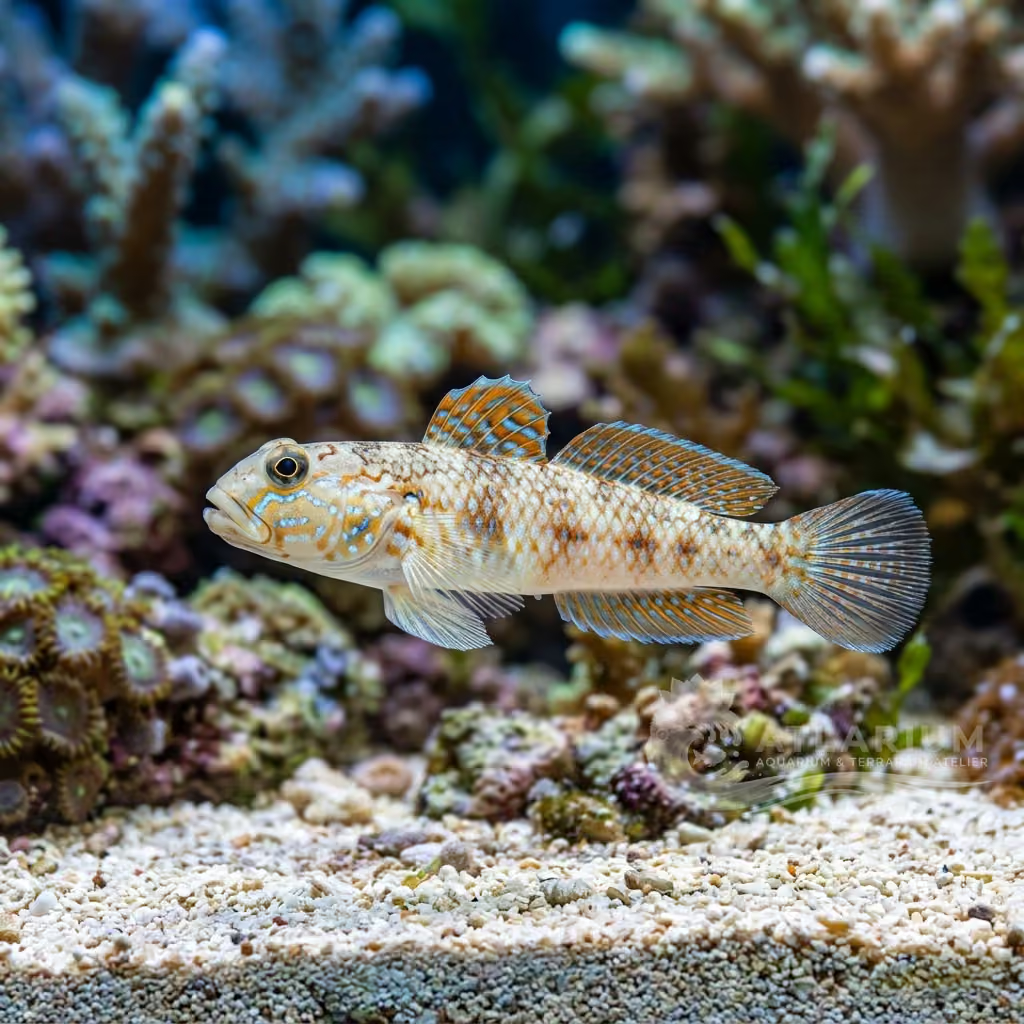
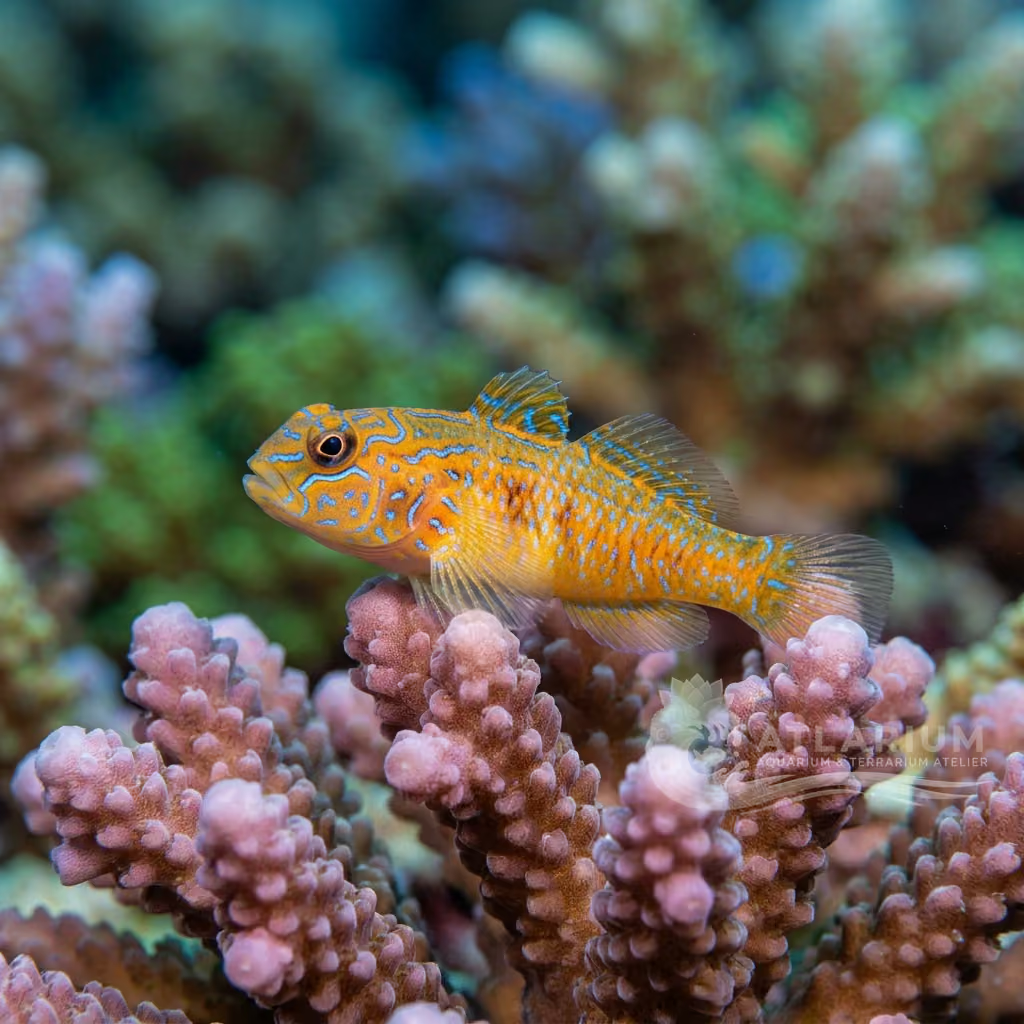
Taxonomy and Morphology: Belongs to the family Gobiidae. Reaches approximately 11 cm in length. Elongated and cylindrical body, expressive upward-facing eyes, and a broad mouth adapted for sifting sand.
Social Behavior: Peaceful and shy fish. Lives in symbiosis with pistol shrimp (primarily Alpheus randalli). The goby acts as a sentry outside the burrow, alerting the blind shrimp with rapid tail movements.
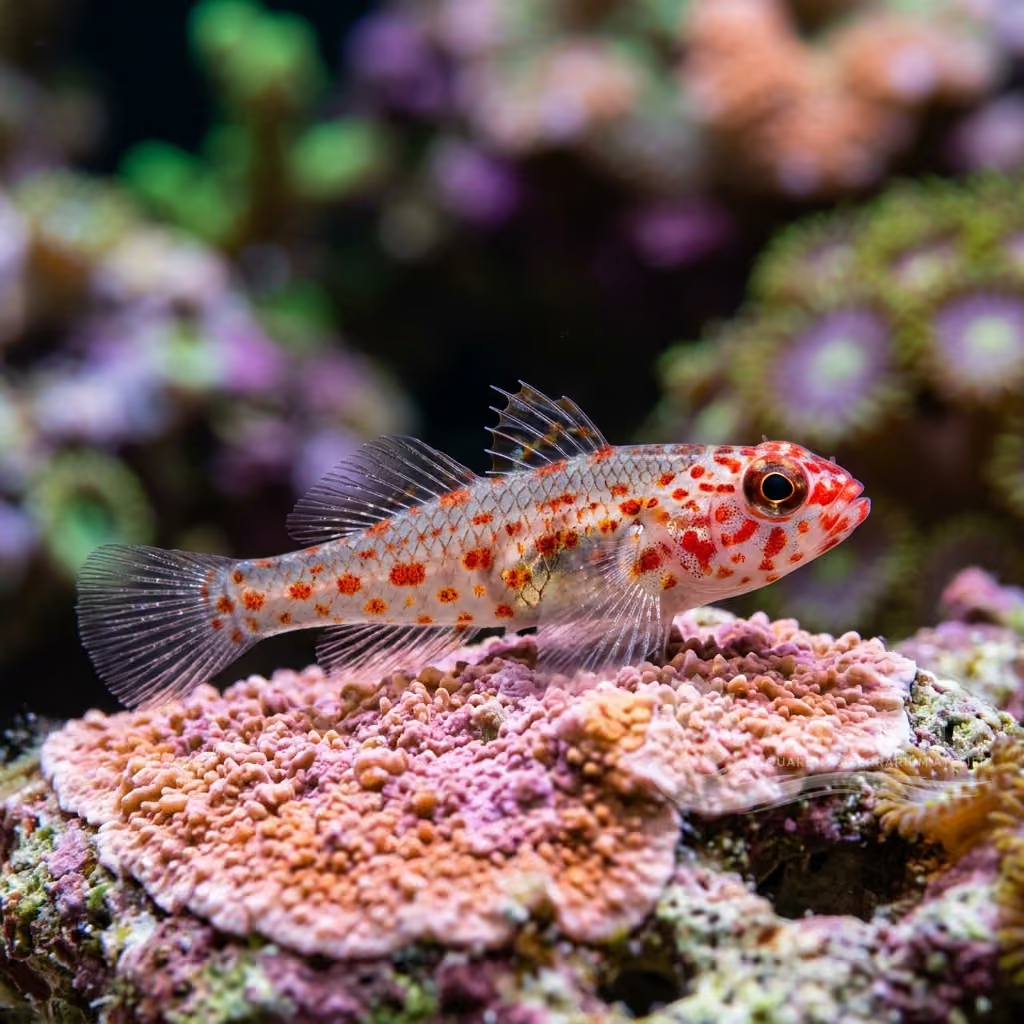
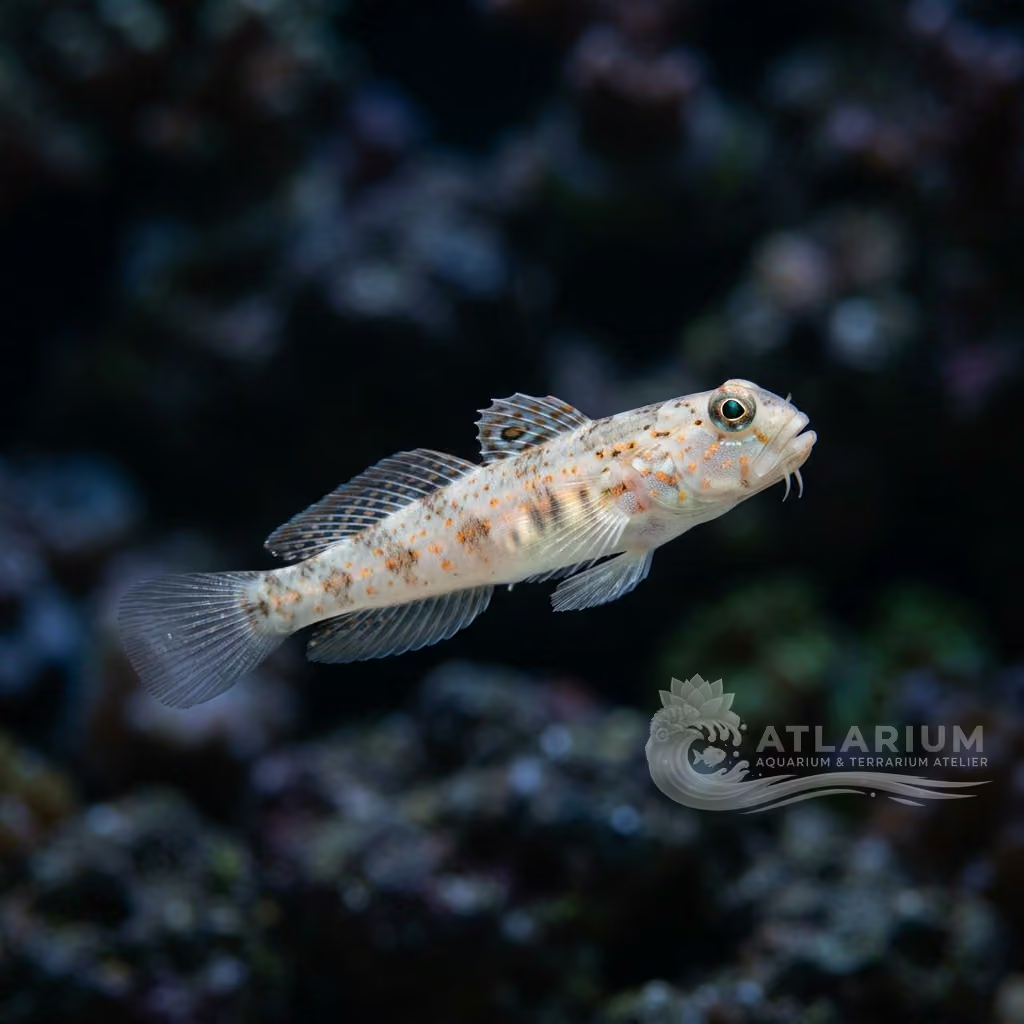
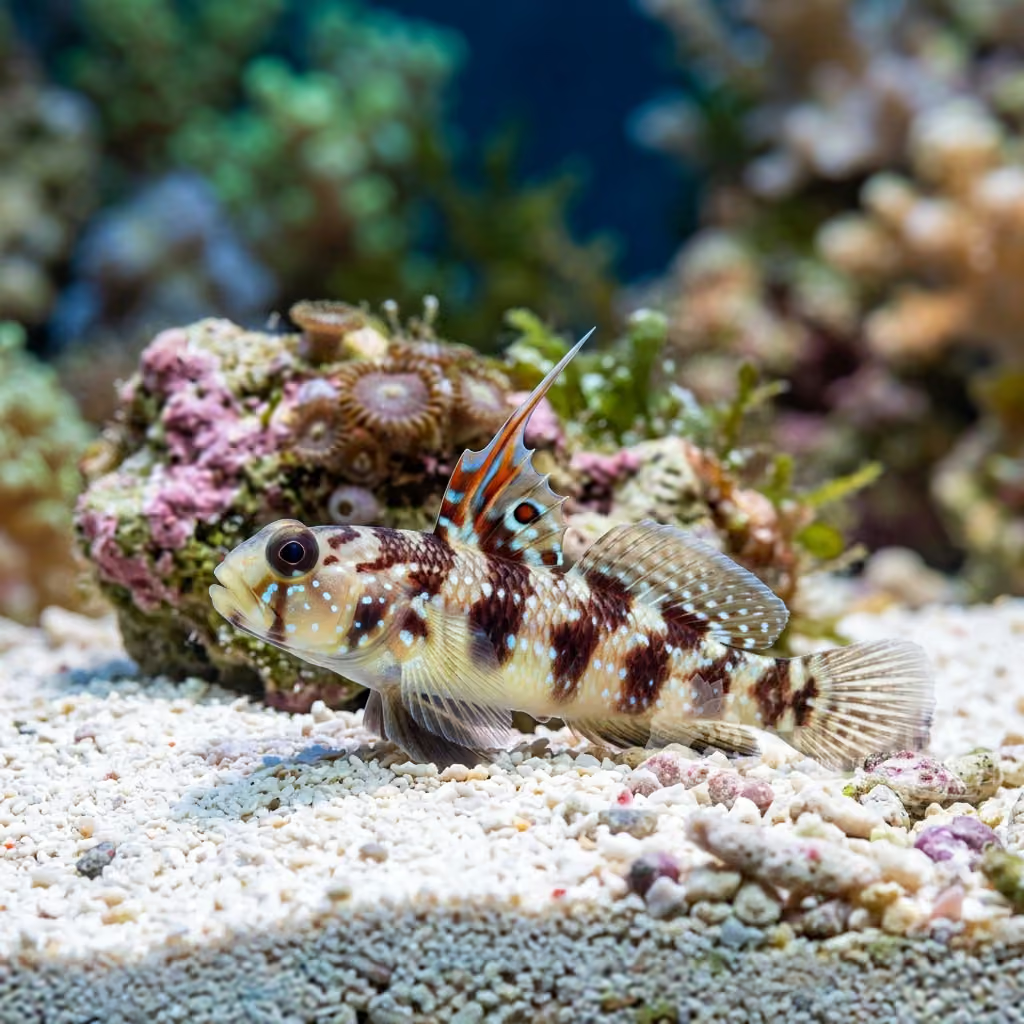
Coloration and Sexual Dimorphism: Spectacular pattern consisting of 5 vibrant pinkish-red vertical bars on a creamy-white background. The head features small red and golden spots. The caudal fin shows concentric colored rings. No sexual dimorphism.

Pflege, Zucht und Mitbewohner
Aquarium Setup: Requires a tank of at least 114 liters (30 gallons). A 5-8 cm deep bed of fine sand mixed with rubble is absolutely required to help the pistol shrimp construct stability in the tunnels.
Diet and Feeding: Carnivorous micropredator. Feed small frozen foods: mysis, brine shrimp, and chopped crustacean flesh. Target feeding with a pipette near the burrow may be needed initially.
Water Quality: Clean, stable water. pH 8.0-8.5, specific gravity 1.020-1.026, temperature 22-26°C (72-78°F). Very hardy once established in the tank.
Compatibility and Cohabitation: 100% reef-safe. Ideal companion for peaceful reef tanks. Avoid active, territorial, or large predatory tankmates that will scare it into constant hiding.
Aquarium Breeding: No successful captive breeding records. Spawning occurs in the burrow, but hatching and the pelagic larval stage are extremely difficult to manage.
Risks and Diseases: High jump risk: the tank must be strictly covered with a lid or jumping guard net. Very shy during the first few weeks.

Geografische Herkunft und Verbreitung
Indian Ocean, distributed from East Africa to the Andaman Sea, including the Maldives. Lives in sheltered sandy areas near coral reefs at depths of 10 to 35 meters.
Ursprung
Tropische Ozeane und RiffeAfrika und MadagaskarSüd- und Südostasien

Fischprofil
- Temperament
- Territorial
- Amblyeleotris aurora is a peaceful and relatively shy goby that will not bother other reef inhabitants. It is entirely non-aggressive toward unrelated species and focuses its defensive behavior solely on protecting its immediate burrow from intruders. However, it can show strong territorial behavior toward conspecifics or other similar goby species sharing the same bottom space. When paired with a symbiotic pistol shrimp, it displays a fascinating, watchful behavior, acting as the eyes for its nearly blind crustacean partner.
- Diät
- Carnivore
- This goby is a carnivore that requires a varied diet of small, meaty marine foods. In captivity, it should be offered high-quality frozen foods such as mysis shrimp, enriched brine shrimp, finely chopped krill, and other small crustaceans. Since they feed primarily on particles drifting near the bottom, target feeding with a pipette or baster near their burrow is highly recommended. Over time, they may also accept high-quality marine pellets or flake foods that sink to the substrate.
- Lebenserwartung
- 5-8 years
- Erwachsenengröße
- 11 cm
- Geschlechterverhältnis
- 1:1 ratio
- In the home aquarium, Amblyeleotris aurora is best kept singly or as a verified, naturally mated pair. Housing multiple specimens of the same sex in a small tank will lead to territorial aggression and fighting over burrowing sites. If a larger aquarium is used, multiple individuals can be kept, provided there is enough space and sand for separate territories. When pairing, introducing a male and a female simultaneously is the safest approach to establish a stable bond.
- Fütterungsfrequenz
- Twice daily
- To maintain its health and active behavior, Amblyeleotris aurora should be fed small portions two to three times a day. Because they have relatively high metabolisms and small stomachs, frequent feedings are much better than one large meal. Target feeding near their burrow entrance ensures they receive their share of food before faster, open-water swimmers can consume it. If kept with a symbiotic shrimp, they will often carry small pieces of food down into the burrow to share with their partner.
- Bioload
- Low
- Amblyeleotris aurora is a small benthic marine goby that produces a very low biological waste footprint. Because it spends most of its time resting near the entrance of its sandy burrow, it does not require heavy biological filtration. However, maintaining a clean substrate and moderate filtration is essential to prevent the buildup of detritus around its home. A well-aerated system with a standard skimmer is typically more than sufficient for managing its waste.
- Fluss
- Strong
- This species prefers a moderate water flow that mimics its natural coastal reef and sandy flat habitats. While some water movement is necessary to carry suspended food particles toward its burrow, the flow near the substrate should not be so strong that it blows away the sand or prevents the goby from swimming comfortably. A gentle to moderate current allows the goby to hover easily outside its home without expending excessive energy. Proper flow also helps keep the sandy substrate clean and oxygenated.
- Sprungrisiko
- Yes
- Like many gobies, Amblyeleotris aurora presents a high risk of jumping out of the aquarium, especially when startled or first introduced. To prevent tragic escapes, a tight-fitting lid or a fine mesh cover is absolutely mandatory. Even minor openings around filtration pipes or cables should be carefully sealed, as these fish can slip through surprisingly small gaps. Providing plenty of hiding spots and a symbiotic pistol shrimp can help reduce their stress and lower the likelihood of jumping behavior.
- Reproduktion
- Oviparous
- Amblyeleotris aurora is an oviparous species that lays its eggs inside the safety of its underground burrow. Once spawning is complete, the male takes on the role of guarding and fanning the egg mass until they hatch. Hatching typically occurs during the night, releasing tiny planktonic larvae into the water column. Unfortunately, breeding this species in captivity is extremely difficult and rarely achieved by hobbyists due to the microscopic size of the larvae and their complex feeding requirements during the planktonic phase.
- Kompatibilität & Tankkameraden
- Peaceful
- This goby is highly compatible with peaceful reef fish such as firefish, small wrasses, dartfish, and peaceful cardinalfish. It should never be housed with large, predatory, or highly aggressive tank mates like groupers, lionfish, or aggressive dottybacks that might view it as food or harass it. It has an exceptional mutualistic compatibility with pistol shrimps of the genus Alpheus, particularly Alpheus randalli, which makes for a fascinating display. Avoid keeping it with other bottom-dwelling fish that might compete aggressively for the same burrowing sites.
- Tankfüllstand
- Bottom
- This species is strictly benthic and spends its entire life on or very close to the aquarium substrate. It is almost always found at the bottom of the tank, hovering near the entrance of its burrow or retreat. While it may occasionally hover a few centimeters above the sand to catch passing food, it will quickly retreat downward at the slightest sign of danger. Consequently, the layout of the tank's lower zone, particularly the sand bed, is the most critical element of its habitat.

Wissenschaftliche Modelle & Parameter
FishBase
Zugang zu den offiziellen wissenschaftlichen Daten der Art
FishBase v25.04Daten synchronisiert am: 15.06.2026
- Trophäenniveau
- 3,3 ± 0,4 se
- Belastbarkeit
- Hoch (weniger als 15 Monate)
- Phylogenetische Einzigartigkeit (PD50)
- 0.5
- Bayessche Längen-Gewichts-Beziehung
- a = 0.00741, b = 3.09
- AnfälligkeitGeringe Anfälligkeit (10 / 100)

Verwandte Arten
Empfehlungen gruppiert nach nahen Verwandten, Auswahl von Begleitern und ähnlicher Betreuung.