Shortstripe goby
Elacatinus chancei
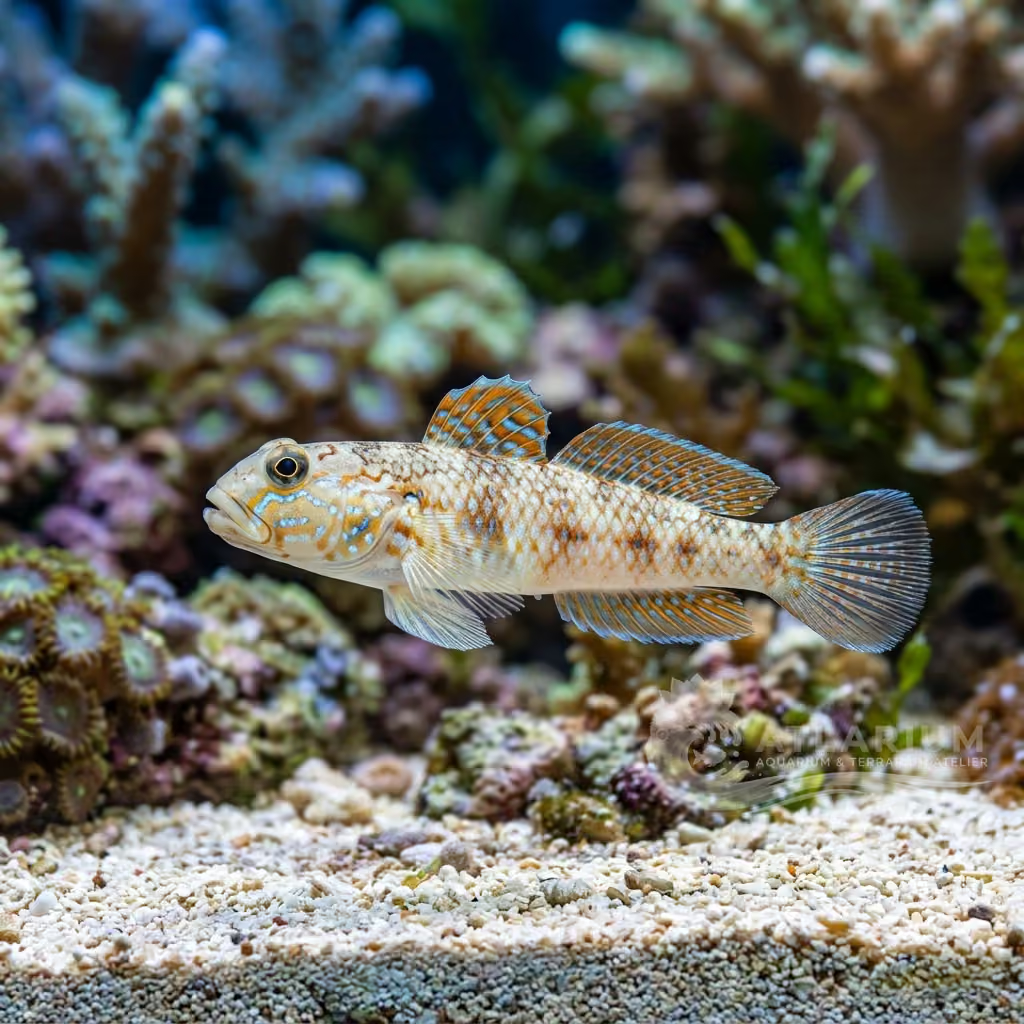
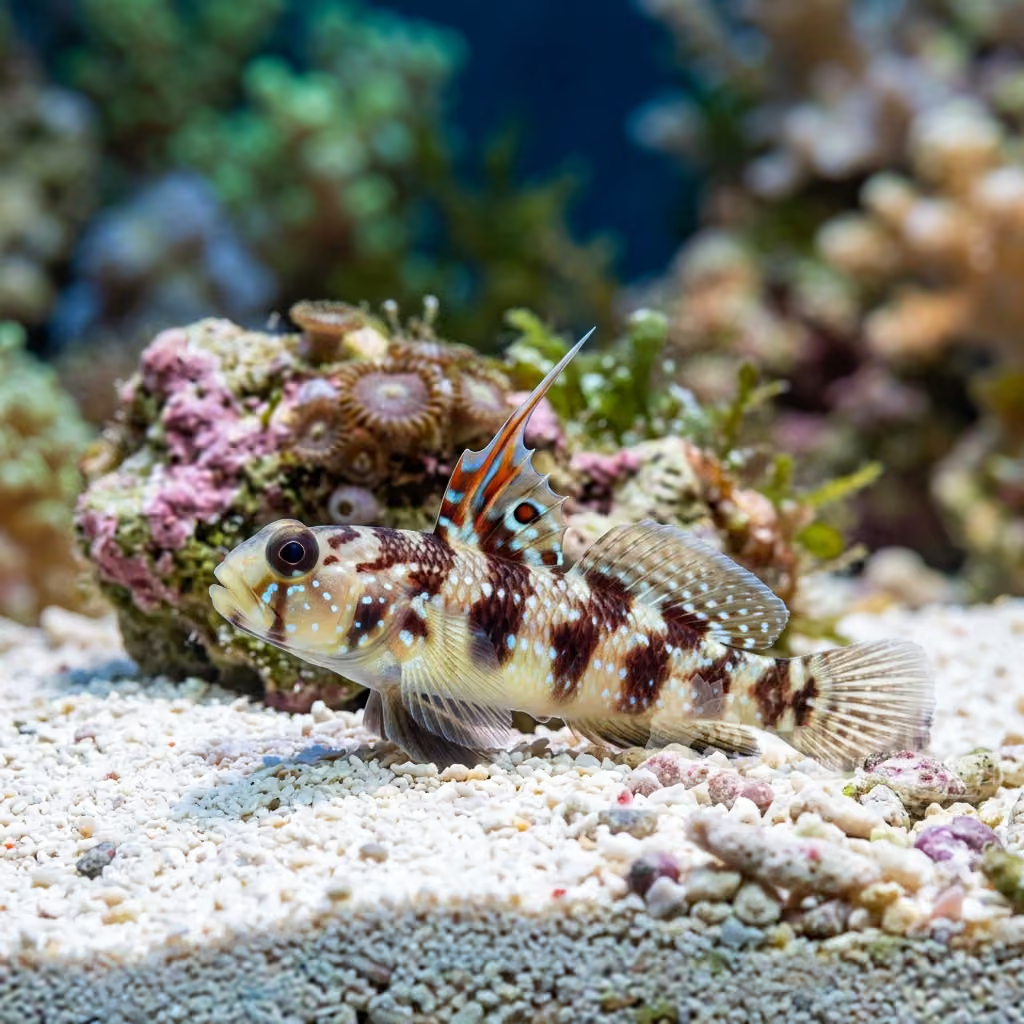
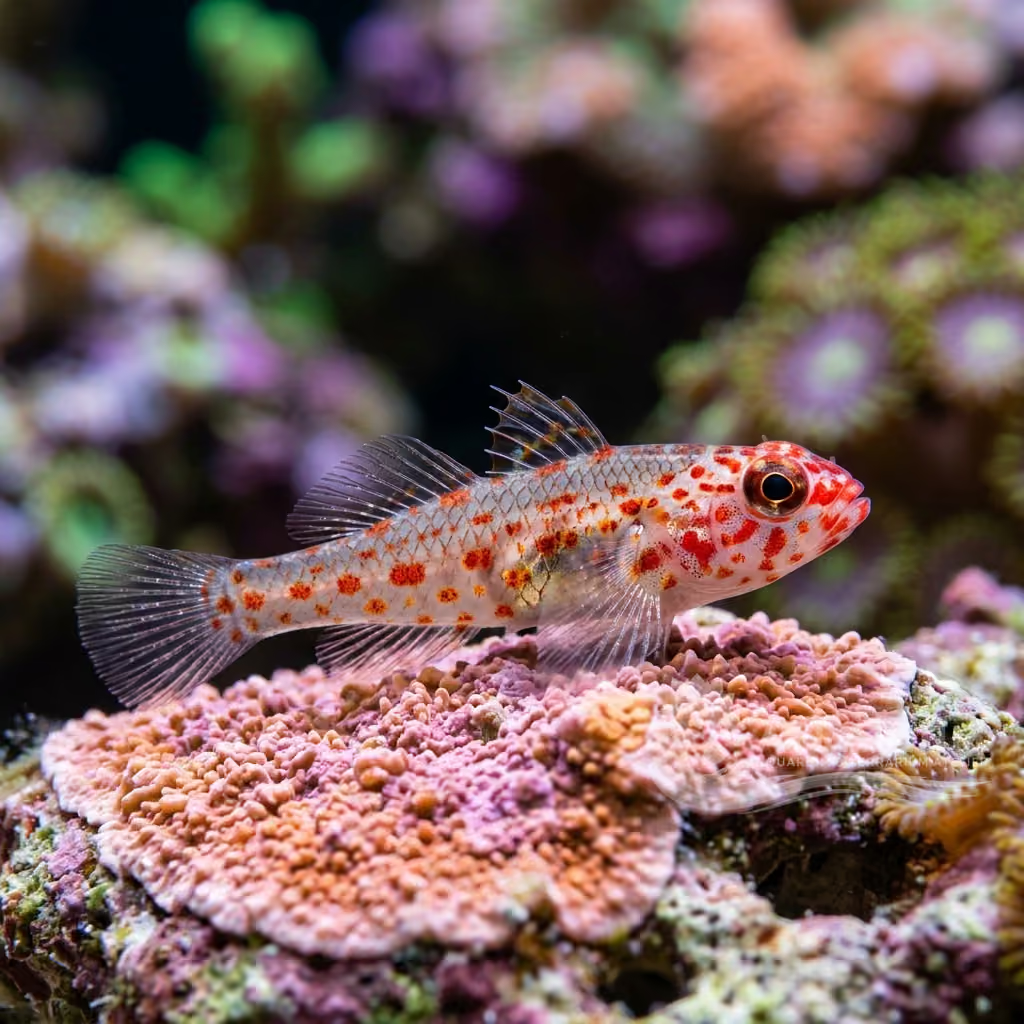
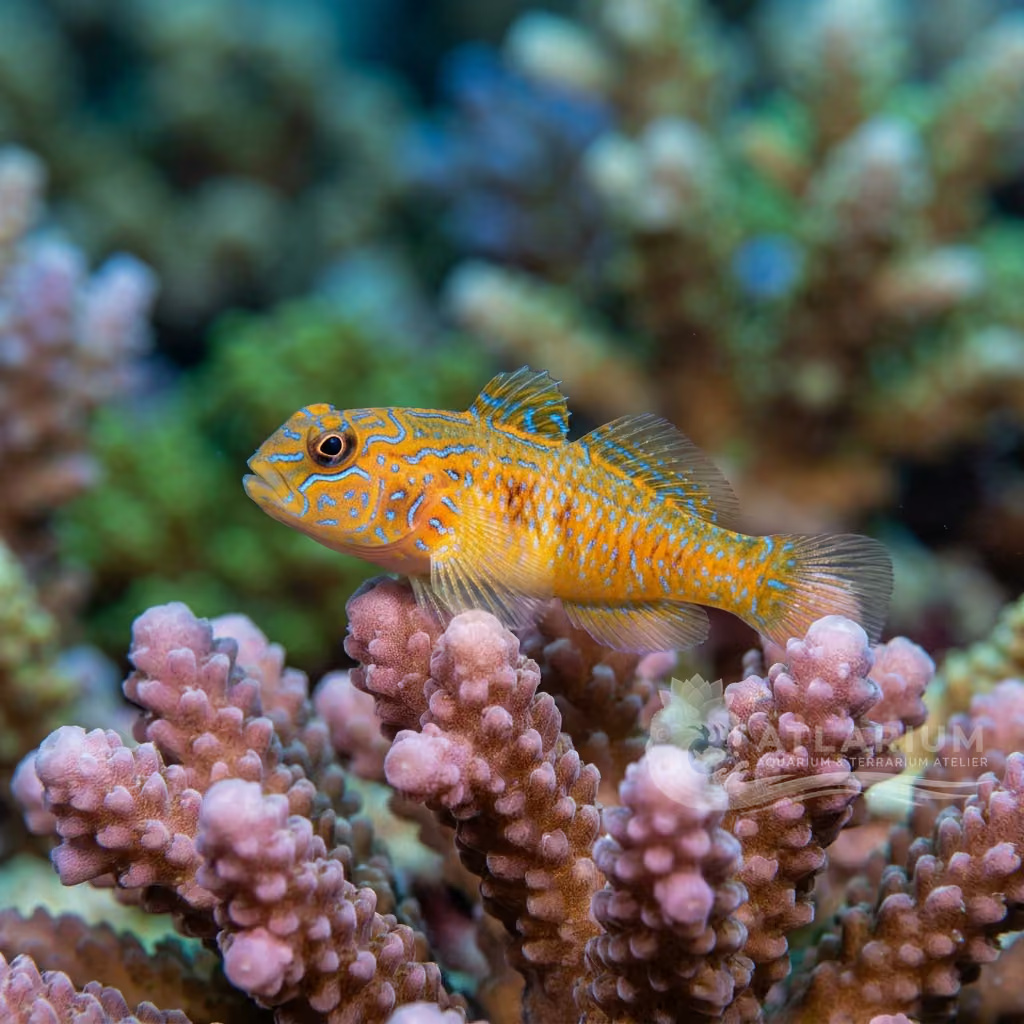
Living in obligate harmony with large tube sponges, this tiny, dark goby flashes a short golden facial stripe. It performs a vital cleaning service for client fish, thriving effortlessly in nano setups.
Wassertemperatur
22 - 27 °C
pH-Wert
8.1 - 8.4
Wassertyp
Meerwasser
Tankfüllstand
Unten
Erwachsenengröße
5 cm
Mindesttankvolumen
>= 40 L
Mindestgruppe
>= 1
KH
8 - 12 dKH

Artbeschreibung
Geographical Origin and Habitat: Elacatinus chancei is native to the tropical waters of the Western Central Atlantic Ocean, with populations concentrated primarily in the Bahamas, the Caribbean, the Virgin Islands, and the Lesser Antilles. It inhabits healthy coral reefs at depths of 5 to 25 meters, showing a strict and specific mutualistic association with large tube sponges, particularly of the genus Verongia (yellow candle sponges). It spends its life resting on the surface or inside the tubes of these hosts.
Taxonomy and Morphology: It belongs to the family Gobiidae and the genus Elacatinus (known as neon or cleaning gobies). It is a tiny fish, reaching a maximum total length of just 3.5-4 cm. It features a slender, cylindrical body with large eyes oriented slightly upward and fleshy lips adapted to pluck parasites and dead skin from the bodies of client fish. The pelvic fins are fused into a cup-shaped sucker disc that allows it to cling to the slimy surface of host sponges.
Social Behavior: This goby is peaceful, active during the day, and beneficial to the aquarium community. It lives singly or in stable pairs that establish a 'cleaning station' on or near their host sponge. They attract larger fish by performing rhythmic, undulating body movements; client fish (including large predators) approach and hover motionless, allowing the goby to inspect and clean them without harm. It shows no territorial aggression.
Coloration and Sexual Dimorphism: Its coloration is distinct and distinguishes it from other neon gobies: the body background is dark grey, brown, or blackish, marked by a bright yellow or golden line that starts at the snout, passes over the eyes, and ends abruptly just behind the head or above the pectoral fin (hence shortstripe), rather than running down the entire body length. There is no visible sexual dimorphism.

Pflege, Zucht und Mitbewohner
Aquarium Setup: Due to its tiny size, this goby is an ideal resident for nano-reef aquariums, with a minimum recommended volume of 30-40 liters. The setup should feature live rock arranged to create small crevices and, if possible, live or artificial tube sponges to simulate its natural habitat. It prefers weak to moderate water current and standard reef lighting.
Diet and Feeding: In the wild, its diet consists of ectoparasites (such as parasitic isopods and copepods) and mucus removed from client fish. In captivity, it acclimates easily to commercial foods: it readily accepts small frozen foods (such as cyclops, copepods, brine shrimp, and finely chopped mysis) and high-quality commercial dry micro-pellets or crushed flakes. Feeding once or twice daily is sufficient.
Water Quality: Requires stable and clean water parameters: temperature 23-26 °C, pH 8.1-8.4, specific gravity 1.020-1.025, and KH 8-12. Although it is a relatively hardy goby, it is sensitive to rapid changes in salinity and organic waste spikes (ammonia or nitrite). Small weekly partial water changes are recommended to maintain water stability.
Compatibility and Cohabitation: This goby is 100% reef-safe and harmless to corals, clams, and small invertebrates. It is an excellent tankmate for peaceful community fish of almost any size, including tangs, clownfish, and wrasses, which will benefit from its cleaning services. Avoid housing with large, mouth-oriented predators (like scorpionfish or large groupers) that might ignore its cleaning status and eat it.
Aquarium Breeding: Breeding in captivity is possible and has been documented. The pair deposits adhesive eggs inside a small crevice or hollow pipe, and the male fertilizes and guards the nest, fanning the eggs until they hatch (typically in 5-7 days). Rearing the pelagic larvae requires a separate setup and a constant supply of live rotifers for the first week.
Risks and Diseases: It is a hardy fish but has a relatively short lifespan in the aquarium, usually around 1-2 years. Primary risks include rapid temperature or salinity fluctuations, which can trigger parasitic infections. Ensure that the goby is actively feeding on introduced foods and not relying solely on parasites, which may be scarce in a clean aquarium.

Geografische Herkunft und Verbreitung
Elacatinus chancei is native to the tropical waters of the Western Central Atlantic Ocean, with populations concentrated primarily in the Bahamas, the Caribbean, the Virgin Islands, and the Lesser Antilles. It inhabits healthy coral reefs at depths of 5 to 25 meters, showing a strict and specific mutualistic association with large tube sponges, particularly of the genus Verongia (yellow candle sponges). It spends its life resting on the surface or inside the tubes of these hosts.
Ursprung
Tropische Ozeane und RiffeExtra-Amazonas-SüdamerikaMittelamerika und Karibik

Fischprofil
- Temperament
- Territorial
- The {sp} is famous for its bold, industrious, and completely peaceful temperament. Despite its tiny size, it shows no fear of massive fish, eagerly swimming up to clean their gills and scales. It is fascinating to watch it interact with tank mates, setting up cleaning stations and performing its natural duties. It is a highly beneficial and entertaining addition to any marine setup.
- Diät
- Carnivore
- While it performs a cleaning function by picking parasites and dead skin off larger fish, this alone cannot sustain it in captivity. Its diet must be heavily supplemented with small, meaty foods like frozen cyclops, baby brine shrimp, and finely chopped mysis. They will also readily accept high-quality micro-pellets and crushed flakes. Ensuring they receive enough food directly is crucial, as they can be outcompeted by faster swimmers.
- Lebenserwartung
- 1-2 years
- Erwachsenengröße
- 5 cm
- Geschlechterverhältnis
- Flexible
- There are no significant visual differences between the sexes, making them difficult to pair based on appearance alone. They can be kept singly or in pairs, though buying an established mated pair is the easiest way to ensure harmony. Two males may fight in smaller tanks, so caution is advised if keeping multiple individuals in a confined space. In large tanks, a small group may establish a peaceful hierarchy.
- Fütterungsfrequenz
- Twice daily
- Because of their small stomachs and high metabolism, they should be fed multiple small meals a day. Two to three targeted feedings are ideal to keep them healthy and active. If kept in a tank with larger fish that they actively clean, they may supplement their own diet, but direct feeding is still necessary. Turning off the flow briefly during feeding helps them catch the food.
- Bioload
- Low
- The Elacatinus chancei adds an extremely minimal bioload to the marine aquarium due to its tiny size. It produces almost imperceptible amounts of waste, making it perfect for nano reefs or heavily stocked larger tanks. Regular, standard filtration systems will handle its biological impact without any issues. It is one of the most environmentally friendly fish to keep in terms of water quality management.
- Fluss
- Moderate
- They prefer moderate water flow that allows them to swim easily between their perching spots. Too strong a current can blow them around, making it difficult for them to establish a cleaning station or catch food. They often sit on prominent rocks or coral heads in areas of gentle flow to advertise their cleaning services. Ensure there are low-flow crevices for them to sleep in at night.
- Sprungrisiko
- Yes
- Like most gobies, the {sp} is a known jumper, especially when startled by a sudden movement or aggressive tank mate. Because of their tiny, slender bodies, they can find their way through remarkably small gaps in an aquarium canopy. A perfectly fitted mesh screen lid is an absolute requirement to keep them safe. Uncovered tanks will almost inevitably result in the fish jumping out over time.
- Reproduktion
- Oviparous
- This species can be bred in the home aquarium with dedicated effort and proper conditioning. The female lays a clutch of adhesive eggs in a small cave or crevice, which the male then aggressively guards until they hatch. The primary challenge lies in rearing the extremely tiny fry, which require microscopic live foods like rotifers immediately after hatching. Successful breeding often requires a dedicated rearing tank.
- Kompatibilität & Tankkameraden
- Community
- This goby is exceptionally peaceful and completely reef-safe, making it a stellar community fish. In the wild, it operates as a cleaner fish, and larger predatory fish in the aquarium will often recognize this and allow it to clean them. It gets along with almost all peaceful and even moderately aggressive fish that respect its cleaner status. It will not bother corals, clams, or small ornamental shrimp.
- Tankfüllstand
- Bottom
- This goby is a benthic species that spends most of its time perched on live rock, corals, or the glass. It establishes a specific territory, often a prominent 'cleaning station', where it waits for other fish to approach. It rarely swims in the open water column unless darting out to grab a piece of food. You will often see it clinging vertically to the aquarium glass or tank decor.

Wissenschaftliche Modelle & Parameter
FishBase
Zugang zu den offiziellen wissenschaftlichen Daten der Art
FishBase v25.04Daten synchronisiert am: 15.06.2026
- Trophäenniveau
- 3,5 ± 0,4 se
- Belastbarkeit
- Hoch (weniger als 15 Monate)
- Phylogenetische Einzigartigkeit (PD50)
- 0.5
- Bayessche Längen-Gewichts-Beziehung
- a = 0.01023, b = 3.01
- AnfälligkeitGeringe Anfälligkeit (10 / 100)

Verwandte Arten
Empfehlungen gruppiert nach nahen Verwandten, Auswahl von Begleitern und ähnlicher Betreuung.