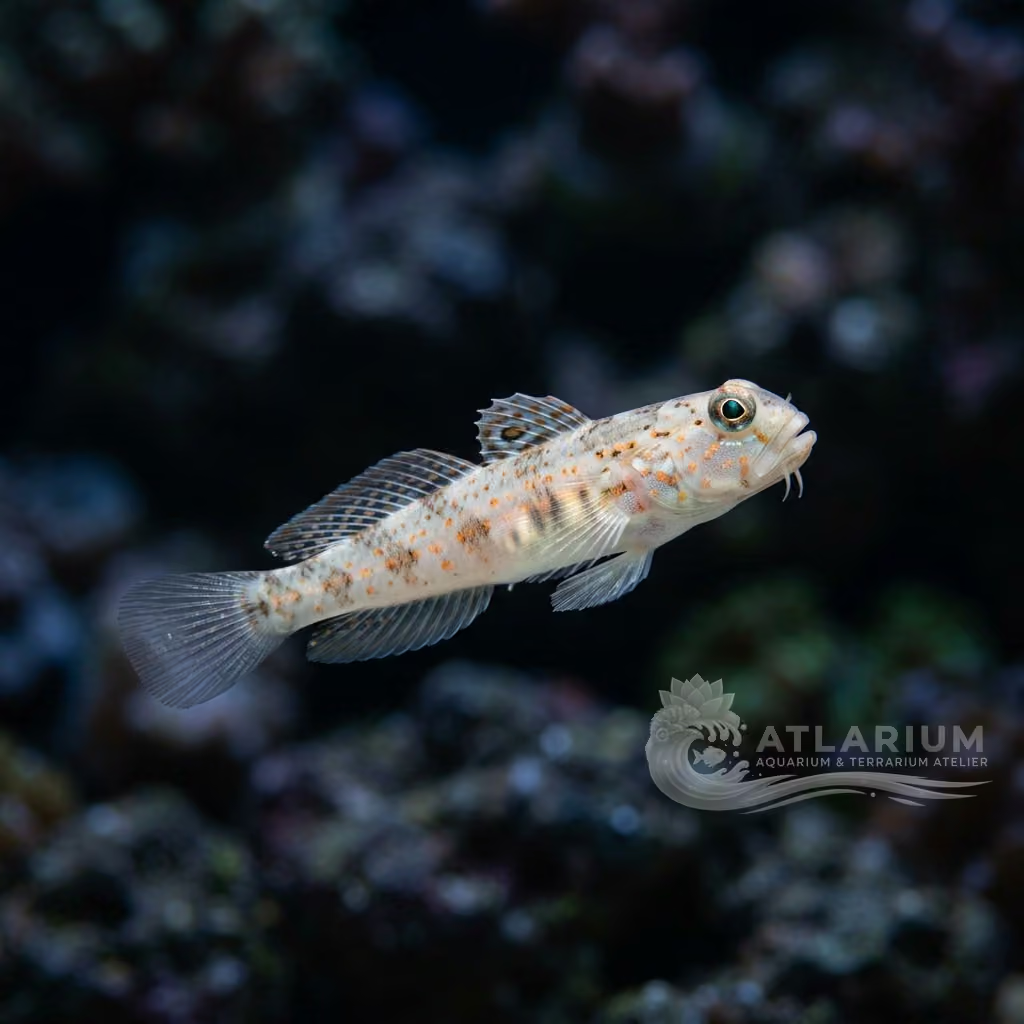
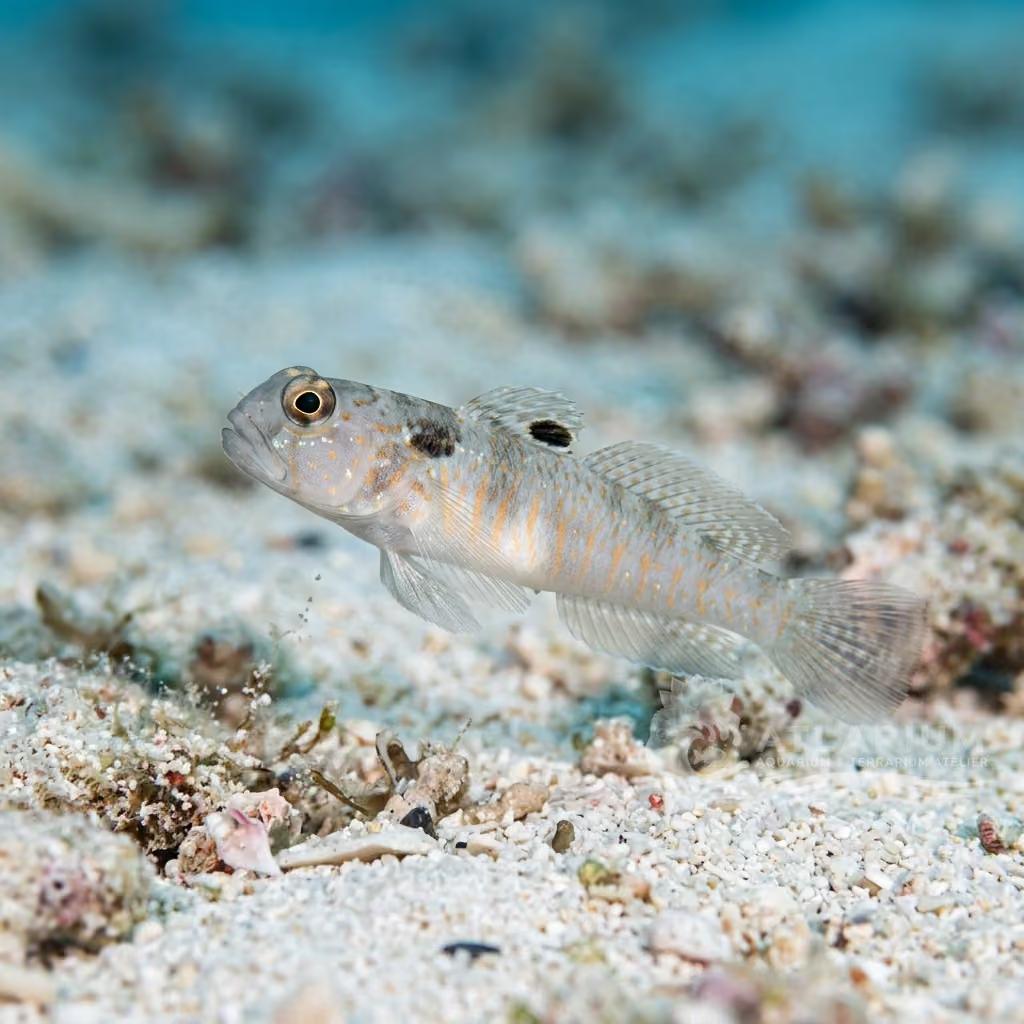
Brown Clown Goby
Gobiodon fulvus
Found in wave-swept lagoons, this micro-carnivore relies entirely on live branching corals for survival. It needs frequent tiny feedings in mature nano reefs.
Wassertemperatur
24 - 28 °C
pH-Wert
8.1 - 8.4
Wassertyp
Meerwasser
Tankfüllstand
Unten
Erwachsenengröße
4,5 cm
Mindesttankvolumen
>= 40 L
Mindestgruppe
>= 1
KH
8 - 12 dKH

Artbeschreibung
Geographical Origin and Habitat: Gobiodon fulvus is distributed across the tropical Western Pacific, from the Ryukyu Islands of Japan to Micronesia, Palau, and Samoa. It inhabits wave-swept outer reefs and clear coral lagoons, living in obligate symbiosis within Acropora coral colonies at depths ranging from 2 to 12 meters.
Taxonomy and Morphology: Belongs to the family Gobiidae, under the genus Gobiodon. Commonly known as the brown or fulvous clown goby, it features a laterally compressed, scaleless body covered in a thick, bitter mucus containing skin toxins that deter predators. It possesses fused pelvic fins forming a suction cup to grip coral branches.
Social Behavior: It is a stationary and territorial fish. It actively defends its host coral colony from intruders, particularly other members of its own species. It displays a peaceful and harmless behavior toward other aquarium fish, remaining perched among the branches of its host coral throughout the day.
Coloration and Sexual Dimorphism: Displays a uniform golden-brown, fulvous, or ochre body color, sometimes with slight pinkish or orange hues on the head. There is no visible external sexual dimorphism; it is a bidirectional hermaphrodite, allowing any two individuals to form a stable breeding pair.

Pflege, Zucht und Mitbewohner
Aquarium Setup: Requires a mature reef aquarium of at least 40-50 liters (approx. 10-12 gallons). The presence of at least one live, healthy colony of branching Acropora coral is strictly necessary for its survival; without live corals, the fish will suffer severe stress and refuse to feed.
Diet and Feeding: A micro-carnivore. It must be fed two to three times daily with tiny frozen foods such as cyclops, lobster eggs, baby brine shrimp, copepods, and finely minced mysis. It may occasionally feed on the polyps or mucus of the host coral, which does not harm a healthy colony.
Water Quality: Because it shares its environment with sensitive stony corals, chemical parameters must be stable and pristine: specific gravity 1.023 - 1.025, pH 8.1 - 8.4, temperature 24 - 26 °C (75-79 °F), and nitrates/phosphates near zero. High-quality filtration and regular water changes are essential.
Compatibility and Cohabitation: Suitable only for small tanks with quiet, peaceful species (dartfish, pipefish, small blennies). Do not house with large, active, or aggressive fish that could intimidate it. It is recommended to keep only one specimen per coral colony, or a single mated pair.
Aquarium Breeding: Breeding can occur in captivity. The pair deposits adhesive eggs on the base of the Acropora branches, clearing a small patch of live tissue beforehand. Both parents guard and fan the eggs until they hatch. Rearing the larvae is highly complex due to the requirement for microscopic live foods.
Risks and Diseases: The greatest risk is the death of the host coral; if the Acropora bleaches or dies, the goby's health declines rapidly. It is sensitive to copper-based medications and sudden salinity swings. Marine ich (Cryptocaryon) can affect it under prolonged stress conditions.

Geografische Herkunft und Verbreitung
Gobiodon fulvus is distributed across the tropical Western Pacific, from the Ryukyu Islands of Japan to Micronesia, Palau, and Samoa. It inhabits wave-swept outer reefs and clear coral lagoons, living in obligate symbiosis within Acropora coral colonies at depths ranging from 2 to 12 meters.
Ursprung
Tropische Ozeane und RiffeOstasien

Fischprofil
- Temperament
- Territorial
- They are exceedingly peaceful and prefer a highly sedentary, observant lifestyle. They spend endless hours sitting perfectly still, simply watching the aquarium environment. They add a fascinating, subtle charm to mature reef setups without causing any trouble.
- Diät
- Carnivore
- They are micro-predators that require a carnivorous diet of tiny particle foods. Feed them a rich variety of cyclops, rotifers, and very finely chopped mysis shrimp. They naturally pick at tiny crustaceans living directly on the coral branches.
- Lebenserwartung
- 2-5 years
- Erwachsenengröße
- 4.5 cm
- Geschlechterverhältnis
- Pair
- They possess the ability to change sex, making pairing very straightforward. Keep them singly or as a bonded pair in a typical nano aquarium. Multiple pairs will fiercely defend their own distinct coral colonies from each other.
- Fütterungsfrequenz
- Twice daily
- Provide them with very small meals one to two times each day. Spot feeding is often essential because they will not actively compete for food in the water column. Ensure the food gently drifts right past their preferred resting spot.
- Bioload
- Low
- The bioload of the Brown coral goby is virtually undetectable in most systems. It is an excellent, low-impact choice for extremely small nano reef setups. Basic filtration and routine water changes are more than adequate.
- Fluss
- Strong
- Gentle to moderate water flow is highly preferred for their comfort and health. High velocity water will constantly blast them off their designated perching spots. A steady, calm current allows them to efficiently capture passing microscopic food.
- Sprungrisiko
- No
- Reproduktion
- Oviparous
- Captive reproduction is occasionally observed in very stable, established reef aquariums. Pairs will clean a tiny spot on a coral to lay a small clutch of eggs. Raising the microscopic fry is exceptionally difficult and rarely achieved by hobbyists.
- Kompatibilität & Tankkameraden
- Peaceful
- It is completely peaceful and ignores other species sharing the aquarium. It should never be housed with large, aggressive predators that might eat it. It is entirely reef safe and will not bother any ornamental invertebrates.
- Tankfüllstand
- Bottom
- They are obligate coral dwellers, heavily favoring the mid to upper tank levels. They specifically require branching stony corals like Acropora to feel comfortable and safe. They will stubbornly refuse to utilize the lower sand bed areas.

Wissenschaftliche Modelle & Parameter
FishBase
Zugang zu den offiziellen wissenschaftlichen Daten der Art
Daten synchronisiert am: 15.06.2026
- Trophäenniveau
- 2,9 ± 0,4 se
- Belastbarkeit
- Hoch (weniger als 15 Monate)
- Phylogenetische Einzigartigkeit (PD50)
- 0.5
- Bayessche Längen-Gewichts-Beziehung
- a = 0.00741, b = 3.09
- AnfälligkeitGeringe Anfälligkeit (10 / 100)

Verwandte Arten
Empfehlungen gruppiert nach nahen Verwandten, Auswahl von Begleitern und ähnlicher Betreuung.