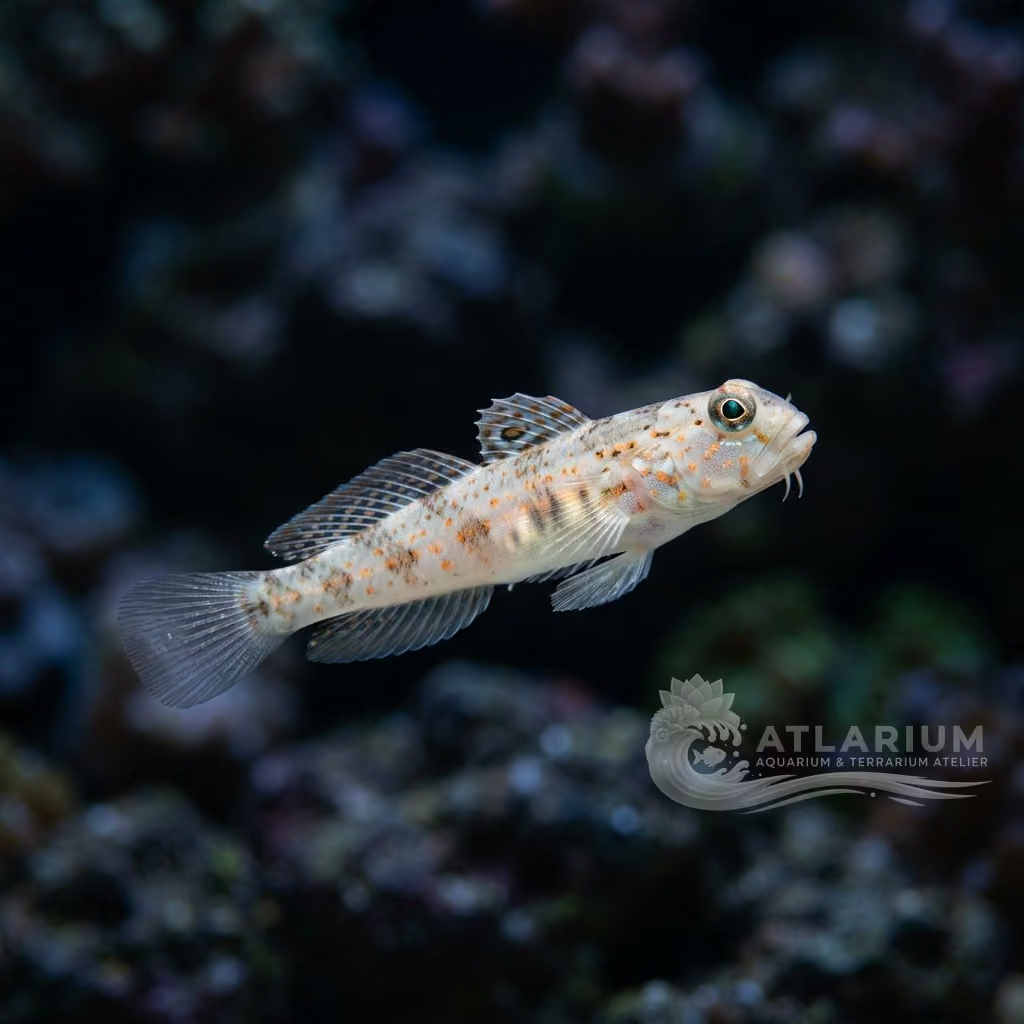
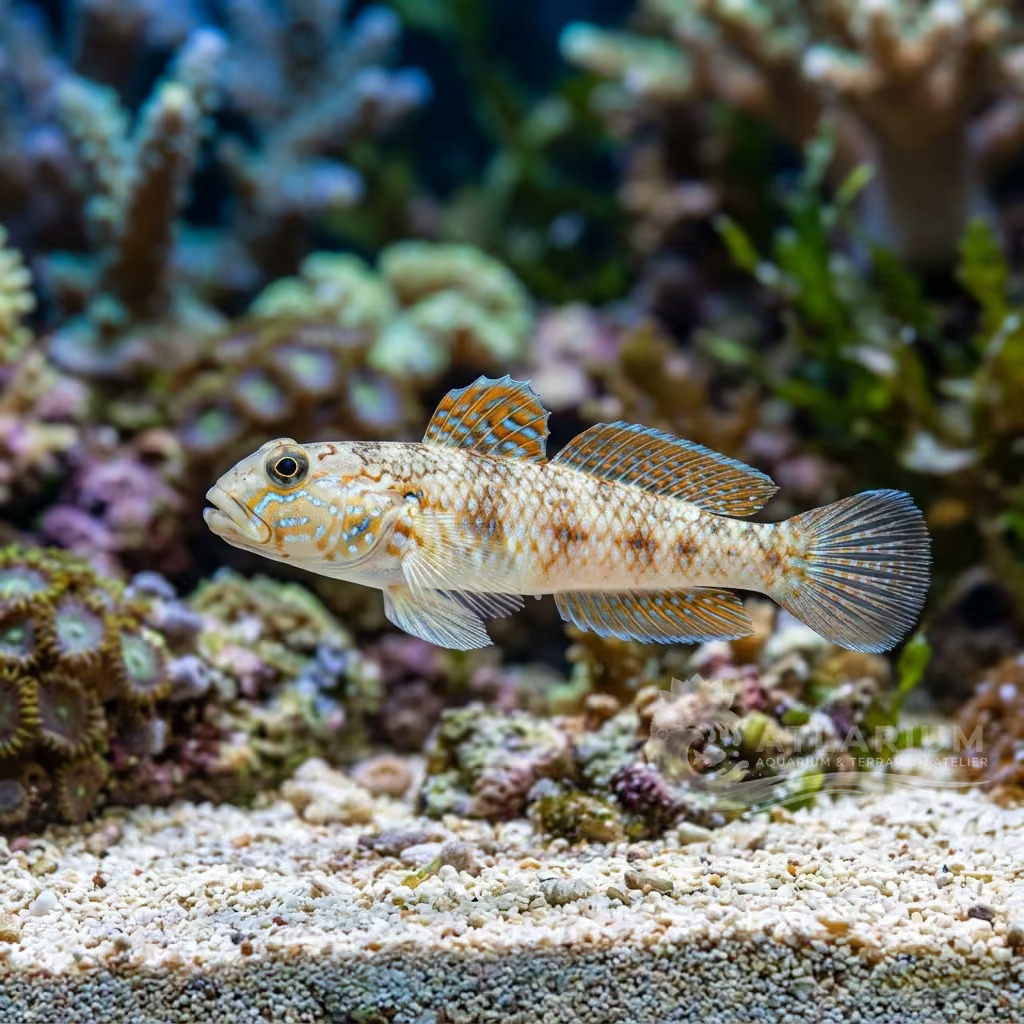
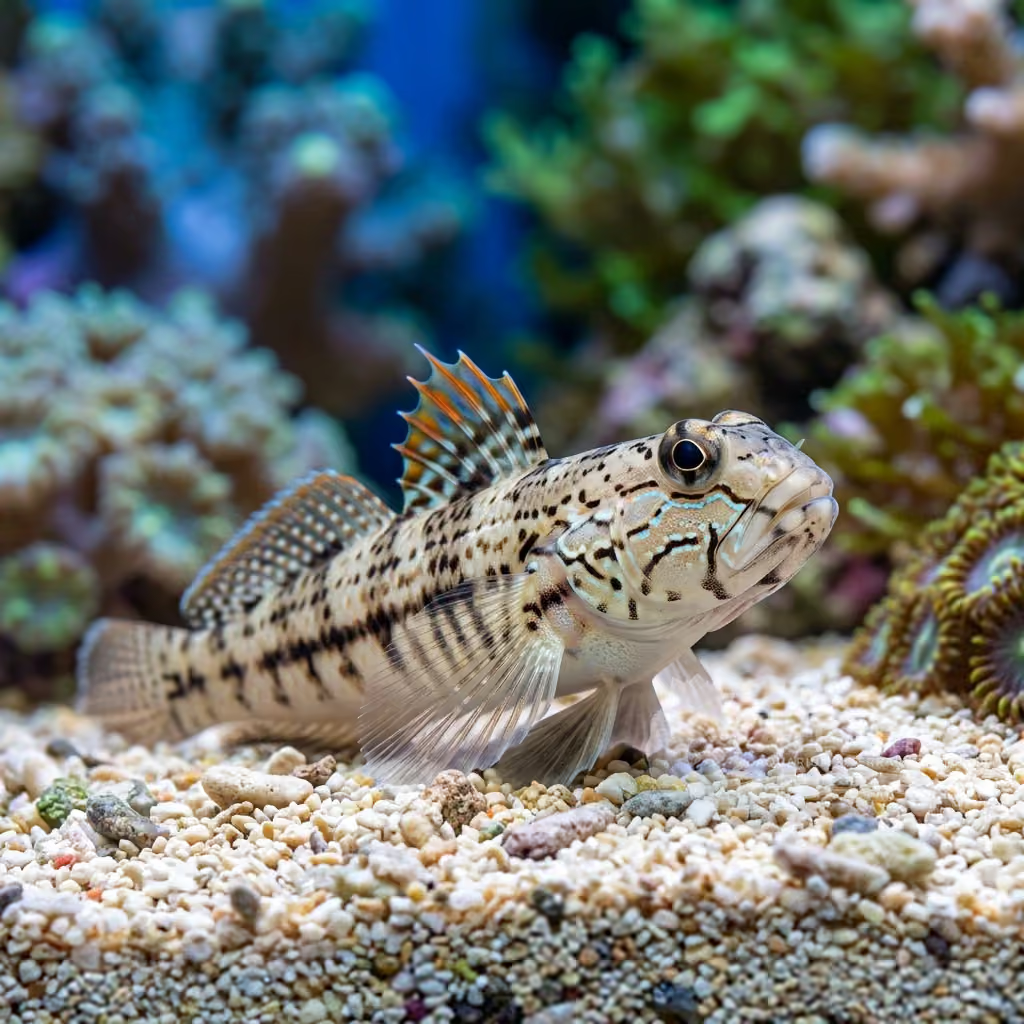
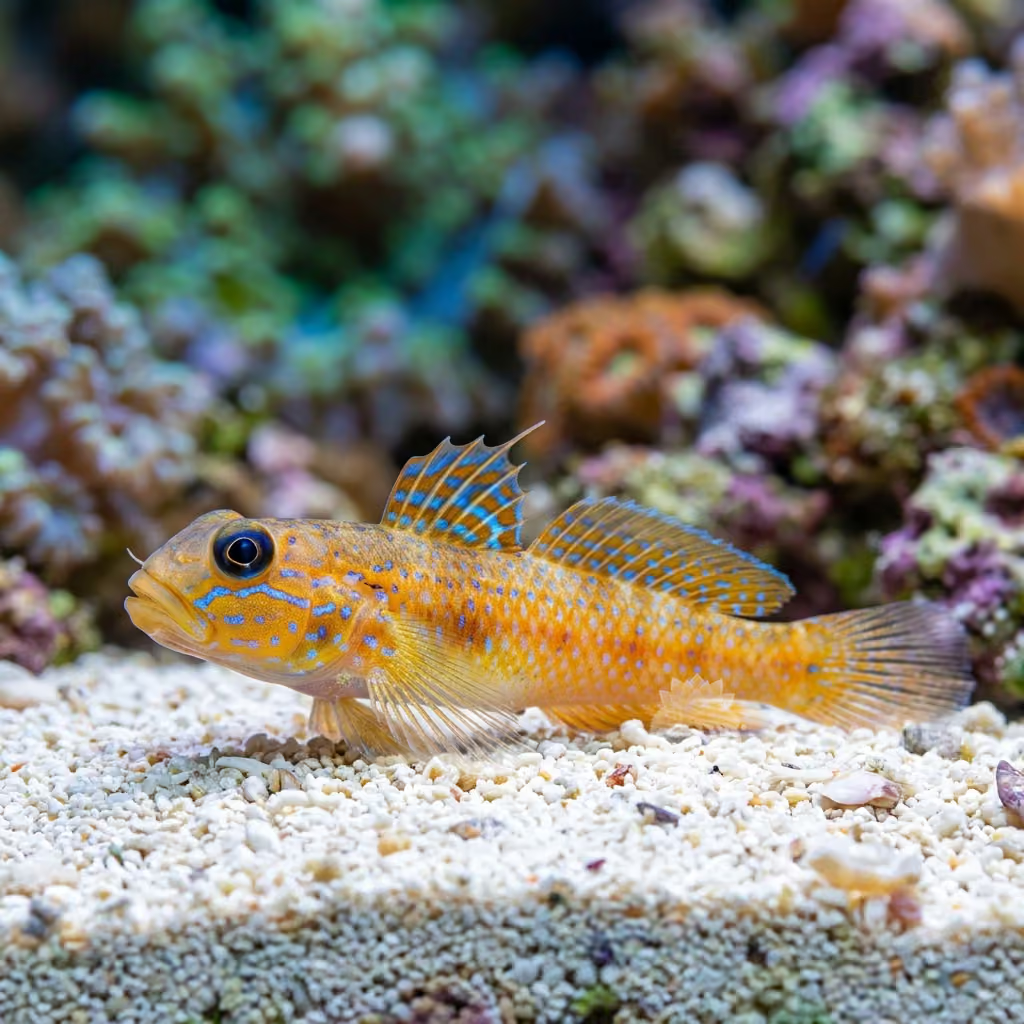
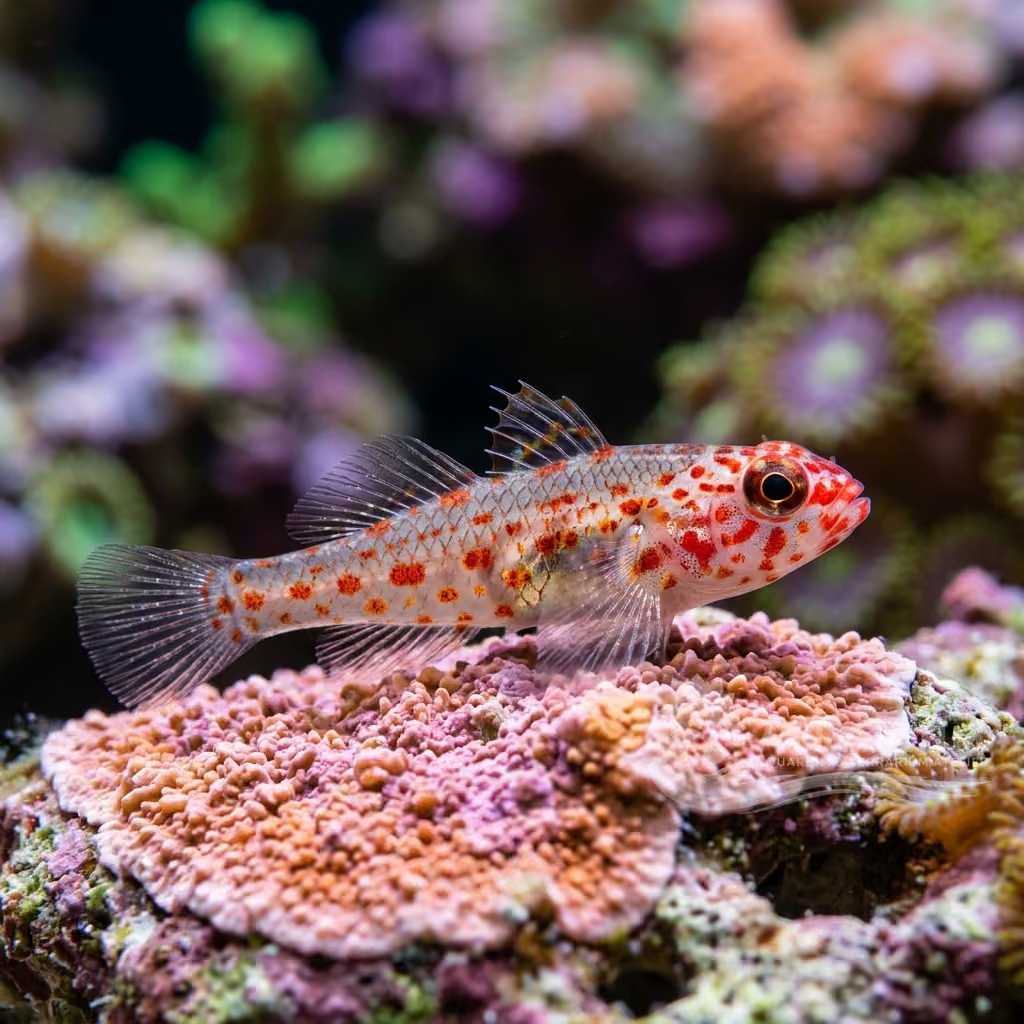
Banded Prawn Goby
Cryptocentrus fasciatus
A popular marine goby famous for its symbiotic relationship with Alpheus snapping shrimp. It inhabits sandy reef zones, requiring deep shell-mixed substrates to construct sturdy burrows.
Wassertemperatur
22 - 28 °C
pH-Wert
8.1 - 8.4
Wassertyp
Meerwasser
Tankfüllstand
Unten
Erwachsenengröße
14 cm
Mindesttankvolumen
>= 150 L
Mindestgruppe
>= 1
KH
8 - 12 dKH

Artbeschreibung
Geographical Origin and Habitat: This goby is native to the western Indo-Pacific, ranging from the Red Sea and East Africa to the Great Barrier Reef, and north to Japan. It inhabits sandy and rubble bottoms of coastal reefs, outer slopes, and sheltered lagoons at depths of 1 to 20 meters.
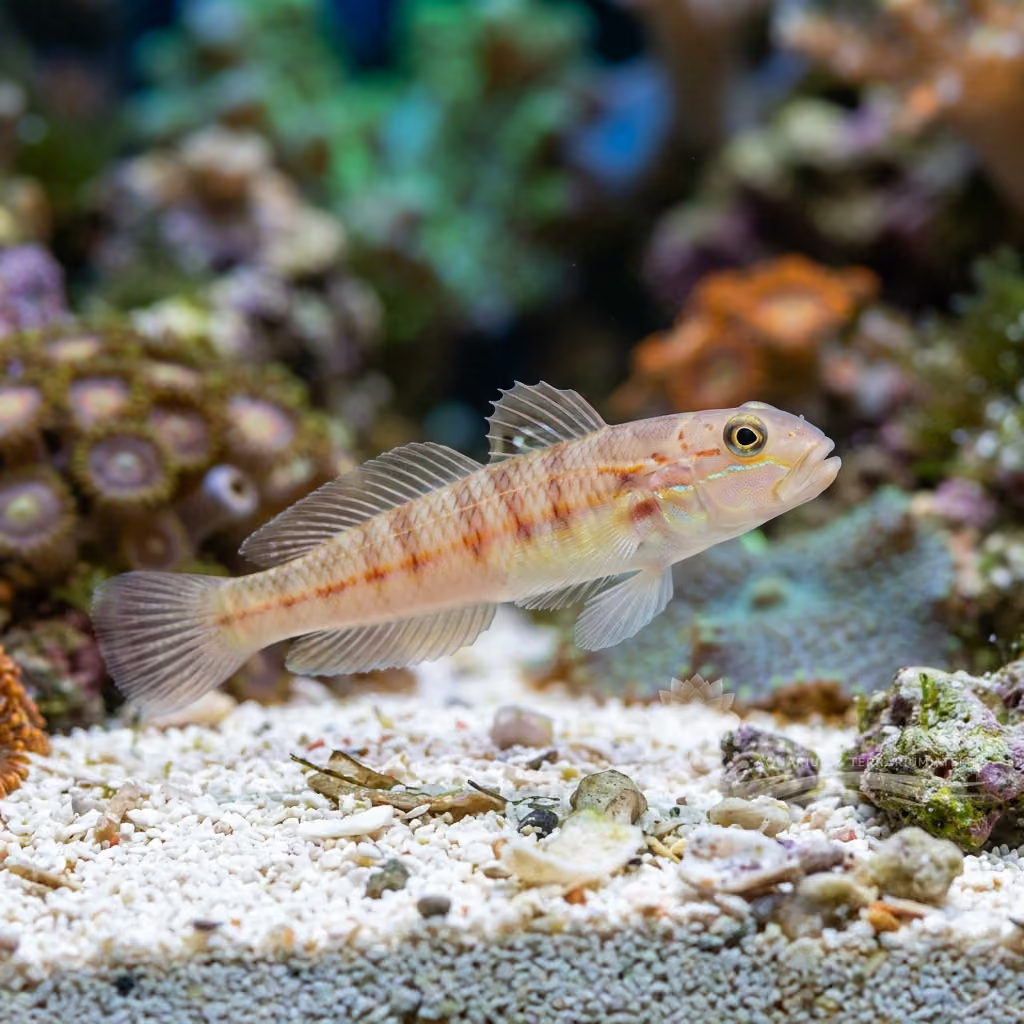
Taxonomy and Morphology: Belongs to the class Actinopterygii, order Perciformes, family Gobiidae, and genus Cryptocentrus. It has an elongated, cylindrical body typical of bottom dwellers. The head is large with high-set, bulbous eyes and a wide mouth with fleshy lips.
Social Behavior: A peaceful bottom dweller that forms a mutualistic symbiotic relationship with snapping shrimps (Alpheus spp.). The shrimp digs and maintains a shared sandy burrow, while the goby acts as a sentry, guarding the entrance and warning the nearly blind shrimp of danger.
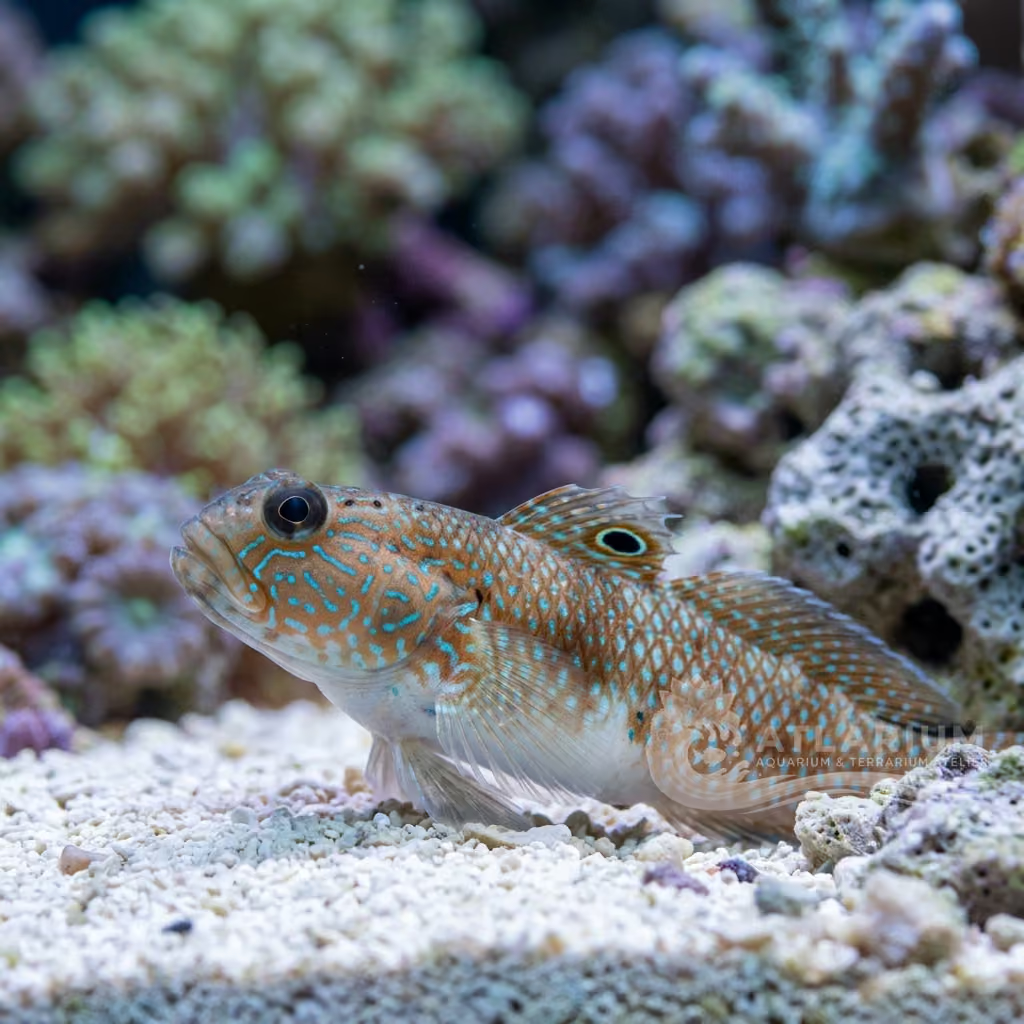
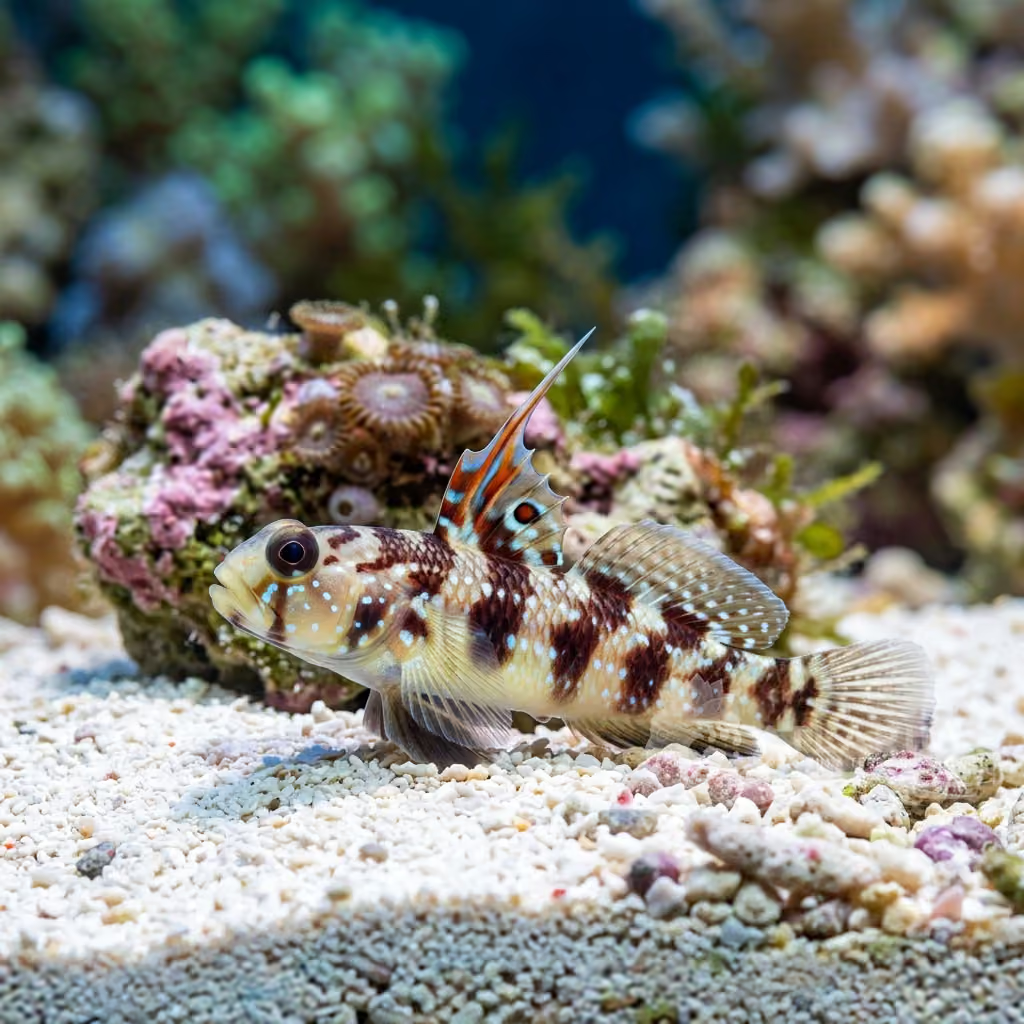
Coloration and Sexual Dimorphism: The body coloration is yellowish-tan or light brown, marked by four or five prominent dark brown, Y-shaped vertical bands. Bright neon blue spots cover the cheeks, gills, and fins. Males are slightly larger and brighter than females, but dimorphism is subtle.

Pflege, Zucht und Mitbewohner
Aquarium Setup: An aquarium of at least 80-100 liters (20-25 gallons) is required. A deep sand bed (5-8 cm) mixed with shell debris or coral gravel is essential to allow burrowing. Place live rocks firmly on the tank bottom glass to prevent collapse during excavation.
Diet and Feeding: Carnivorous. In the aquarium, it should be fed a variety of meaty frozen foods such as mysis shrimp, brine shrimp, chopped krill, and table shrimp. It will also readily accept sinking marine pellets and granulate foods that reach the bottom.
Water Quality: Requires stable marine parameters: water temperature 24°C-27°C (75°F-81°F), pH 8.1-8.4, and specific gravity 1.020-1.025. Maintain clean water with regular water changes and efficient filtration, keeping ammonia and nitrite at zero.
Compatibility and Cohabitation: 100% reef-safe and compatible with peaceful community fish. Keeping it with a symbiotic pistol shrimp (e.g., Alpheus bellulus) is highly recommended. Do not house with aggressive bottom dwellers or same-sex conspecifics in small tanks.
Aquarium Breeding: Breeding in captivity is difficult and rarely achieved. They are demersal spawners; the pair lays and fertilizes eggs deep inside their sandy burrow, where they guard them. The hatched larvae are planktonic and require specialized rotifer feeding.
Risks and Diseases: Susceptible to typical marine fish diseases like white spot (Ictio). A primary risk for this species is jumping out of the tank when startled; therefore, a tight-fitting lid or mesh cover is absolutely necessary to prevent loss.

Geografische Herkunft und Verbreitung
This goby is native to the western Indo-Pacific, ranging from the Red Sea and East Africa to the Great Barrier Reef, and north to Japan. It inhabits sandy and rubble bottoms of coastal reefs, outer slopes, and sheltered lagoons at depths of 1 to 20 meters.
Ursprung
Tropische Ozeane und RiffeAfrika und MadagaskarOstasienAustralien, Neuguinea und Ozeanien

Fischprofil
- Temperament
- Peaceful
- They are peaceful, cautious, and highly entertaining to watch. They spend most of their day sitting near their burrow, observing the tank for food or danger. They are not aggressive to other fish species, reserving their territoriality solely for other similar gobies. Their fascinating behavior and peaceful demeanor make them a favorite among reef hobbyists.
- Diät
- Carnivore
- Primarily carnivorous, their natural diet consists of small crustaceans and zooplankton found near the substrate. In the home aquarium, they should be fed a varied diet of meaty frozen items such as mysis shrimp, brine shrimp, and chopped krill. They will also adapt to eating high-quality sinking marine carnivore pellets. Maintaining a varied diet ensures strong immune health and vibrant coloration.
- Lebenserwartung
- 5-7 years
- Erwachsenengröße
- 14 cm
- Geschlechterverhältnis
- Flexible
- They are best kept as solitary individuals or in a confirmed, bonded male-female pair. Attempting to keep multiple unbonded individuals, particularly males, in the same aquarium usually results in severe aggression and death. Pairs will share a burrow and coordinate their defense and feeding strategies. Procuring a pre-bonded pair is the safest route for keeping multiple specimens.
- Fütterungsfrequenz
- Twice daily
- Offer them small feedings once or twice a day. They are ambush predators that rely on currents to bring food close to their burrow entrance. Target feeding is often the best method to ensure they receive adequate nutrition, especially in tanks with fast, aggressive eaters. Watch to ensure they actually consume the food and it doesn't just blow away.
- Bioload
- Medium
- The Y-bar Watchman Goby has a minimal bioload, perfectly suited for nano reefs or larger marine community tanks. They consume small meaty foods and produce very little waste. Regular maintenance schedules appropriate for a reef tank will easily process any biological output they generate. They are highly efficient, low-impact additions to the marine aquarium.
- Fluss
- Moderate
- They prefer moderate, varied water flow that replicates the natural ebb and flow of the reef. The flow needs to be strong enough to deliver suspended food to their burrow but not so intense that it disturbs their carefully constructed sand excavations. Gentle, indirect flow from wavemakers is usually ideal. They rely on their burrow for respite from any strong currents.
- Sprungrisiko
- Yes
- Like all gobies, the Y-bar Watchman has a significant risk of jumping. A tight-fitting lid, canopy, or fine mesh screen is an absolute necessity. They are easily startled by sudden movements, lighting changes, or aggressive tankmates, which can trigger a jumping response. Ensuring they have a secure burrow drastically reduces this risk.
- Reproduktion
- Oviparous
- Captive breeding is possible but the rearing of fry is exceptionally challenging. They lay their eggs inside their burrow, where the male fiercely guards them. Upon hatching, the microscopic larvae enter the water column and require a steady supply of specific zooplankton (like rotifers) to survive. Success requires dedicated rearing tanks and advanced aquaculture techniques.
- Kompatibilität & Tankkameraden
- Peaceful
- They are peaceful towards almost all other tankmates, making them ideal community fish. Like most watchman gobies, they form a fascinating symbiotic relationship with Alpheus pistol shrimp, which is highly recommended for their well-being. They can be territorial towards other gobies of similar size or benthic habits. They are entirely reef-safe and ignore corals and ornamental invertebrates.
- Tankfüllstand
- Bottom
- They are obligate bottom-dwellers that require a deep, sandy substrate. They spend their time at the entrance of their burrow, which they excavate in the sand, often in conjunction with a pistol shrimp. They rarely swim into the middle or upper levels of the water column. Providing a substrate depth of at least three inches with varied grain sizes is crucial for their natural behavior.

Wissenschaftliche Modelle & Parameter
FishBase
Zugang zu den offiziellen wissenschaftlichen Daten der Art
FishBase v25.04Daten synchronisiert am: 15.06.2026
- Trophäenniveau
- 3,4 ± 0,4 se
- Belastbarkeit
- Hoch (weniger als 15 Monate)
- Phylogenetische Einzigartigkeit (PD50)
- 0.5
- Bayessche Längen-Gewichts-Beziehung
- a = 0.00741, b = 3.09
- AnfälligkeitGeringe Anfälligkeit (10 / 100)

Verwandte Arten
Empfehlungen gruppiert nach nahen Verwandten, Auswahl von Begleitern und ähnlicher Betreuung.