Diagonal-bar Shrimpgoby
Amblyeleotris diagonalis
Found near sandy outer reefs, this slender goby forms a symbiotic bond with pistol shrimp. It needs a 100L tank with deep mixed sand and a secure rock structure.
Wassertemperatur
22 - 26 °C
pH-Wert
8.1 - 8.4
Wassertyp
Meerwasser
Tankfüllstand
Unten
Erwachsenengröße
11 cm
Mindesttankvolumen
>= 100 L
Mindestgruppe
>= 1
KH
8 - 12 dKH

Artbeschreibung
Geographical Origin and Habitat: Indo-Pacific: Red Sea and East Africa to the Solomon Islands and the Great Barrier Reef. Found on sandy patches near outer reefs from 2 to 30 meters deep. They are commonly found on the sandy fringes of reefs where rubble provides structure for burrow building.
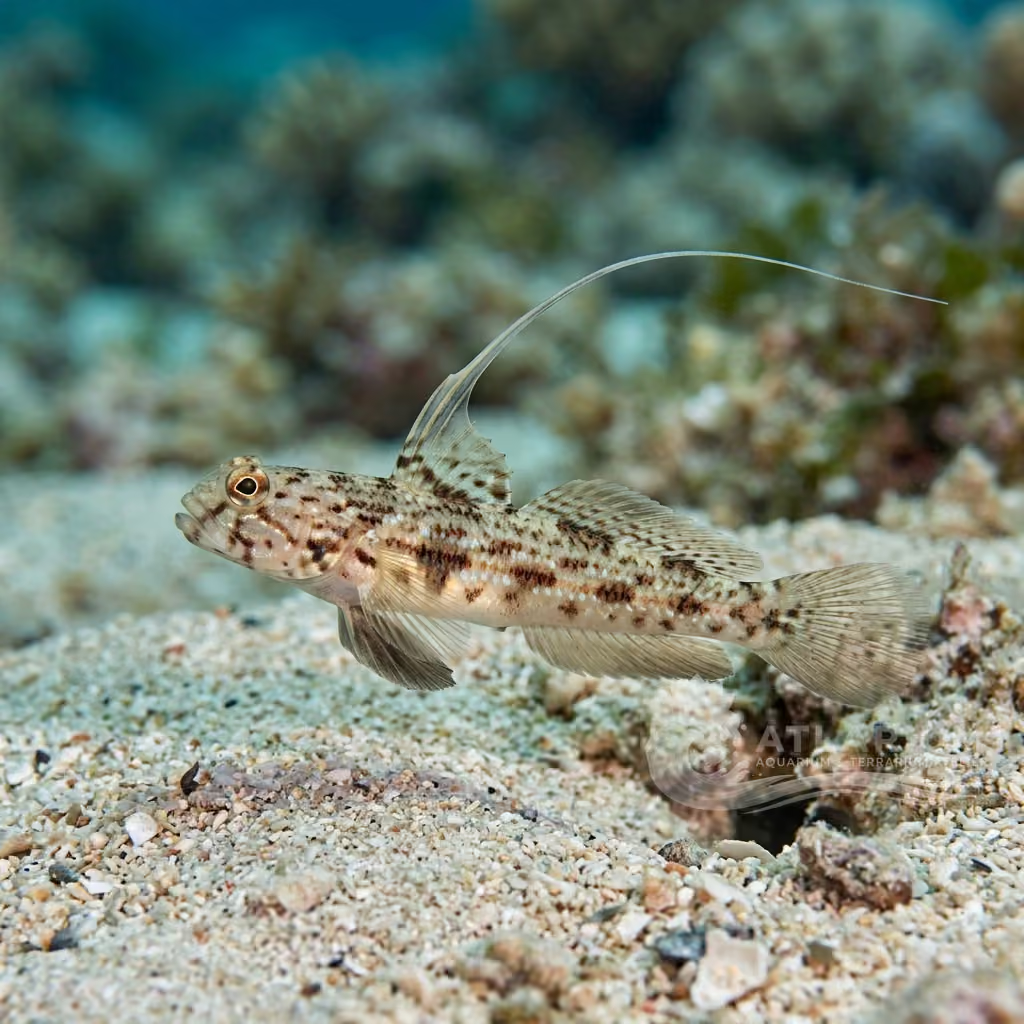
Taxonomy and Morphology: Member of the family Gobiidae. Slender body with large, close-set eyes on top of the head. Reaches 11.0 cm in length. Their eyes can move independently, which is a great adaptation for scanning the environment for threats.
Social Behavior: Symbiotic. Shares a burrow with Alpheus snapping shrimp, acting as the eyes and lookout for the shrimp while it digs. The goby acts as a sentry, keeping physical contact with the shrimp's antennae at all times near the burrow.
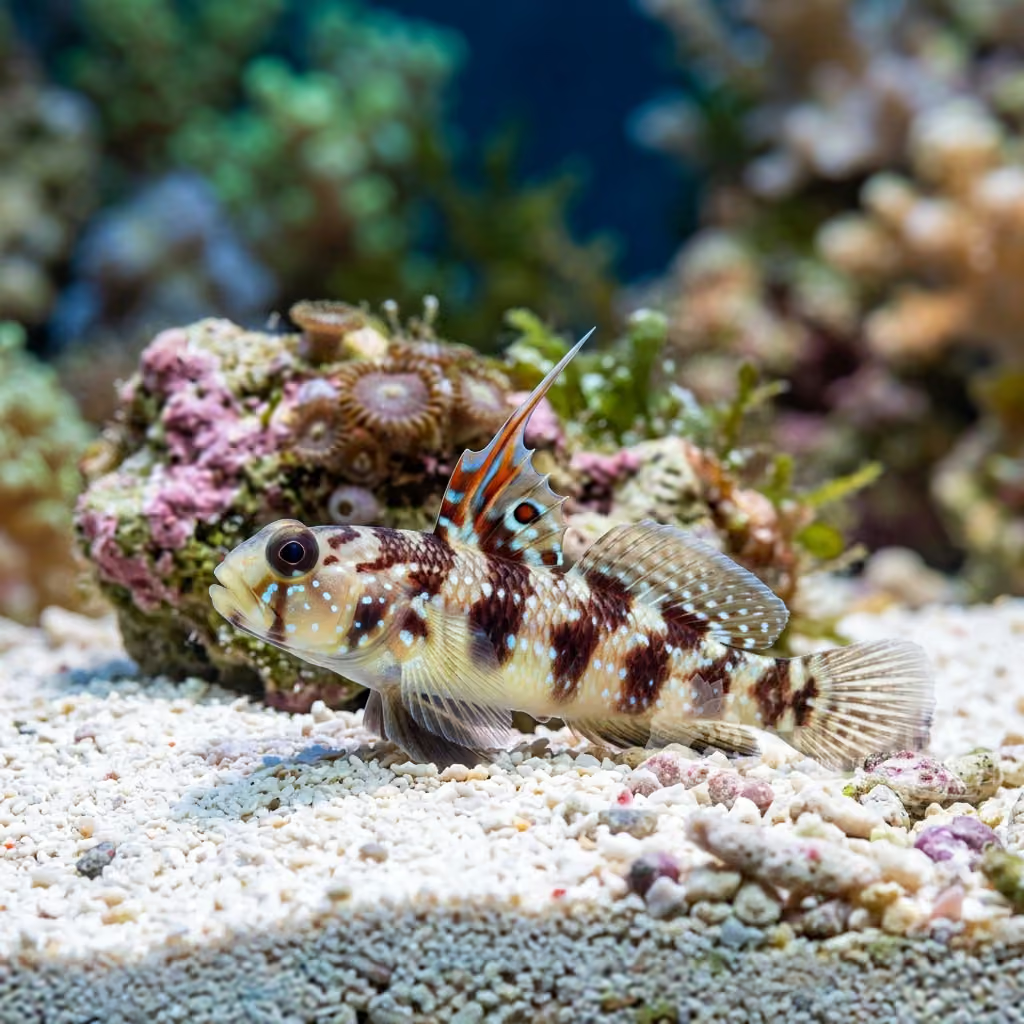
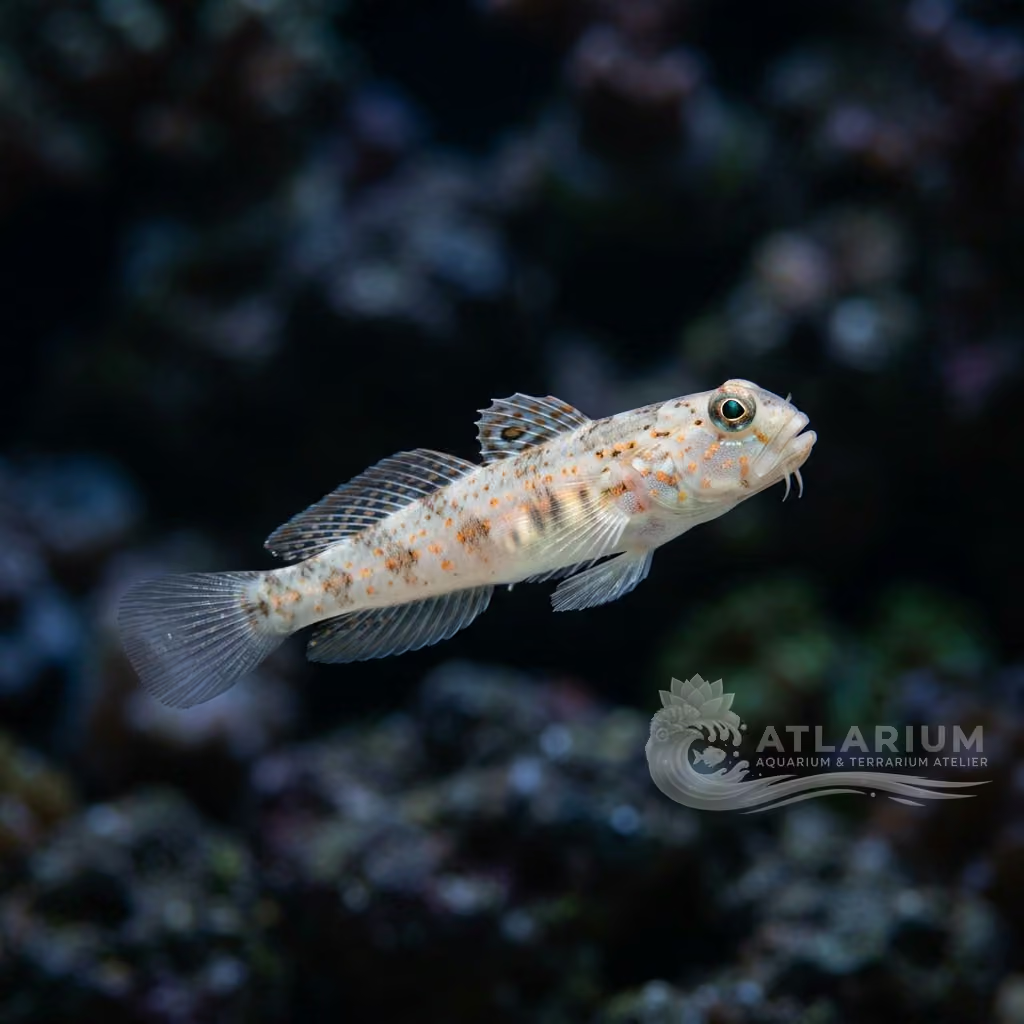
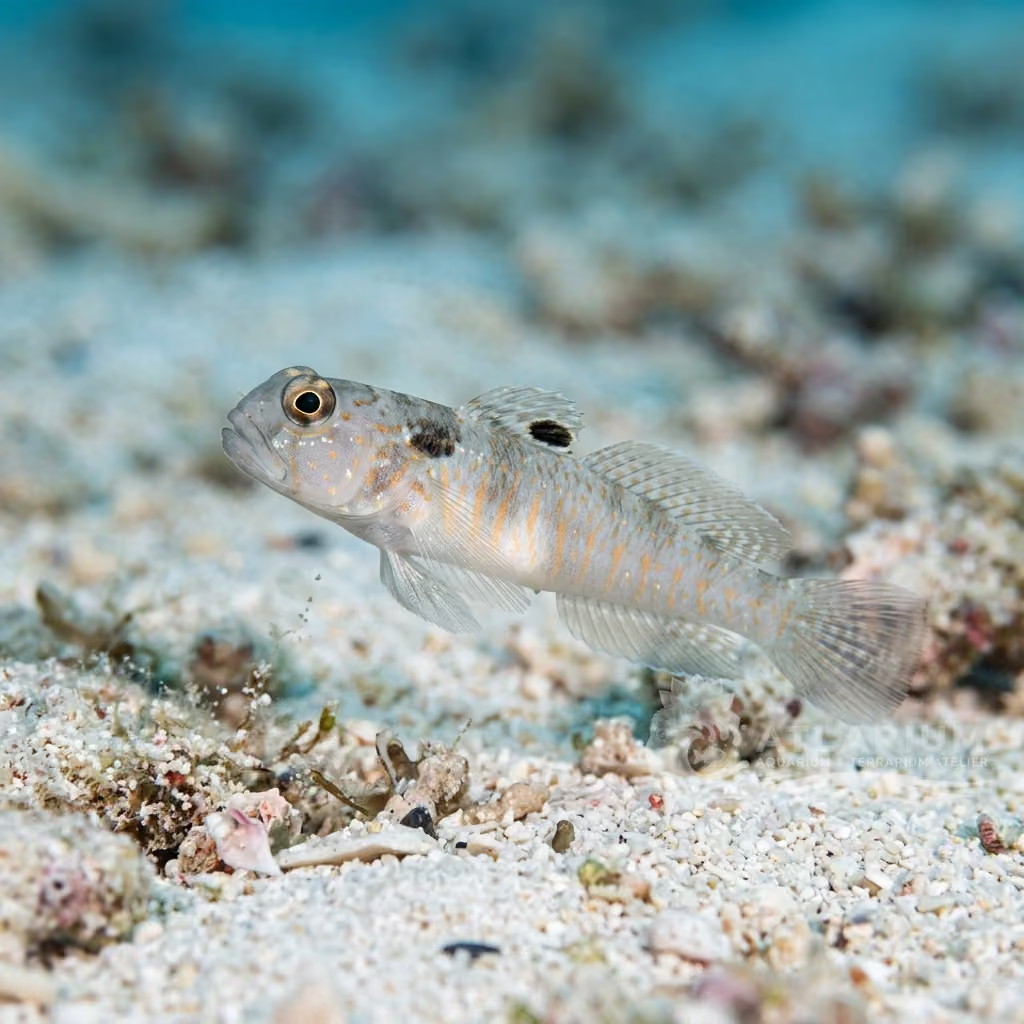
Coloration and Sexual Dimorphism: Whitish-grey base color with 5 prominent diagonal orange-brown bands. Iridescent blue spots scatter across the head. No sexual dimorphism. The diagonal orange bands are highly contrasting, helping them communicate with conspecifics in sandy habitats.

Pflege, Zucht und Mitbewohner
Aquarium Setup: Requires a tank of at least 100 liters with a deep substrate of mixed sand, gravel, and shell rubble. Rock structures must be secure. Secure lid is mandatory. The sand bed should be deep enough to allow the shrimp to excavate a stable tunnel system under the rocks.
Diet and Feeding: Carnivorous. Feeds on benthic invertebrates. Accepts frozen mysis, artemia, chopped table shrimp, and sinking carnivore pellets. Target feeding with a long pipette is recommended to ensure the goby gets enough food in active tanks.
Water Quality: Keep reef parameters stable: temperature 22-26 °C, pH 8.1-8.4, salinity SG 1.020-1.025. Standard reef filtration. Stable alkalinity and pH levels are important to maintain the health of both the goby and its symbiotic shrimp.
Compatibility and Cohabitation: Peaceful with other fish. Keep with a compatible Alpheus shrimp. Avoid housing with aggressive bottom dwellers. Highly compatible with other peaceful reef fish; they will not disturb corals or other ornamental invertebrates.
Aquarium Breeding: Spawns inside the shared burrow. Both parents protect the nest. Rearing the planktonic larvae is extremely difficult. The spawning process is highly secretive, and the tiny larvae require specialized rotifer and copepod cultures.
Risks and Diseases: Known to jump if startled. Starvation risk if it does not establish its burrow with a shrimp partner. Startle responses are common; ensure the aquarium is completely covered to prevent the fish from jumping out.

Geografische Herkunft und Verbreitung
Indo-Pacific: Red Sea and East Africa to the Solomon Islands and the Great Barrier Reef. Found on sandy patches near outer reefs from 2 to 30 meters deep. They are commonly found on the sandy fringes of reefs where rubble provides structure for burrow building.
Ursprung
Tropische Ozeane und RiffeAfrika und MadagaskarOstasien

Fischprofil
- Temperament
- Peaceful
- It is a peaceful, somewhat timid fish that relies heavily on its symbiotic relationship with a pistol shrimp for safety. It acts as the lookout, warning the nearly blind shrimp of approaching danger with a flick of its tail. It only shows aggression toward other benthic gobies that encroach on its specific territory.
- Diät
- Carnivore
- This species is a carnivore that naturally feeds on small benthic invertebrates. In captivity, it eagerly accepts frozen mysis, enriched brine shrimp, and sinking micropellets. Ensuring the food reaches the bottom near its burrow is essential for proper feeding.
- Lebenserwartung
- 3-5 years
- Erwachsenengröße
- 11 cm
- Geschlechterverhältnis
- Flexible
- They should be kept singly or as a specifically acquired mated pair. Introducing multiple males into the same aquarium will inevitably lead to aggressive territorial disputes. Because visual sexing is nearly impossible, acquiring an established pair is the safest option.
- Fütterungsfrequenz
- Twice daily
- It should be fed small meaty meals once or twice a day. Target feeding using a turkey baster or long pipette directly over its burrow is highly recommended. It will rarely venture far from its safe haven to compete for food in the water column.
- Bioload
- Medium
- The Diagonal Shrimpgoby contributes a relatively light bioload to the aquarium. It is a small, relatively inactive species that does not require massive amounts of food. Its minimal waste production makes it an excellent choice for modestly sized nano reefs.
- Fluss
- Strong
- It prefers a gentle to moderate water flow near the substrate. Strong, turbulent currents can easily collapse its burrow and cause significant stress. A calm environment allows it to comfortably observe its surroundings from its burrow entrance.
- Sprungrisiko
- Yes
- Like almost all gobies, it poses a severe jump risk when frightened or harassed. A tightly fitting aquarium cover or fine mesh lid is completely necessary. Open-topped tanks are highly unsuitable and will likely result in the loss of the fish.
- Reproduktion
- Oviparous
- Captive breeding is possible but rare, usually occurring when paired with a symbiotic pistol shrimp. Eggs are laid deep within the shrimp's complex burrow and guarded fiercely by the male goby. The resulting larvae are microscopic and require advanced planktonic rearing techniques.
- Kompatibilität & Tankkameraden
- Peaceful
- It is an incredibly peaceful fish that makes a perfect addition to a community reef tank. It poses absolutely no threat to corals or most ornamental invertebrates. It should not be housed with aggressive, fast-swimming, or large predatory fish that might eat it.
- Tankfüllstand
- Bottom
- It is an obligate bottom-dwelling species that rarely leaves the sandy substrate. It spends its entire life hovering just outside the entrance of its constructed burrow. It relies entirely on the live rock and deep sand bed for its security.

Wissenschaftliche Modelle & Parameter
FishBase
Zugang zu den offiziellen wissenschaftlichen Daten der Art
FishBase v25.04Daten synchronisiert am: 15.06.2026
- Trophäenniveau
- 3,4 ± 0,4 se
- Belastbarkeit
- Hoch (weniger als 15 Monate)
- Phylogenetische Einzigartigkeit (PD50)
- 0.5
- Bayessche Längen-Gewichts-Beziehung
- a = 0.00741, b = 3.09
- AnfälligkeitGeringe Anfälligkeit (10 / 100)

Verwandte Arten
Empfehlungen gruppiert nach nahen Verwandten, Auswahl von Begleitern und ähnlicher Betreuung.