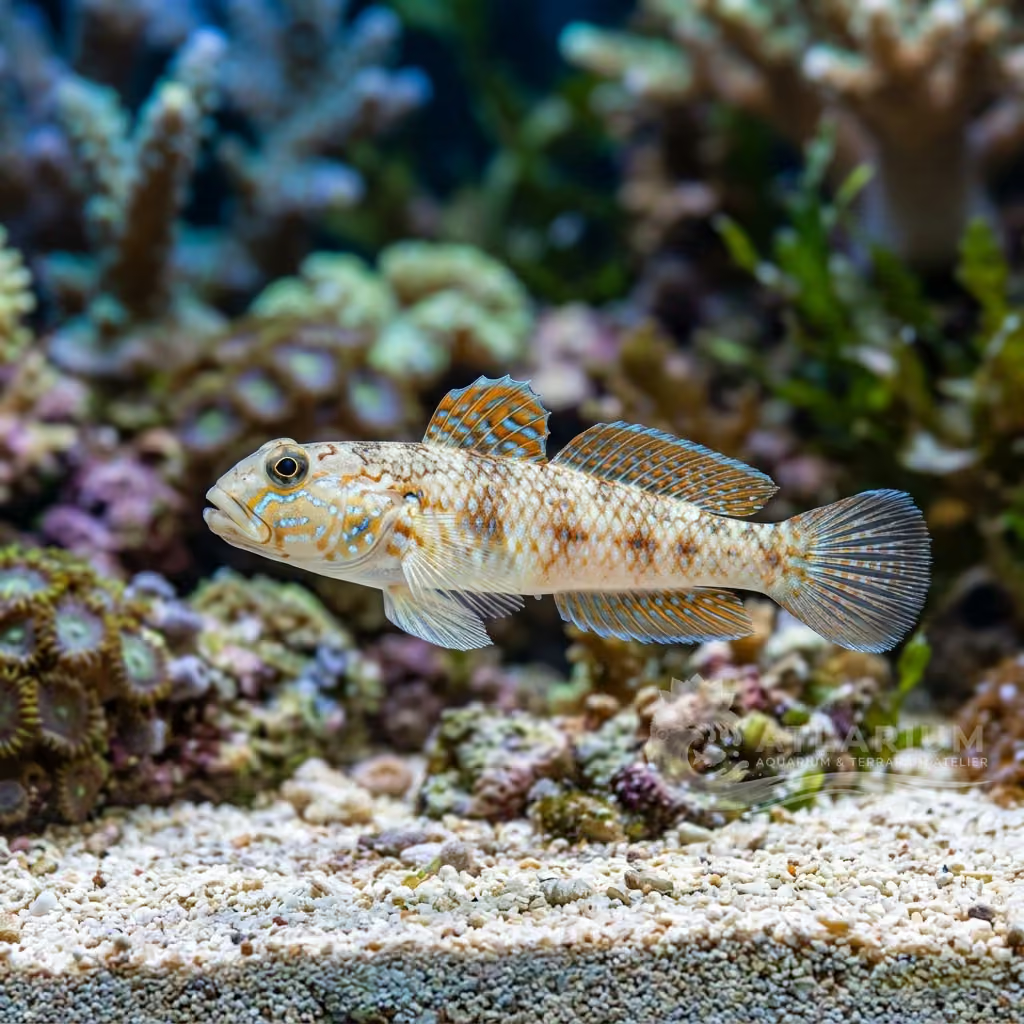
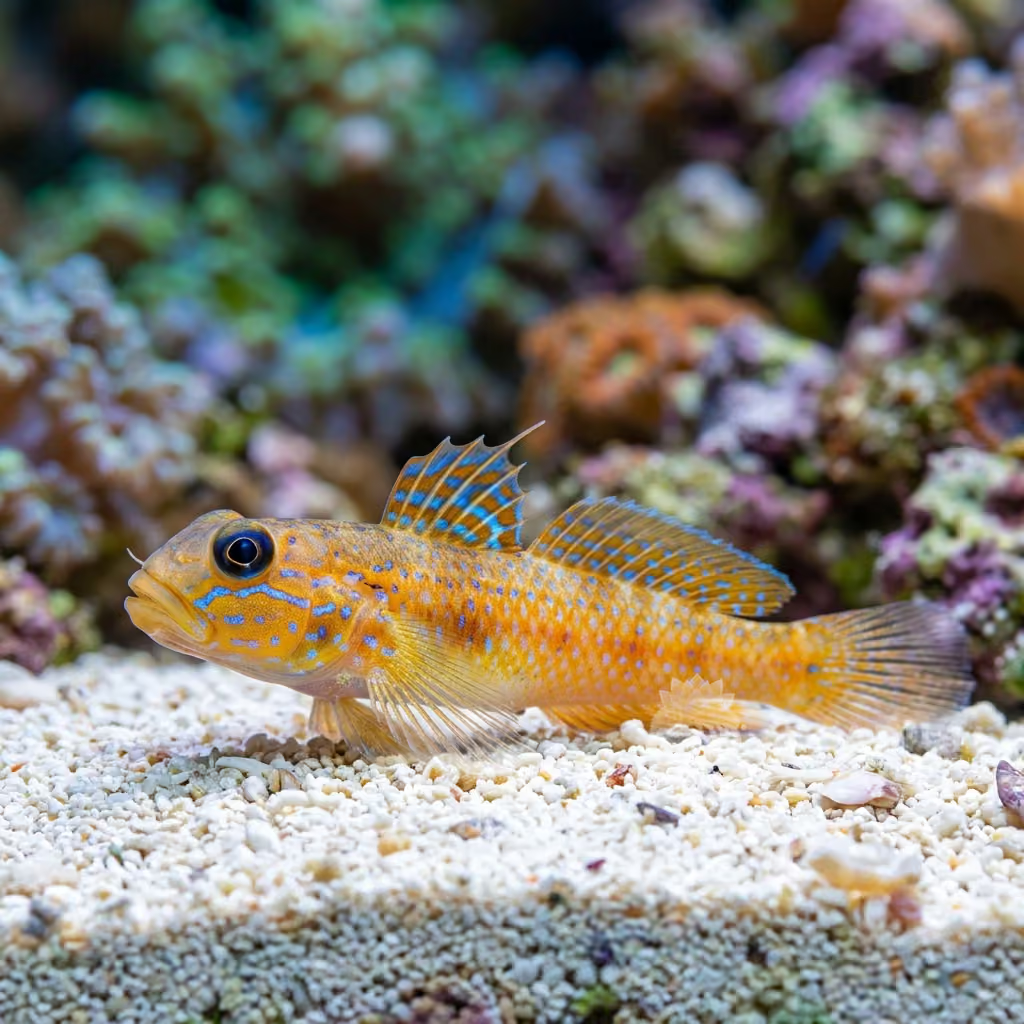
New Caledonia Shrimpgoby
Amblyeleotris novaecaledoniae
A rare and interesting symbiotic goby endemic to New Caledonia, forming a fascinating mutualistic relationship with Alpheus pistol shrimp. Highly prized for its unique origin.
Wassertemperatur
22 - 26 °C
pH-Wert
8.1 - 8.4
Wassertyp
Meerwasser
Tankfüllstand
Unten
Erwachsenengröße
9,5 cm
Mindesttankvolumen
>= 120 L
Mindestgruppe
>= 1
KH
8 - 12 dKH

Artbeschreibung
Geographical Origin and Habitat: Amblyeleotris novaecaledoniae is a marine goby endemic to the waters of the Western Pacific Ocean, specifically restricted to the archipelago of New Caledonia. It frequents sandy coral lagoons, transition zones between reefs and sandy flats, and protected coastal bays. It is typically found at modest depths ranging from 3 to 25 meters where the substrate consists of medium-to-fine sediment.
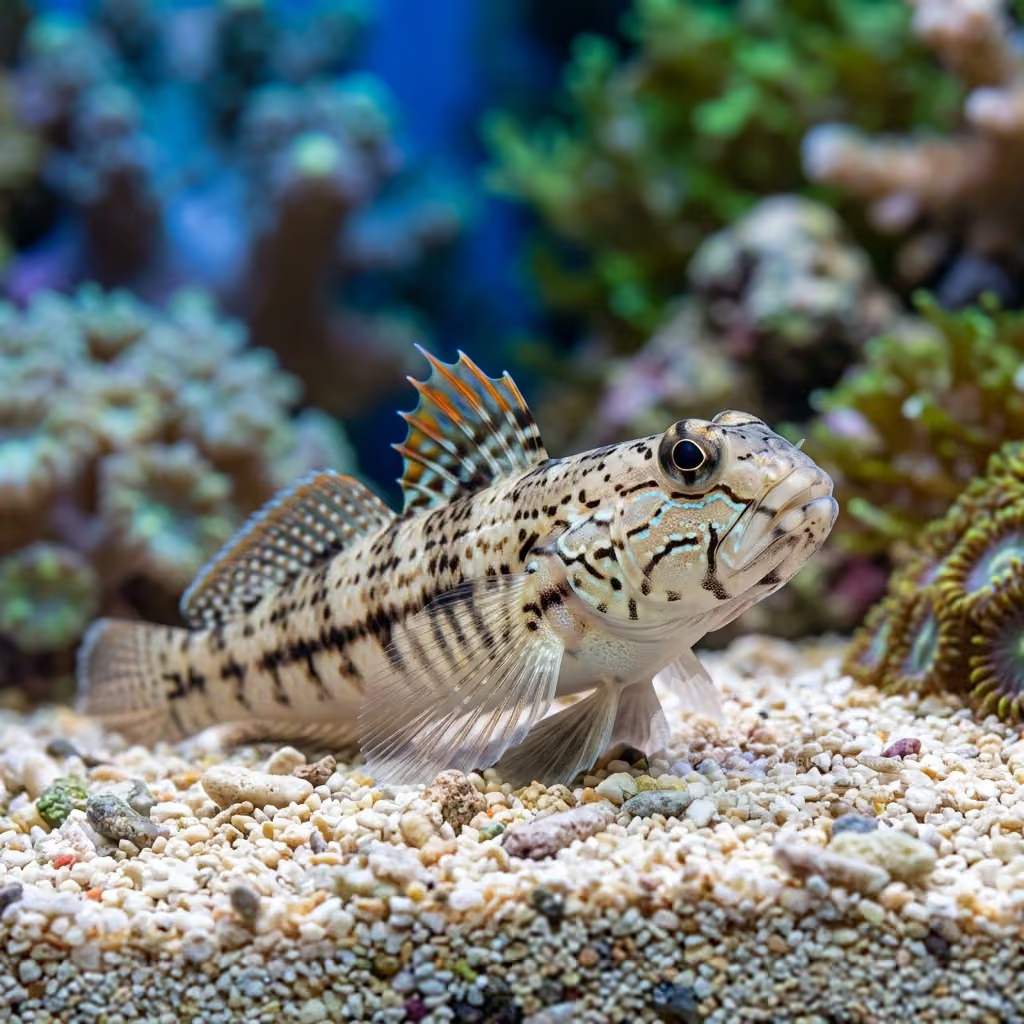
Taxonomy and Morphology: Belonging to the family Gobiidae, it is closely related to other symbiotic shrimpgobies of the genus Amblyeleotris. It features a slender, elongated body with prominent eyes placed high on the head, allowing it to easily spot predators. The mouth is large and contains small, conical teeth. Adults reach a maximum length of about 8.0 to 9.5 centimeters.
Social Behavior: A benthic fish that lives in close symbiosis with pistol shrimps of the genus Alpheus. This relationship is mutualistic: the shrimp digs and maintains the burrow, while the goby acts as a sentry, using its excellent vision to signal danger with rapid tail flicks. It is peaceful toward other species but territorial toward same-sex conspecifics.
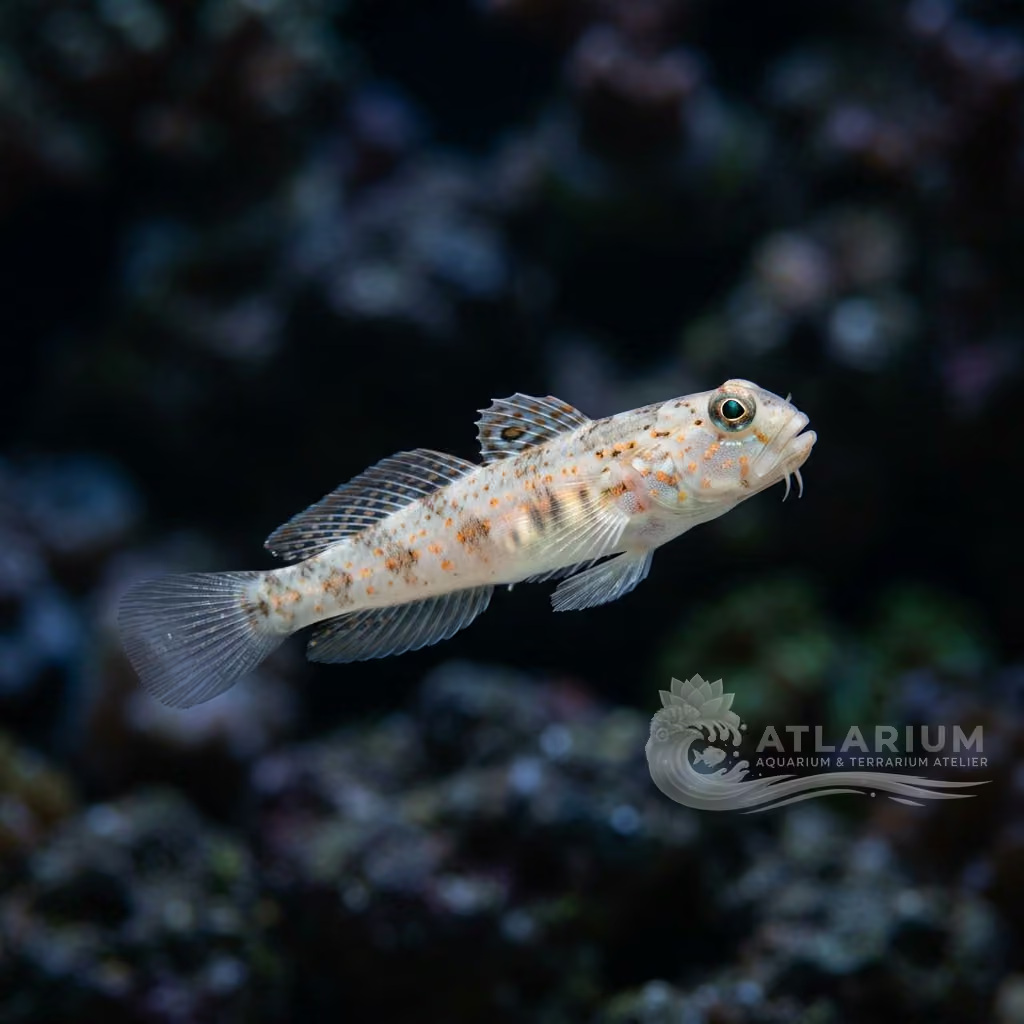
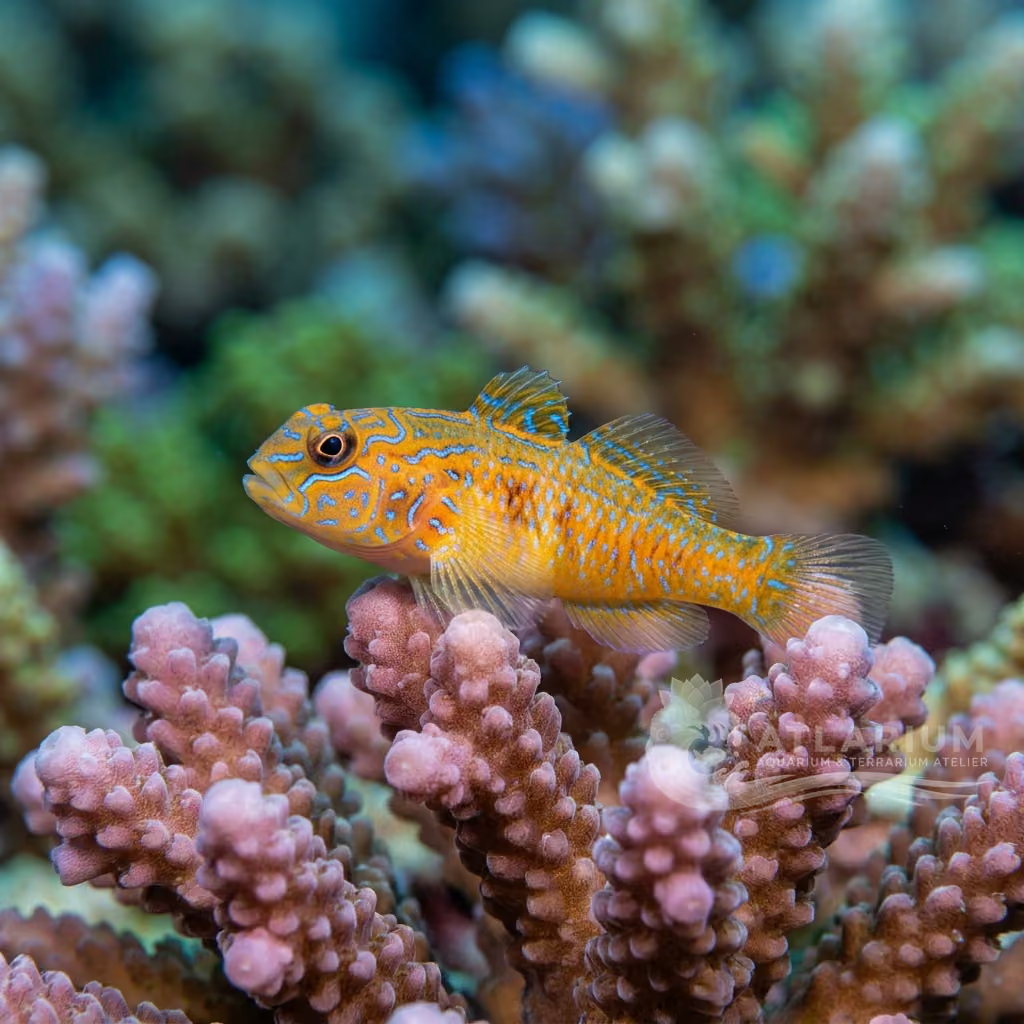
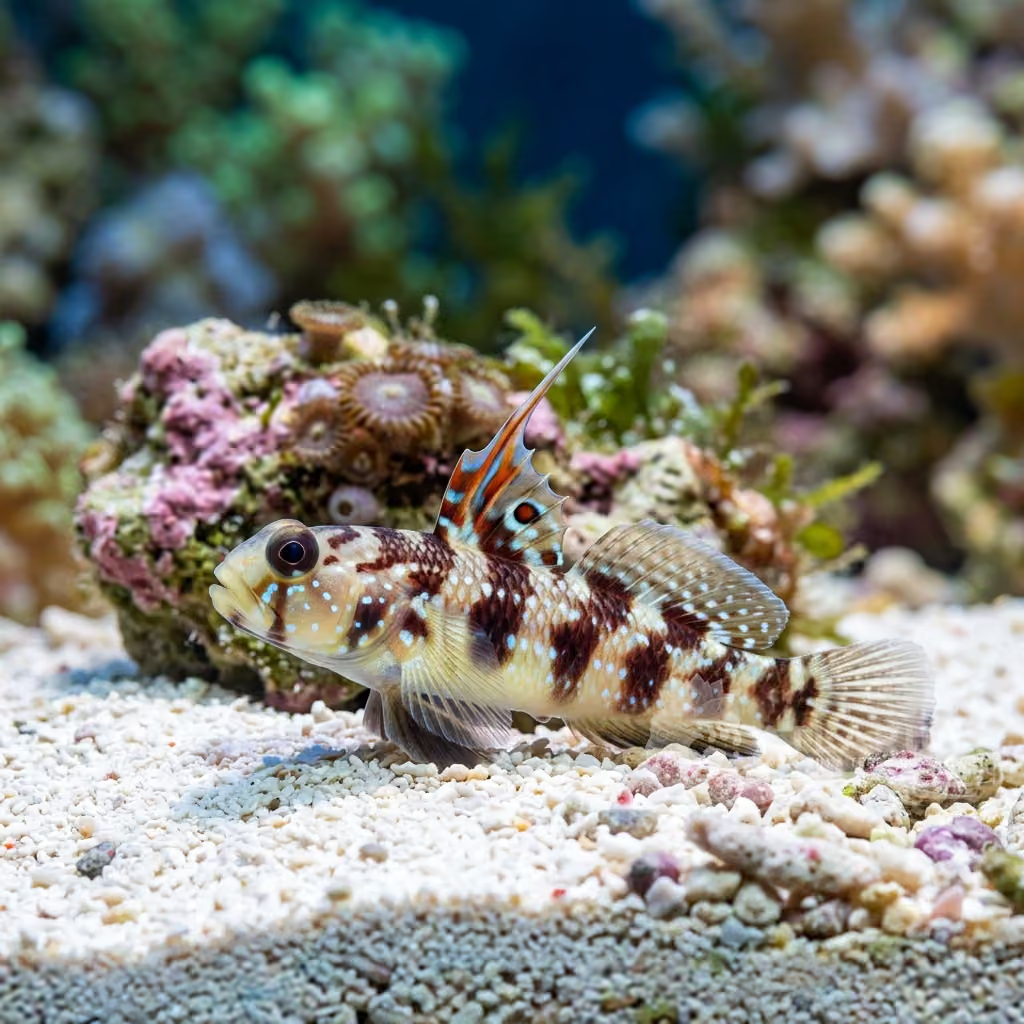
Coloration and Sexual Dimorphism: The body has a cream-white to light beige background color, marked with five distinct, wide brown or reddish-brown vertical bands. Iridescent electric blue dots are scattered across the head and body, especially during the breeding season. There is no visible sexual dimorphism to distinguish males from females.

Pflege, Zucht und Mitbewohner
Aquarium Setup: Requires an aquarium of at least 80-100 liters (approx. 20-25 gallons). The bottom must have a sandy substrate of at least 5-7 cm depth, mixed with aragonite rubble and shell fragments to help the shrimp build sturdy burrow walls. Ensure the rockwork is secure. A tight-fitting mesh or glass lid is mandatory, as this fish will jump out if startled.
Diet and Feeding: Carnivorous. In captivity, it feeds readily on small frozen foods such as brine shrimp, mysis, copepods, lobster eggs, and finely chopped krill. It will also accept dry sinking pellets or crushed flakes. Feedings should be target-fed close to the burrow entrance using a pipette or feeding tube.
Water Quality: Demands stable marine water parameters: water temperature between 22°C and 26°C, pH between 8.1 and 8.4, specific gravity between 1.023 and 1.025, and KH between 8 and 12 dKH. Nitrates and phosphates must be kept low via regular water changes and efficient filtration. Good water oxygenation is required.
Compatibility and Cohabitation: Excellent reef-safe candidate for community and reef tanks. Keeping it with a symbiotic Alpheus pistol shrimp is highly recommended to observe their natural behavior. It shares space well with peaceful reef fish like clownfish, small wrasses, and blennies. Avoid large, predatory or aggressive tankmates.
Aquarium Breeding: Breeding in home aquariums is extremely difficult. The pair spawns inside the sandy burrow, where the male guards and aerates the eggs. The newly hatched larvae are planktonic and very small, needing specialized live food like rotifers and microalgae cultures to survive their initial development stages.
Risks and Diseases: Jumping out of the tank is a major risk, especially during acclimation or nighttime. Without its symbiotic shrimp partner, the goby can suffer from high stress levels and may starve. It is susceptible to marine ich (Cryptocaryon) if subjected to rapid temperature drops or poor water quality.

Geografische Herkunft und Verbreitung
Amblyeleotris novaecaledoniae is a marine goby endemic to the waters of the Western Pacific Ocean, specifically restricted to the archipelago of New Caledonia. It frequents sandy coral lagoons, transition zones between reefs and sandy flats, and protected coastal bays. It is typically found at modest depths ranging from 3 to 25 meters where the substrate consists of medium-to-fine sediment.
Ursprung
Tropische Ozeane und RiffeOstasienAustralien, Neuguinea und Ozeanien

Fischprofil
- Temperament
- Territorial
- It is a peaceful, shy, and cautious fish that prefers to stay close to the safety of its established burrow. While it will bravely defend its immediate territory from other bottom-dwellers, it ignores fish swimming higher up. Providing plenty of rubble and a quiet environment helps it feel secure and behave naturally.
- Diät
- Carnivore
- As a micro-predator, its natural diet consists mostly of tiny benthic crustaceans and zooplankton found near the substrate. In captivity, it eagerly accepts frozen mysis shrimp, brine shrimp, and sinking carnivore pellets. Providing a varied, high-quality meaty diet is critical for maintaining its health and vibrant coloration.
- Lebenserwartung
- 5-8 years
- Erwachsenengröße
- 9.5 cm
- Geschlechterverhältnis
- Solitary
- There are no obvious external differences between males and females, making sexing this species visually almost impossible. They are best kept singly or as a confirmed mated pair to avoid territorial disputes. Placing multiple unsexed individuals in a small tank usually leads to aggressive territorial battles over burrow sites.
- Fütterungsfrequenz
- Twice daily
- Feeding small portions two to three times daily is recommended to mimic its natural, continuous foraging behavior. Because it rarely ventures far from its burrow, targeted feeding near its home may be necessary in a busy tank. Care should be taken to ensure it gets enough food without overfeeding the entire system.
- Bioload
- Low to Medium
- This species has a minimal impact on the overall bioload of the aquarium due to its small size and sedentary lifestyle. It produces very little waste compared to more active, open-water swimmers. Routine maintenance and standard filtration are entirely sufficient to keep the water pristine.
- Fluss
- Strong
- It favors gentle to moderate water flow, reflecting the calm sandy bottoms and rubble zones it inhabits in the ocean. Exceedingly strong currents can collapse its delicate burrow and make feeding difficult. A well-planned, indirect flow pattern allows the goby to thrive while keeping detritus from accumulating.
- Sprungrisiko
- Yes
- Like most gobies, this fish is easily spooked and possesses a strong instinct to jump when frightened or chased. A tight-fitting lid or a fine mesh cover is absolutely necessary to prevent it from leaping out of the aquarium. Keeping it in an open-top tank is highly risky and often ends poorly.
- Reproduktion
- Oviparous
- Captive breeding of this species is extremely rare and technically demanding, primarily due to the difficulty of raising its microscopic pelagic larvae. In their natural habitat, they are substrate spawners that lay adhesive eggs deep within the safety of their burrow. The male takes on the responsibility of guarding and oxygenating the eggs until they hatch.
- Kompatibilität & Tankkameraden
- Peaceful
- It is a fantastic community fish for peaceful reef aquariums, coexisting easily with corals and small, non-aggressive tank mates. This fish forms a fascinating symbiotic bond with pistol shrimp, which provides an incredible behavioral display. Large or predatory fish must be avoided, as they will easily consume this small goby.
- Tankfüllstand
- Bottom
- This bottom-dwelling fish spends the vast majority of its life resting on the sand bed or hovering just outside its burrow. It relies heavily on a deep sand substrate to create its home alongside its symbiotic shrimp partner. It will only dart higher into the water column momentarily to grab a passing morsel of food.

Wissenschaftliche Modelle & Parameter
FishBase
Zugang zu den offiziellen wissenschaftlichen Daten der Art
FishBase v25.04Daten synchronisiert am: 15.06.2026
- Trophäenniveau
- 3,3 ± 0,4 se
- Belastbarkeit
- Hoch (weniger als 15 Monate)
- Phylogenetische Einzigartigkeit (PD50)
- 0.5
- Bayessche Längen-Gewichts-Beziehung
- a = 0.00741, b = 3.09
- AnfälligkeitGeringe Anfälligkeit (10 / 100)

Verwandte Arten
Empfehlungen gruppiert nach nahen Verwandten, Auswahl von Begleitern und ähnlicher Betreuung.