Five-lined Coral Goby
Gobiodon quinquestrigatus
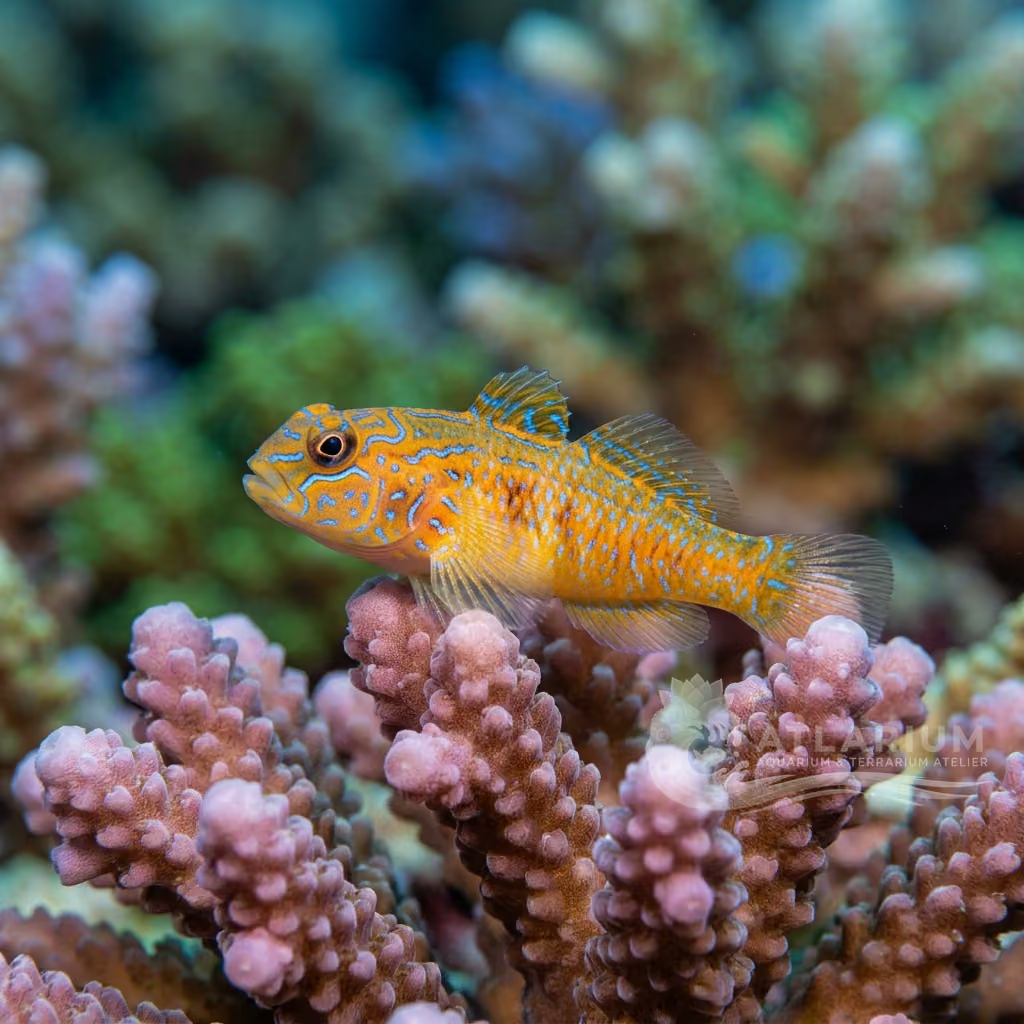
The Five-lined Coral Goby is a small, scale-less fish with a toxic mucus layer, residing in Acropora corals. Perfect for nano-reefs, it requires small meaty foods and stable marine parameters.
Wassertemperatur
24 - 28 °C
pH-Wert
8.1 - 8.4
Wassertyp
Meerwasser
Tankfüllstand
Alle Ebenen
Erwachsenengröße
4,5 cm
Mindesttankvolumen
>= 60 L
Mindestgruppe
>= 1
KH
8 - 12 dKH

Artbeschreibung
Geographical Origin and Habitat: Indo-Pacific: Philippines to the Society Islands, north to southern Japan, south to Australia and Tonga. Lives commensally among branching Acropora corals. Endemic to the tropical Indo-Pacific, this goby lives in close association with Acropora corals in shallow lagoons.
Taxonomy and Morphology: Member of the family Gobiidae. Reaches a maximum size of 4.5 cm. Features a compressed, scale-less body with a toxic mucus layer. As a scaleless goby, its skin is covered in a thick, bitter mucus layer that deters predators and prevents skin infections.
Social Behavior: Coral-commensal species. Lives in monogamous pairs or small groups within the branches of branching corals for protection. It exhibits a highly sedentary lifestyle, rarely leaving the protective branches of its host coral colony.
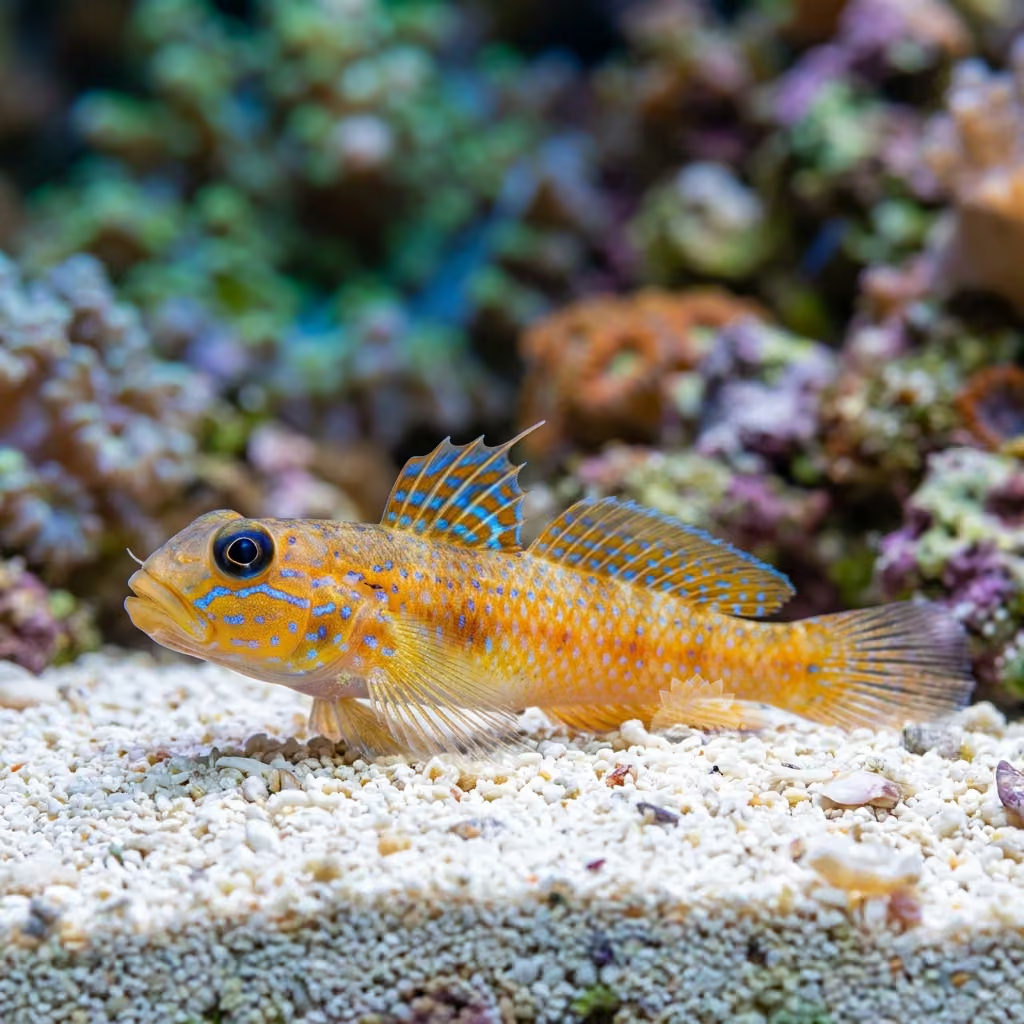
Coloration and Sexual Dimorphism: Body is dark reddish-brown to grayish, featuring five prominent vertical blue-white lines on the head. Bi-directional hermaphrodite. The body color ranges from dark reddish-brown to green, with five glowing vertical blue lines visible on the head and cheeks.

Pflege, Zucht und Mitbewohner
Aquarium Setup: Minimum 60 liters. Must be provided with branching Acropora stony corals to live and hide in, simulating its natural reef habitat. Best suited for nano reef aquariums containing branching stony corals which serve as the fish's natural habitat and shelter.
Diet and Feeding: Carnivore. Offer small, meaty foods such as cyclops, copepods, rotifers, and finely minced frozen mysis twice daily. Feed a variety of small, meaty foods such as cyclops, oyster eggs, and baby brine shrimp, distributed directly into the coral branches.
Water Quality: Maintain stable marine parameters: temperature 24-28°C, pH 8.1-8.4, salinity 1.020-1.025 SG. Good filtration is necessary. Maintain pristine water conditions with low nutrient levels, similar to the requirements for keeping delicate SPS corals.
Compatibility and Cohabitation: Peaceful towards other fish. May argue with other clown gobies for breeding space. Completely safe with invertebrates. Generally peaceful with non-related species, but territorial disputes will occur if multiple coral gobies share a single host coral.
Aquarium Breeding: Lays adhesive eggs on the branches of corals, clearing a small patch of tissue. The male guards the nest. Rearing larvae is difficult. Spawning is common in mature tanks, but raising the microscopic larvae requires specialized live foods and rotifer cultures.
Risks and Diseases: Small size makes it vulnerable to being sucked into open filter intakes. Coral polyp nipping occurs during nesting but rarely kills the coral. Avoid introducing to tanks with large, aggressive fish that might ignore the toxic mucus and swallow the goby.

Geografische Herkunft und Verbreitung
Indo-Pacific: Philippines to the Society Islands, north to southern Japan, south to Australia and Tonga. Lives commensally among branching Acropora corals. Endemic to the tropical Indo-Pacific, this goby lives in close association with Acropora corals in shallow lagoons.
Ursprung
Tropische Ozeane und RiffeSüd- und SüdostasienOstasienAustralien, Neuguinea und Ozeanien

Fischprofil
- Temperament
- Territorial
- They have a highly peaceful and calm demeanor. They can be territorial toward visually similar gobies. Overall, they are an absolute joy in a mixed reef.
- Diät
- Carnivore
- They are dedicated carnivores needing meaty foods. Supply a varied mix of frozen zooplankton and mysis shrimp. They are voracious eaters once comfortable in their environment.
- Lebenserwartung
- 5-8 years
- Erwachsenengröße
- 4.5 cm
- Geschlechterverhältnis
- Flexible
- They easily pair up by changing sex as needed. Any two non-paired individuals will generally sort out a bond. This flexibility makes them very easy to keep in couples.
- Fütterungsfrequenz
- Twice daily
- At least two small feedings a day are recommended. They metabolize their food rapidly. Regular feeding keeps their immune system robust.
- Bioload
- Low to Medium
- This micro-goby produces a very low bioload. They are an excellent addition to small, well-maintained reefs. They do not put any strain on filtration systems.
- Fluss
- Strong
- Moderate water flow is perfectly fine for them. They rely on the water column to deliver food to their perch. They do not thrive in high-velocity wavemaker streams.
- Sprungrisiko
- Yes
- Jump risk is generally considered to be low. They much prefer to retreat into the rocks if threatened. Using a tank cover is still a smart preventative measure.
- Reproduktion
- Oviparous
- They are known to breed within the protective arms of branching corals. Eggs are laid in a circular pattern on a stripped branch. Captive breeding is rare but entirely possible.
- Kompatibilität & Tankkameraden
- Peaceful
- They are a peaceful species that blends into any docile tank. They ignore almost all other fish and invertebrates. Like other Gobiodon, they might slightly nip SPS coral branches.
- Tankfüllstand
- All levels
- They are middle to top dwellers. They hop from branch to branch to survey their territory. They rarely ever touch the bottom substrate.

Wissenschaftliche Modelle & Parameter
FishBase
Zugang zu den offiziellen wissenschaftlichen Daten der Art
FishBase v25.04Daten synchronisiert am: 15.06.2026
- Trophäenniveau
- 3,4 ± 0,5 se
- Belastbarkeit
- Hoch (weniger als 15 Monate)
- Phylogenetische Einzigartigkeit (PD50)
- 0.5
- Bayessche Längen-Gewichts-Beziehung
- a = 0.01995, b = 3.01
- AnfälligkeitGeringe Anfälligkeit (10 / 100)

Verwandte Arten
Empfehlungen gruppiert nach nahen Verwandten, Auswahl von Begleitern und ähnlicher Betreuung.