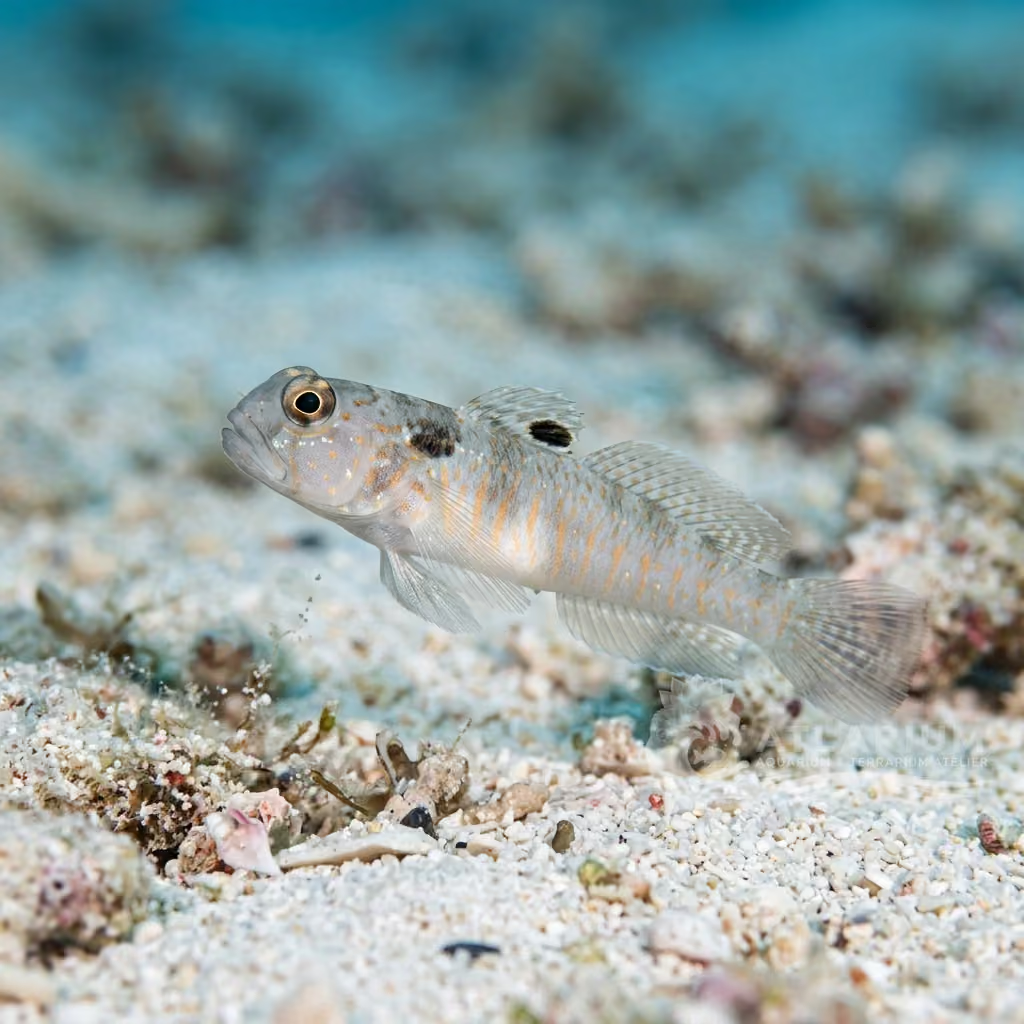
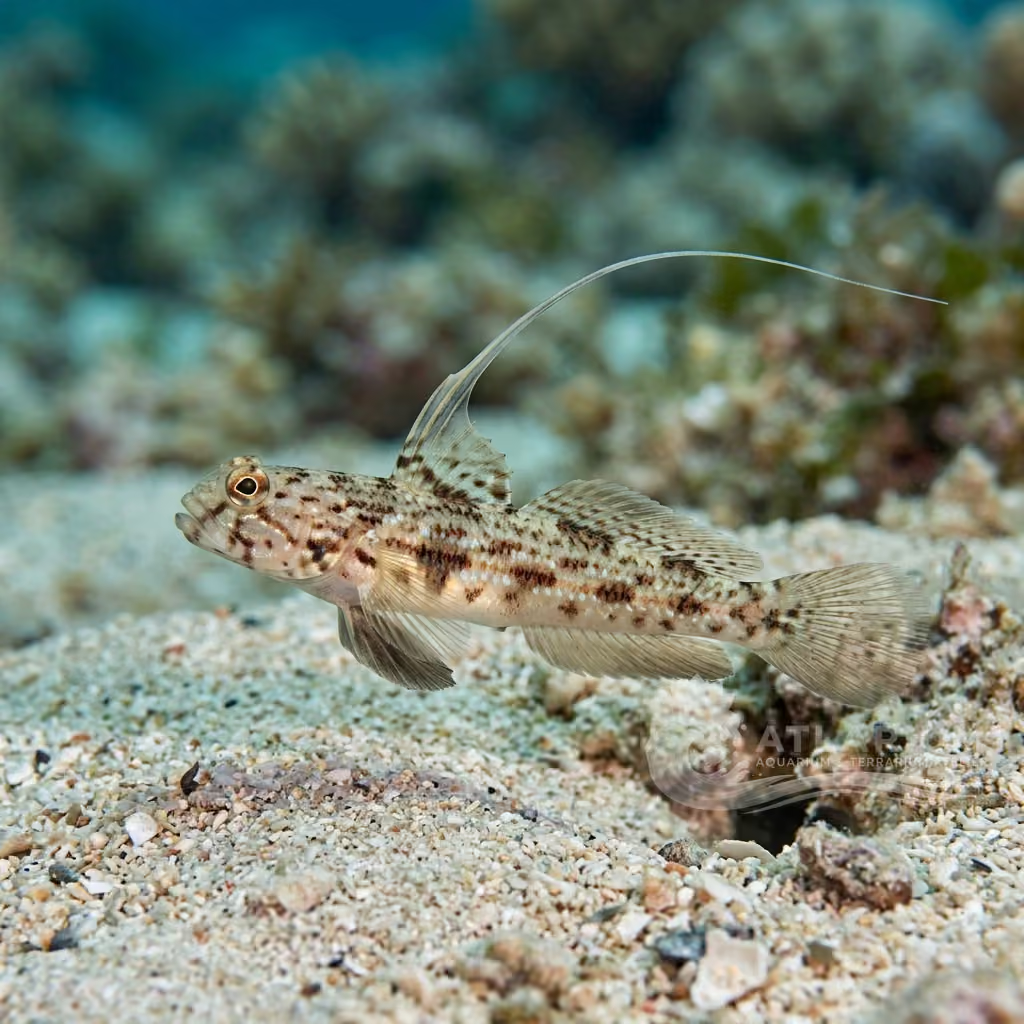
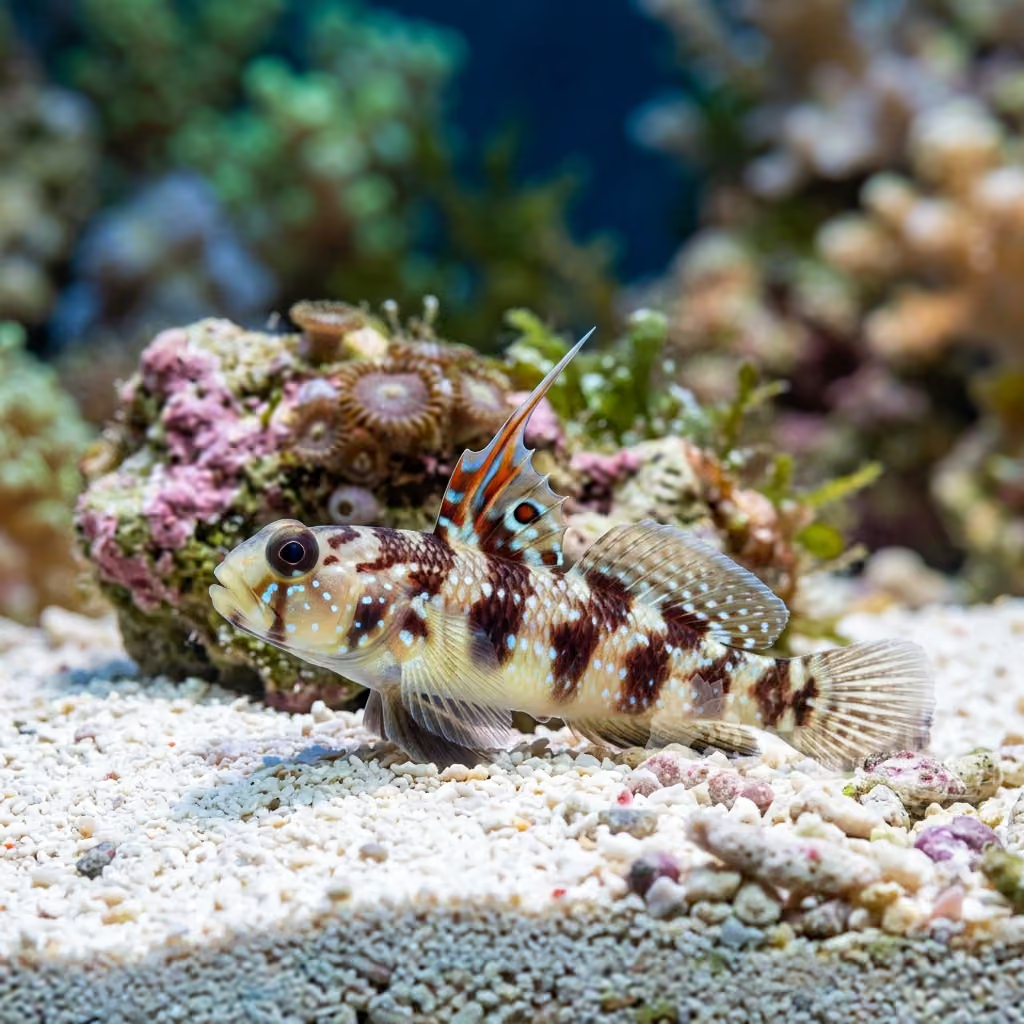
Arch-fin shrimpgoby
Amblyeleotris arcupinna
A small marine goby that forms a mutualistic symbiotic relationship with Alpheus snapping shrimps, featuring a prominent, arched dorsal fin and a peaceful bottom-dwelling nature.
Wassertemperatur
23 - 27 °C
pH-Wert
8.1 - 8.4
Wassertyp
Meerwasser
Tankfüllstand
Unten
Erwachsenengröße
7,5 cm
Mindesttankvolumen
>= 80 L
Mindestgruppe
>= 1

Artbeschreibung
Geographical Origin and Habitat: Amblyeleotris arcupinna is native to the tropical waters of the Western Pacific. It has been documented mainly in sheltered sandy areas and coral lagoons around Papua New Guinea, the Solomon Islands, and the Ryukyu Islands of southern Japan. It inhabits sandy or rubble bottoms adjacent to coral reefs at depths ranging from 5 to 25 meters, where the substrate consists of sand mixed with coral fragments.
Taxonomy and Morphology: Belonging to the family Gobiidae, subfamily Gobiinae, genus Amblyeleotris. It features an HTML-like elongated, cylindrical body typical of benthic gobies. Adults reach a maximum length of about 8-10 centimeters. The mouth is large and low-set, ideal for catching small organisms. The main morphological characteristic is the highly developed, arched dorsal fin, from which its scientific name is derived.
Social Behavior: This species is famous for its symbiotic association with snapping shrimps of the genus Alpheus. The shrimp digs and maintains a burrow in the sand, while the goby, possessing excellent vision, acts as a sentinel against predators. The goby stands at the burrow entrance, maintaining physical contact with the shrimp's antennae, signaling danger with rapid tail flicks.
Coloration and Sexual Dimorphism: The coloration features a sandy-white or grayish body crossed by 5-6 well-defined dark brown or reddish-brown vertical bands. The prominent dorsal fin displays orange and yellow hues with a dark arched pattern. There is no obvious sexual dimorphism to the naked eye, although males may present slightly more developed fins during breeding.

Pflege, Zucht und Mitbewohner
Aquarium Setup: Requires an aquarium of at least 100 liters (approx. 25 gallons) with adequate floor space. The substrate is the most critical factor: it must consist of a layer of fine sand mixed with small shell fragments or coral rubble at least 5-6 cm deep. This allows the Alpheus shrimp (which should be introduced with the fish) to dig the burrow without it collapsing.
Diet and Feeding: A benthic carnivore. In the aquarium, it readily feeds on small frozen foods such as mysis, brine shrimp, copepods, and chopped krill. It also accepts sinking pellets. It is recommended to feed the fish near the burrow entrance, as it rarely ventures far from its shelter to search for food.
Water Quality: Water parameters must be stable and typical of a marine aquarium: temperature 24-26°C (75-79°F), pH 8.1-8.4, specific gravity 1.021-1.025, and nitrates preferably below 20 mg/l. Efficient biological filtration and good water movement are necessary, avoiding excessive currents near the bottom that would disturb the shrimp.
Compatibility and Cohabitation: It is a peaceful and reef-safe species. It coexists perfectly with all corals and invertebrates. It can be kept with peaceful fish such as clownfish, wrasses, anthias, and surgeonfish. Avoid large predatory fish or aggressive bottom-dwellers (such as large blennies) that could compete for the burrow or attack the goby.
Aquarium Breeding: Breeding in the aquarium is extremely rare. They form monogamous pairs. Eggs are deposited inside the burrow dug by the Alpheus shrimp, where the male guards them until they hatch. The larvae are planktonic and very difficult to raise due to the requirement for microscopic live foods in their initial stages.
Risks and Diseases: It is a hardy fish. The primary risk is jumping out of the tank, especially during the initial introduction phase, which makes a lid mandatory. In the absence of its symbiotic shrimp, the goby may become extremely shy and remain permanently hidden, which can reduce its lifespan.

Geografische Herkunft und Verbreitung
Amblyeleotris arcupinna is native to the tropical waters of the Western Pacific. It has been documented mainly in sheltered sandy areas and coral lagoons around Papua New Guinea, the Solomon Islands, and the Ryukyu Islands of southern Japan. It inhabits sandy or rubble bottoms adjacent to coral reefs at depths ranging from 5 to 25 meters, where the substrate consists of sand mixed with coral fragments.
Ursprung
Tropische Ozeane und RiffeAfrika und MadagaskarOstasienAustralien, Neuguinea und Ozeanien

Fischprofil
- Temperament
- Territorial
- This goby has a peaceful, cautious, and highly observant temperament. They spend their days keeping watch outside their burrow while their shrimp partner works on excavation. Their timid nature means they need a calm environment to feel secure enough to stay visible.
- Diät
- Carnivore
- Their diet should consist primarily of small, meaty marine foods suitable for their diminutive mouths. Offer them enriched brine shrimp, frozen mysis shrimp, and finely chopped seafood or high-quality micro-pellets. They are bottom feeders and will eagerly snatch food that drifts down near their burrow entrance.
- Lebenserwartung
- 3-5 years
- Erwachsenengröße
- 7.5 cm
- Geschlechterverhältnis
- Flexible
- They can be kept singly or in known mated pairs without issue. Keeping multiple unsexed individuals in a small tank may lead to territorial squabbles over prime burrow locations. In larger tanks with ample floor space, multiple individuals can often coexist peacefully.
- Fütterungsfrequenz
- Twice daily
- They should be fed small amounts once or twice daily to keep them healthy and well-nourished. Target feeding near their burrow with a pipette can be beneficial to ensure they get their share without being outcompeted. Watch to make sure they are actively eating and not being scared away by faster tank mates.
- Bioload
- Medium
- This small goby produces a very light bioload, making it suitable for smaller aquariums or nano reefs. Their minimal waste output is easily handled by standard mechanical and biological filtration systems. Regular, small water changes are sufficient to maintain pristine water conditions for this species.
- Fluss
- Strong
- A moderate, gentle water flow is preferred, as it gently brings food particles towards their burrow. Too much flow can disturb their sandy home and make it difficult for them to feed effectively. They thrive in calmer areas near the substrate where they can easily hover and observe.
- Sprungrisiko
- Yes
- Like many gobies, they are known to jump, particularly when they are first introduced or if they feel threatened. A secure, tight-fitting mesh lid is highly recommended to prevent accidental escapes. Ensure there are no gaps around filtration equipment or cables where they might slip through.
- Reproduktion
- Oviparous
- Breeding in the home aquarium is rarely documented, and the process is not well understood. In the wild, they likely spawn in their burrows, but rearing the pelagic larvae in captivity would be extremely difficult. At present, practically all specimens in the trade are wild-caught rather than captive-bred.
- Kompatibilität & Tankkameraden
- Peaceful
- They are extremely peaceful and somewhat timid, making them excellent candidates for community reef tanks. They should not be kept with aggressive, large, or predatory fish that might intimidate or eat them. They form a fascinating symbiotic relationship with Alpheus pistol shrimp, which should ideally be provided as a companion.
- Tankfüllstand
- Bottom
- They are strict bottom dwellers that spend nearly all their time hovering just above or resting near their burrow. They require a deep sand bed to dig their homes, often in partnership with a pistol shrimp. They will quickly retreat into their hole at the first sign of perceived danger.

Wissenschaftliche Modelle & Parameter
FishBase
Zugang zu den offiziellen wissenschaftlichen Daten der Art
FishBase v25.04Daten synchronisiert am: 15.06.2026
- Trophäenniveau
- 3,4 ± 0,4 se
- Belastbarkeit
- Hoch (weniger als 15 Monate)
- Phylogenetische Einzigartigkeit (PD50)
- 0.5
- Bayessche Längen-Gewichts-Beziehung
- a = 0.00741, b = 3.09
- AnfälligkeitGeringe Anfälligkeit (10 / 100)

Verwandte Arten
Empfehlungen gruppiert nach nahen Verwandten, Auswahl von Begleitern und ähnlicher Betreuung.