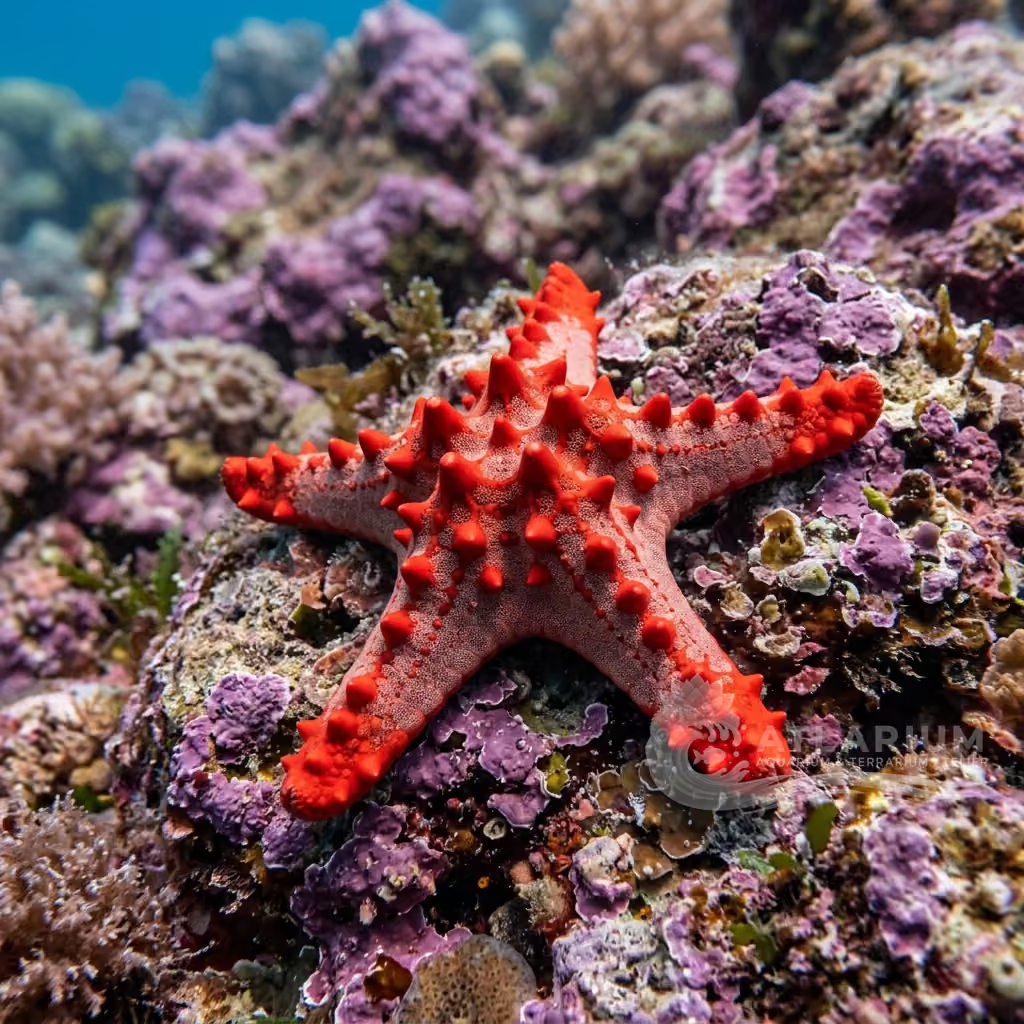
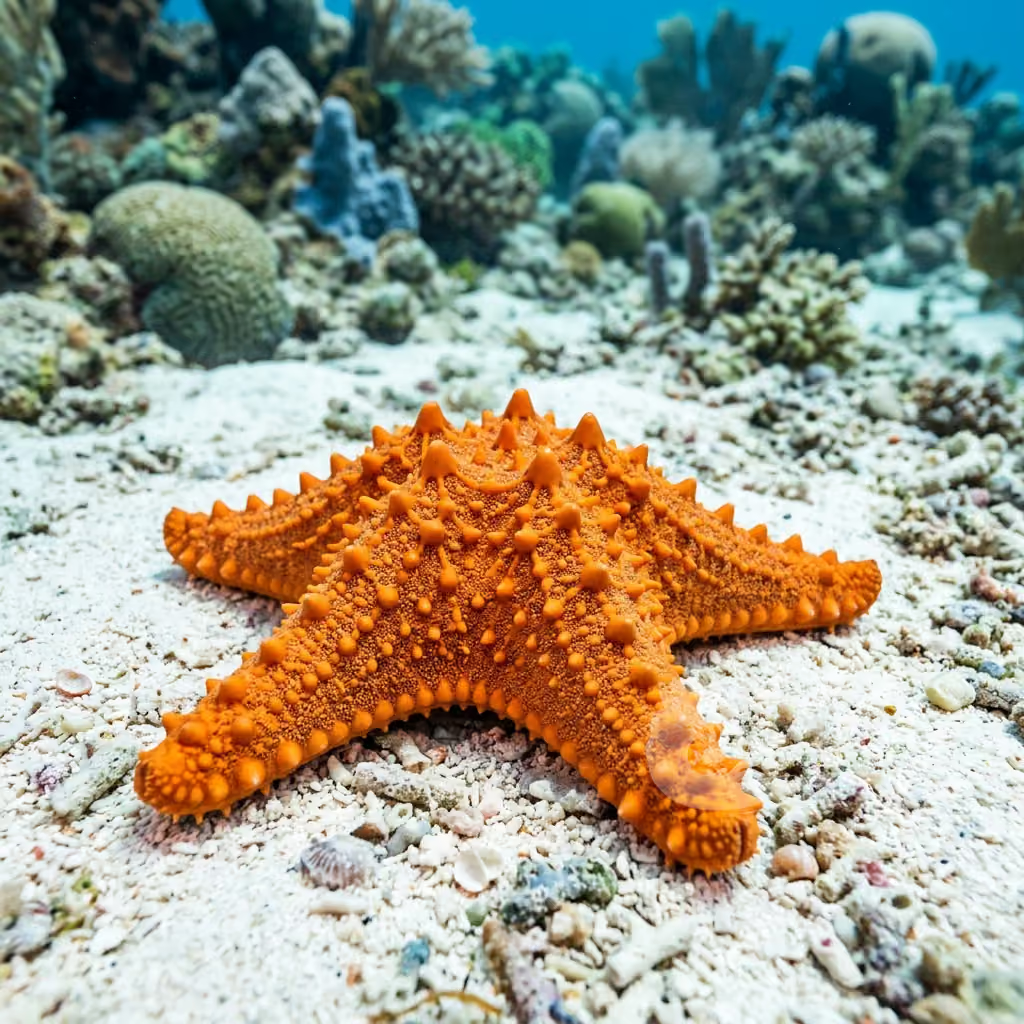
Mammillated starfish
Pentaceraster mammillatus
A massive tropical starfish defined by prominent, rounded tubercles across its dorsal surface. Its grand size strictly limits it to very spacious aquariums.
Temperatura da água
22 - 28 °C
Valor de pH
8.1 - 8.4
Tipo de água
Marinho
Tipo invertebrado
Starfish
Tamanho adulto
15 cm
Grupo mínimo
>= 1
KH
8 - 12 dKH
Papel ecológico
Scavenger
Sensibilidade ao cobre
High

Descrição da espécie
Geographical Origin and Habitat: Pentaceraster mammillatus is a tropical starfish native to the warm waters of the Western Indian Ocean and the Red Sea. It primarily inhabits sandy or muddy habitats adjacent to coral reefs, seagrass beds, and coastal lagoons at modest depths, generally between 1 and 20 meters. It moves slowly over soft substrates in search of organic particles and small prey.
Taxonomy: This species belongs to the class Asteroidea, order Valvatida, and family Oreasteridae. The genus Pentaceraster groups large starfish of robust build, characterized by a rigid calcified skeleton enriched with protruding bumps. There is no known genetic differentiation into subspecies, but the species shows a wide phenotypic variation depending on geographic origin.
Social Behavior: It is a solitary invertebrate with slow movements. It does not show complex social behaviors or territoriality towards conspecifics, although the presence of multiple specimens requires huge tanks to ensure sufficient food resources for all. Being an opportunistic predator, it constantly patrols the bottom and rocks, consuming everything in its path.
Coloration and Sexual Dimorphism: Coloration is extremely variable and fascinating: the body base can vary from beige-cream to gray, yellow-orange, or reddish. On the back, it features large rounded conical tubercles (called mammillae) arranged in regular rows, often of contrasting color compared to the body (such as bright red or dark brown). There is no externally identifiable sexual dimorphism.

Cuidado, criação e companheiros de tanque
Tank Setup: Requires a very spacious marine aquarium, with a minimum capacity of 300 liters for a single adult specimen. The setup must include wide areas of deep, mature sandy substrate, with few rocks positioned so as not to hinder the movement of the starfish. The arrangement of the rocks must be stable, as the physical strength of this invertebrate can easily move unsecured formations.
Diet and Feeding: It is an opportunistic carnivore and detritivore. In the aquarium, it cannot survive only on fish food waste: it must be fed directly by placing small pieces of shrimp, mussels, clams, or fresh fish near its body or under its arms two or three times a week. It is not reef safe: it actively feeds on sponges, small anemones, soft corals, and other benthic invertebrates.
Water Quality: It is extremely sensitive to water quality and sudden changes in parameters. Requires stable values: temperature between 23 and 26 °C, pH between 8.1 and 8.4, specific gravity constant at 1.023-1.025, and KH between 8 and 12. It does not tolerate copper or heavy metals in the tank. Acclimatization during introduction must be performed very slowly, preferably using the drip method for several hours.
Compatibility and Tankmates: Can coexist with robust, non-corallivorous marine fish (such as tangs, clownfish, and wrasses), but cohabitation with specialized starfish predators like triggerfish, pufferfish, and harlequin shrimp (Hymenocera picta) must be avoided. As indicated, it is not compatible with reef aquariums rich in soft corals, sponges, or small mollusks, which would be quickly consumed.
Aquarium Breeding: Breeding in the aquarium is extremely unlikely and undocumented in the home hobby. It is a species with separate sexes that simultaneously release eggs and sperm into the water for external fertilization. Larval development involves a complex planktonic stage requiring microscopic food and controlled current conditions, impossible to replicate in common filtration systems.
Risks and Diseases: The main risk is tissue necrosis, often manifested by the loss of parts of the arms or the melting of skin tissues. This pathology is generally caused by osmotic shock due to sudden water changes, incorrect salinity, or elevated nitrate and phosphate levels. Insufficient feeding leads to a slow organic decline culminating in the death of the invertebrate.

Origem e distribuição geográfica
Pentaceraster mammillatus is a tropical starfish native to the warm waters of the Western Indian Ocean and the Red Sea. It primarily inhabits sandy or muddy habitats adjacent to coral reefs, seagrass beds, and coastal lagoons at modest depths, generally between 1 and 20 meters. It moves slowly over soft substrates in search of organic particles and small prey.
Origem
Oceanos tropicais e recifesSul e Sudeste Asiático

Perfil de invertebrados
- Dieta
- Carnivore
- Carnivorous scavenger. Readily consumes detritus, bivalves, sponges, and pieces of meaty seafood.
- Papel ecológico
- Scavenger
- A large predatory sea star that patrols the sandbed and rockwork looking for sessile invertebrates.
- Tamanho adulto
- 15 cm
- Risco de salto
- No
- Sensibilidade ao choque
- High
- Vulnerable to rapid changes in salinity and dissolved oxygen. Drip acclimate slowly and keep fully submerged.
- Cálcio e minerais
- High
- Requires normal marine calcium levels to sustain its heavy, calcified skeleton.
- Muda
- Yes
- Cannot molt. Tissue decay (melting) indicates starvation, poor water quality, or osmotic shock.
- Reprodução
- Oviparous
- Not bred in captivity due to lack of knowledge regarding their planktonic larval needs.
- Compatibilidade e companheiros de tanque
- Reef safe
- NOT reef safe. Will consume corals, sponges, and anemones. Best suited for large, fish-only aquariums.

Espécies relacionadas
Recomendações agrupadas por parentes próximos, escolhas de acompanhantes e cuidados semelhantes.