Paddletail Starfish
Choriaster granulatus
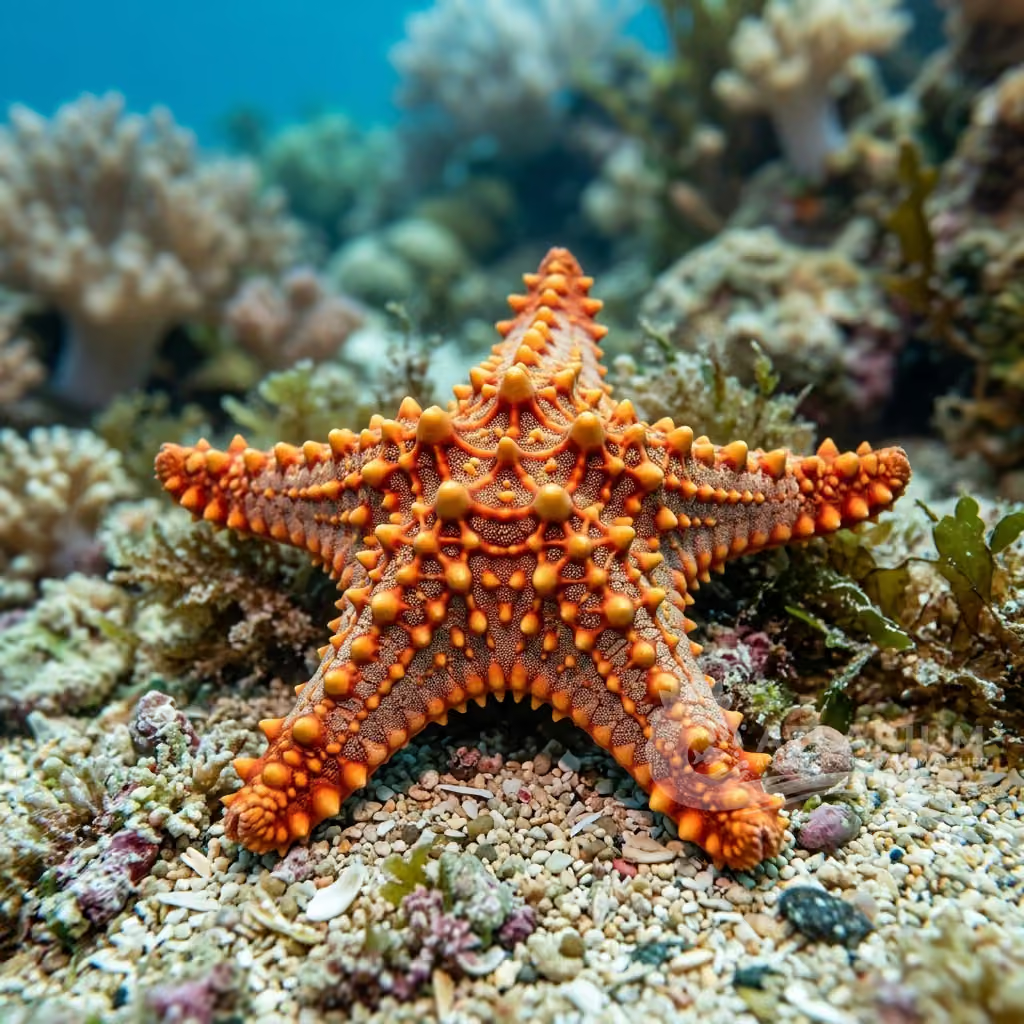
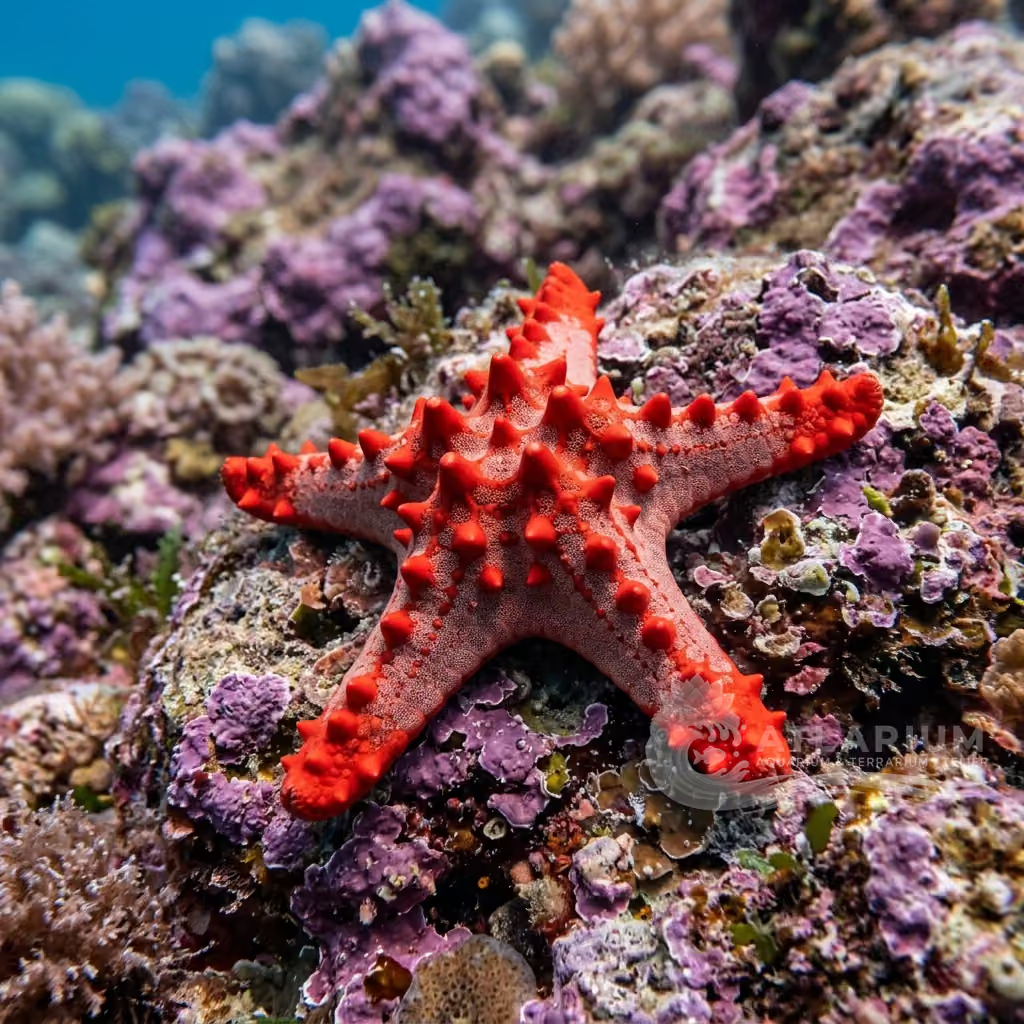
A massive, thick-bodied starfish from the Indo-Pacific, famously nicknamed the 'Doughboy' for its puffy appearance, but quite challenging to feed correctly.
Temperatura da água
23 - 28 °C
Valor de pH
8 - 8.3
Tipo de água
Marinho
Tipo invertebrado
Starfish
Tamanho adulto
27 cm
Grupo mínimo
>= 1
KH
8 - 12 dKH
Papel ecológico
Scavenger
Sensibilidade ao cobre
High

Descrição da espécie
Geographical Origin and Habitat: Tropical Indo-Pacific, from East Africa to the Great Barrier Reef. Found on deep outer slopes and sandy patches near reefs. They occur in shallow waters near reef slopes and sandy patches where organic detritus accumulates.
Taxonomy: Family Oreasteridae, genus Choriaster. Features a thick, pillow-like body with short, stubby, rounded arms resembling fingers. Member of the family Oreasteridae. Easily identified by its thick, pillow-like arms and granulated texture.
Social Behavior: Solitary and slow. Peaceful toward fish, but predatory toward sessile invertebrates. Forages on sand beds and flat rock zones. Peaceful and slow-moving, it spends its time scanning the substrate for food without disturbing other tank inhabitants.
Coloration and Sexual Dimorphism: Pale pinkish-beige or cream color, often with darker brown or reddish patches in the center. No visual differences between sexes. The contrast between the pinkish base and dark brown papulae on its back varies among individual specimens.

Cuidado, criação e companheiros de tanque
Tank Setup: Requires a very large tank of at least 400 liters. Needs a spacious sand bed with minimal rock obstructions to allow easy movement. Needs a large, established tank with plenty of open sand area. Rocks must be secure as the starfish is heavy and strong.
Diet and Feeding: Carnivorous scavenger. Feeds on detritus, carrion, sponges, and small anemones. Supplement with regular feedings of chopped fish or shrimp meat. Feed frozen shrimp, clams, and squid placed directly under the starfish. They require target feeding in captivity.
Water Quality: Keep standard marine parameters stable. pH 8.0-8.3, specific gravity 1.023-1.025. Avoid high nitrates and water chemistry fluctuations. High sensitivity to fluctuations in salinity and temperature. Drip acclimation for several hours is highly recommended.
Compatibility and Tankmates: Not reef-safe. Will consume corals, sponges, and sessile invertebrates. Best kept in a fish-only system with peaceful tankmates. Not safe for reef tanks with corals or sponges, which it may consume. Keep with peaceful fish.
Aquarium Breeding: Not recorded in home aquariums. Wild reproduction is sexual, releasing gametes into the water column. Captive spawning is currently undocumented due to the difficulty in maintaining viable larval cultures.
Risks and Diseases: Highly sensitive to copper treatments. Slow drip acclimation is mandatory to prevent tissue necrosis from osmotic shock. Highly prone to rapid tissue necrosis (RTN) if exposed to sudden drops in salinity or high nitrates.

Origem e distribuição geográfica
Tropical Indo-Pacific, from East Africa to the Great Barrier Reef. Found on deep outer slopes and sandy patches near reefs. They occur in shallow waters near reef slopes and sandy patches where organic detritus accumulates.
Origem
Oceanos tropicais e recifesÁfrica e Madagascar

Perfil de invertebrados
- Dieta
- Carnivore
- Scavenger and detritivore. It may also consume sponges, carrion, and small benthic invertebrates.
- Papel ecológico
- Scavenger
- Cruises over rubble and sand, sweeping up organic debris and small organisms.
- Tamanho adulto
- 27 cm
- Risco de salto
- No
- Sensibilidade ao choque
- High
- Must be acclimated over several hours. Sudden changes in pH or specific gravity will cause rapid disintegration.
- Cálcio e minerais
- High
- A massive sea star that requires excellent water chemistry and high calcium to support its bulk.
- Muda
- Yes
- Does not molt. Look for signs of 'melting' or white lesions, which are usually fatal without immediate intervention.
- Reprodução
- Oviparous
- Reproduction relies on broadcast spawning and a complex larval cycle that fails in aquariums.
- Compatibilidade e companheiros de tanque
- Reef safe
- Generally not recommended for delicate reef aquariums as it can knock over rocks and may consume some sessile invertebrates.

Espécies relacionadas
Recomendações agrupadas por parentes próximos, escolhas de acompanhantes e cuidados semelhantes.