Panda Uaru
Uaru fernandezyepezi
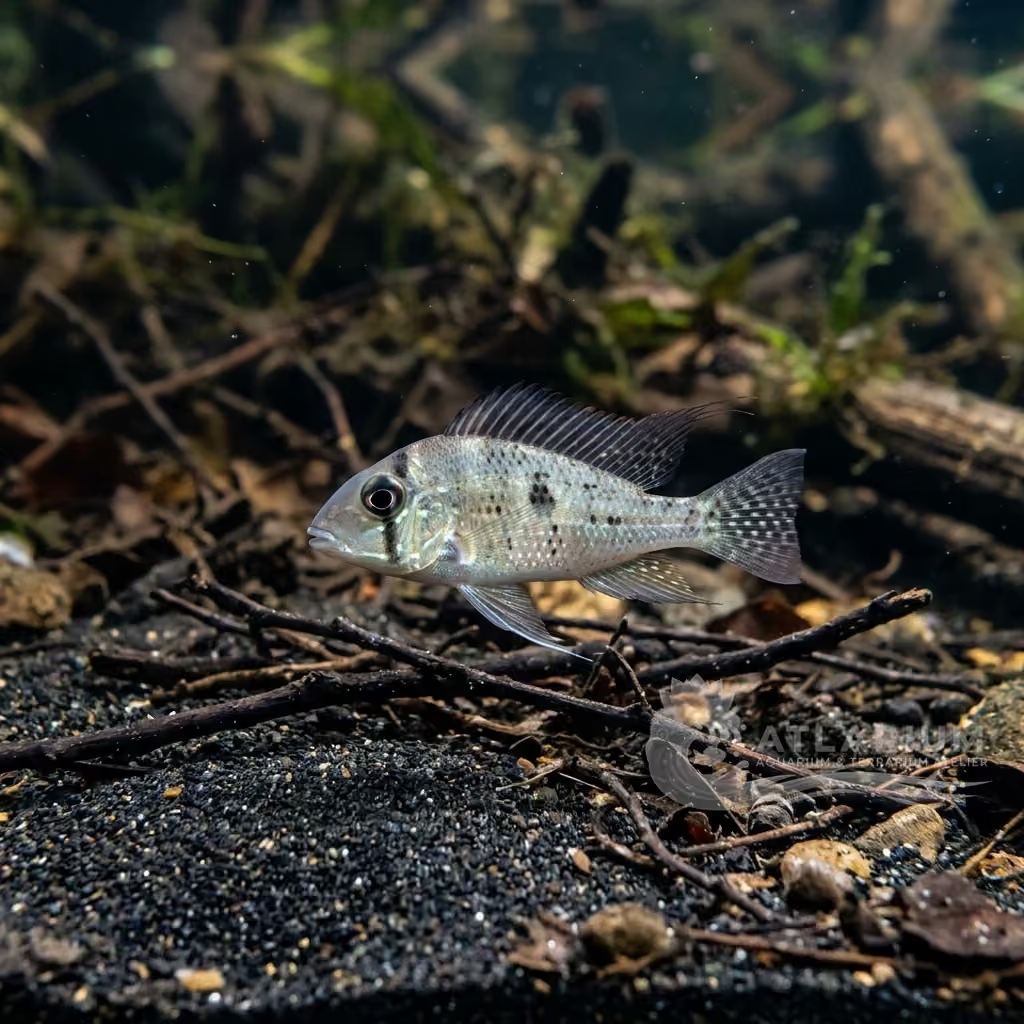
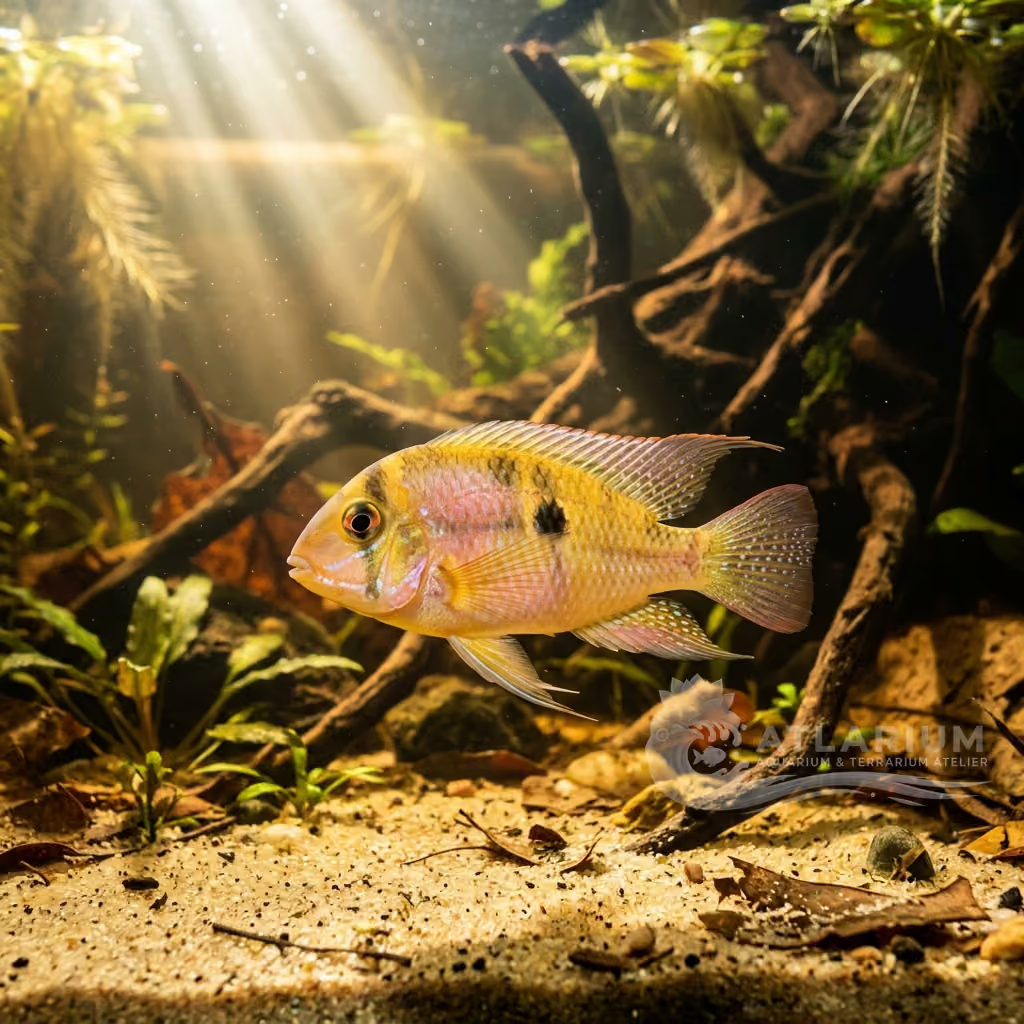
The precious and fragile 'Panda Uaru' (25 cm). Very rare cousin of the amphiacanthoides. The fernandezyepezi is an exclusive and unapproachable jewel of aquariology, renowned for the impressive white livery spotted with imposing black blotches (Panda effect). Extreme challenge for the breeder: it is frighteningly vulnerable to parasites, nitrates and chemical fluctuations, requiring immaculate and hyper-hot habitats.
Temperatura da água
28 - 30 °C
Valor de pH
4.5 - 6
Tipo de água
Água doce
Nível do tanque
Meio
Tamanho adulto
25 cm
Volume mínimo do tanque
>= 300 L
Grupo mínimo
>= 1
GH
1 - 5 dGH
KH
1 - 2 dKH
TDS
25 - 95 ppm
Condutividade
39 - 148 uS/cm

Descrição da espécie
Geographic Origin and Biotope: FishBase records Uaru fernandezyepezi from the Orinoco and Atabapo river basins in South America. It records that the species lives in rivers without being very abundant.
Taxonomy and Morphology: FishBase records a maximum length of 19.0 cm SL (24 cm TL).
Social Behaviour: This recovery makes no statement about social behaviour.
Colouration and Sexual Dimorphism: FishBase records that the species has no significant value as a food fish. This recovery makes no statement about colouration or sexual dimorphism.

Cuidado, criação e companheiros de tanque
Verified data: FishBase records Uaru fernandezyepezi as a freshwater, benthopelagic tropical species with a temperature range of 30–34 °C. Its listed distribution is the Orinoco River basin, in the Atabapo River basin. FishBase lists a maximum length of 19.0 cm SL for male/unsexed specimens, states that it occurs in rivers and is never very abundant, and records that both parents tend the clutch.

Origem e distribuição geográfica
Esta espécie é originária de: Sud America (Bacino dell'Orinoco, Rio Atabapo).
Origem
Amazônia, Orinoco e Guianas

Perfil de peixe
- Temperamento
- Semi-aggressive
- They are quite intelligent, relatively peaceful, and can become very responsive to their owners. While mildly territorial during breeding, they lack the extreme aggression seen in many other large cichlids. They form strong bonds with their mates and exhibit highly social behavior when kept in groups.
- Dieta
- Omnivore
- They are largely herbivorous in the wild, favoring aquatic plants, fruits, and soft wood. In the aquarium, they will rapidly consume any live plants, making planted tanks nearly impossible. Their diet should consist of high-quality cichlid pellets, blanched vegetables, and occasional protein treats like bloodworms or shrimp.
- Expectativa de vida
- 8-12 years
- Tamanho adulto
- 25 cm
- Proporção sexual
- Pair
- They are nearly impossible to sex outside of spawning behavior. Purchasing a group of juveniles and allowing them to pair off naturally is the most reliable method for obtaining a breeding pair. Unpaired adults can usually be kept together without severe aggression, provided the tank is sufficiently large.
- Frequência de alimentação
- Twice daily
- Adult Uaru should be fed once or twice a day with large, sinking pellets and vegetable matter. Providing romaine lettuce, zucchini, or cucumber provides excellent enrichment and aids their digestion. Young Uaru require more frequent feedings of higher protein foods to support their rapid growth phase.
- Carga biológica
- High
- These large, heavy-bodied cichlids produce a massive bioload that requires excellent filtration. As messy eaters and large waste producers, they demand rigorous maintenance routines. Frequent large water changes and powerful canister filters or sumps are essential to keep nitrates in check.
- Fluxo
- Stagnant
- They originate from the slow-moving blackwater rivers and flooded forests of South America. They prefer a moderate flow that keeps the water clean without creating a raging torrent. Providing areas of calmer water behind large pieces of driftwood allows them to rest comfortably.
- Risco de salto
- Yes
- While not particularly prone to jumping, their large size and sudden bursts of speed can dislodge loose aquarium lids. A sturdy glass canopy is recommended to prevent water loss and ensure they remain securely inside the tank. Floating plants can reduce their skittishness and minimize sudden, splashing movements.
- Reprodução
- Oviparous
- Breeding is notoriously difficult, requiring extremely soft, highly acidic water. They are biparental substrate spawners that display a remarkable breeding adaptation where fry feed on their parents' body mucus. This unique behavior mimics Discus and makes raising the fry without the parents exceedingly difficult.
- Compatibilidade e companheiros de tanque
- Peaceful
- They are generally peaceful for a large cichlid, especially when kept with similarly sized, robust companions. They should be housed with peaceful South American cichlids, large characins, or plecos. They will, however, readily consume any fish small enough to fit into their mouths.
- Nível do tanque
- Middle
- They generally inhabit the middle and lower levels of the aquarium. They enjoy picking at driftwood and foraging along the substrate for fallen food. A tall tank with plenty of vertical swimming space accommodates their deep-bodied profile nicely.

Modelos e parâmetros científicos
FishBase
Acesso aos dados científicos oficiais da espécie
FishBase v25.04Dados sincronizados em: 15/06/2026
- Nível trófico
- 3,3 ± 0,5 se
- Resiliência
- Média (1,4 - 4,4 anos)
- Unicidade filogenética (PD50)
- 0.75
- Relação bayesiana comprimento-peso
- a = 0.02692, b = 3.02
- VulnerabilidadeVulnerabilidade baixa (13 / 100)

Espécies relacionadas
Recomendações agrupadas por parentes próximos, escolhas de acompanhantes e cuidados semelhantes.