Panda Apisto
Apistogramma nijsseni
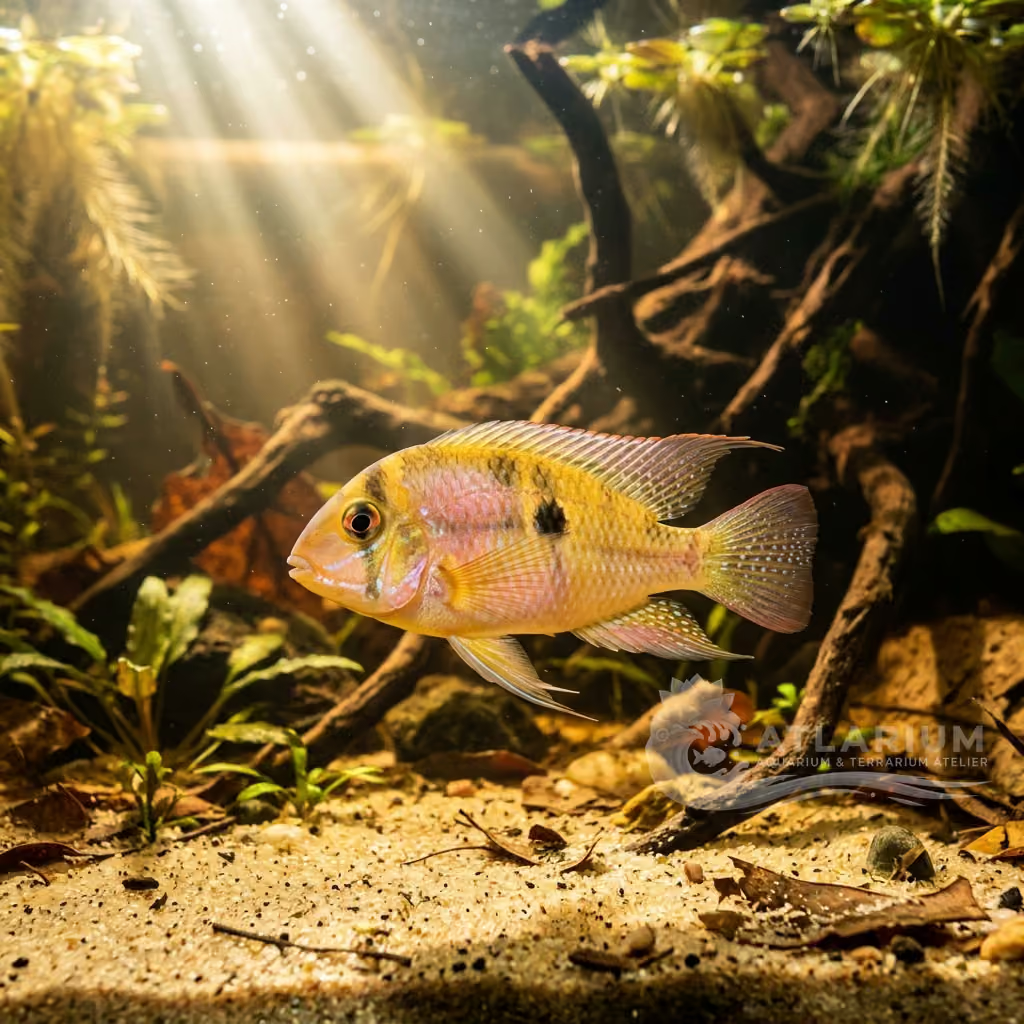
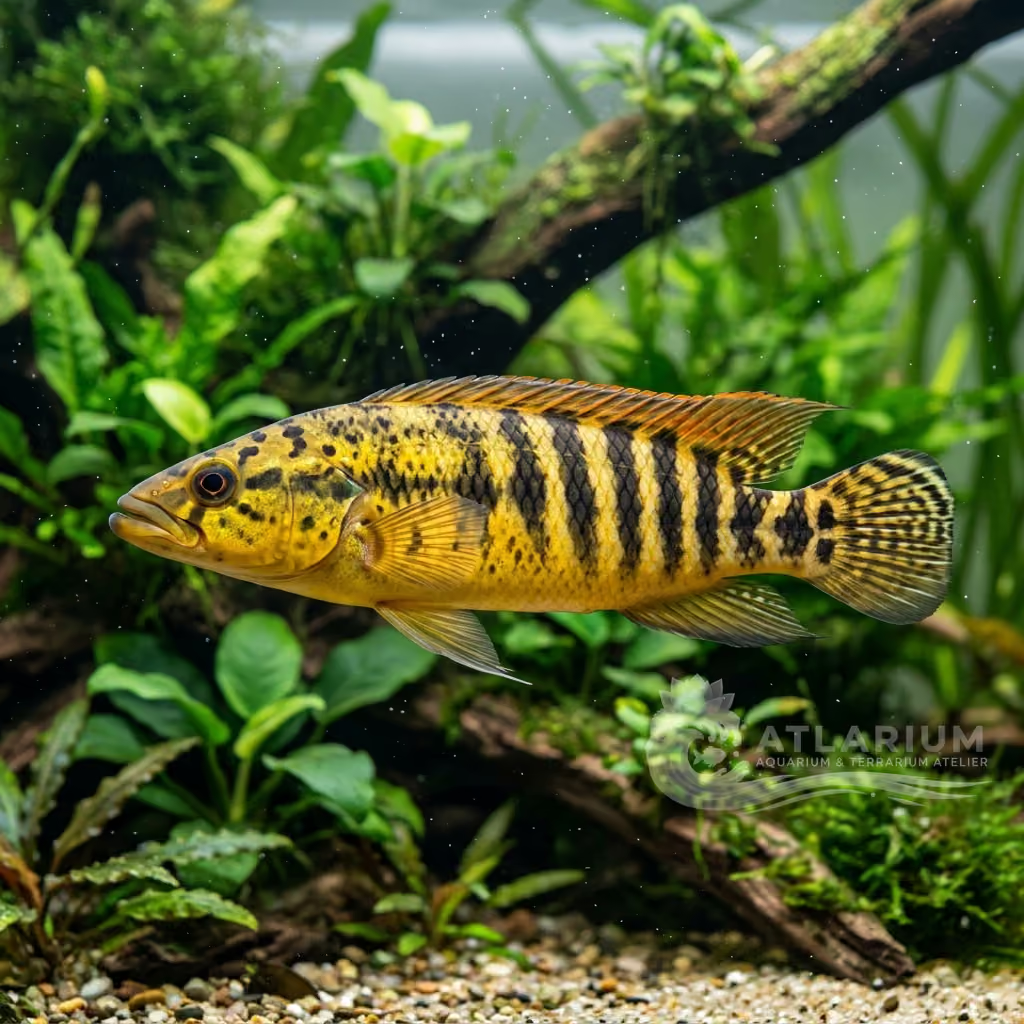
The 'Panda' of dwarf cichlids. A complete reversal of the norm: the female is the showstopper, sporting a brilliant lemon-yellow body broken by massive jet-black 'panda' blotches. Highly demanding of acidic blackwater.
Temperatura da água
23 - 28 °C
Valor de pH
5 - 6.5
Tipo de água
Água doce
Nível do tanque
Parte inferior e intermediária
Tamanho adulto
7,5 cm
Volume mínimo do tanque
>= 100 L
Grupo mínimo
>= 1
GH
1 - 5 dGH
KH
1 - 2 dKH
TDS
25 - 95 ppm
Condutividade
39 - 148 uS/cm

Descrição da espécie
Geographical Origin and Habitat: Very restricted area in the Ucayali/Carahuayte river basin (Peru). Lives in small and isolated "Igarapés" (slow forest streams) submerged by rotting leaf beds in deeply acidic and amber waters, known as Blackwater.
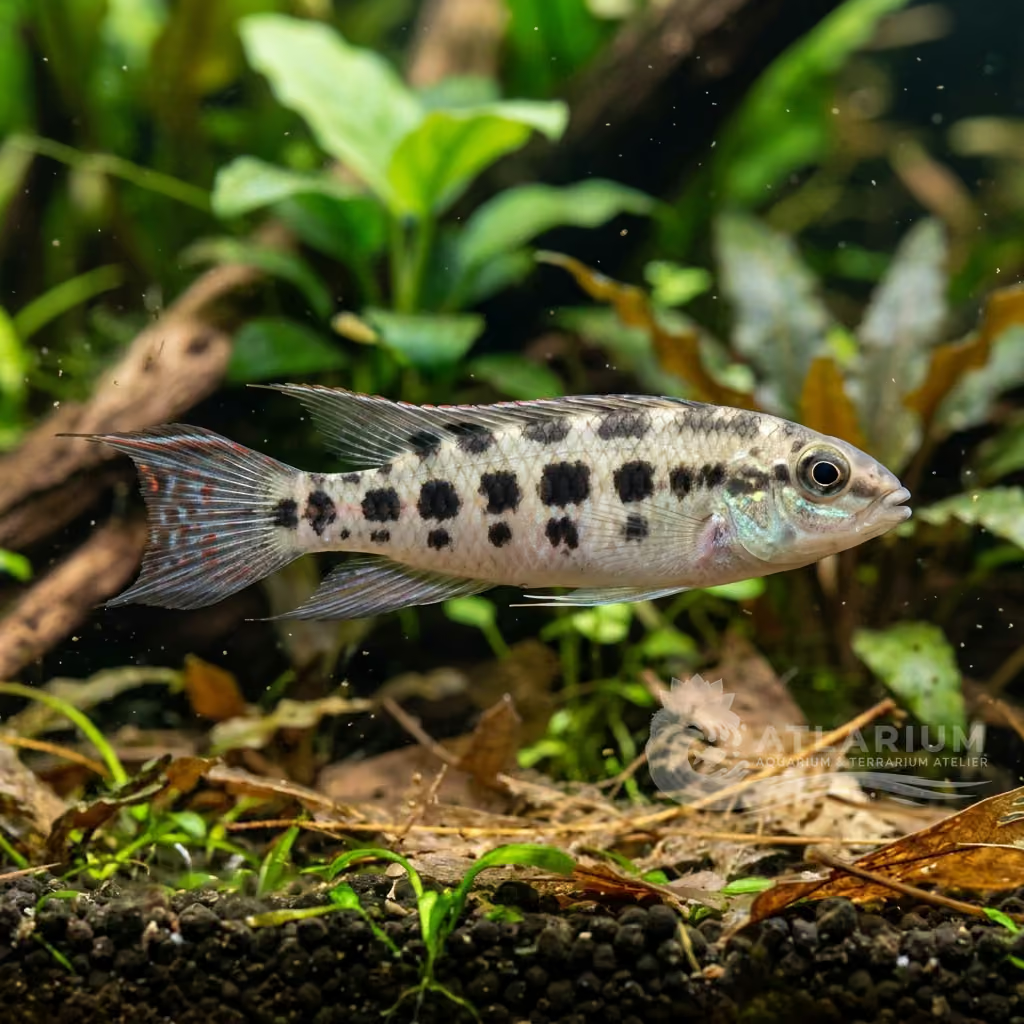
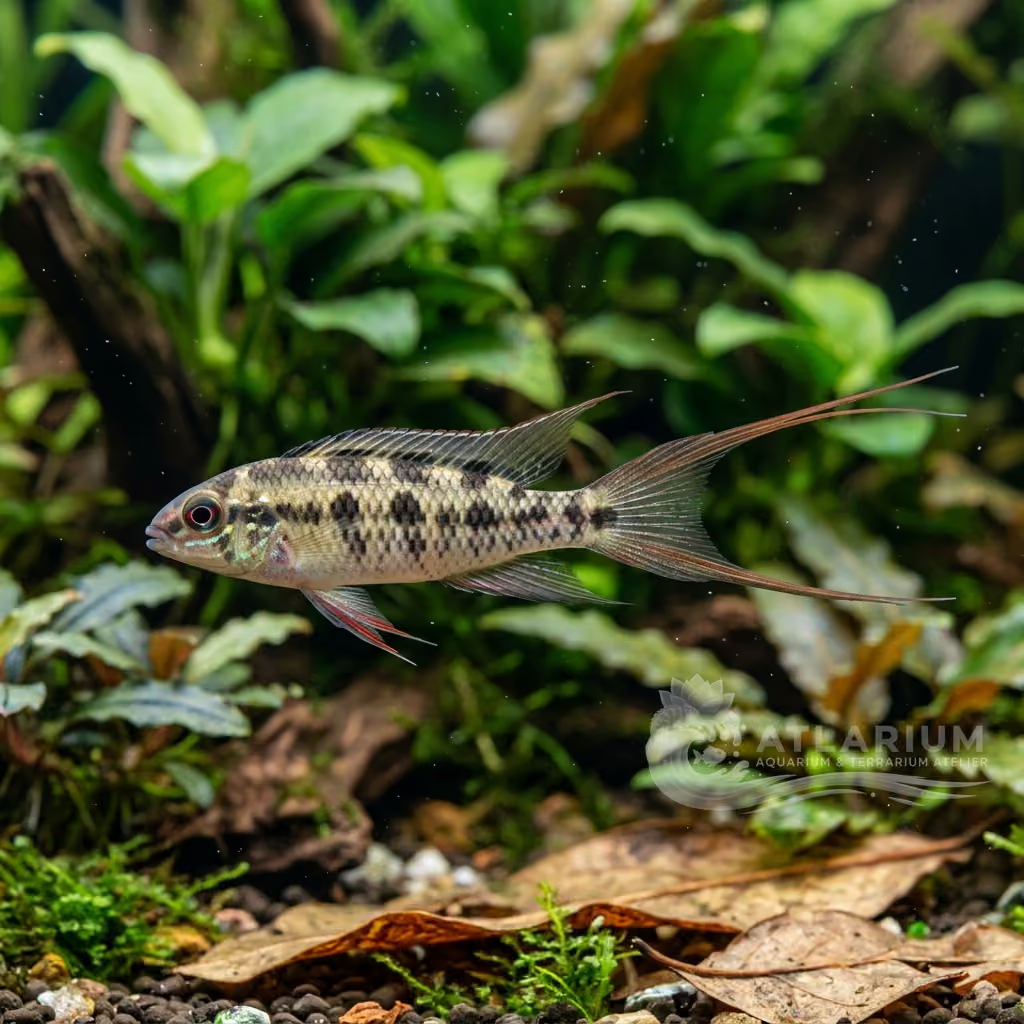
Taxonomy and Morphology: Panda Dwarf Cichlid (Apistogramma nijsseni). A stocky Dwarf Cichlid, very robust in body, with a sloping facial profile. Gives its name to the "Nijsseni" group, united by imposing males and extreme chromatic sexual dimorphism.
Social Behavior: One of the most aggressive species of the genus. They establish pair bonds (often faithful) that are fierce towards any intruder or member of the same species. It is almost impossible to keep more than one pair without fatal incidents in tanks under a meter and a half.
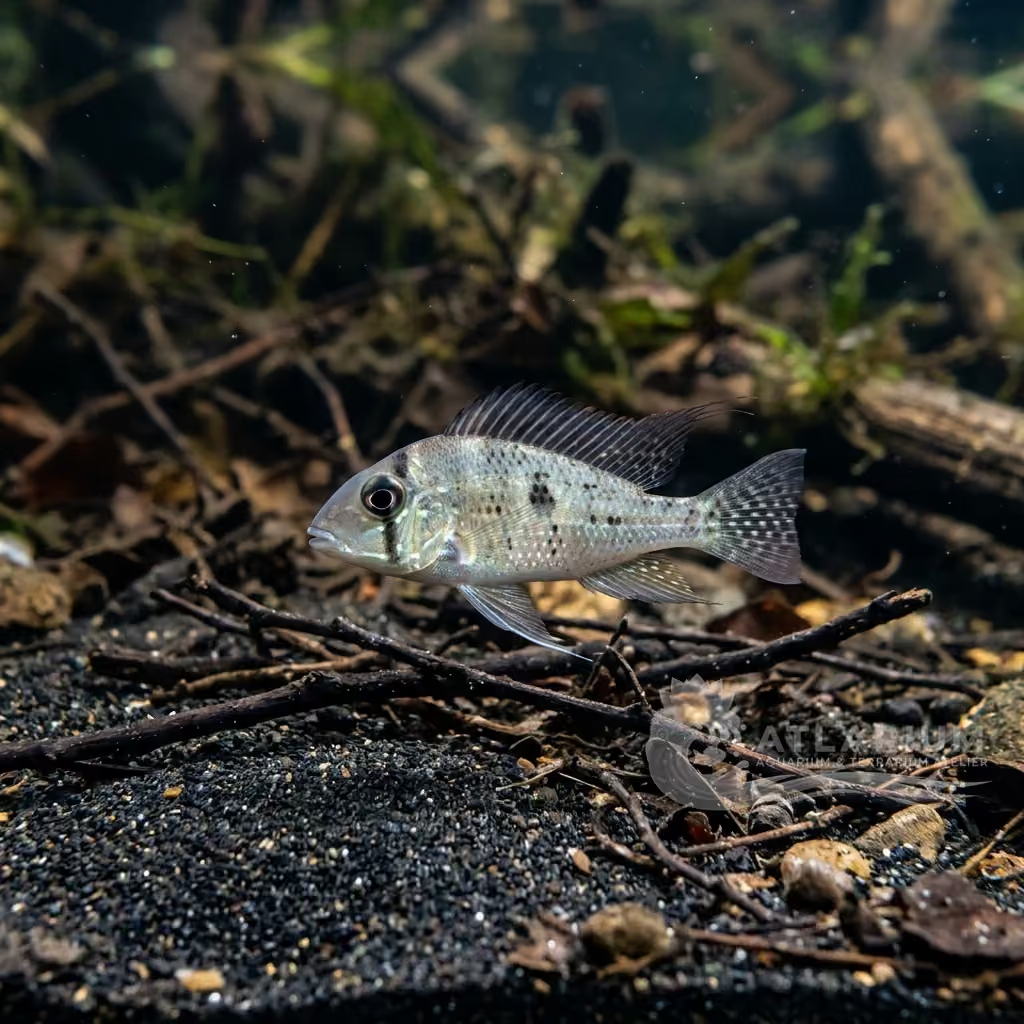
Coloration and Sexual Dimorphism: Stunning pastel males (yellow/green) with the entire outer edge of the caudal fin carmine red. The female gives the name "Panda" to the species: a fluorescent yellow interrupted by three huge black spots (on the cheek, in the middle of the flank and on the caudal peduncle).

Cuidado, criação e companheiros de tanque
Aquarium Setup: Minimum 60-80 cm (24-32 inches) for ONLY ONE formed PAIR. Specialized flooded forest setup: a massive tangle of wood and layers of oak leaves on the bottom. The presence of coconuts (dens) and fine sand is vital for courtship.
Diet and Feeding: Voracious leaf-litter micro-predator. Once acclimated it is very voracious, accepting both good sinking granules and frozen prey (bloodworms, brine shrimp, mysis). Live food (daphnia) rapidly enhances coloration in both sexes.
Water Quality: Not suitable for chemistry beginners. Essential soft and clearly acidic water (optimal pH 5.5). High bacterial levels or the presence of nitrates quickly lead to its decay (pale gills or accelerated breathing).
Compatibility and Cohabitation: Due to their ruthless defensive skills (the Panda female has no mercy), they should only be paired with mid-high and fast "Dither fish" (Pencil Tetras or Cardinals). Never associate them with bottom-dwelling Loricariids in small tanks: they would be disemboweled.
Aquarium Breeding: Difficult to induce harmony: if they do not like each other, the male will assassinate the female (or vice versa). If they mate in a cave, the female defends the den alone while the male patrols the entire quadrant of the aquarium attacking the glass.
Risks and Diseases: Like all its group, it is extremely fragile to bacterial attacks if exposed to pollutants. Couple incompatibility is the leading cause of violent death (from stress or submission) documented by hobbyists.

Origem e distribuição geográfica
Very restricted area in the Ucayali/Carahuayte river basin (Peru). Lives in small and isolated "Igarapés" (slow forest streams) submerged by rotting leaf beds in deeply acidic and amber waters, known as Blackwater.
Origem
Extra-Amazônica América do Sul

Perfil de peixe
- Temperamento
- Semi-aggressive
- This species is generally peaceful toward unrelated tank mates but displays strong territoriality toward other dwarf cichlids and conspecifics. During the spawning and brood care phases, both the male and female become extremely defensive and aggressive, chasing away any intruders that approach their breeding cave. In non-breeding periods, they are relatively shy and prefer to retreat into quiet, shaded areas of the aquarium.
- Dieta
- Omnivore
- As micro-predators in nature, Apistogramma nijsseni require a diet rich in small invertebrates and organic matter. In captivity, they thrive on high-quality live and frozen foods such as baby brine shrimp, daphnia, cyclops, and bloodworms. While they can eventually be trained to accept sinking pellets or flakes, a varied live and frozen diet is crucial for maintaining their vibrant colors and overall health.
- Expectativa de vida
- 3-5 years
- Tamanho adulto
- 7.5 cm
- Proporção sexual
- 1:1 ratio
- This species forms strong, monogamous pair bonds, making a 1:1 stocking ratio the most suitable for home aquariums. Keeping them in harems is generally not recommended as the bonded pair may aggressively target and harass the unbonded female. In larger setups with ample footprint and natural boundaries, multiple pairs can be kept, but close monitoring is required to manage territorial disputes.
- Frequência de alimentação
- Twice daily
- It is best to feed these dwarf cichlids twice a day with small, controlled portions that they can consume within a couple of minutes. Feeding them smaller amounts more frequently helps replicate their natural foraging behavior and prevents excess food from spoiling the water. Care should be taken to ensure that bottom-dwelling tank mates are actually receiving the food before upper-level species consume it all.
- Carga biológica
- Low
- Although Apistogramma nijsseni is a small dwarf cichlid with a low physical waste output, it is highly sensitive to accumulated organic compounds. Efficient filtration, ideally through a sponge filter or slow-flow canister filter, is necessary to keep waste levels at zero. Regular water changes are critical to prevent the accumulation of nitrates, which can quickly compromise the immune system of these delicate fish.
- Fluxo
- Stagnant
- Coming from slow-moving blackwater streams and creeks, Apistogramma nijsseni prefers a weak to moderate water current. Strong currents can exhaust these small fish and cause them chronic stress, which makes them more susceptible to disease. The filtration system should be adjusted, or baffled, to provide gentle water movement while ensuring efficient biological filtration.
- Risco de salto
- Yes
- While not habitual jumpers, Panda Apistos can leap out of the tank when startled, stressed, or pursued by territorial tank mates. To prevent fatal accidents, a tight-fitting lid or cover slides are essential additions to the aquarium setup. Providing plenty of floating plants and complex structure also helps reduce their stress levels, reducing the likelihood of flight jumps.
- Reprodução
- Oviparous
- Apistogramma nijsseni is a cave-spawning species where the female plays the primary role in guarding the eggs and fry. The female chooses a secluded cave, lays her eggs on the ceiling, and then turns a bright canary-yellow with distinct black markings to warn intruders. For successful breeding, the water must be extremely soft and acidic, with a pH between 5.0 and 6.0, as harder water will prevent the eggs from hatching.
- Compatibilidade e companheiros de tanque
- With caution
- They are best kept with small, peaceful dither fish such as pencilfish, hatchetfish, or small tetras that occupy the upper water levels. These dither fish help make the Apistos feel secure and encourage them to swim in the open. They should not be kept with other cichlids or aggressive bottom-dwellers, and caution is advised when keeping them with dwarf shrimp, which will likely be viewed as food.
- Nível do tanque
- Middle/Bottom
- Apistogramma nijsseni is primarily a bottom-dwelling cichlid that spends most of its time near the substrate. They actively forage along the bottom, searching for food particles and exploring caves, leaf litter, and driftwood crevices. While they may occasionally ascend to the middle water levels, especially during feeding or courtship, they remain closely tied to the lower third of the aquarium.

Modelos e parâmetros científicos
FishBase
Acesso aos dados científicos oficiais da espécie
FishBase v25.04Dados sincronizados em: 15/06/2026
- Nível trófico
- 3,3 ± 0,4 se
- Resiliência
- Média (1,4 - 4,4 anos)
- Unicidade filogenética (PD50)
- 0.5
- Relação bayesiana comprimento-peso
- a = 0.0182, b = 2.99
- VulnerabilidadeVulnerabilidade baixa (10 / 100)

Espécies relacionadas
Recomendações agrupadas por parentes próximos, escolhas de acompanhantes e cuidados semelhantes.