Água doceEspecialista
©AI Generated·Proprietary
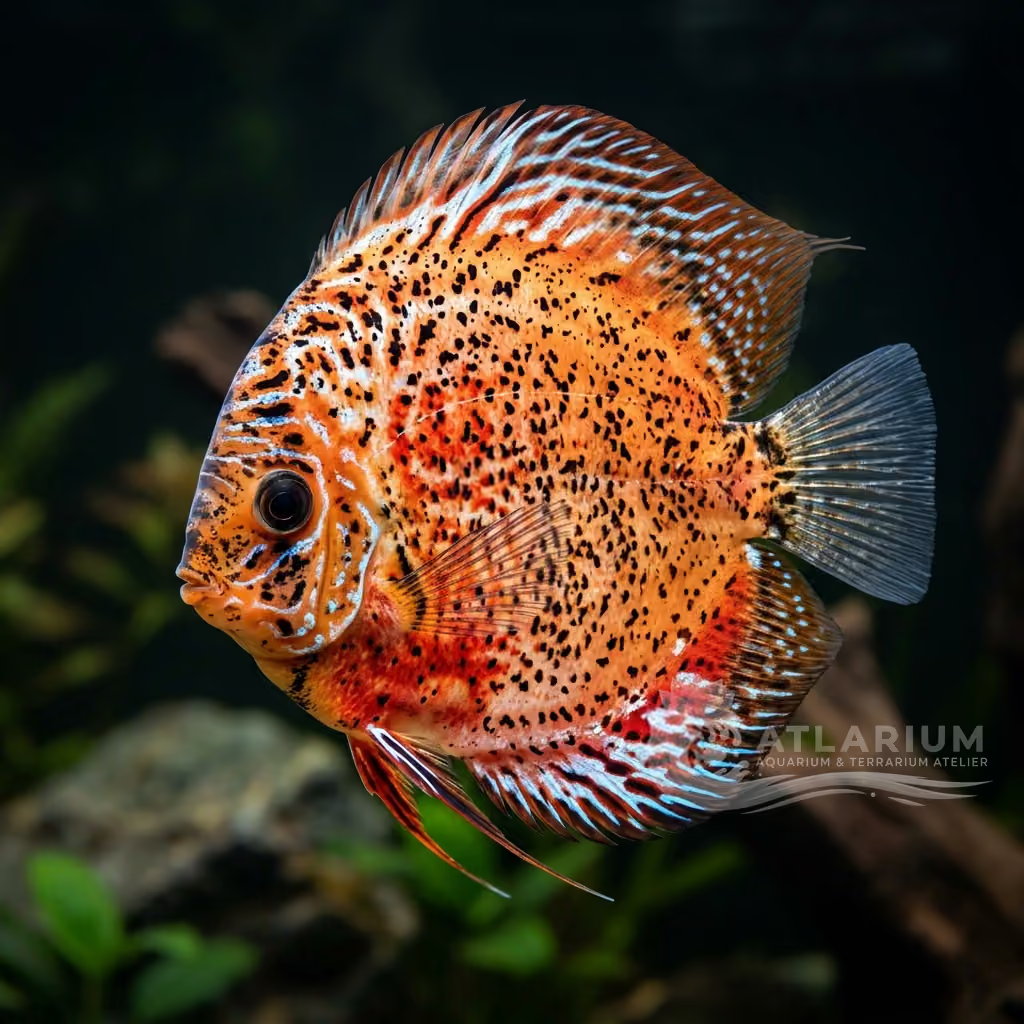
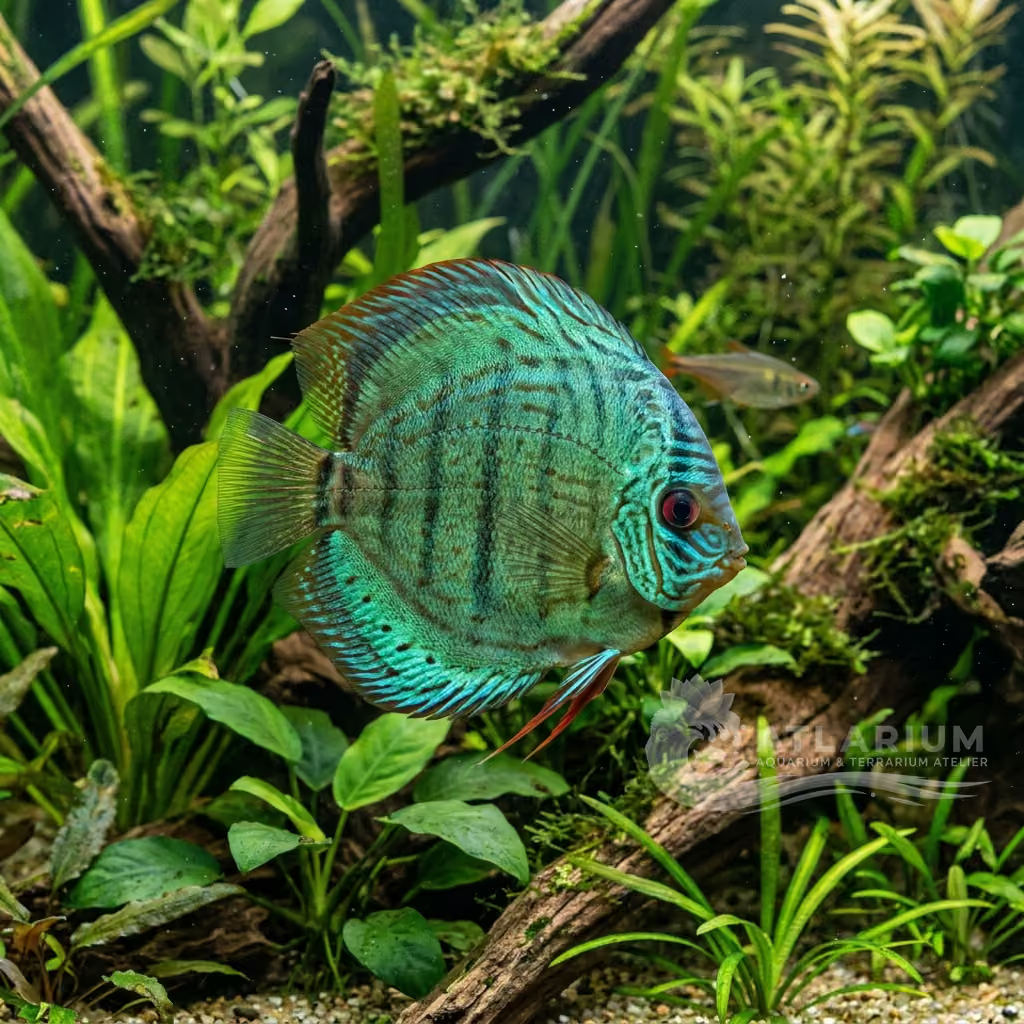
Symphysodon discus — Discus (Symphysodon discus)

Discus

Symphysodon discus

The Discus is the legendary "King" of the freshwater aquarium. As large as a dessert plate (20 cm), it moves with hypnotic slowness and majesty. Parents feed their young via a skin mucus, in one of nature's most moving displays. However, it is a fish for experts only. The King is paranoid, fragile, and needs extreme thermal conditions (28-30°C) to survive. It does not tolerate fast tankmates that steal its food and needs schools of at least 6 to dilute internal hierarchies, otherwise the leader will bully the lowest-ranking fish to death.

Temperatura da água

28 - 32 °C

Valor de pH

5 - 6.5

Tipo de água

Água doce

Nível do tanque

Meio

Tamanho adulto

20 cm

Volume mínimo do tanque

>= 300 L

Grupo mínimo

>= 5

GH

1 - 5 dGH

KH

1 - 3 dKH

TDS

25 - 105 ppm

Condutividade

39 - 164 uS/cm

Descrição da espécie

Geographical Origin and Habitat: South America, strictly endemic to the mighty Amazon basin (Brazil, Peru, Colombia). It predominantly inhabits intensely flooded "Igapó" forests, sluggish swamps, and the silent, dead-end backwaters of massive rivers (predominantly "Blackwater" and "Clearwater" tributaries). It stubbornly hovers deep within pitch-black shadows provided by an impenetrable, submerged tangle of massive tree roots, thick riparian vegetation, and a thick floor of sunken, rotting leaves. The Wild Discus utterly despises strong currents, violent water flow, and direct, blinding sunlight.
Taxonomy and Morphology: Universally crowned by the hobby as the undisputed "King of the Aquarium." The genus name *Symphysodon* owes its origin to the fish's legendary, saucer-like profile—a shape totally unique among freshwater fish. Its violently flat, almost perfectly circular, pancake-like body is a masterful evolutionary adaptation engineered to let it glide silently, "blade-on," through dense, tightly-packed sunken branches without being detected. Adults reach awe-inspiring, dinner-plate dimensions: 15-20 cm (6-8 inches) in diameter. Their tiny, delicate mouths and fleshy lips are designed for precise, surgical "picking" of food rather than ripping or gulping.
Social Behavior: His Majesty is regal, incredibly elegant, and glacially slow. Intensely gregarious, it is a strict, obligate schooling fish that demands the security of a strong, highly structured hierarchy (an absolute minimum of 6-8 individuals). They are painfully shy, highly high-strung, and instantly communicate their stress levels in a fraction of a second by flushing dark or clamping their fins. Discus maintain arguably the most complex and brutal "pecking order" in the hobby: there is always a tyrannical "Alpha" who rules the tank, and a deeply stressed, perpetually bullied "Omega" forced to the bottom. A large group is physically necessary to disperse this relentless aggression (which usually manifests as slow, forceful head-butts to the flanks).
Coloration and Sexual Dimorphism: Pure, magnetic wild spectacle. The "Wild Form" (encompassing Heckel, Brown, Green, and Blue strains) presents a base canvas ranging from deep, rusty reddish-brown, to pale mustard-yellow, or olive-green. The body is sharply severed by nine (9) thick, bold, dark vertical bars (which are the ultimate mood ring: an Alpha turns them completely "off," while a terrified or sick Discus turns them pitch-black). The face, dorsal/anal fins, and often the outer perimeter of the disc are violently streaked and laced with a glowing, neon "Wild Turquoise" or Electric Blue vermiculation, offset by a glaring, demonic scarlet-red iris. **Absolute Zero Dimorphism:** Males and females are completely, 100% physically indistinguishable. You can only confirm sex during the literal act of spawning, when the female drops a thick, blunt, cylindrical breeding tube, whereas the male's tube is thin, sharply pointed, and conical.

Cuidado, criação e companheiros de tanque

Aquarium Setup: The setup strictly dictates life or death. Managing an adult school requires enormous, heavily committed aquariums: an absolute life-support minimum of 300 liters (75 Gallons), though 400-500+ liters (100-125+ Gallons, over 4 feet/120 cm long) is the actual standard. *Vertical height is crucial:* the water column must be a minimum of 50 cm (20 inches) deep. The aquascape must flawlessly replicate the Rio Negro: the substrate MUST be fine, soft sand (gravel collects deadly waste and ruins their foraging), dominated by colossal, branching bogwood (Manzanita) dangling down from the surface to create safe "shadow curtains", and the lighting must be intensely dimmed by a canopy of floating plants (like Frogbit). Tannin-rich, tea-colored water (from Catappa leaves) acts as a powerful anti-depressant, preventing catastrophic panic attacks and "glass-smashing" darting.
Diet and Feeding: A foraging Macro-omnivore (Micro-Predator). They feed by hovering over the sand and forcefully "blowing" jets of water at the substrate to unearth hidden invertebrates, or gently picking algae. They are notoriously, excruciatingly finicky and frustrating to feed. They DEMAND premium-grade, slow-sinking or bottom-dwelling foods: high-end Discus-specific granules (laced with Garlic/Spirulina), high-quality frozen bloodworms, artemia, and white worms. Hardcore breeders often use hyper-protein "Beefheart Mix" pastes to achieve monstrous growth, but this is a double-edged sword that devastatingly pollutes the water in minutes. You must feed them tiny amounts, but constantly (juveniles demand feeding up to 5 times a day).
Water Quality: Discus rarely die from mysterious diseases; they die from the owner's ignorance of water chemistry. Their tolerance for chemical fluctuations is zero. They demand the absolute "Holy Grail" of water conditions: **Extreme Heat** (locked solidly between 28°C and 30°C / 82-86°F; dropping below 80°F is a death sentence), **Extreme Softness** (Reverse Osmosis water is virtually mandatory, KH 1-3, GH 2-6), and **Strict Acidity** (pH 5.5 - 6.8). Above all else, the tank MUST remain biologically immaculate. Nitrates must be permanently pegged near zero, with zero ammonia. You must either deploy titanic filtration with massive, relentless water changes (e.g. 30-50% weekly or a constant automated drip system), or the horrific Hexamita parasite will inevitably butcher the entire school.
Compatibility and Cohabitation: The ideal Discus tank is a majestic, species-only showcase sanctuary. They are too slow and timid to compete for food. The only acceptable tankmates—used specifically as "dither fish" to signal to the Discus that the coast is clear—are massive, tight schools of slow, heat-loving South American tetras (Cardinal Tetras or Rummy-nose Tetras), or large, gentle benthic grazers (like *Corydoras sterbai* and Bristlenose Plecos). It is an unforgivable, capital crime to mix them with Angelfish (which carry latent parasites and aggressively out-eat them), boisterous tetras (Serpae), fin-nipping Barbs (which will shred the Discus's long, trailing fins), or any territorial cichlids.
Aquarium Breeding: One of the most mystical, profoundly moving, and baffling events in nature; for a beginner, breeding them borders on witchcraft. Over years within a school, a pair will naturally bond. They will spasmodically and violently "peck" clean a smooth, vertical surface (a terracotta breeding cone or filter intake). They lay hundreds of bright orange eggs. The world-unique magic happens upon hatching: for the first critical week, the microscopic, dark "wriggler" larvae do not eat plankton. Instead, they physically swarm and attach themselves to the flanks of their mother and father, violently grazing and feeding off a thick, hyper-nutritious, protein-rich white mucus secreted by the parents' skin. Removing the parents guarantees the fry will instantly starve to death.
Risks and Diseases: 1. Internal Flagellates (Hexamita / "Hole in the Head"): This is the inescapable Curse of the Discus. If water quality slips, or a fish is hopelessly bullied by the Alpha, its gut lining is destroyed. It will excrete thick, white, stringy feces, completely refuse food for months, hide in the darkest corner (with its black stress bars blazing), and literally waste away into a skeletal "knife-blade," eventually developing open, rotting sores on its forehead. It is nearly incurable in late stages. 2. Panic Darting (Glass Smashing): Suddenly turning on bright room/tank lights short-circuits their brains; a Discus will rocket blindly at bullet speed in the dark, shattering its skull or snapping its spine against the glass or rocks. Automatic dimmers are mandatory. 3. Irreversible Stunting ("Owl Face"): The ultimate tragedy is buying a 2-inch Discus and locking it in a 30-Gallon tank with poor food. The body permanently halts growth, but the eyes keep growing, resulting in a grotesquely deformed, giant-eyed "stunted" fish that suffers a pitiful, premature death.

Origem e distribuição geográfica

South America, strictly endemic to the mighty Amazon basin (Brazil, Peru, Colombia). It predominantly inhabits intensely flooded "Igapó" forests, sluggish swamps, and the silent, dead-end backwaters of massive rivers (predominantly "Blackwater" and "Clearwater" tributaries). It stubbornly hovers deep within pitch-black shadows provided by an impenetrable, submerged tangle of massive tree roots, thick riparian vegetation, and a thick floor of sunken, rotting leaves. The Wild Discus utterly despises strong currents, violent water flow, and direct, blinding sunlight.

Origem

Cosmopolita ou apresentadoAmazônia, Orinoco e Guianas

Perfil de peixe

Temperamento
Peaceful
Heckel Discus are famously sensitive, shy, and require a stable, quiet environment to thrive. They are majestic and serene when comfortable, but highly prone to stress-induced illnesses if their strict needs are not met. They build a noticeable rapport with their caretaker, often coming to the glass to beg for food.
Dieta
Carnivore
Their natural diet consists of insects, crustaceans, and plant detritus found in flooded forests. In the aquarium, they require a varied, high-quality diet of frozen bloodworms, brine shrimp, and specialized discus formulations. Ensuring their diet includes high-quality vitamins is crucial for maintaining their health and vibrant barring.
Expectativa de vida
10-15 years
Tamanho adulto
20 cm
Proporção sexual
Pair
They should be kept in groups of at least 5 to 6 to allow for natural socialization and pair formation. A clear pecking order will establish itself within the group, which spreads out minor aggression. Keeping them in too small a group often leads to the weakest fish being relentlessly bullied.
Frequência de alimentação
Twice daily
Adult Heckel Discus should be fed two to three times daily with high-quality foods. Juveniles require intense feeding schedules, up to five times a day, to achieve their full growth potential. Care must be taken not to overfeed to the point of spoiling the water quality.
Carga biológica
Medium to High
The Heckel Discus produces a substantial bioload, necessitating stringent aquarium maintenance. Because they are notoriously sensitive to dissolved waste, heavy biological filtration and pristine water conditions are non-negotiable. Frequent and large water changes are essential to keep nitrate levels virtually undetectable.
Fluxo
Stagnant
They demand very low water flow, mimicking the stagnant or slow-moving blackwater rivers of their origin. Strong currents cause severe stress and physical exhaustion. Use spray bars or baffles to minimize water turbulence while maintaining adequate filtration and oxygenation.
Risco de salto
Yes
While not considered active jumpers, they may startle easily and attempt to escape the tank if panicked. A sturdy, tight-fitting lid is essential to prevent tragic accidents. Sudden lighting changes or loud external noises are the most common triggers for jumping behavior.
Reprodução
Oviparous
Breeding the true Heckel Discus is considered one of the pinnacles of the freshwater hobby due to its extreme difficulty. They require perfectly replicated blackwater conditions, extremely low pH, and high temperatures to induce spawning. Like other Discus, parents feed their fry via a nutrient-rich mucosal secretion on their skin.
Compatibilidade e companheiros de tanque
Community
They are peaceful but very sensitive, requiring tank mates that will not outcompete them for food or cause them anxiety. Best kept in a species-only tank or with very placid, warm-water species like Rummy-nose tetras or small Loricariids. Extremely active or aggressive fish will force them into hiding and cause detrimental stress.
Nível do tanque
Middle
They spend the vast majority of their time in the mid-levels of the aquarium. They prefer to navigate gracefully between vertical structures like driftwood branches that mimic submerged tree roots. They will occasionally forage on the substrate but avoid the top layer of the water.

Modelos e parâmetros científicos

FishBase

Acesso aos dados científicos oficiais da espécie

FishBase v25.04Dados sincronizados em: 15/06/2026
Nível trófico
2,9 ± 0,33 se
Resiliência
Alta (menos de 15 meses)
Unicidade filogenética (PD50)
0.625
Relação bayesiana comprimento-peso
a = 0.02692, b = 3.02
VulnerabilidadeVulnerabilidade baixa (10 / 100)