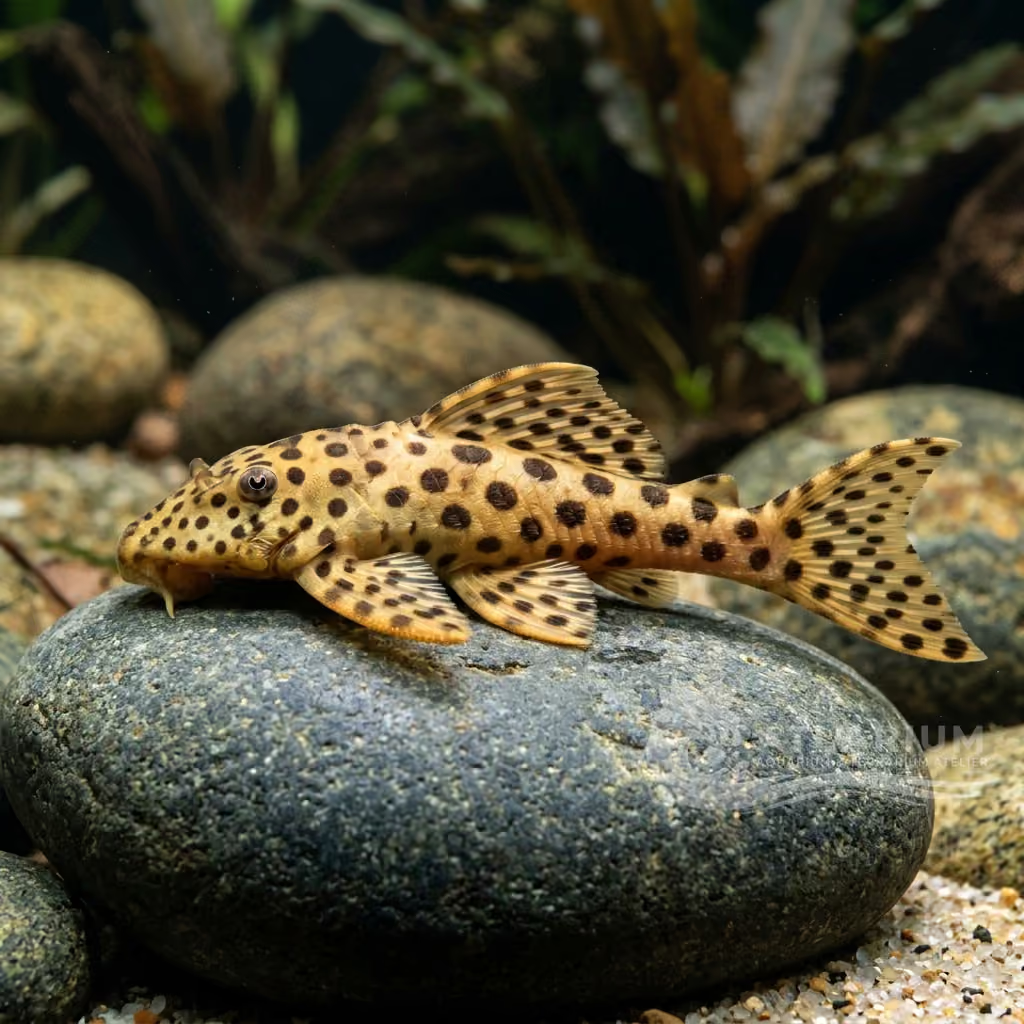
Zebra otocinclus
Otocinclus cocama
The 'designer' version of Otocinclus: the body is adorned with alternating dark vertical bands and light zones giving it the look of a miniature zebra — the most decorative of algae-cleaning fish. Like all Otos, it is a specialized algae grazer that feeds incessantly on surfaces. Extremely peaceful and gregarious: must be kept in groups of at least 6. Critical: never add to new tanks — requires mature tanks with established biofilm and soft algae. Often arrives malnourished from trade: immediate food access is vital. Copper-sensitive.
0 - 27 °C
5 - 7
Eau douce
Fond et milieu
4,4 cm
>= 40 L
>= 6
0 - 27 dGH
1 - 13 dKH
10 - 535 ppm
16 - 836 uS/cm

Description de l'espèce

Soins, reproduction et cohabitation

Origine et répartition géographiques
Origine

Profil de poisson
- Tempérament
- Peaceful
- They exhibit a very timid and shy temperament. They rely on camouflage and hiding to feel secure. Providing plenty of hiding spots reduces their stress significantly.
- Régime alimentaire
- Herbivore
- They are primarily strict herbivores. Biofilm and soft algae make up their main diet. Supplemental feeding with blanched vegetables is highly recommended.
- Espérance de vie
- 3-5 years
- Taille adulte
- 4.4 cm
- Ratio des sexes
- School
- A specific sex ratio is not strictly necessary. They thrive best in large mixed groups. Keeping at least six individuals promotes natural schooling behavior.
- Fréquence d'alimentation
- Continuous
- They should have constant access to food. Algae grazing occurs naturally throughout the entire day. Supplemental foods can be offered a few times weekly.
- Charge biologique
- Low
- This species produces a very small bioload. It contributes minimal waste to the water column. Filtration requirements are relatively low for this fish.
- Courant
- Strong
- They prefer moderate to high water flow. Good oxygenation is strictly required for their health. A small powerhead can help simulate their natural streams.
- Risque de saut
- No
- Reproduction
- Oviparous
- Breeding in captivity is generally very rare. They require heavily planted environments to induce spawning. Eggs are usually deposited on broad plant leaves.
- Compatibilité et compagnons
- Community
- It is highly peaceful and excellent for community tanks. Best kept with small, non-aggressive species. Large or boisterous fish should be completely avoided.
- Niveau dans le bac
- Middle/Bottom
- They predominantly occupy the bottom and middle levels. You will often find them resting on plant leaves. They also cling to the aquarium glass frequently.

Modèles et paramètres scientifiques
Fenêtre sur les données scientifiques officielles de l’espèce
- Singularité phylogénétique (PD50)
- 0.5
- Relation bayésienne longueur-poids
- a = 0.00977, b = 3.06
- VulnérabilitéVulnérabilité faible (10 / 100)

Galerie d'images
Images sous licence liées à l'espèce ou, lorsqu'elles sont indiquées, au taxon représentatif le plus proche.

Espèces associées
Recommandations regroupées par proches parents, compagnons et soins similaires.