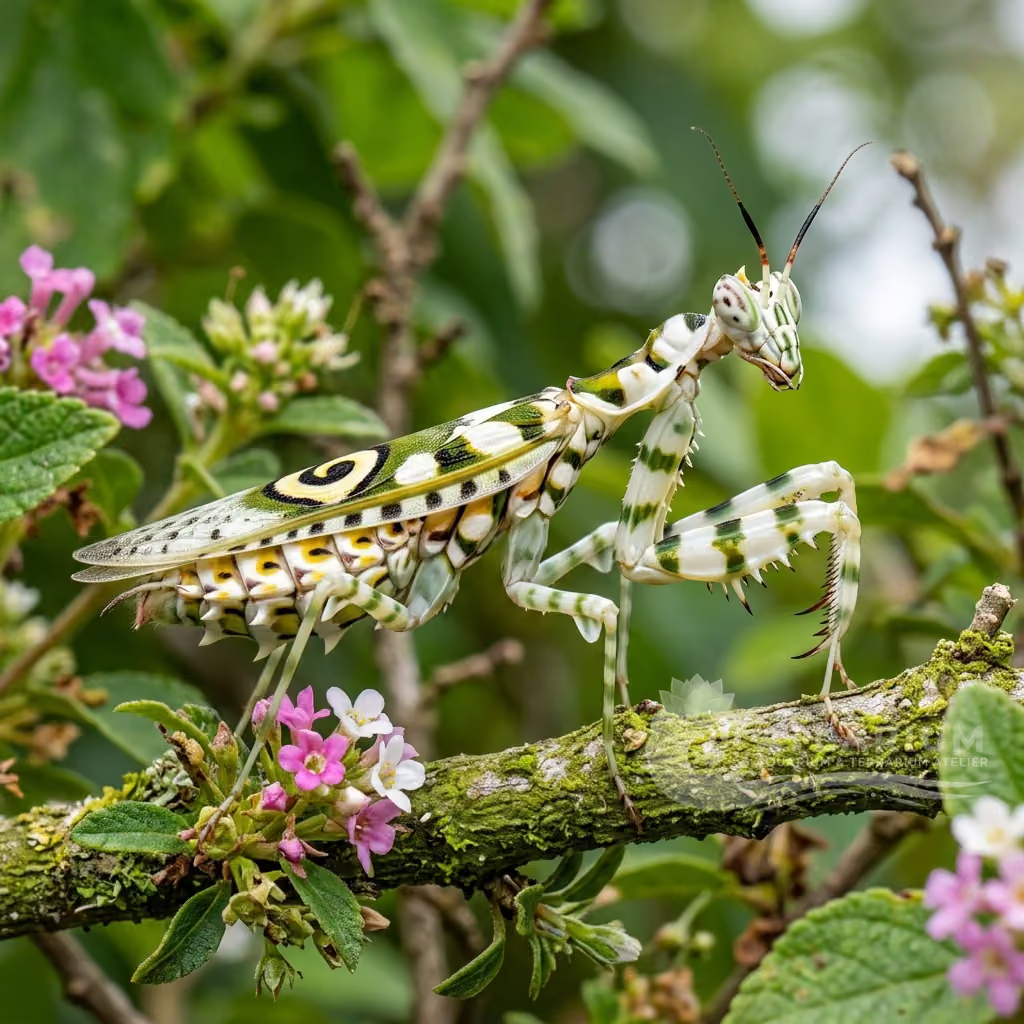
Devil's Flower Mantis
Idolomantis diabolica
The Idolomantis diabolica, known as the Devil's Flower Mantis. It is considered the 'Holy Grail' of the terrarium hobby: the most complex, imposing and majestic mantis on the planet. Females exceed 4-5 inches and possess huge leaf shields on legs, thorax and back. Its name derives from the most spectacular 'Deimatic Display' in nature: it spreads its wings and raises its giant arms revealing a Blood Red, Snow White, Black and Electric Blue interior. Breeding is a nightmare for neophytes: needs colossal fully mesh enclosures, infernal temperatures (over 95°F), extreme ventilation to prevent diseases and highly controlled humidity. Exclusive aerial predator: accepts only drosophila, flies (calliphora), flying moths and bees. Crickets or roaches will cause death.
Terrestrial
30 - 60 %
35 °C
22 - 26 °C
24 °C
>= 2 cm

Species description

Care, breeding and tankmates

Geographic origin and distribution
Origin

Terrestrial invertebrate profile
- Diet
- Carnivore
- Idolomantis diabolica is a strict specialist that feeds almost exclusively on flying insects. They rarely recognize crawling insects (like roaches or crickets) as food. Their diet must consist heavily of blue bottle flies, moths, and butterflies. Providing a constant supply of flying prey is an essential husbandry challenge.
- Adult size
- 13 cm
- Lifestyle/Microhabitat
- Arboreal
- This is one of the largest and most specialized arboreal mantises, native to the hot, dry scrublands and savannahs of East Africa. They require incredibly large, well-ventilated enclosures (often entirely mesh) with very specific, high heat gradients to simulate the blistering sun of their natural habitat.
- Activity cycle
- Diurnal
- The Devil's Flower Mantis is a diurnal species, using the bright sunlight to hunt high up in the canopy. It adopts a specific resting posture to mimic a flower or leaf, remaining motionless for long periods until a pollinating insect comes within striking range.
- Sociality
- Gregarious
- Unlike most large mantises, nymphs can often be raised communally in massive, heavily planted mesh enclosures, provided there is an absolute overabundance of flying food. However, as they reach sub-adult and adult stages, the risk of cannibalism increases, and separation is usually the safest approach.
- Reproduction
- Oviparous
- Breeding is famously difficult in captivity. Both sexes must be perfectly timed in their maturity. Males are small, flighty, and easily spooked. Females require immense amounts of flying food to produce viable oothecae. The resulting egg cases require careful diapause management to hatch successfully.
- Venomous
- No
- Handling tolerance
- Expert only
- Handling is highly discouraged. They are notoriously skittish, delicate, and prone to stress. When disturbed, they perform one of the most elaborate threat displays of any insect, rearing up to reveal brilliant red, white, and blue colors under their massive forelegs to frighten away predators.
- Brumation
- This species originates from very hot environments (Tanzania, Kenya) and does not undergo brumation. They require extreme heat (basking spots of 95°F to 105°F / 35°C to 40°C) and high ventilation. Cold temperatures or stagnant air are rapidly fatal to this highly specialized species.
- Molting
- Periodic
- Molting is exceptionally difficult and the leading cause of death in captivity. They need massive vertical space and absolutely perfect environmental conditions (high heat, high ventilation, but a sudden spike in humidity just prior to the molt). Disturbing them during this process is a guaranteed death sentence.

Related species
Recommendations grouped by close relatives, companion choices, and similar care.