Back to atlas
FishFreshwaterAdvanced

Encyclopaedia

Silver Arowana

Osteoglossum bicirrhosum

The 'Silver Serpent' of the Amazon (90-120 cm / 3-4 feet). The more affordable, but massively larger South American cousin to the famous Asian Dragon Fish. What starts as a cute, cheap, 4-inch ribbon in the pet store rapidly explodes into an absolute monster—a 4-foot long, snake-like metallic predator that relentlessly cruises the top of the tank. It is an Olympic jumper capable of launching feet into the air to catch bugs, requiring a colossal, bank-vault aquarium and suffering from the exact same devastating 'Drop-Eye' deformities if fed improper diets or kept in inadequate tanks.

Family
Osteoglossidae
Origin
Bacino dell'Amazzonia
Origin
Amazon, Orinoco, and Guianas
Tank use
Used in 0 tanks

Share

Species challenges
Temperature

24 °C - 30 °C

pH

6 - 7.5

Water type

Freshwater

Tank level

Surface

Adult size

90 cm

Description

Geographic Origin and Biotope: Vastly distributed across the massive, sprawling, sluggish river basins of the Amazon, Essequibo, and Oyapock in South America. They are strictly 'Top-Dwelling' hunters. They patrol the shallow, heavily forested, muddy riverbanks and flooded jungles (Igapó). They stare upward constantly, waiting under low-hanging branches for spiders, giant beetles, frogs, and even small birds and bats to fall or perch too close to the dark water's surface.

Taxonomy and Morphology: A gargantuan, ancient, prehistoric-looking serpent-fish (Osteoglossidae). Unlike the thick, chunky Asian Arowana, the Silver Arowana is incredibly elongated, slender, and ribbon-like. It routinely exceeds 100 cm (over 3 feet) in captivity. The body is heavily compressed from the sides, featuring a massive, sloped jaw pointing straight up to the sky. It features two prominent sensory 'barbels' (whiskers) on its lower lip to detect vibrations on the water's surface. Its dorsal and anal fins run almost the entire length of its back half, converging into a tiny tail, making it look and swim like a shimmering sea-snake.

Social Behavior: The Relentless Surface Cruiser. The Silver Arowana never rests on the bottom. It spends 100% of its life pacing restlessly back and forth, inches below the surface of the aquarium, creating an incredibly dynamic, almost stressful tension in the room. They are famously dubbed 'Water Monkeys' by locals in the Amazon because they are capable of launching their massive bodies vertically up to 6 feet out of the water to snatch a bat off a low branch. In the tank, they are surprisingly tolerant of giant, peaceful bottom-dwelling fish, but are highly aggressive to other Arowanas and will blindly inhale any small fish that enters the upper water column.

Coloration and Sexual Dimorphism: The Liquid Mercury Mirror. While they lack the blinding gold and red variants of the Asian species, the Silver Arowana is breathtaking in its own right. As juveniles, they have a fragile, almost translucent bluish-pink body. As they hit adulthood, their giant, thick scales harden into a blinding, solid, highly-reflective Metallic Silver or Chrome, shimmering brilliantly under aquarium lights. Depending on the lighting, the trailing edges of their massive fins will often glow with soft, iridescent pinks or icy blues. Males and females look totally identical.

Care and observations

Tank Setup: The 'Monster Tank' Reality Check. This is the single most 'out-grown' and tragically killed fish in the hobby. You cannot keep an adult in a standard tank. AN ADULT REQUIRES A MINIMUM 250 cm (8-foot) LONG, AND ABSOLUTELY CRITICALLY, A 100 cm (3-foot) WIDE TANK (300+ gallons). If the tank is not 3-feet wide, the rigid 4-foot fish literally cannot physically turn around, permanently bending and crippling its spine. THE JUMPING DEATH: You MUST, absolutely must, have an incredibly heavy polycarbonate or thick glass lid weighted down with latches or bricks. A 3-foot Arowana slamming into a standard plastic hood at night will blow the lid off the tank and suffocate to death on your carpet.

Feeding: The Premium Top-Feeder. Never feed them sinking food; always force them to look UP to eat to prevent eye deformities. The absolute staple must be premium, high-protein floating Arowana Sticks (Hikari). You MUST supplement this with massive, crunchy, low-fat treats: live gut-loaded dubia roaches, giant crickets, freeze-dried krill, and massive chunks of raw tilapia or prawn (with shell). THE 'GOLDFISH' BAN: Never, ever feed them cheap live goldfish from the pet store. The absurdly high fat and parasite content of goldfish guarantees the Arowana will develop a massive, fatal fatty-liver disease and die miserably years before its time.

Water Quality: The Warm Amazonian Flow. After they survive the incredibly fragile juvenile stage, adults are very hardy. They demand warm, tropical water: 24-28°C (75-82°F) (Cooler water totally destroys their appetite and immune system). pH 6.0 to 7.0 (Slightly acidic to neutral). Because this fish eats like a horse, it produces unbelievable amounts of waste. You absolutely must run an oversized external Sump Filter and perform massive 40-50% weekly water changes, or the Nitrates will rot its massive, beautiful barbels and scales off.

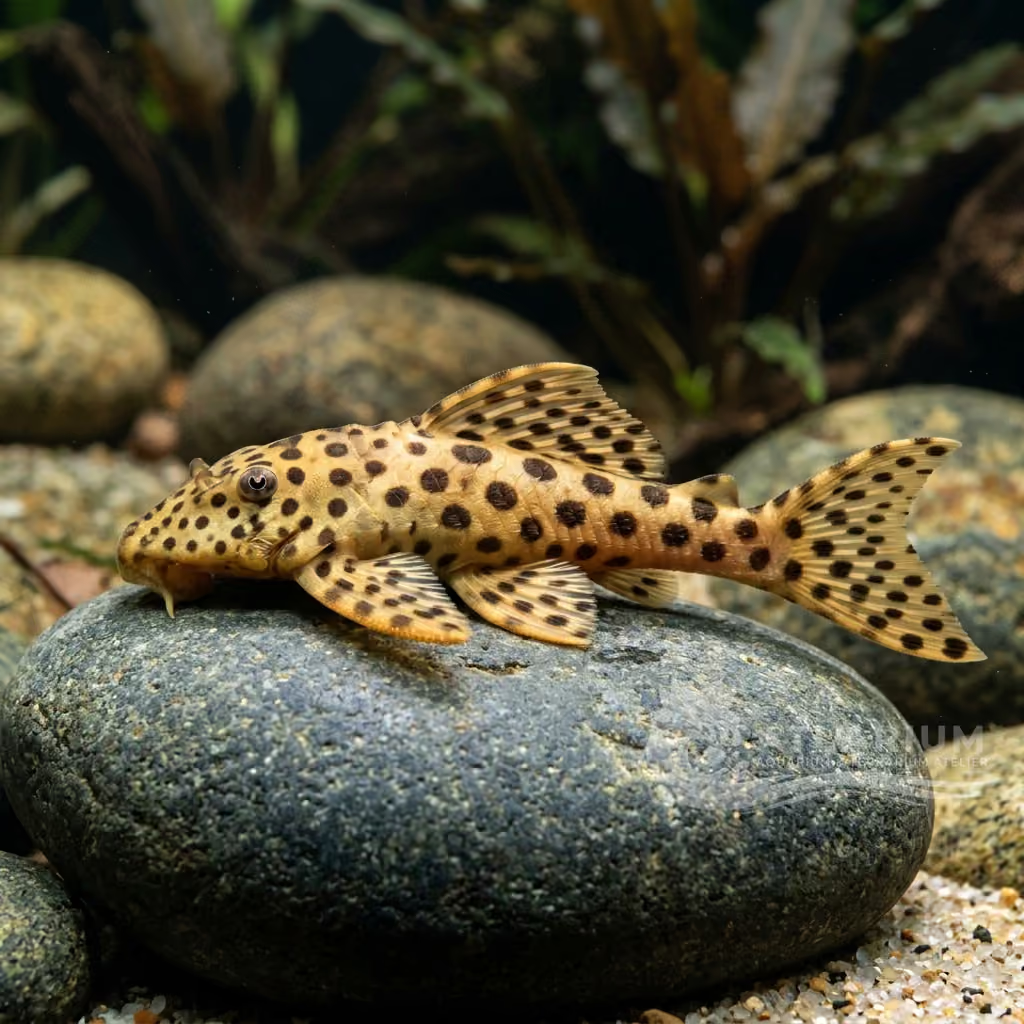
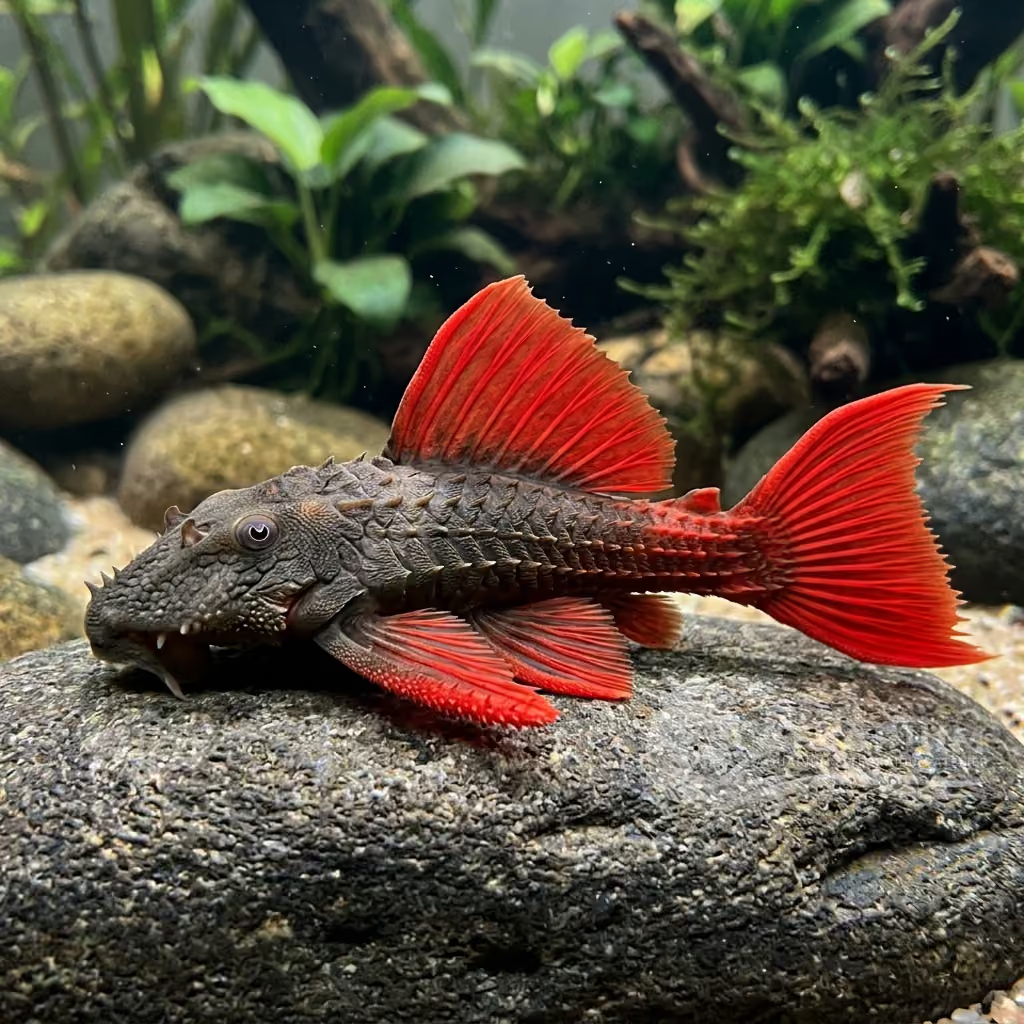
Compatibility: THE 'TALL TANK' DIVISION OF LABOR. Never mix two Silver Arowanas; they will tear each other apart in the cramped surface layer. The legendary 'Monster Community' strategy is separating the tank vertically: The Arowana rules the surface alone, completely ignoring the giant, heavily-armored titans living in the basement. Perfect companions are massive freshwater stingrays (Motoro), giant armored Plecos (over 18 inches), ancient Bichirs (Polypterus), or large, peaceful Datnoids and Oscars. WARNING: Any fish that can physically fit inside the Arowana's massive bucket mouth (like a 4-inch Angelfish or Tetra) will be swallowed whole at midnight.

Reproduction: The Giant Mouthbrooding Father. Breeding them in a glass home aquarium is virtually impossible; it occurs strictly in massive outdoor mud ponds in tropical climates. The male performs the ultimate sacrifice: after the female lays dozens of massive, marble-sized orange eggs, the male carefully scoops ALL of them into his mouth. He will lock his jaws and incubate the eggs inside his mouth for nearly two months, starving himself completely, until he spits out massive, 4-inch long baby Arowanas that still have giant orange yolk-sacs hanging off their bellies.

Risks: 1. THE INEVITABLE 'DROP-EYE' (Eye Ptosis): The most famous Arowana tragedy. One or both of their massive eyes permanently drop downward, locking in place so the fish looks cross-eyed and deformed. It is almost 100% caused by the owner feeding them fat-loaded goldfish (fat builds up behind the eye pushing it down) or forcing the fish to constantly stare DOWN through the clear glass to watch other fish, instead of staring UP as nature intended. It is incurable and ruins the fish's aesthetic value. 2. The 'U-Bend' spinal deformation: Horribly permanently bending the fish's spine into an 'S' shape by forcing a 4-foot fish to live in a 2-foot wide tank. 3. Jumping out of the tank to a dry, crispy death because the owner was too cheap to buy a heavy lid or latch.

Fish profile

Temperament
Predatore di superficie formidabile, ma sorprendentemente tollerante verso pesci di taglia adeguata sul fondo.
Diet
Carnivoro puro: accetta insetti (grilli, scarafaggi), lombrichi, pezzi di pesce bianco, gamberetti e pellet giganti galleggianti.
Tank level
Surface
Minimum group
1
Adult size
90 cm
Minimum tank
1,500 L
GH
2 dGH - 15 dGH
KH
n/a
TDS
n/a
Conductivity
n/a
Sex ratio
Ininfluente per esemplari singoli.
Feeding frequency
1-2 volte al giorno (giovani), 2-3 volte a settimana (adulti)
Bioload
Estremamente Alto
Flow
Corrente da debole a moderata
Jump risk
Covered tank required
Reproduction
Allevatore boccale paterno (Mouthbrooder). In natura il maschio incuba uova grosse come biglie nella sua enorme bocca per due mesi. Impossibile in acquari domestici.
Compatibility
Tenerlo da solo o con altri colossi pacifici che nuotano a livelli inferiori: Datnioides, grandi trigoni (Potamotrygon), Pacu, grandi Loricaridi. Mangerà implacabilmente qualsiasi cosa entri nella sua mostruosa bocca.

Image gallery

Licensed images linked to the species or, when marked, to the closest representative taxon.