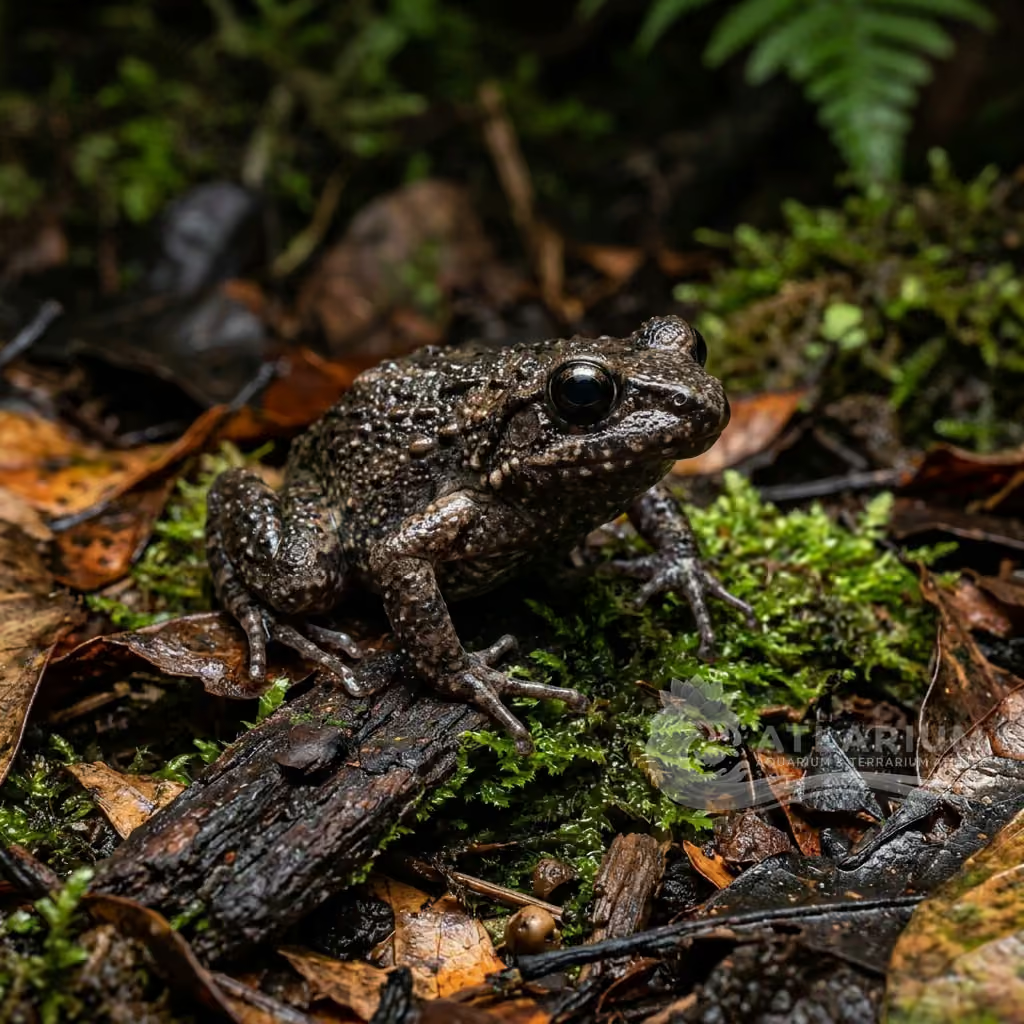
American bullfrog
Rana catesbeiana
A very large, hardy North American frog, known for its extreme voracity, territorial behavior, and deep bellowing call.
Water Temperature
15 - 28 °C
pH Value
6.5 - 7.8
Environment
Freshwater / Semi-aquatic
Humidity
60 - 80 %
Day temperature
26 °C
Night temperature
20 °C
Ambient temperature
26 °C
Brumation temperature
4 - 8 °C
Minimum enclosure
>= 45 L

Species description
Geographical Origin and Habitat: The American bullfrog (Lithobates catesbeianus) is native to eastern North America, from southern Canada down through the eastern and central United States to the Gulf Coast. However, due to aquaculture escapes and intentional releases, it has become a highly successful invasive species globally, establishing breeding populations in Europe, Asia, and South America. It prefers large, permanent, warm bodies of water such as lakes, marshes, and slow-moving rivers with rich shoreline vegetation.
Taxonomy and Genetics: Belongs to the family Ranidae. Long known under the scientific name Rana catesbeiana, modern taxonomy places it in the genus Lithobates. It possesses a highly adaptable genetic structure and a resilient immune system, allowing it to act as a healthy carrier of deadly pathogens like the chytrid fungus (Bd), which devastates native amphibian populations.
Behavior and Habits: Diurnal and nocturnal, spending most of its life in or near water. They are typically found floating among aquatic plants or sitting on muddy banks. Males are highly territorial and aggressive, using physical wrestling and a deep, resonant, bull-like bellowing call ('jug-o-rum') to defend their territory. They are voracious predators.
Morphology: This is one of the largest frog species in the world, with adults reaching body lengths up to 20 cm and weights exceeding 600 grams. The skin is smooth, green to olive-brown with dark mottled patterns. They lack dorsolateral folds along the sides of the back. The tympanum (ear drum) is large; in males, it is noticeably larger than the eye, whereas in females, it is about the same size.

Care, breeding and tankmates
Terrarium Setup: Requires a very large paludarium of at least 150x60x60 cm for a single adult. The enclosure should feature a deep aquatic zone (20-30 cm deep) occupying 60% of the space, and a solid land area with smooth river rocks and large logs. Install a heavy-duty canister filter, as their waste production is substantial.
Lighting and Heating: Maintain ambient and water temperatures between 18 °C and 24 °C. Avoid high temperatures, as they prefer temperate conditions. Provide a basking spot of 28 °C on the land side. A 5.0% UVB lamp is required for 10-12 hours daily to support calcium metabolism and prevent skeletal deformities.
Humidity and Hydration: Keep relative humidity at 70-80% through daily misting. Pristine water quality is essential; perform 30-50% water changes twice a week using dechlorinated water. Keep pH neutral to slightly alkaline (7.0-7.8). Stagnant water will quickly cause skin infections.
Feeding and Supplementation: Carnivorous and highly opportunistic. They will consume anything they can fit into their mouths, including large crickets, roaches, earthworms, freshwater fish, and occasional pinky mice. Dust prey items with calcium and vitamin D3 twice a week for adults and at every feeding for growing juveniles.
Compatibility: Must be housed individually. Bullfrogs are highly cannibalistic and solitary. They will eat smaller conspecifics, other frog species, and any fish housed with them. Co-habitation with other animals is not possible.
Health and Common Diseases: Prone to red-leg disease (bacterial septicemia) if water quality is poor. Nutritional metabolic bone disease (MBD) occurs if calcium supplementation is neglected. Ensure the paludarium is well-ventilated with screen panels to prevent stagnant, humid air which breeds bacteria.

Geographic origin and distribution
The American bullfrog (Lithobates catesbeianus) is native to eastern North America, from southern Canada down through the eastern and central United States to the Gulf Coast. However, due to aquaculture escapes and intentional releases, it has become a highly successful invasive species globally, establishing breeding populations in Europe, Asia, and South America. It prefers large, permanent, warm bodies of water such as lakes, marshes, and slow-moving rivers with rich shoreline vegetation.
Origin
Cosmopolitan or introducedExtra-Amazon South AmericaCentral America and CaribbeanNorth AmericaEurope, Mediterranean, and West Asia

Amphibian profile
- Diet
- Carnivore
- This species is primarily insectivorous, consuming a wide variety of small invertebrates like crickets, flies, and roaches in the wild. In captivity, a similar varied diet should be provided, dusted regularly with calcium and multivitamin supplements. Appropriately sized live food is essential to trigger their natural feeding response.
- Life expectancy
- 7-16 years
- Adult size
- 15 cm
- Lifestyle/Microhabitat
- Aquatic
- Depending on their morphology, they may live exclusively in trees, on the forest floor, or near bodies of water. A properly designed vivarium must provide the correct balance of humidity, temperature, and specific microhabitats. Ample vertical climbing space or deep substrate should be provided accordingly.
- Activity cycle
- Diurnal
- Most are strictly nocturnal, becoming active at dusk to hunt and vocalize under the cover of darkness. This pattern helps them avoid diurnal predators and prevents desiccation from the heat of the sun. During daylight hours, they remain motionless in hidden spots to conserve energy and retain moisture.
- Sociality
- Solitary
- They exhibit fascinating behaviors that vary depending on their exact habitat, often relying on camouflage to avoid predators. Many display remarkable agility and jumping prowess when startled or while hunting. Social interactions are generally limited to breeding seasons when males become highly territorial.
- Reproduction
- Oviparous
- Breeding typically occurs following heavy rainfall or during the wet season. Males attract females with distinctive vocalizations from specific calling sites near water. Depending on the exact species, eggs may be laid in water, on foliage overhanging water, or in specialized foam nests.
- Toxicity
- Toxic
- American bullfrogs are completely non-toxic and do not possess venom or dangerous skin secretions. They rely on their considerable size, camouflage, and powerful jumping ability to evade predation rather than chemical defenses. As with all frogs, hand washing is necessary to protect the frog from human skin residues and to maintain good sanitary practices.
- Life stage
- Neotenic
- The bullfrog begins its life as an aquatic tadpole, which can grow remarkably large and may take up to two years to metamorphose in colder climates. Upon metamorphosis, it transforms into a rapidly growing froglet that continues its carnivorous habits. Adult bullfrogs are among the largest true frogs in North America, boasting massive, muscular hind legs and a deeply resonant vocal sac in males.
- Handling tolerance
- With caution
- Can be handled briefly but are incredibly powerful jumpers and will thrash vigorously if restrained. They may also release large amounts of urine or bite if they feel severely threatened. Minimal handling with wet hands is advised.
- Brumation
- Required
- In their native northern range, they brumate at the bottom of ponds buried in mud for the winter. While they can be kept active year-round in captivity, a cool resting period mimics natural rhythms.
- Molting
- Regular
- Shedding frequently occurs entirely underwater. The bullfrog will twist and contort its body to loosen the skin, pushing it forward into its mouth to eat it, relying entirely on the aquatic environment to facilitate the process.

Related species
Recommendations grouped by close relatives, companion choices, and similar care.