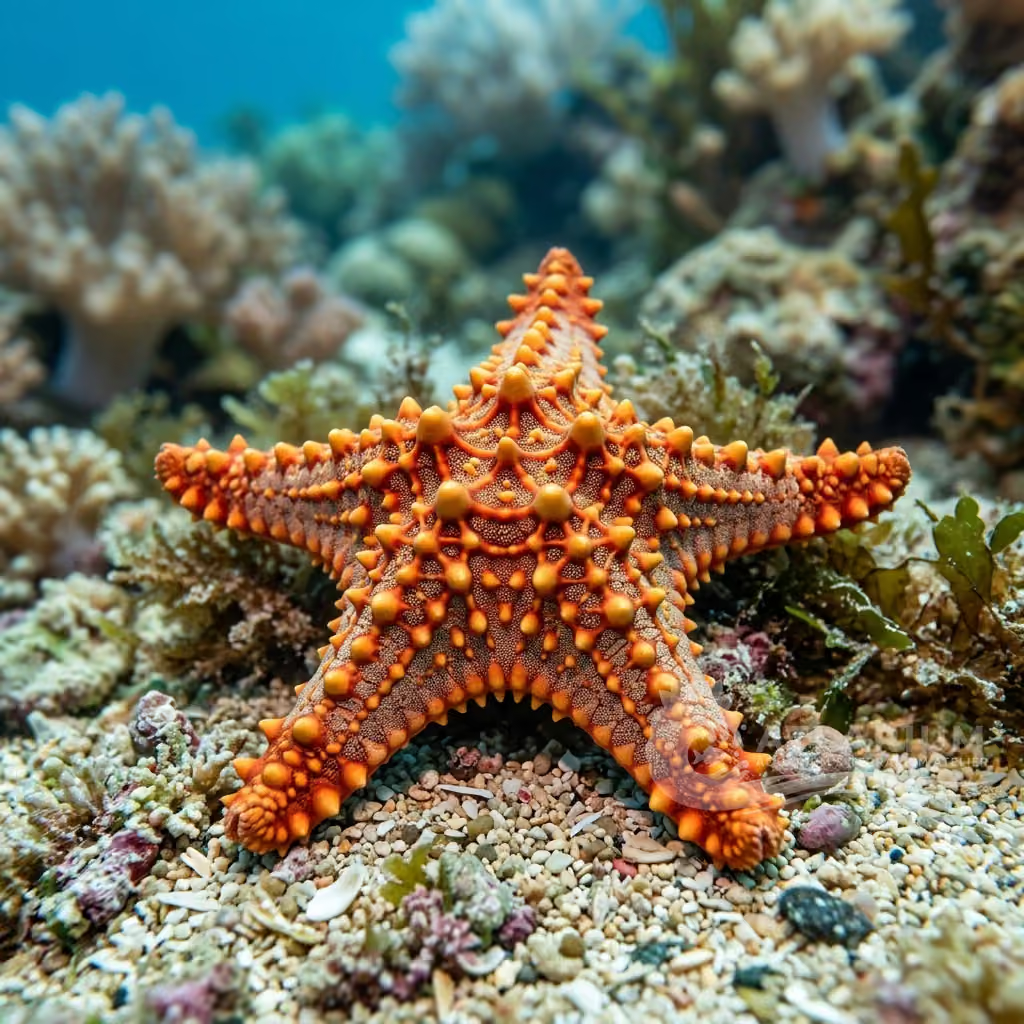
Collector urchin
Tripneustes gratilla
A diligent tropical Indo-Pacific sea urchin, celebrated for consuming nuisance algae and uniquely camouflaging itself with loose aquarium debris.
Wassertemperatur
22 - 26 °C
pH-Wert
8.1 - 8.4
Wassertyp
Meerwasser
Wirbelloser Typ
Sea urchin
Erwachsenengröße
12 cm
Mindestgruppe
>= 1
KH
8 - 12 dKH
Ökologische Rolle
Herbivore
Kupferempfindlichkeit
High

Artbeschreibung
Geographical Origin and Habitat: Tripneustes gratilla is widely distributed throughout the tropical waters of the Indo-Pacific, extending from East Africa and the Red Sea to Hawaii, the Galapagos, and the northern coasts of Australia. It inhabits shallow coral reefs, sandy lagoons, seagrass beds, and intertidal flats rich in algal growth, generally at depths of 1 to 30 meters. It favors areas with high solar exposure that promotes algae.
Taxonomy: Belonging to the class Echinoidea, order Camarodonta, family Toxopneustidae, and genus Tripneustes. No commercial genetic variants or breeds exist. It features a globose test (shell) slightly flattened at the poles, covered with short, dense spines and numerous pedicellariae arranged in alternating bands of spineless areas.
Social Behavior: It is a peaceful, slow-moving, and solitary organism. It is famous for its carrying or covering behavior, using its tube feet to collect and hold pieces of algae, shell fragments, gravel, and other debris on top of its body. This behavior protects it from intense ultraviolet light and camouflages it from predators such as triggerfish.
Coloration and Sexual Dimorphism: The coloration of both the test and spines is highly variable. Spines can be orange, red, white, or black, creating striking contrast patterns against the dark, spineless ambulacral fields. There is no visible sexual dimorphism; males and females are identical externally and release their gametes directly into the water column during spawning events.

Pflege, Zucht und Mitbewohner
Tank Setup: Requires a mature marine tank of at least 150 liters with plenty of live rock supporting a healthy growth of algae. All rockwork must be securely stacked or glued with epoxy, as this urchin is surprisingly strong and can push over loose rocks, potentially crushing corals or cracking glass panels. Safe water flow must be maintained.
Diet and Feeding: A voracious herbivore. Its diet consists of hair algae, microalgae, coralline algae, and macroalgae. It is one of the best clean-up crew members for controlling nuisance algae. If natural algae levels run low, it must be supplemented with dried seaweed (nori) sheets attached to rocks, or it will quickly starve.
Water Quality: Requires stable marine parameters suitable for sensitive invertebrates. Maintain water temperatures between 24°C and 27°C, pH at 8.1 to 8.4, specific gravity at 1.023 to 1.025, and alkalinity between 8 and 11 dKH. It is highly sensitive to rapid changes in salinity and temperature, and copper-based treatments are strictly lethal.
Compatibility and Tankmates: Entirely reef-safe, although it may accidentally pick up and carry loose coral frags. It coexists peacefully with most marine fish and invertebrates. Do not house with predatory species that feed on urchins, such as triggerfish, puffers, and large wrasses, which will actively bite off its spines and crush the test.
Aquarium Breeding: Breeding in captivity is extremely rare in home aquariums. Spawning occurs externally, and the resulting larvae (echinoplutei) spend a long period in the plankton. Culturing these delicate larvae requires specialized water flow systems and precise phytoplankton feeding, making it impractical for hobbyists.
Risks and Diseases: Loss of spines is the primary indicator of stress, poor water quality, or starvation. If the urchin begins losing spines rapidly, exposing bare patches of the test, survival rates drop dramatically. It is also at risk of getting trapped in unprotected powerhead intakes, where its delicate tube feet can be easily damaged.

Geografische Herkunft und Verbreitung
Tripneustes gratilla is widely distributed throughout the tropical waters of the Indo-Pacific, extending from East Africa and the Red Sea to Hawaii, the Galapagos, and the northern coasts of Australia. It inhabits shallow coral reefs, sandy lagoons, seagrass beds, and intertidal flats rich in algal growth, generally at depths of 1 to 30 meters. It favors areas with high solar exposure that promotes algae.
Ursprung
Tropische Ozeane und RiffeAfrika und MadagaskarAustralien, Neuguinea und Ozeanien

Wirbelloses Profil
- Diät
- Herbivore
- The diet of Tripneustes gratilla typically consists of organic detritus, microalgae, or specific planktonic particles. In a home aquarium, they constantly forage along the substrate or rockwork looking for nourishment. Supplemental feeding with specialized invertebrate pellets or liquid foods may be necessary. Ensuring a varied and nutritious diet will promote vibrant colors and long-term health. Overfeeding should be avoided to maintain optimal water quality.
- Ökologische Rolle
- Herbivore
- In the wild, Tripneustes gratilla plays a crucial role in maintaining the balance of its native ecosystem. They often act as natural cleaners, breaking down waste materials and unconsumed food. Their constant movement helps aerate the sand bed and prevent the buildup of toxic gases. By managing algae growth, they create space for slow-growing corals and sponges to thrive. A balanced aquarium ecosystem relies heavily on their diligent cleaning efforts.
- Erwachsenengröße
- 12 cm
- Sprungrisiko
- No
- Stoßempfindlichkeit
- High
- This invertebrate is highly sensitive to rapid fluctuations in water parameters. Sudden changes in temperature, salinity, or pH can cause severe osmotic shock and death. A slow and careful acclimation process, preferably drip acclimation, is absolutely necessary. Maintain stable aquarium conditions through regular monitoring and automated top-offs. Avoid performing excessively large water changes at once.
- Kalzium und Mineralien
- High
- Proper calcium levels are absolutely vital for the structural integrity and growth of this species. They continuously extract calcium carbonate from the water to build their shells, skeletons, or protective tubes. Maintaining calcium levels between 400 and 450 ppm ensures they remain healthy. It is also important to balance alkalinity and magnesium alongside calcium supplementation. Regular testing is required in heavily stocked reef aquariums.
- Häutung
- Shell growth
- If applicable to its morphology, this invertebrate undergoes periodic molting to facilitate growth. During the molting process, the organism becomes extremely vulnerable to predation and stress. It is crucial to provide ample hiding spaces, such as caves or crevices, where they can retreat safely. Do not remove the discarded exoskeleton, as they often consume it to quickly replenish essential minerals. Disturbing them during this delicate phase can lead to fatal complications.
- Reproduktion
- Oviparous
- Reproduction in the home aquarium is often challenging and rare for many invertebrate species. Most require highly specific environmental triggers, such as temperature shifts or lunar cycles. The resulting larvae usually have a prolonged planktonic stage, making them difficult to rear. Specialized food sources like phytoplankton are needed to sustain the offspring. Consequently, most specimens available in the hobby are wild-caught or professionally aquacultured.
- Kompatibilität & Tankkameraden
- Not reef safe
- Compatibility varies largely based on the specific species and tank mates. They are generally peaceful but can fall prey to aggressive or predatory fish. Ensure they are housed with calm tank mates that will not nip or harass them. Research individual species requirements to avoid territorial disputes. Always monitor new additions carefully to ensure harmonious interactions.

Wissenschaftliche Modelle & Parameter
SeaLifeBase
Zugang zu den offiziellen wissenschaftlichen Daten der Art
SeaLifeBase v26.04Daten synchronisiert am: 15.06.2026
- Belastbarkeit
- Hoch (weniger als 15 Monate)

Verwandte Arten
Empfehlungen gruppiert nach nahen Verwandten, Auswahl von Begleitern und ähnlicher Betreuung.