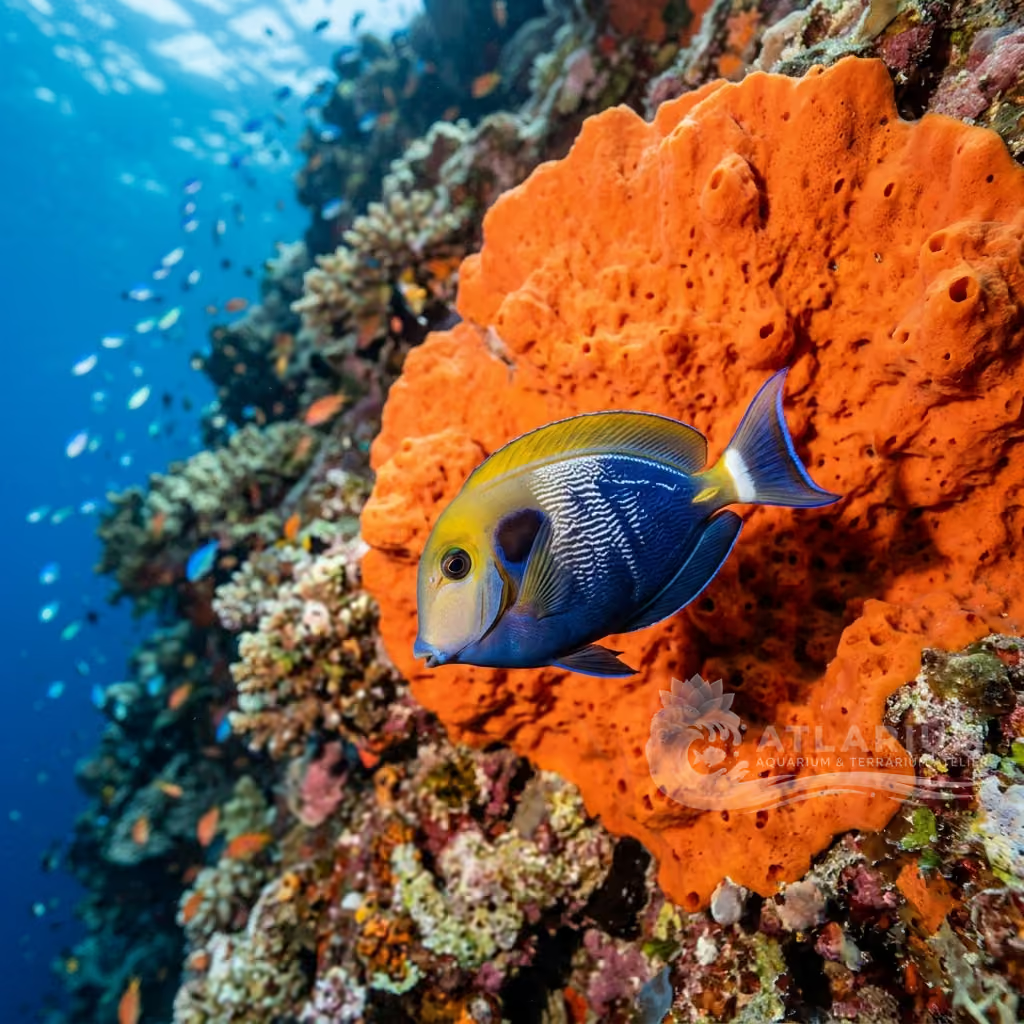
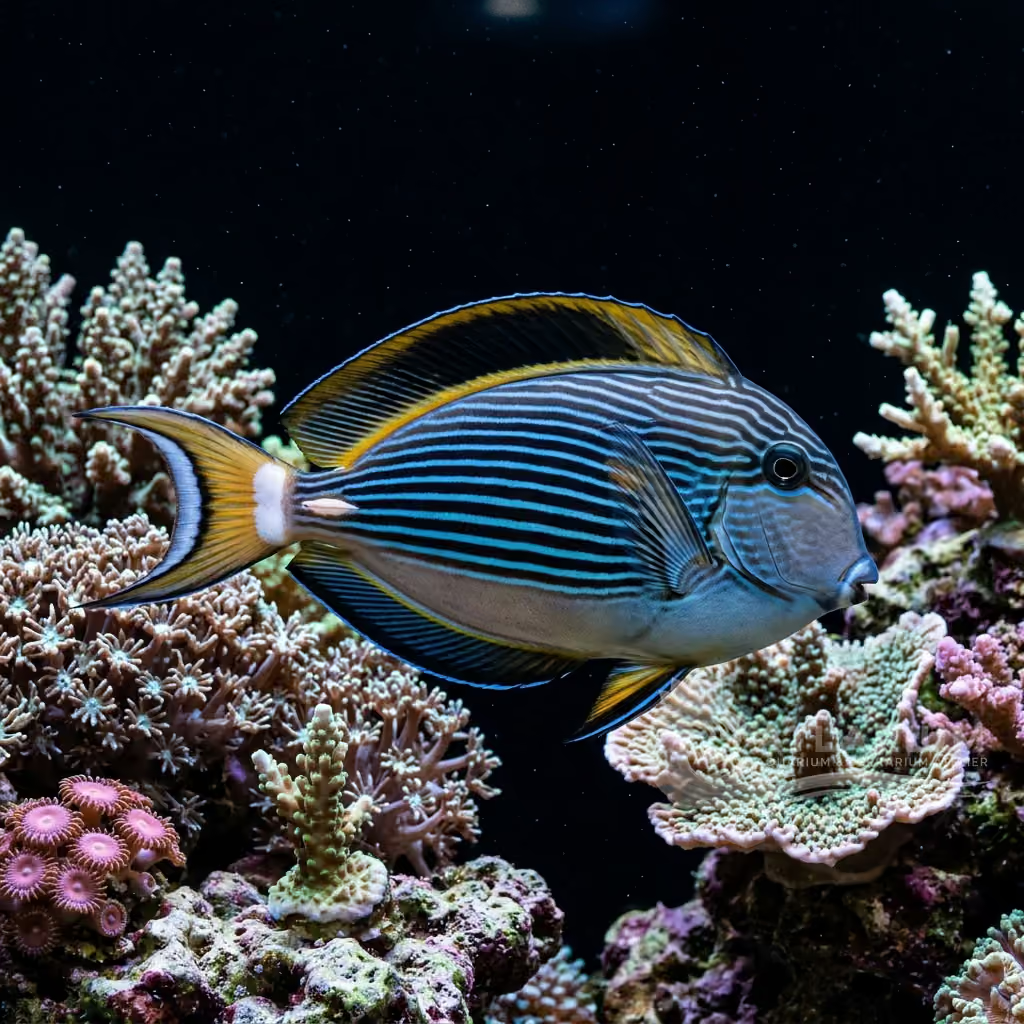
Powder brown tang
Acanthurus japonicus
The powder brown tang from the Western Pacific inhabits clear lagoons and outer reef slopes. It requires strong surges, oxygen-rich currents, and a steady supply of algae.
Wassertemperatur
22 - 26 °C
pH-Wert
8.1 - 8.4
Wassertyp
Meerwasser
Tankfüllstand
Alle Ebenen
Erwachsenengröße
21 cm
Mindesttankvolumen
>= 470 L
Mindestgruppe
>= 1
KH
8 - 12 dKH

Artbeschreibung
Geographical Origin and Habitat: This species is widely distributed throughout the Western Pacific, particularly around southern Japan, Taiwan, the Philippines, Palau, and parts of Indonesia. It inhabits outer reef slopes and clear lagoons at depths ranging from 1 to 20 meters. It frequents areas subject to strong surge and oxygen-rich currents, where rocky substrates are covered with a dense algal turf on which it grazes.
Taxonomy and Morphology: Belonging to the family Acanthuridae and the genus Acanthurus. The species features a laterally compressed, oval body shape with a small, terminal mouth equipped with specialized teeth for scraping algae. It possesses razor-sharp, retractable spines (scalpels) on both sides of the caudal peduncle, characteristic of surgeonfishes and used for self-defense. It can reach an adult length of 20 cm.
Social Behavior: It is a restless, active daytime swimmer. In the wild, it often forms small groups or mixed schools to graze on coral reefs. It displays highly territorial and aggressive behavior toward conspecifics or other surgeonfishes of similar shape and color (such as Acanthurus nigricans), vigorously defending its established feeding territories.
Coloration and Sexual Dimorphism: The coloration consists of a deep, velvety brownish-bronze body. A key distinguishing feature is a prominent white patch located under the eye extending to the mouth, and a bright yellow band running along the outer margin of the dorsal and anal fins. The pectoral fins are yellow-tinged, and the tail is white with a vertical yellow stripe.

Pflege, Zucht und Mitbewohner
Aquarium Setup: Requires an extremely spacious, mature marine aquarium of at least 400 liters (approx. 100 gallons) to accommodate its active swimming habits. The aquascape should feature a large amount of stable live rock arranged to form tunnels and caves for shelter, while keeping the front half of the aquarium completely open for swimming.
Diet and Feeding: The diet is primarily herbivorous and must reflect its natural feeding habits. It is essential to offer daily dried seaweed (nori), spirulina, and high-quality commercial herbivore pellets enriched with vitamins. Supplement occasionally with frozen meaty foods like mysis and brine shrimp to maintain weight and general health.
Water Quality: Water quality must be pristine and highly stable. Recommended parameters: temperature 24-26°C (75-79°F), pH 8.1-8.4, specific gravity 1.022-1.025, with nitrates and phosphates kept as close to zero as possible. A powerful protein skimmer, strong water movement to simulate reef currents, and an active UV sterilizer are highly recommended to control pathogens.
Compatibility and Cohabitation: Highly territorial toward other surgeonfishes. It can coexist with active reef fish from other families like wrasses, damselfishes, and clownfish. Do not house with other Acanthurus species or similarly shaped tangs unless the tank is exceptionally large (over 1000 liters), as violent and potentially fatal fighting will occur.
Aquarium Breeding: Breeding in home aquaria is extremely difficult and has not been reliably accomplished. They are pelagic spawners in the wild, releasing gametes into the water column during coordinated group spawning events at dusk. The resulting larvae go through a prolonged planktonic phase before settling onto the reef.
Risks and Diseases: This species is notorious for being highly susceptible to external parasites such as marine ich (Cryptocaryon irritans) and marine velvet (Amyloodinium ocellatum), and is also prone to Head and Lateral Line Erosion (HLLE). Strict quarantine protocols are mandatory before introducing this delicate fish to a display tank.

Geografische Herkunft und Verbreitung
This species is widely distributed throughout the Western Pacific, particularly around southern Japan, Taiwan, the Philippines, Palau, and parts of Indonesia. It inhabits outer reef slopes and clear lagoons at depths ranging from 1 to 20 meters. It frequents areas subject to strong surge and oxygen-rich currents, where rocky substrates are covered with a dense algal turf on which it grazes.
Ursprung
Tropische Ozeane und RiffeSüd- und SüdostasienOstasien

Fischprofil
- Temperament
- Semi-aggressive
- The Powder Brown Tang is a semi-aggressive fish that exhibits strong territorial behavior, particularly towards other tangs. It will aggressively defend its grazing territory against similar-looking species or competitors with similar diets. However, it is generally peaceful towards smaller, unrelated fish such as clownfish, wrasses, and gobies. To manage its territorial nature, it is best introduced as one of the last additions to the aquarium after more peaceful species have established themselves.
- Diät
- Herbivore
- This species is primarily herbivorous and requires a diet rich in plant-based matter to thrive. In the aquarium, its staple food should consist of high-quality dried seaweed (Nori), spirulina flakes, and specialized herbivore pellets. Although it will readily eat meaty foods like mysis shrimp or brine shrimp, these should only be offered occasionally as treats. A lack of sufficient plant material in its diet can lead to nutritional deficiencies and make it highly susceptible to head and lateral line erosion.
- Lebenserwartung
- 10-15 years
- Erwachsenengröße
- 21 cm
- Geschlechterverhältnis
- Solitary
- In the aquarium, this species is highly territorial towards its own kind and similar-looking surgeonfish. Therefore, it is strongly recommended to keep only a single specimen per tank to avoid fatal aggression. In exceptionally large, public-sized aquariums, it may be possible to keep a small group, but a strict hierarchy will be established, often resulting in dominant behavior. For standard home aquariums, stocking one individual is the safest and most successful approach.
- Fütterungsfrequenz
- Twice daily
- Due to its high energy levels and rapid metabolism, the Powder Brown Tang benefits from frequent feedings throughout the day. It is ideal to feed small portions of prepared food two to three times daily. Additionally, using an algae clip with Nori allows the fish to graze continuously, which closely mimics its natural foraging behavior on the reef. Regular grazing helps keep the fish occupied, reduces stress, and supports its digestive health.
- Bioload
- Medium to High
- The Powder Brown Tang is an active swimmer with a high metabolism, meaning it produces a substantial amount of waste. Consequently, it has a high biological load and requires robust filtration to maintain excellent water quality. A high-performance protein skimmer, strong biological filtration, and frequent partial water changes are essential to prevent the accumulation of nitrates and phosphates. Keeping the water clean is also crucial to minimize stress, which can otherwise trigger disease in this sensitive species.
- Fluss
- Strong
- In its natural habitat, Acanthurus japonicus inhabits reef crests and shallow seaward reefs exposed to strong currents. In the aquarium, it requires a moderate to strong water flow to feel comfortable and stay healthy. Strong circulation not only simulates its native environment but also ensures the water is highly oxygenated, which is vital for this active species. Implementing powerful wavemakers and keeping a clean water surface will help meet these flow requirements.
- Sprungrisiko
- Yes
- Due to its active nature and easily startled temperament, this species poses a significant jump risk. When spooked by sudden movements, lights turning off, or aggression from tank mates, it can bolt towards the surface at high speeds and escape the tank. To prevent tragic accidents, the aquarium must be fitted with a secure, tight-fitting lid or a fine mesh cover. Additionally, providing ample hiding places among the rockwork helps the fish feel secure and reduces the likelihood of panic-induced jumping.
- Reproduktion
- Oviparous
- Breeding the Powder Brown Tang in captivity is exceptionally challenging and has rarely been accomplished in home aquariums. In nature, they are broadcast spawners that release their gametes into the water column during synchronized spawning events. The fertilized eggs drift with the currents as pelagic larvae for a prolonged period before settling onto the reef. Replicating these oceanic conditions and providing the correct microscopic food for the larvae is extremely difficult in a closed system.
- Kompatibilität & Tankkameraden
- Peaceful
- This species is generally reef-safe and will not harm corals or sessile invertebrates, making it an excellent addition to a reef aquarium. It is highly compatible with peaceful, unrelated species such as wrasses, clownfish, anthias, and small gobies. However, it should not be housed with other tangs, especially those of the same genus or similar coloration, due to severe territorial aggression. Any potential tank mates should be active and robust enough to handle the tang's fast-swimming and energetic presence.
- Tankfüllstand
- All levels
- Acanthurus japonicus is an energetic, open-water swimmer that utilizes all levels of the aquarium. It can frequently be seen cruising through the middle and upper water columns where water movement is strongest. However, it will also constantly descend to the bottom of the tank to graze on microalgae growing on live rock and substrate. Providing a spacious environment with unobstructed horizontal swimming space is crucial to accommodate its active behavior across all depths.

Wissenschaftliche Modelle & Parameter
FishBase
Zugang zu den offiziellen wissenschaftlichen Daten der Art
FishBase v25.04Daten synchronisiert am: 15.06.2026
- Trophäenniveau
- 2,3 ± 0,1 se
- Belastbarkeit
- Hoch (weniger als 15 Monate)
- Phylogenetische Einzigartigkeit (PD50)
- 0.5
- Bayessche Längen-Gewichts-Beziehung
- a = 0.02291, b = 2.96
- AnfälligkeitGeringe Anfälligkeit (13 / 100)

Verwandte Arten
Empfehlungen gruppiert nach nahen Verwandten, Auswahl von Begleitern und ähnlicher Betreuung.