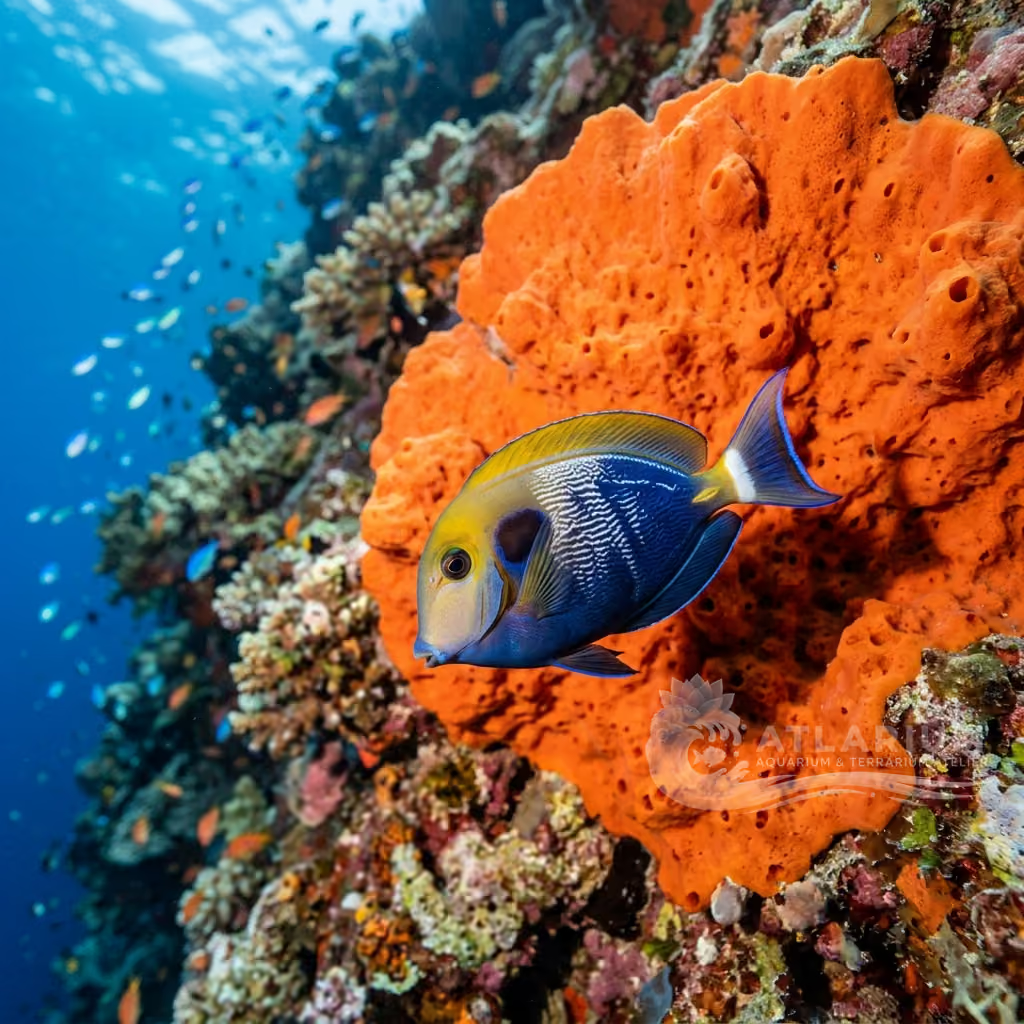
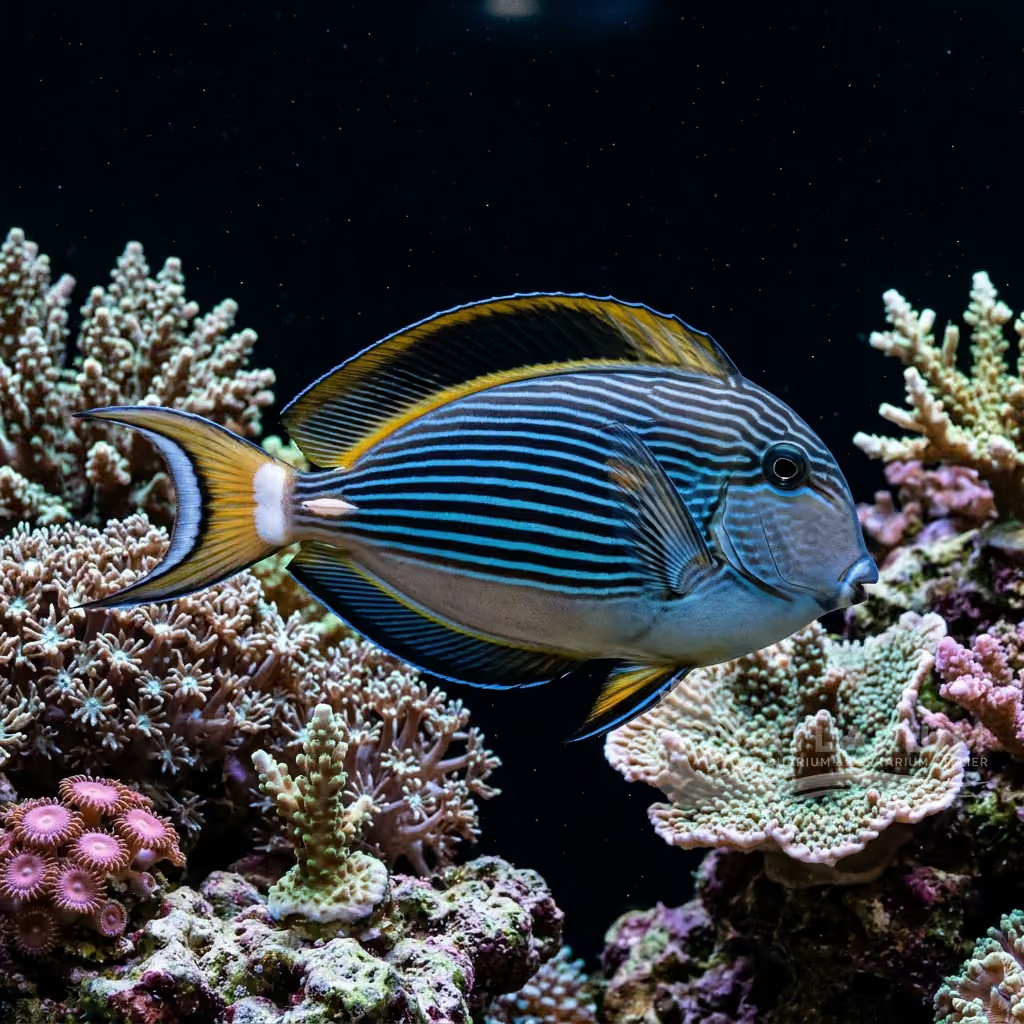
Chronixis Surgeonfish
Acanthurus chronixis
An exceptionally rare surgeonfish endemic to the Caroline Islands. It inhabits deep outer coral reef drop-offs with high water clarity, strong currents, and abundant corals.
Wassertemperatur
22 - 26 °C
pH-Wert
8.1 - 8.4
Wassertyp
Meerwasser
Tankfüllstand
Alle Ebenen
Erwachsenengröße
21 cm
Mindesttankvolumen
>= 470 L
Mindestgruppe
>= 1
KH
8 - 12 dKH

Artbeschreibung
Geographical Origin and Habitat: Tropical Western Pacific. This is an exceptionally rare marine species, endemic to the Kapingamarangi Atoll in the Caroline Islands. It primarily inhabits outer coral reef slopes and drop-offs down to a depth of 30 meters. These habitats are characterized by strong oceanic currents, high water clarity, and abundant coral cover.
Taxonomy and Morphology: A member of the family Acanthuridae. It reaches a maximum length of approximately 21 cm. It features a laterally compressed, oval body shape, with a specialized mouth equipped with small teeth designed for scraping benthic algae and detritus off rock and dead coral substrates.
Social Behavior: An active diurnal swimmer and semi-aggressive fish. Juveniles exhibit Batesian mimicry, copying the appearance and swimming style of dwarf angelfish of the genus Centropyge (specifically Centropyge vrolikii) to deter predators. Adults are mostly solitary or occur in small, loose groups.
Coloration and Sexual Dimorphism: Features a uniform dark brownish-purple body coloration with a prominent black patch on the shoulder area above the gill opening. The caudal fin is slightly rounded. There is no visible sexual dimorphism, making males and females visually indistinguishable.

Pflege, Zucht und Mitbewohner
Aquarium Setup: Needs a spacious and long aquarium of at least 470 liters (approx. 125 gallons) to accommodate its active swimming habits. Strong water movement via wavemakers and high dissolved oxygen levels are critical. Provide plenty of rockwork for grazing but preserve open water zones.
Diet and Feeding: Primarily herbivorous. In the home aquarium, it must be fed frequently with high-quality nori, spirulina flakes, specialized veggie pellets, and vitamin-enriched herbivore frozen foods. Offering macroalgae helps sustain their natural grazing instincts.
Water Quality: Maintain stable parameters with a temperature of 22-26°C (72-78°F), pH 8.1-8.4, and specific gravity of 1.020-1.025. A powerful protein skimmer is highly recommended to keep organic waste low and ensure proper water oxygenation.
Compatibility and Cohabitation: 100% reef-safe as it will not harm hard or soft corals. However, it can show strong territorial aggression towards other surgeonfish of similar shape or color, especially within smaller tanks. Keep only one per tank unless it is a very large system.
Aquarium Breeding: Breeding in captivity has not been successfully documented in home aquariums due to their pelagic spawning nature and the extremely delicate, long-lasting pelagic larval stage (acronurus) which requires specialized planktonic feeding.
Risks and Diseases: Equipped with a sharp, venomous retractable caudal spine on each side of the caudal peduncle. Use caution when handling or netting. Highly susceptible to marine ich (Cryptocaryon) and velvet (Oodinium) under stress.

Geografische Herkunft und Verbreitung
Tropical Western Pacific. This is an exceptionally rare marine species, endemic to the Kapingamarangi Atoll in the Caroline Islands. It primarily inhabits outer coral reef slopes and drop-offs down to a depth of 30 meters. These habitats are characterized by strong oceanic currents, high water clarity, and abundant coral cover.
Ursprung
Tropische Ozeane und Riffe

Fischprofil
- Temperament
- Territorial
- They exhibit an active and energetic temperament, constantly patrolling the middle and lower zones of the aquarium. They can be bold and assertive once established but may show shyness when first introduced. Establishing a clear hierarchy with rockwork territories helps minimize stress and minor territorial skirmishes.
- Diät
- Herbivore
- As a herbivorous marine species, its diet in the wild primarily consists of benthic algae and detritus scraped from rock surfaces. In a home aquarium, they must be provided with high-quality dried seaweed (Nori), spirulina, and specialized herbivore pellets daily. While they will accept meaty frozen foods such as mysis and brine shrimp, these should only be offered occasionally to prevent digestive issues.
- Lebenserwartung
- 10-15 years
- Erwachsenengröße
- 21 cm
- Geschlechterverhältnis
- Solitary
- Due to their strong territorial instincts and intense intraspecific aggression, it is highly recommended to keep Acanthurus chronixis as a single specimen in the aquarium. Housing multiple individuals of this species, or other surgeonfish with similar body shapes and colorations, is only feasible in exceptionally large systems with numerous hiding spots. Since there is no visible sexual dimorphism, determining the sex of these fish in captivity is nearly impossible for hobbyists. Consequently, keeping a solitary individual is the safest approach to prevent potentially lethal dominance battles.
- Fütterungsfrequenz
- Twice daily
- Due to their high metabolic rate and active swimming behavior, these fish need to be fed multiple times a day. It is recommended to offer small portions of food 3 to 4 times daily, or utilize a seaweed clip so they can graze constantly. Continuous grazing closely mimics their natural feeding behavior and helps prevent aggression and lateral line disease.
- Bioload
- High
- Acanthurus chronixis has a high biological load, typical of the surgeonfish family, owing to its active metabolism and herbivorous diet. These fish graze constantly throughout the day, producing a substantial amount of organic waste. To maintain optimal water quality, an oversized filtration system is essential, complemented by an efficient protein skimmer and strong water circulation. Regular water changes and the use of chemical media are highly recommended to control the accumulation of nitrates and phosphates.
- Fluss
- Strong
- They prefer moderate to strong water flow, reflecting their natural habitat along shallow reef zones where currents are active. In the aquarium, high water movement is necessary to maintain high oxygen saturation levels, which surgeonfish require. Adequate flow also encourages natural swimming exercise, helping the fish maintain muscle tone and overall health.
- Sprungrisiko
- Yes
- Although not classified among the most frequent jumpers, Acanthurus chronixis still poses a genuine risk of leaping out of the aquarium. This behavior is most likely to occur if the fish is startled by sudden movements outside the tank, during nighttime hours, or when chased by aggressive tank mates. It is essential to equip the aquarium with a secure lid or a fine-mesh screen cover to prevent accidental escapes. Providing adequate hiding spaces and quiet areas will also help minimize the stress that might trigger a jump.
- Reproduktion
- Oviparous
- Spawning in captivity is extremely difficult and rarely documented for this species. They are broadcast spawners that release their gametes into the water column during dusk, where eggs drift with pelagic currents. In a home aquarium, replicating the necessary depth, current, and environmental triggers is virtually impossible, and there is no parental care.
- Kompatibilität & Tankkameraden
- Semi-aggressive
- Chronixis surgeonfish are generally reef-safe and compatible with most peaceful or semi-aggressive fish that are not surgeonfish. However, they can be highly territorial toward similarly shaped species or other members of the Acanthurus genus. It is best to house them individually and avoid mixing them with other mimic tangs unless the aquarium is exceptionally large.
- Tankfüllstand
- All levels
- Acanthurus chronixis is a tireless swimmer that utilizes all levels of the aquarium to move around actively. Nonetheless, it spends a significant amount of time in the lower and middle zones of the tank, where it constantly grazes on live rock in search of algae. The ideal tank layout should feature a large, open central swimming area combined with a structured rockwork background containing plenty of caves and crevices. This setup supports their natural grazing behavior while satisfying their need for constant active movement.

Wissenschaftliche Modelle & Parameter
FishBase
Zugang zu den offiziellen wissenschaftlichen Daten der Art
FishBase v25.04Daten synchronisiert am: 15.06.2026
- Trophäenniveau
- 2,2 ± 0,1 se
- Belastbarkeit
- Hoch (weniger als 15 Monate)
- Phylogenetische Einzigartigkeit (PD50)
- 0.5
- Bayessche Längen-Gewichts-Beziehung
- a = 0.02291, b = 2.96
- AnfälligkeitGeringe Anfälligkeit (18 / 100)

Verwandte Arten
Empfehlungen gruppiert nach nahen Verwandten, Auswahl von Begleitern und ähnlicher Betreuung.