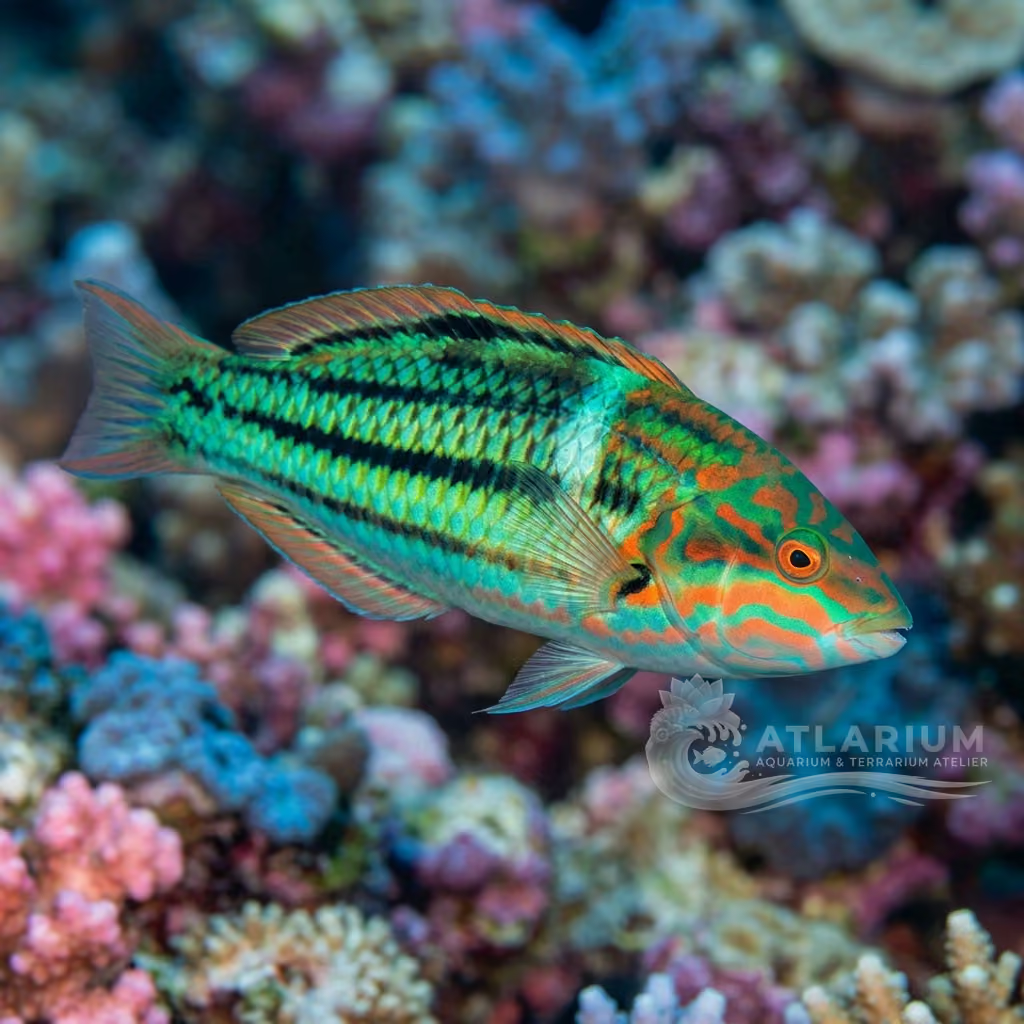
Spotfin Hogfish
Bodianus pulchellus
A colorful and hardy marine hogfish split between red and yellow coloration. An active carnivore that is not safe with small ornamental invertebrates.
Wassertemperatur
24 - 27 °C
pH-Wert
8.1 - 8.4
Wassertyp
Meerwasser
Tankfüllstand
Unten und in der Mitte
Erwachsenengröße
20 cm
Mindesttankvolumen
>= 350 L
Mindestgruppe
>= 1
KH
8 - 12 dKH

Artbeschreibung
Geographical Origin and Habitat: Distributed in the Western Atlantic Ocean, from the coast of North Carolina and Florida down to southern Brazil, including the Gulf of Mexico and the Caribbean Sea. It is associated with outer coral reefs and deep rocky reefs, typically at depths between 15 and 120 meters, preferring areas rich in sponges and corals with strong currents.
Taxonomy and Morphology: Belongs to the family Labridae, genus Bodianus. Features a robust, elongated body with a pointed snout and strong jaws equipped with protruding canine-like teeth adapted to crush invertebrate shells. Adults reach a maximum length of 15-20 cm (6-8 inches) in aquariums (up to 25 cm in the wild).
Social Behavior: Active and robust swimmer. As juveniles, they often act as facultative cleaners, removing parasites from larger fish. As they mature, this behavior declines, and they become solitary and highly territorial, defending their grazing territories from other similar species or conspecifics.
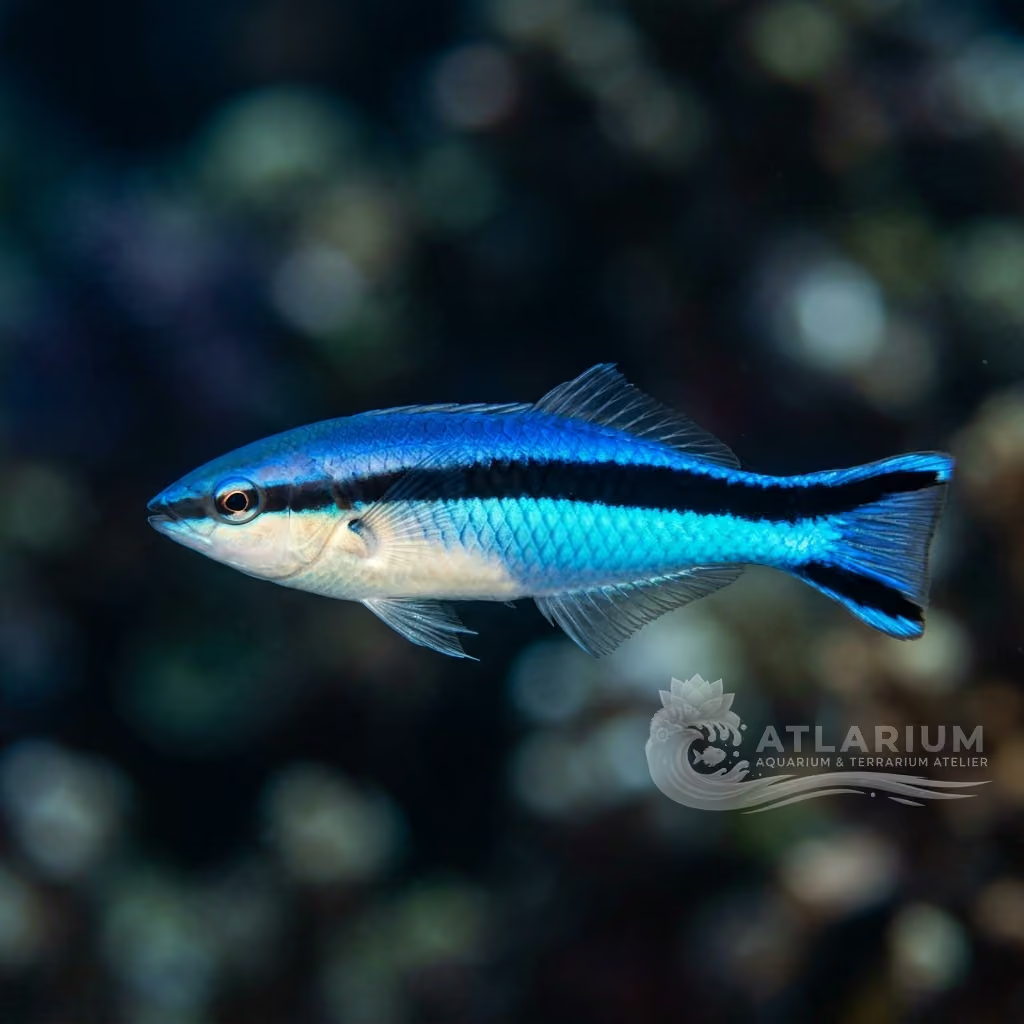
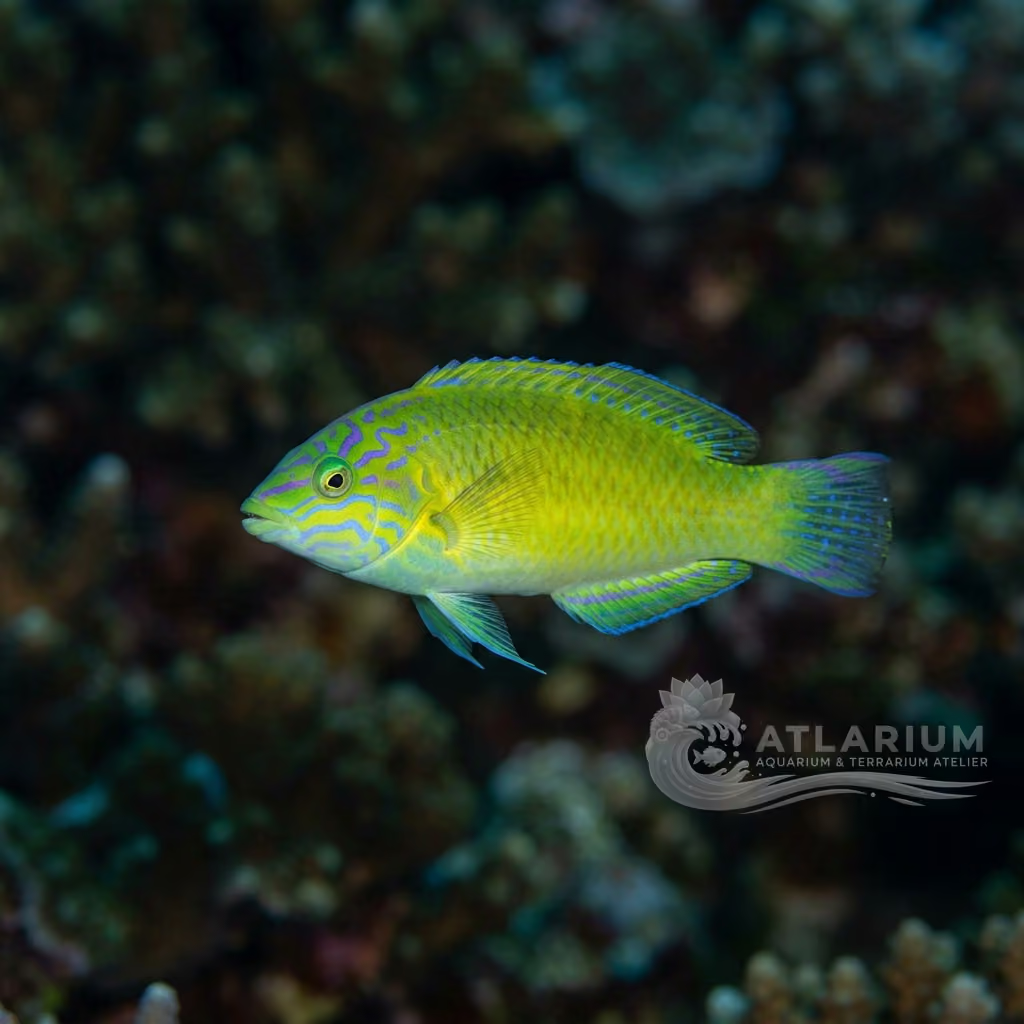
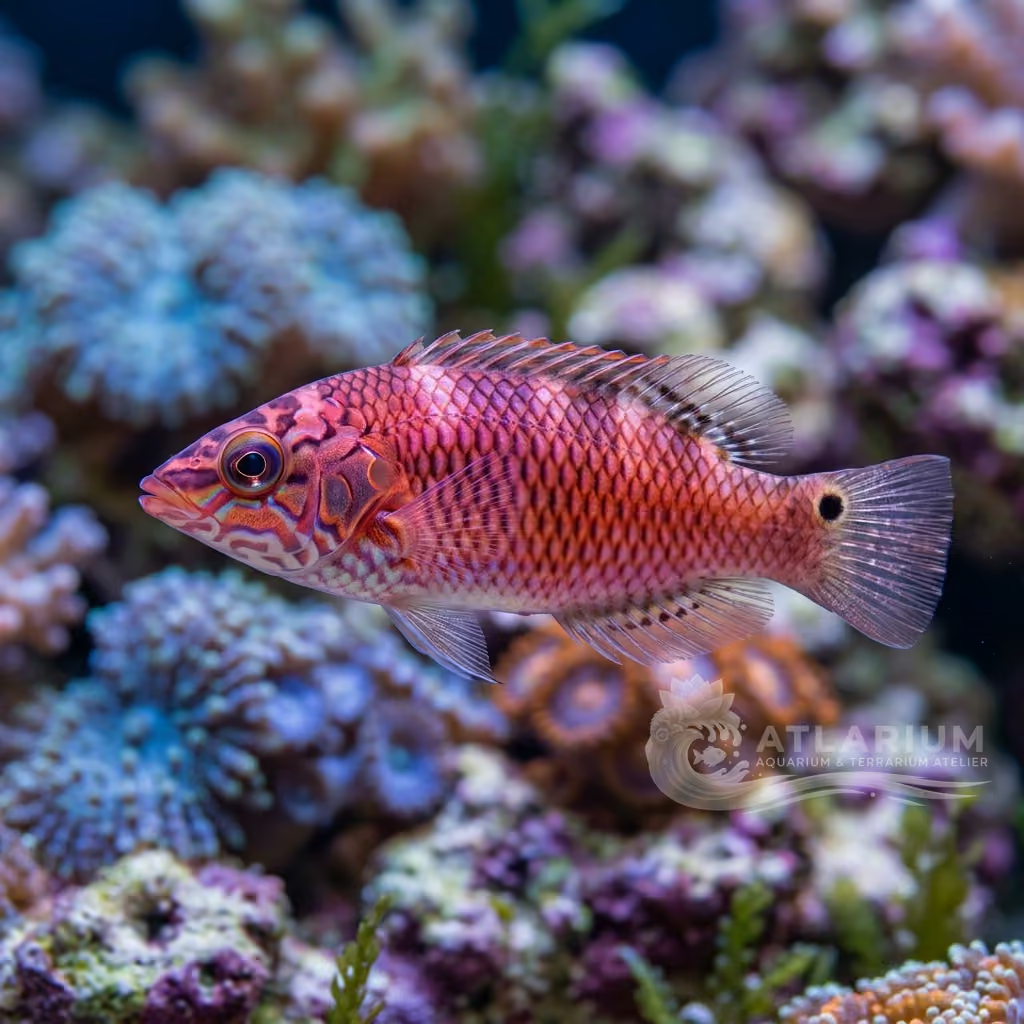
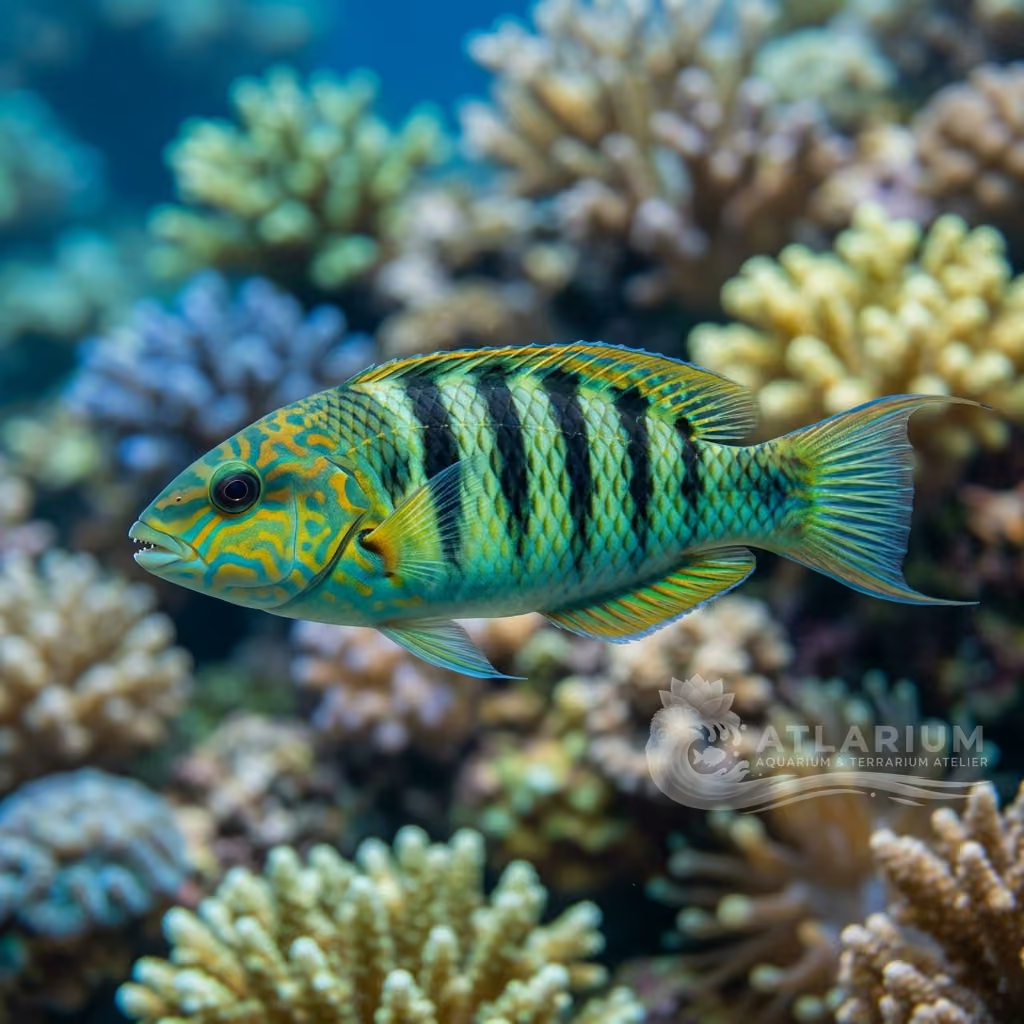
Coloration and Sexual Dimorphism: Spectacular coloration divided into contrasting zones: the anterior dorsal portion and head are bright red, while the posterior body and tail are lemon yellow. A broad white stripe runs along the side. Notable black spots are located on the pectoral fin tips and anterior dorsal fin. No obvious visual sexual dimorphism.

Pflege, Zucht und Mitbewohner
Aquarium Setup: Needs a tank of at least 300 liters (80 gallons) for a single specimen, with plenty of live rock arranged to form caves, ledges, and visual barriers to mimic deep reef slopes. Requires ample open swimming space and a tight lid, as they are strong jumpers when startled or during feeding.
Diet and Feeding: Voracious carnivore. In the wild, it feeds on crabs, hermit crabs, bivalve mollusks, gastropods, sea urchins, and small fish. In captivity, feed a meat-rich diet of chopped shrimp, clams, mysis, krill, and high-quality commercial pellets or granules for predatory marine fish. Feed twice daily.
Water Quality: Demands standard clean tropical marine water. Temperature between 23°C and 26°C (73°F - 79°F), pH 8.1-8.4, specific gravity 1.021-1.025, and dKH 8-12. An efficient protein skimmer is vital to handle the substantial bioload generated by its carnivorous feeding habits.
Compatibility and Cohabitation: Can be housed with robust, similarly sized or larger marine fish like tangs, angelfish, triggerfish, or lionfish. Incompatible with ornamental invertebrates such as small shrimp, crabs, or snails, which will be preyed upon. Reef-safe with corals, though it may flip small loose rocks.
Aquarium Breeding: Spawning in home aquariums is not documented. In nature, they are pelagic spawners that release eggs and sperm into the open water column during dusk mating rituals. The larvae undergo a very long planktonic phase that is difficult to support in captivity.
Risks and Diseases: Hardy species that adapts well to aquarium life after acclimation. Can catch external parasites (Cryptocaryon, Oodinium) if stressed or during transport. A vitamin-enriched diet helps maintain a strong immune system.

Geografische Herkunft und Verbreitung
Distributed in the Western Atlantic Ocean, from the coast of North Carolina and Florida down to southern Brazil, including the Gulf of Mexico and the Caribbean Sea. It is associated with outer coral reefs and deep rocky reefs, typically at depths between 15 and 120 meters, preferring areas rich in sponges and corals with strong currents.
Ursprung
Tropische Ozeane und RiffeExtra-Amazonas-SüdamerikaMittelamerika und KaribikNordamerika

Fischprofil
- Temperament
- Semi-aggressive
- This species exhibits a semi-aggressive temperament that becomes more pronounced as the fish matures and grows. Adults are highly territorial and will actively defend their preferred cave or rock structure from intruders. They can be particularly aggressive toward similar-looking wrasses, smaller passive fish, or newly introduced tankmates. However, they are generally peaceful toward larger, more robust species that do not compete for the same ecological niche.
- Diät
- Carnivore
- As voracious carnivores, spotfin hogfish require a protein-rich diet composed of high-quality marine-based foods. In the wild, they feed on a variety of benthic invertebrates such as crabs, snails, worms, and mollusks. Captive specimens should be fed a varied diet of mysis shrimp, krill, chopped clams, squid, and fortified brine shrimp. Offering high-quality carnivore pellets can also help supplement their nutritional needs and maintain their bright red and yellow coloration.
- Lebenserwartung
- 10-15 years
- Erwachsenengröße
- 20 cm
- Geschlechterverhältnis
- Harem
- In their natural habitat, these protogynous hermaphrodites live in harem structures where a single dominant male oversees several females. In a home aquarium, keeping them singly is highly recommended to avoid severe territorial aggression unless the tank is exceptionally large. If attempting to form a group or harem, one should introduce multiple smaller juveniles simultaneously into a spacious system. This allows a natural hierarchy to develop where the largest individual will eventually transition into the dominant male.
- Fütterungsfrequenz
- 2-3 times daily
- To support their active lifestyle and high metabolic rate, spotfin hogfish should be fed two to three times daily. Providing multiple small meals throughout the day is far better than a single large feeding, as it helps reduce waste and mimics their natural foraging behavior. It is important to only feed what they can consume within a few minutes to keep water parameters stable. Supplementing their meals with vitamin enrichments is also recommended to sustain their long-term health.
- Bioload
- Medium to High
- The spotfin hogfish grows to a substantial size of up to 11 inches and possesses a very active metabolism, resulting in a significant biological waste output. To manage this high bioload, a large aquarium of at least 100 to 120 gallons equipped with a robust protein skimmer and high-quality filtration is essential. Regular water changes and efficient mechanical and biological filtration are necessary to maintain low nitrate levels and optimal water quality. Overfeeding should be avoided to prevent sudden spikes in ammonia or nitrite in the system.
- Fluss
- Strong
- Coming from tropical reefs, this species prefers moderate to strong water movement in the aquarium. Stronger currents help simulate their natural reef habitat and provide healthy oxygenation throughout the tank. While they enjoy active currents for swimming, they also require areas of lower flow behind rockwork to rest and sleep at night. Ensuring adequate water flow is also beneficial for keeping detritus in suspension so the filtration system can remove it.
- Sprungrisiko
- Yes
- Like almost all wrasses and hogfish, this species poses a very high risk of jumping out of the aquarium, particularly when startled or chased. It is absolutely essential to equip the tank with a tight-fitting lid or a secure mesh cover to prevent escape. Any small gaps around pipes or cables should also be sealed, as these agile fish can easily locate and jump through small openings. Providing adequate hiding spots in rockwork can also help minimize their flight response and startle behavior.
- Reproduktion
- Oviparous
- The spotfin hogfish is a protogynous hermaphrodite that reproduces via broadcast spawning, releasing eggs and sperm into the water column. While spawning in home aquariums is extremely rare due to the size and depth requirements, this species has been successfully bred in professional aquaculture facilities. Rising Tide Conservation successfully closed the breeding cycle of this species in 2017, proving that captive rearing is possible. Breeding them requires a very large volume of water, precise environmental triggers, and specialized larval rearing techniques.
- Kompatibilität & Tankkameraden
- Reef safe
- The spotfin hogfish is not reef-safe, as it will readily consume small ornamental shrimp, crabs, snails, and feather dusters. It is best suited for a fish-only-with-live-rock (FOWLR) system or a reef aquarium containing only large, noxious corals that it will ignore. Compatible tankmates include moderately aggressive fish such as larger angelfish, hawkfish, groupers, tangs, and triggerfish. Avoid keeping them with small, docile species like firefish or neon gobies, which may be harassed or eaten.
- Tankfüllstand
- Middle/Bottom
- The spotfin hogfish is an active swimmer that spends a significant portion of its time in the lower and middle zones of the aquarium. It frequently patrols the rockwork and substrate in search of hidden invertebrates to prey upon. Additionally, it requires a deep sand bed as it may burrow into the sand to sleep or seek refuge when threatened. However, it will also utilize the open water column for active swimming throughout the day.

Wissenschaftliche Modelle & Parameter
FishBase
Zugang zu den offiziellen wissenschaftlichen Daten der Art
FishBase v25.04Daten synchronisiert am: 15.06.2026
- Trophäenniveau
- 3,6 ± 0,48 se
- Belastbarkeit
- Mittel (1,4 - 4,4 Jahre)
- Phylogenetische Einzigartigkeit (PD50)
- 0.5
- Bayessche Längen-Gewichts-Beziehung
- a = 0.01023, b = 3.11
- AnfälligkeitGeringe Anfälligkeit (19 / 100)

Verwandte Arten
Empfehlungen gruppiert nach nahen Verwandten, Auswahl von Begleitern und ähnlicher Betreuung.