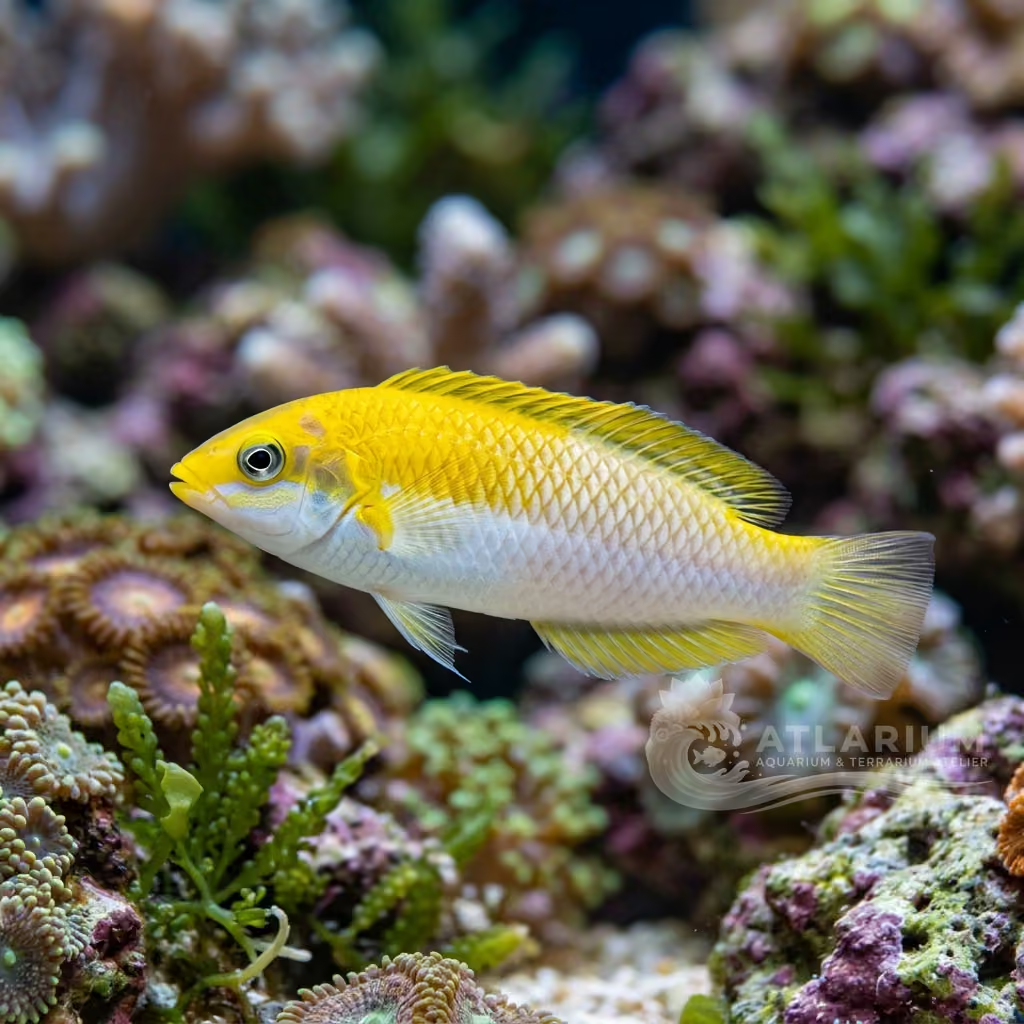
Five-stripe wrasse
Thalassoma quinquevittatum
The five-stripe wrasse is a breathtakingly colorful, intensely active predator of benthic invertebrates. Highly energetic, it requires a spacious setup, powerful water flow, and a secure lid.
Wassertemperatur
23 - 28 °C
pH-Wert
8.1 - 8.4
Wassertyp
Meerwasser
Tankfüllstand
Alle Ebenen
Erwachsenengröße
17 cm
Mindesttankvolumen
>= 300 L
Mindestgruppe
>= 1
KH
8 - 12 dKH

Artbeschreibung
Geographical Origin and Habitat: The fish species Thalassoma quinquevittatum is native to extensive tropical reefs of the Indo-Pacific, distributed from East African coasts to Hawaii, northwards to southern Japan, and southwards to Australia. It predominantly populates reef zones exposed to strong surge, outer reef crests, and clear lagoons at depths ranging from 1 to 25 meters, preferring areas rich in vegetation, rocks, or crevices where it can find shelter from natural predators. The geographical distribution of this organism reflects its ecological adaptability to different natural aquatic habitats.
Taxonomy and Morphology: From a systematic perspective, Thalassoma quinquevittatum belongs to the family Labridae, order Perciformes. It was officially classified by Lay & Bennett, 1839. Morphologically, it is distinguished by an elongated, fusiform body reaching up to 15 cm in length, a terminal mouth equipped with small sharp teeth for capturing and crushing small shells, and a truncate caudal fin, structural features adapted for swimming and hunting in its natural environment.
Social Behavior: This fish exhibits a behavior that is predominantly extremely active, tireless swimmer, diurnal, and territorial. Towards conspecifics and other species, it behaves in a semi-aggressive and dominant; males defend large territories by swimming continuously and displaying dominant behavior towards smaller or shy fish manner. It plays an active role in its habitat, occupying a specific ecological niche.
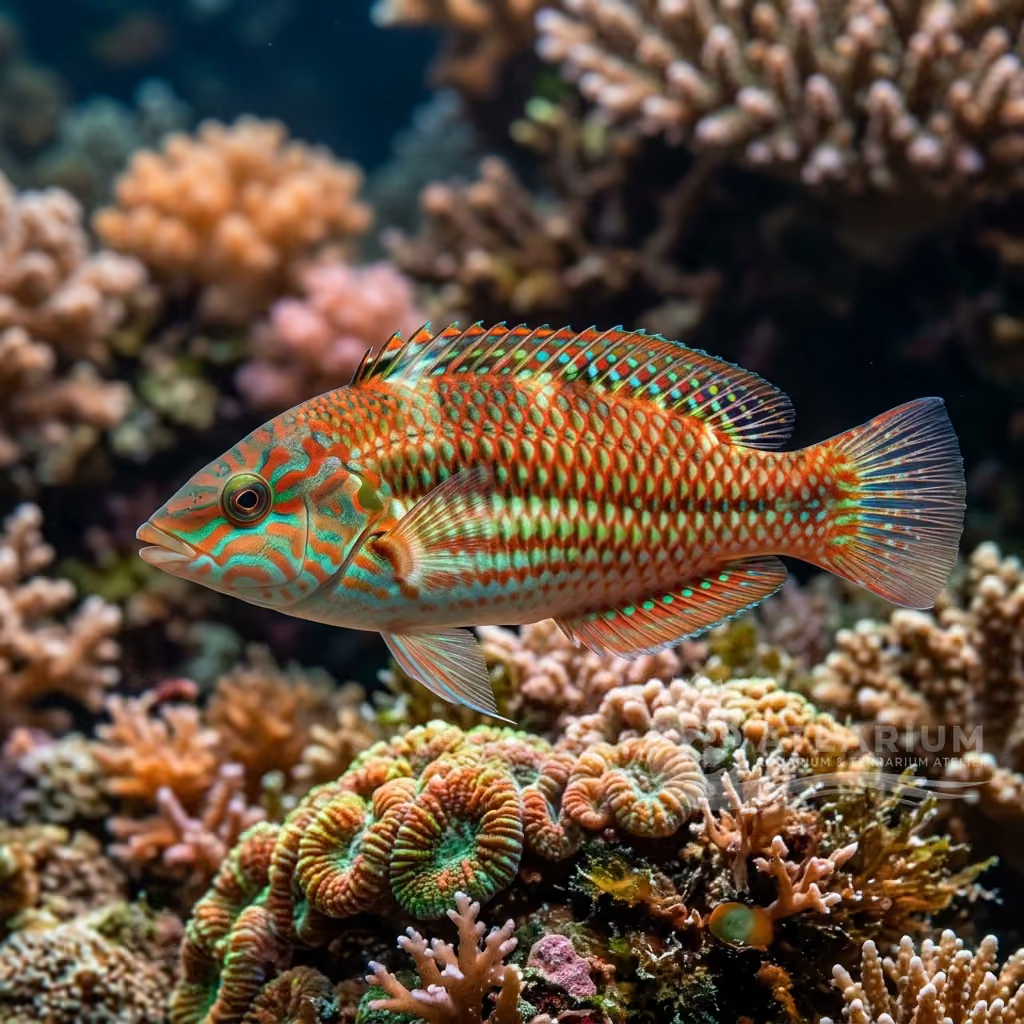
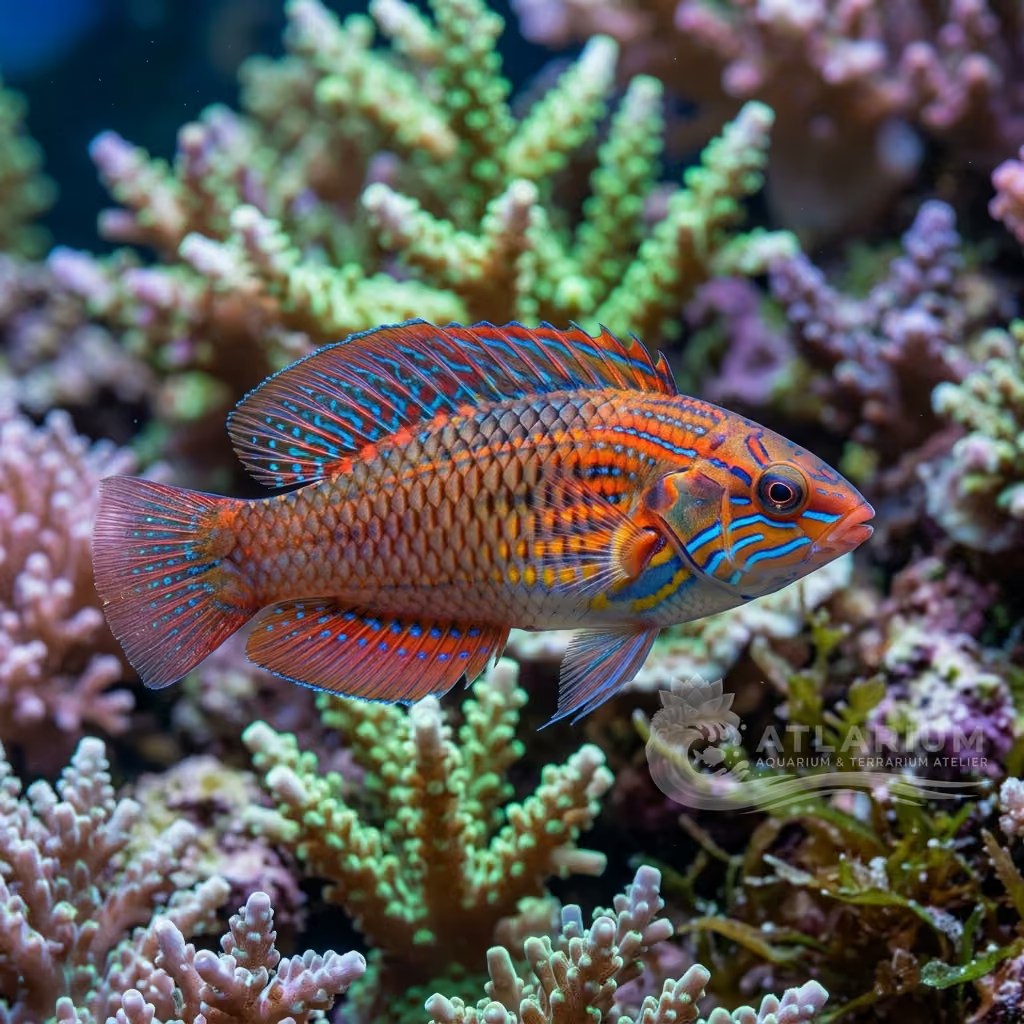
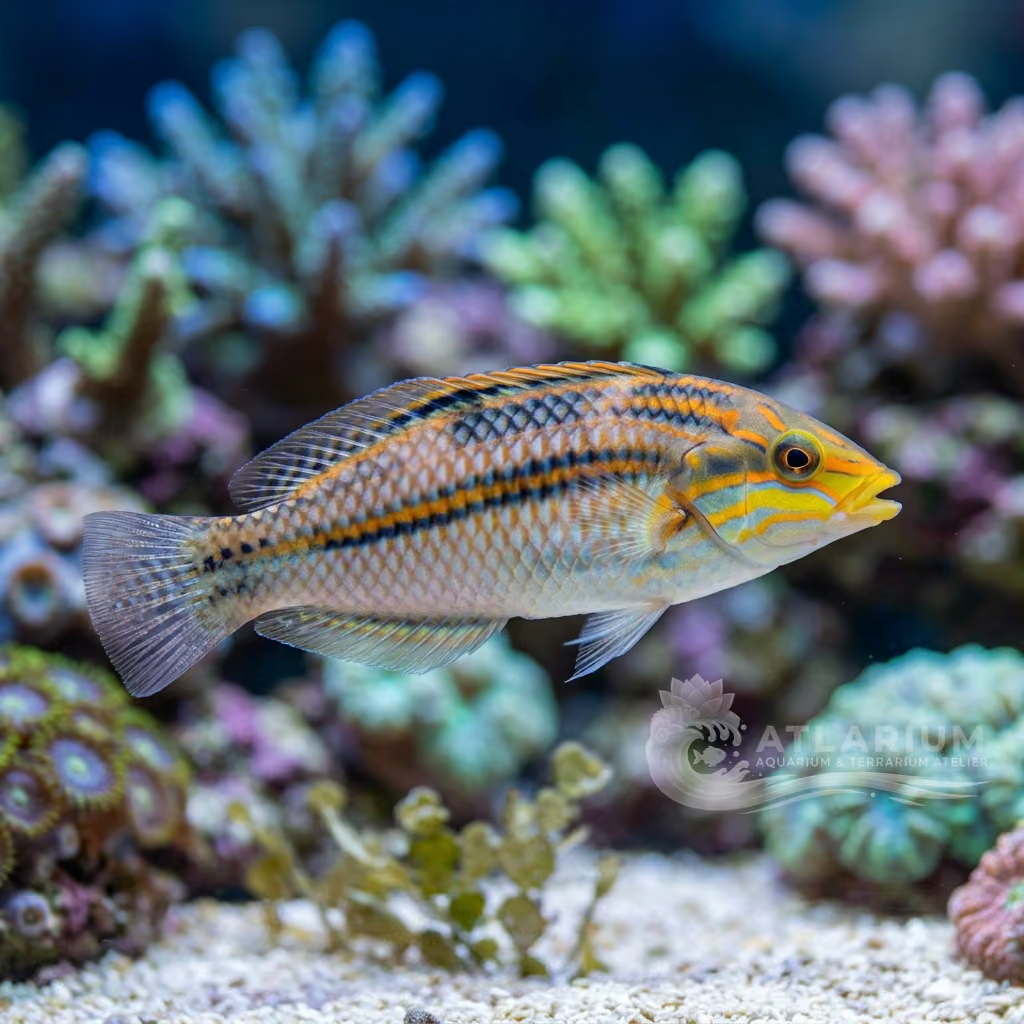
Coloration and Sexual Dimorphism: The coloration of this species is characterized by a gorgeous bright green-blue body highlighted by five distinct pinkish-red longitudinal stripes along the flanks and yellow markings on the head. Regarding sexual dimorphism, protogynous hermaphrodite species; dominant terminal males are larger than females, showing significantly brighter coloration and elongated fins.

Pflege, Zucht und Mitbewohner
Aquarium Setup: To properly house Thalassoma quinquevittatum, a stable aquarium with a minimum volume of 300 liters to allow free and energetic swimming is recommended. The tank must be set up with a large aquarium with ample open space for fast swimming, powerful flow pumps, reef rockwork, and a fine sand bed of at least 5-8 cm for burying themselves to sleep or hide to ensure a stimulating and safe environment.
Diet and Feeding: The diet of this fish is predominantly strictly carnivorous and aggressive. In the aquarium, it readily accepts frozen foods like krill, mysis, chopped crab, shrimp, fresh clams, and high-quality protein-rich pellets. Integrating the diet with vitaminized feeds helps keep the specimen healthy.
Water Quality: The stability of water parameters is fundamental for the long-term health of Thalassoma quinquevittatum. Ideal values include a temperature of 24-26 °C, pH of 8.1-8.4, specific gravity of 1.023-1.025 specific gravity, and KH of 8-12 dKH. It is essential to perform regular water changes to maintain ammonia and nitrites at zero, and limit nitrates.
Compatibility and Cohabitation: In terms of compatibility, this species proves to be semi-aggressive and not suitable for small marine invertebrates. It can be housed with active medium and large fish like tangs, angelfish, triggerfish, and large armored crabs. Conversely, cohabitation with small ornamental shrimp, small snails, small shy fish, and corals that could be disturbed by its restless swimming is absolutely not recommended, as they could harm or prey on it.
Aquarium Breeding: Breeding Thalassoma quinquevittatum in the aquarium is extremely complex and never achieved in home aquariums due to the need for open water spawning and massive volumes. The reproductive cycle involves spawners release eggs and sperm simultaneously in the water column; pelagic eggs float in open water and require specialized aquaculture systems to collect and rear. The development of fry requires stable conditions and suitable feeds for the early stages of growth.
Risks and Diseases: The main health risks for this species are related to risk of injury by jumping out if the tank is uncovered, and skin abrasions caused by coarse or sharp sand. It is sensitive to skin parasite infestations like Cryptocaryon irritans and Oodinium, as well as bacterial eye infections. Rapid fluctuations in chemical parameters can cause stress and immune weakening.

Geografische Herkunft und Verbreitung
The fish species Thalassoma quinquevittatum is native to extensive tropical reefs of the Indo-Pacific, distributed from East African coasts to Hawaii, northwards to southern Japan, and southwards to Australia. It predominantly populates reef zones exposed to strong surge, outer reef crests, and clear lagoons at depths ranging from 1 to 25 meters, preferring areas rich in vegetation, rocks, or crevices where it can find shelter from natural predators. The geographical distribution of this organism reflects its ecological adaptability to different natural aquatic habitats.
Ursprung
Tropische Ozeane und RiffeAfrika und MadagaskarOstasienAustralien, Neuguinea und Ozeanien

Fischprofil
- Temperament
- Semi-aggressive
- Semi-aggressive and very active. Can outcompete slow fish for food. May harass passive species.
- Diät
- Carnivore
- Carnivorous diet consisting of meaty foods. Feed mysis shrimp, chopped seafood, and high-quality pellets. Variety is essential for color maintenance.
- Lebenserwartung
- 5-8 years
- Erwachsenengröße
- 17 cm
- Geschlechterverhältnis
- Solitary
- Keep one male per tank. Multiple females can be kept in large systems. They can change sex from female to male.
- Fütterungsfrequenz
- Twice daily
- Feed them two to three times daily. They are aggressive eaters. Ensure shy tank mates get enough food.
- Bioload
- Medium
- These wrasses have a moderate to high bioload. They are very active and eat constantly. Efficient mechanical and biological filtration is needed.
- Fluss
- Strong
- They enjoy strong water currents. Good flow helps keep the water well oxygenated. This mimics their natural surge zones.
- Sprungrisiko
- Yes
- They are notorious jumpers when startled. A tight-fitting mesh lid is absolutely mandatory. Any small gap can lead to escape.
- Reproduktion
- Oviparous
- Rarely bred in the home aquarium. They are pelagic spawners. Males are often terminal phase females.
- Kompatibilität & Tankkameraden
- Community
- Can be aggressive towards small invertebrates. May flip over snails and crabs. Larger species will eat ornamental shrimp.
- Tankfüllstand
- All levels
- Very active in the middle and lower levels. They require a deep sand bed to bury themselves at night. They will constantly patrol the rockwork.

Wissenschaftliche Modelle & Parameter
FishBase
Zugang zu den offiziellen wissenschaftlichen Daten der Art
FishBase v25.04Daten synchronisiert am: 15.06.2026
- Trophäenniveau
- 3,6 ± 0,56 se
- Belastbarkeit
- Hoch (weniger als 15 Monate)
- Phylogenetische Einzigartigkeit (PD50)
- 0.5
- Bayessche Längen-Gewichts-Beziehung
- a = 0.01, b = 3.05
- AnfälligkeitGeringe Anfälligkeit (10 / 100)

Verwandte Arten
Empfehlungen gruppiert nach nahen Verwandten, Auswahl von Begleitern und ähnlicher Betreuung.