Spotted hawkfish
Cirrhitichthys aprinus
A characterful, spotted marine hawkfish that perches on rocks and corals. Highly territorial and hardy, it thrives in medium reef setups but may prey on tiny crustaceans.
Wassertemperatur
24 - 27 °C
pH-Wert
8.1 - 8.4
Wassertyp
Meerwasser
Tankfüllstand
Unten
Erwachsenengröße
12,5 cm
Mindesttankvolumen
>= 150 L
Mindestgruppe
>= 1
KH
8 - 12 dKH

Artbeschreibung
Geographical Origin and Habitat: The Spotted Hawkfish is widely distributed throughout the tropical Indo-West Pacific, ranging from the eastern coast of Africa and the Red Sea to the Line Islands, north to southern Japan, and south to the Great Barrier Reef. It inhabits shallow lagoons, rocky reefs, and outer reef slopes at depths ranging from 1 to 40 meters, perching atop stony corals.
Taxonomy and Morphology: Belonging to the family Cirrhitidae and the genus Cirrhitichthys. It features a moderately elongated, laterally compressed body. The lower rays of its pectoral fins are thickened and unbranched, specialized for anchoring the fish against strong currents on rock faces. It reaches a maximum size of 7-8 cm.
Social Behavior: Predominantly solitary and highly territorial towards conspecifics. It spends most of its day sitting motionless on high perches, scanning the water column before darting down to capture prey. It can become dominant in smaller tanks, occasionally chasing away shy bottom-dwelling fishes.
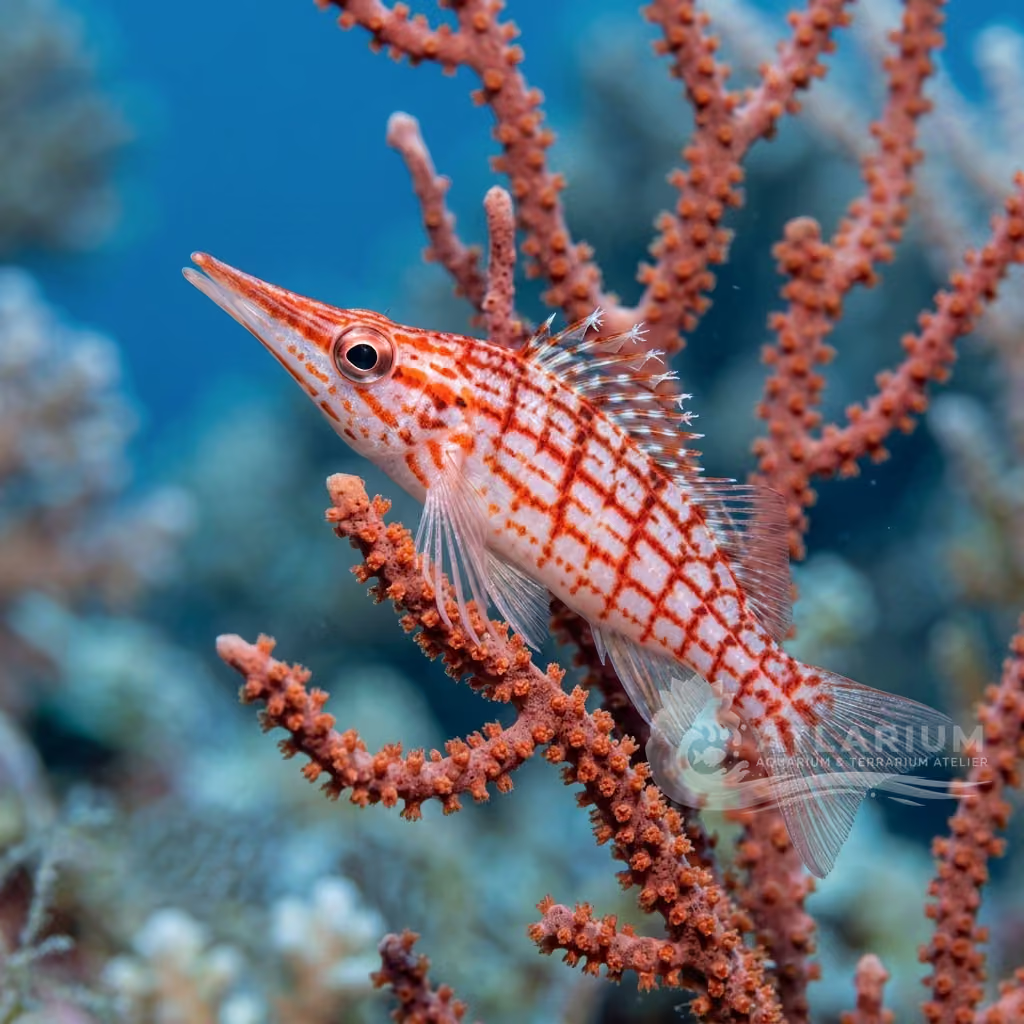
Coloration and Sexual Dimorphism: The body pattern consists of a white or cream base adorned with large, irregular reddish-brown to dark orange spots and vertical blotches. The head features distinctive fine lines radiating from the eyes. Sexual dimorphism is not visually apparent, though females grow slightly larger than males.

Pflege, Zucht und Mitbewohner
Aquarium Setup: A minimum tank volume of 150 liters (approx. 40 gallons) is recommended. The aquascape should feature plenty of live rock arranged with flat shelves and high perching spots. A tight-fitting lid or mesh cover is mandatory, as hawkfish are notorious jumpers.
Diet and Feeding: Strictly carnivorous. Offer a varied diet of frozen foods such as mysis shrimp, brine shrimp, chopped krill, clams, and squid. It will readily adapt to high-quality carnivore pellets and flakes. Feed small portions once or twice daily.
Water Quality: Keep standard marine reef parameters: temperature 23-26°C (73-79°F), pH 8.1-8.4, specific gravity 1.022-1.025, and carbonate hardness (dKH) 8-12. Regular partial water changes and efficient protein skimming are highly recommended.
Compatibility and Cohabitation: Excellent companion for moderately active fish like dwarf angels, tangs, and larger wrasses. Avoid keeping it with small ornamental shrimp, crabs, or tiny gobies, as they will be treated as natural prey and consumed.
Aquarium Breeding: Spawning in home aquaria is extremely rare. They are pelagic spawners that perform a courtship dance ascending into the water column to release eggs. Rearing the delicate, planktonic larvae requires specialized live micro-feeds and is rarely successful.
Risks and Diseases: This is an incredibly hardy species with high disease resistance. However, it can contract typical marine ailments such as Ich (Cryptocaryon irritans) or Velvet if subjected to sudden temperature fluctuations or poor water quality.

Geografische Herkunft und Verbreitung
The Spotted Hawkfish is widely distributed throughout the tropical Indo-West Pacific, ranging from the eastern coast of Africa and the Red Sea to the Line Islands, north to southern Japan, and south to the Great Barrier Reef. It inhabits shallow lagoons, rocky reefs, and outer reef slopes at depths ranging from 1 to 40 meters, perching atop stony corals.
Ursprung
Tropische Ozeane und RiffeAfrika und MadagaskarAustralien, Neuguinea und Ozeanien

Fischprofil
- Temperament
- Semi-aggressive
- The Spotted Hawkfish is semi-aggressive and highly territorial regarding its favorite perching spots. They spend most of their time sitting motionless on live rock or coral branches, observing the tank before darting after prey. They should be housed singly unless in a very large aquarium.
- Diät
- Carnivore
- The Spotted Hawkfish is an opportunistic carnivore that requires meaty foods. Offer a varied diet of frozen mysis, brine shrimp, chopped krill, clams, and squid. Over time, they will also accept high-quality pellets and flakes formulated for marine carnivores.
- Lebenserwartung
- 10 years
- Erwachsenengröße
- 12.5 cm
- Geschlechterverhältnis
- Solitary
- Solitary
- Fütterungsfrequenz
- Twice daily
- They should be fed once or twice daily with moderate portions. Since they are sedentary predators, their feeding should be monitored to ensure they do not overeat. Providing small, controlled amounts helps maintain their health and prevents water pollution.
- Bioload
- Medium
- The spotted hawkfish produces a moderate bioload relative to its size, primarily driven by its carnivorous diet. Since it relies on meaty foods like small crustaceans, waste output can accumulate if overfed. Adequate protein skimming and regular water changes are usually sufficient to maintain pristine water quality. A well-established biological filtration system will easily process the metabolic waste produced by this species.
- Fluss
- Strong
- They prefer moderate to strong water flow, which replicates the current-swept reef environments they inhabit in the wild. Since they lack a swim bladder, they rely on their sturdy pectoral fins to anchor themselves to rocks against the flow. Good circulation also promotes water oxygenation.
- Sprungrisiko
- Yes
- Like many hawkfish, this species possesses a strong instinct to dart upwards when startled or pursuing prey, creating a significant jump risk. They are known to launch themselves out of open-top aquariums during feeding frenzies or territorial disputes. It is highly recommended to secure the tank with a tight-fitting lid or a specialized mesh cover to prevent accidental escape. Even small gaps around equipment should be covered to ensure their safety.
- Reproduktion
- Oviparous
- They are pelagic spawners that perform a courtship dance, ascending into the water column at dusk to release eggs and sperm. Breeding in home aquariums is extremely difficult and rarely documented. The tiny, planktonic larvae require highly specialized live foods to survive, making rearing them very complex.
- Kompatibilität & Tankkameraden
- Reef safe
- They are generally reef-safe with corals, but pose a threat to small mobile invertebrates. They will actively hunt and consume ornamental shrimp, crabs, and very small fish like gobies. They are compatible with larger, semi-aggressive tankmates such as tangs, angels, and wrasses.
- Tankfüllstand
- Bottom
- This species is primarily a bottom-to-midwater dweller that spends most of its time perched on live rock or coral branches. They lack a swim bladder, which anchors them to the lower regions of the aquarium unless actively hunting. You will often observe them strategically positioning themselves on elevated rocky outcrops to survey their surroundings for potential prey. Consequently, they do not frequently utilize the upper third of the water column.

Wissenschaftliche Modelle & Parameter
FishBase
Zugang zu den offiziellen wissenschaftlichen Daten der Art
FishBase v25.04Daten synchronisiert am: 15.06.2026
- Trophäenniveau
- 3,5 ± 0,55 se
- Phylogenetische Einzigartigkeit (PD50)
- 0.5039
- Bayessche Längen-Gewichts-Beziehung
- a = 0.01585, b = 3.05
- AnfälligkeitGeringe Anfälligkeit (10 / 100)

Verwandte Arten
Empfehlungen gruppiert nach nahen Verwandten, Auswahl von Begleitern und ähnlicher Betreuung.