Twospot Slender Hogfish
Bodianus bimaculatus
The Two-spot Hogfish is a slender, deep-water reef fish with striking colors. It requires a peaceful aquarium with fine sand and intricate live rock formations to hide and hunt.
Wassertemperatur
24 - 27 °C
pH-Wert
8.1 - 8.4
Wassertyp
Meerwasser
Tankfüllstand
Unten und in der Mitte
Erwachsenengröße
8 cm
Mindesttankvolumen
>= 150 L
Mindestgruppe
>= 1
KH
8 - 12 dKH

Artbeschreibung
Geographical Origin and Habitat: Distributed in the tropical Indo-Pacific, from East Africa and Madagascar to Indonesia, north to southern Japan, and south to New Caledonia. Prefers deep sandy reefs and rubble zones at depths of 30 to 60 meters. This slender hogfish is native to deep-water drop-offs and rocky reefs in the Indo-West Pacific region.
Taxonomy and Morphology: Member of the Labridae family, genus Bodianus. Features a remarkably slender and elongated body compared to other hogfishes. Reaches a maximum size of 8 cm (3.1 inches). It features a highly elongated, streamlined body shape and a pointed snout adapted for catching small prey in crevices.
Social Behavior: Active and moderately peaceful. However, it can show territorial behavior towards smaller bottom-dwelling fish. Bold and energetic. It is an active diurnal swimmer that spends the day hunting and retires to rocky caves to sleep at night.
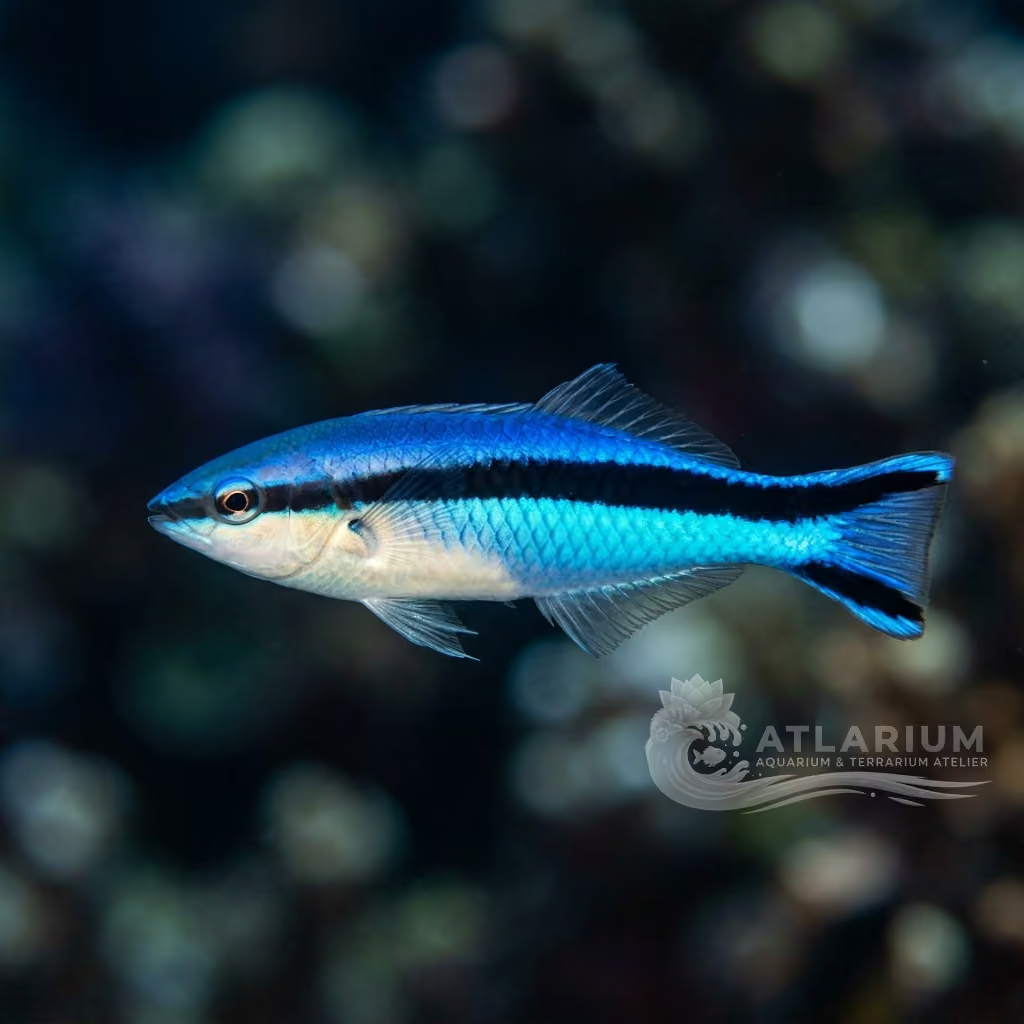
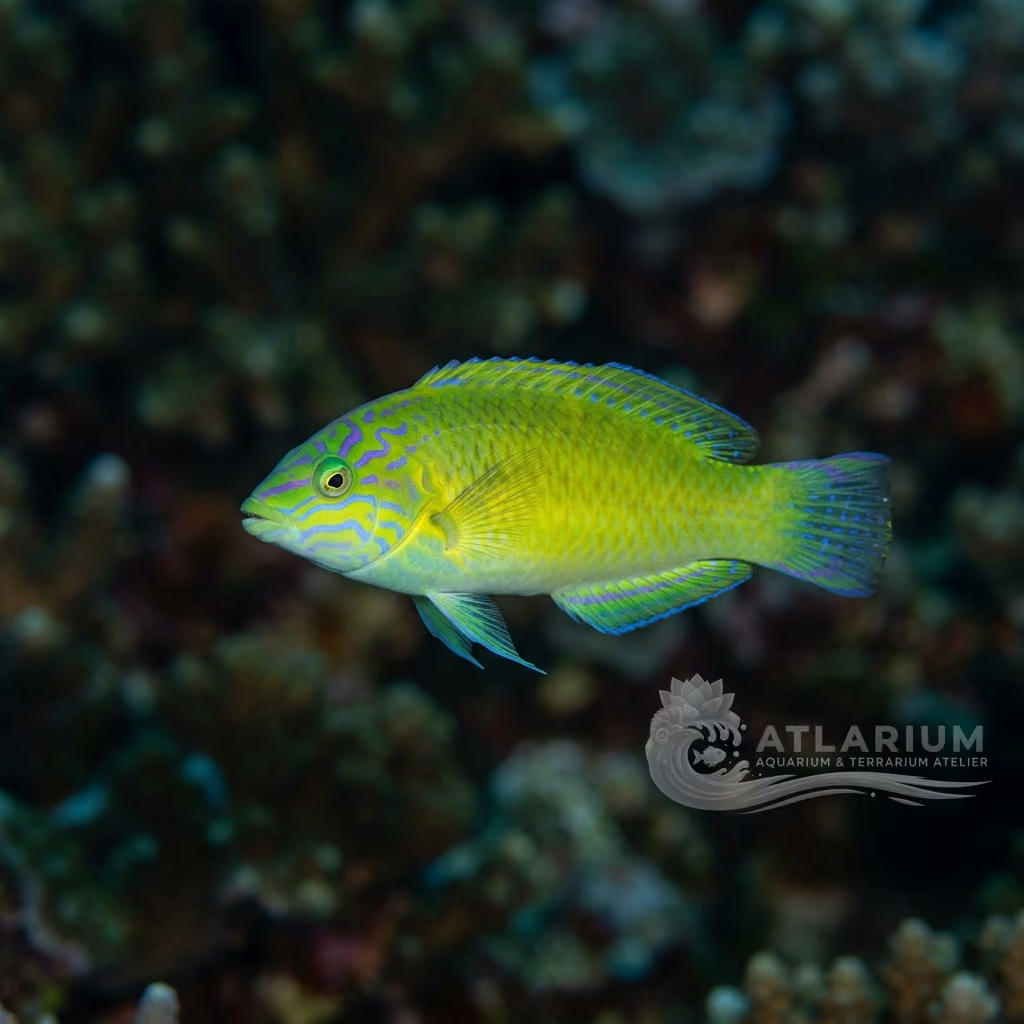
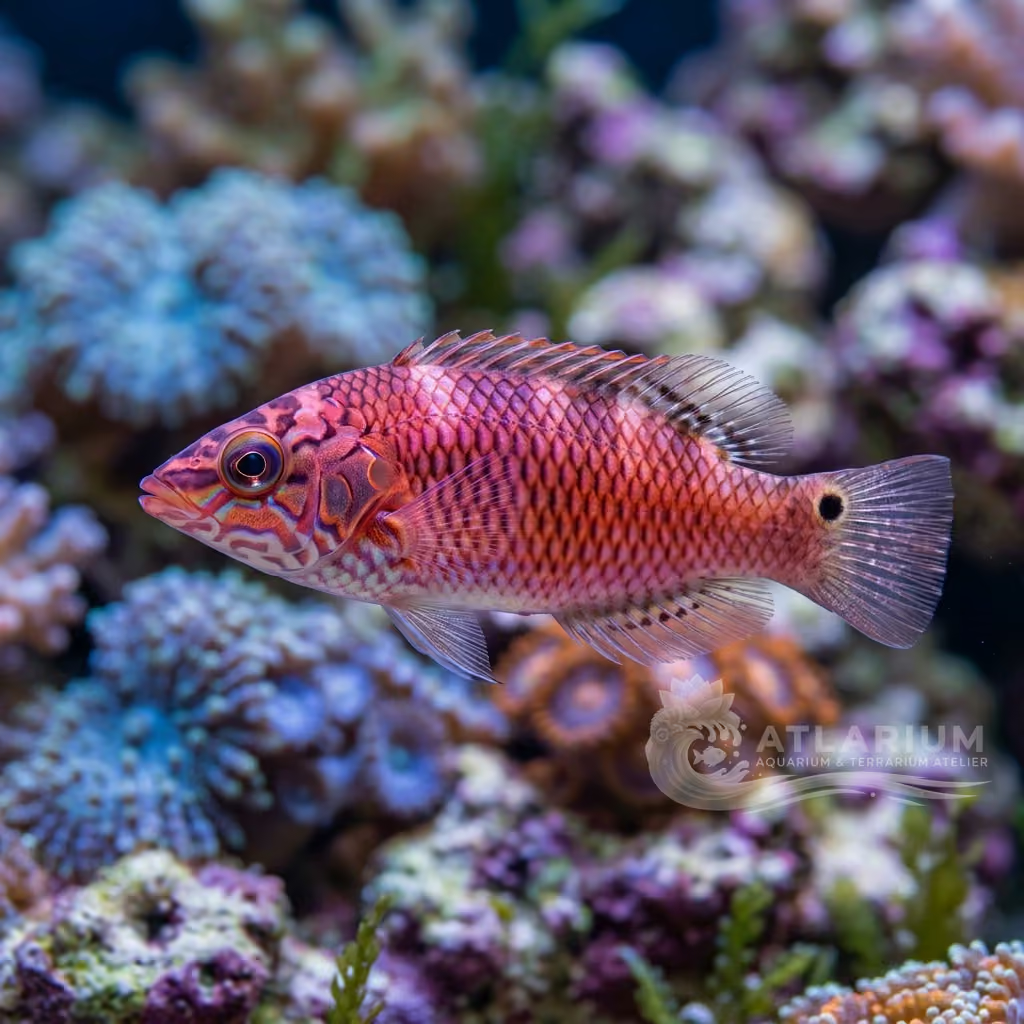
Coloration and Sexual Dimorphism: Body is bright lemon-yellow or orange-pink with thin reddish horizontal stripes. Features two prominent black spots: one behind the eye on the gill cover and one on the tail base. No distinct sexual dimorphism. The base color is bright yellow to reddish-yellow, accented by a black spot on the gill cover and another at the tail base.

Pflege, Zucht und Mitbewohner
Aquarium Setup: Needs a tank of at least 150 liters with fine sand and live rock arranged to create numerous crevices. A tight-fitting lid is essential to prevent jumping. Provide a tank size of at least 150 liters with plenty of live rock arranged to form caves and overhangs for hiding.
Diet and Feeding: Carnivorous. Naturally feeds on small benthic invertebrates. Feed frozen mysis, brine shrimp, finely chopped krill, and small high-quality pellets twice daily. Offer a carnivorous diet consisting of frozen mysis, brine shrimp, chopped krill, and high-quality dry foods.
Water Quality: Maintain stable reef parameters: temperature 24-26°C (75-79°F), pH 8.1-8.4, specific gravity 1.022-1.025, GH 15-25, and KH 8-12. Maintain standard reef parameters with proper water movement and efficient protein skimming to support oxygenation.
Compatibility and Cohabitation: Reef-safe with corals. May prey on very small ornamental shrimp. Avoid housing with similar-shaped wrasses or other hogfish species. Reef-safe with corals, but may prey on very small ornamental shrimp; peaceful with most other community fish.
Aquarium Breeding: Unsuccessful in home aquaria due to its deep-water spawning habits. Rearing the larvae is not feasible in typical home systems due to the complex pelagic developmental stages.
Risks and Diseases: Very hardy. Primary risks include territorial behavior against new passive tankmates and escape through jumping. A secure lid is essential, as this fish is an agile jumper and will readily escape through uncovered gaps.

Geografische Herkunft und Verbreitung
Distributed in the tropical Indo-Pacific, from East Africa and Madagascar to Indonesia, north to southern Japan, and south to New Caledonia. Prefers deep sandy reefs and rubble zones at depths of 30 to 60 meters. This slender hogfish is native to deep-water drop-offs and rocky reefs in the Indo-West Pacific region.
Ursprung
Tropische Ozeane und RiffeAfrika und MadagaskarSüd- und SüdostasienOstasienAustralien, Neuguinea und Ozeanien

Fischprofil
- Temperament
- Semi-aggressive
- The twospot hogfish is generally considered semi-aggressive, exhibiting a peaceful demeanor towards unrelated tank mates but displaying territorial behavior towards similar species. As they mature, they can become increasingly assertive, particularly in smaller tanks or if housed with very passive fish. They will actively defend their preferred caves and hunting grounds from other wrasses or hogfish. However, compared to larger hogfish species, they are relatively mild-mannered and integrate well into most community reefs.
- Diät
- Carnivore
- This species is strictly carnivorous and requires a varied diet of meaty marine foods to thrive. In the aquarium, they should be offered high-quality frozen foods such as mysis shrimp, brine shrimp, krill, and finely chopped clams or squid. They will also readily accept high-quality carnivorous pellets and flakes once acclimated. Their strong jaws allow them to crush small ornamental invertebrates, so caution is advised if keeping them with small shrimp or snails.
- Lebenserwartung
- 5-8 years
- Erwachsenengröße
- 8 cm
- Geschlechterverhältnis
- Harem
- In their natural habitat, these fish are protogynous hermaphrodites and form small harems dominated by a single large male. In an aquarium, it is usually best to house them singly unless the tank is exceptionally large and multiple specimens can be introduced simultaneously as juveniles. Attempting to keep multiple males will lead to severe territorial aggression and fighting. If a group is desired, introducing one male with several smaller females in a spacious tank is the safest approach.
- Fütterungsfrequenz
- 2-3 times daily
- Because of their active swimming style and high metabolism, twospot hogfish should be fed two to three times daily. Providing smaller, frequent meals helps sustain their energy levels and reduces potential aggression driven by hunger. It is important to feed only what they can consume within a few minutes to prevent excess food from decaying and affecting water quality. A consistent feeding schedule will also make them more confident and visible in the aquarium.
- Bioload
- Low to Medium
- The twospot hogfish is a relatively small species, which keeps its individual biological waste output moderate. However, because it requires a protein-rich carnivorous diet consisting of meaty foods, it can contribute significantly to the nutrient load if overfed. A well-functioning protein skimmer and efficient biological filtration are recommended to maintain pristine water conditions. Regular water changes and carbon filtration will help manage any organic buildup from their feeding habits.
- Fluss
- Strong
- The twospot hogfish prefers moderate water flow, which mimics the deep reef slopes and drop-offs they inhabit in the wild. While they are agile swimmers capable of navigating stronger currents, excessively turbulent water may stress them and force them to hide. Providing areas of varied flow, including calmer zones near their shelter, allows them to rest comfortably. Proper flow is also beneficial as it keeps meaty food suspended in the water column for easier feeding.
- Sprungrisiko
- Yes
- Like almost all members of the wrasse family, the twospot hogfish is an exceptional jumper and will readily leap out of an open aquarium. They are easily startled, especially during acclimation or when the aquarium lights turn on and off, which can trigger a flight response. A secure, tight-fitting lid or a fine mesh screen cover is absolutely mandatory to prevent loss. Any small gaps around pipes or cables should also be sealed, as they can fit through surprisingly narrow openings.
- Reproduktion
- Oviparous
- In captivity, reproducing the twospot hogfish is highly difficult and rarely achieved by home aquarists. They are protogynous hermaphrodites, meaning individuals function first as females and can later transition into males under social cues. Spawning involves complex courtship rituals and open water egg dispersal, requiring specialized setups and large volumes of water. Rearing the tiny, pelagic larvae is the most challenging phase, demanding specific micro-foods like rotifers and copepods.
- Kompatibilität & Tankkameraden
- Reef safe
- The twospot hogfish is generally compatible with moderately active reef fish of similar size, such as tangs, dwarf angels, and anthias. They should not be kept with very aggressive fish like large dottybacks or highly territorial wrasses, nor with extremely docile species that they might intimidate. Because they are carnivores, they pose a threat to very small ornamental shrimp (like sexy shrimp) and tiny crabs. However, they are completely reef-safe regarding corals, anemones, and larger clean-up crew members.
- Tankfüllstand
- Middle/Bottom
- The twospot hogfish is primarily a bottom-to-middle dweller that spends most of its time darting in and out of rockwork. They are highly active swimmers that appreciate open swimming areas but feel most secure when close to the safety of caves and crevices. In the wild, they are typically found on deep reef slopes, hovering just above the substrate. In the aquarium, they will occupy the lower half of the water column, scanning the sand and rocks for potential food.

Wissenschaftliche Modelle & Parameter
FishBase
Zugang zu den offiziellen wissenschaftlichen Daten der Art
FishBase v25.04Daten synchronisiert am: 15.06.2026
- Trophäenniveau
- 3,5 ± 0,49 se
- Belastbarkeit
- Hoch (weniger als 15 Monate)
- Phylogenetische Einzigartigkeit (PD50)
- 0.5
- Bayessche Längen-Gewichts-Beziehung
- a = 0.01047, b = 3.08
- AnfälligkeitGeringe Anfälligkeit (10 / 100)

Verwandte Arten
Empfehlungen gruppiert nach nahen Verwandten, Auswahl von Begleitern und ähnlicher Betreuung.