Littorella uniflora
Littorella uniflora
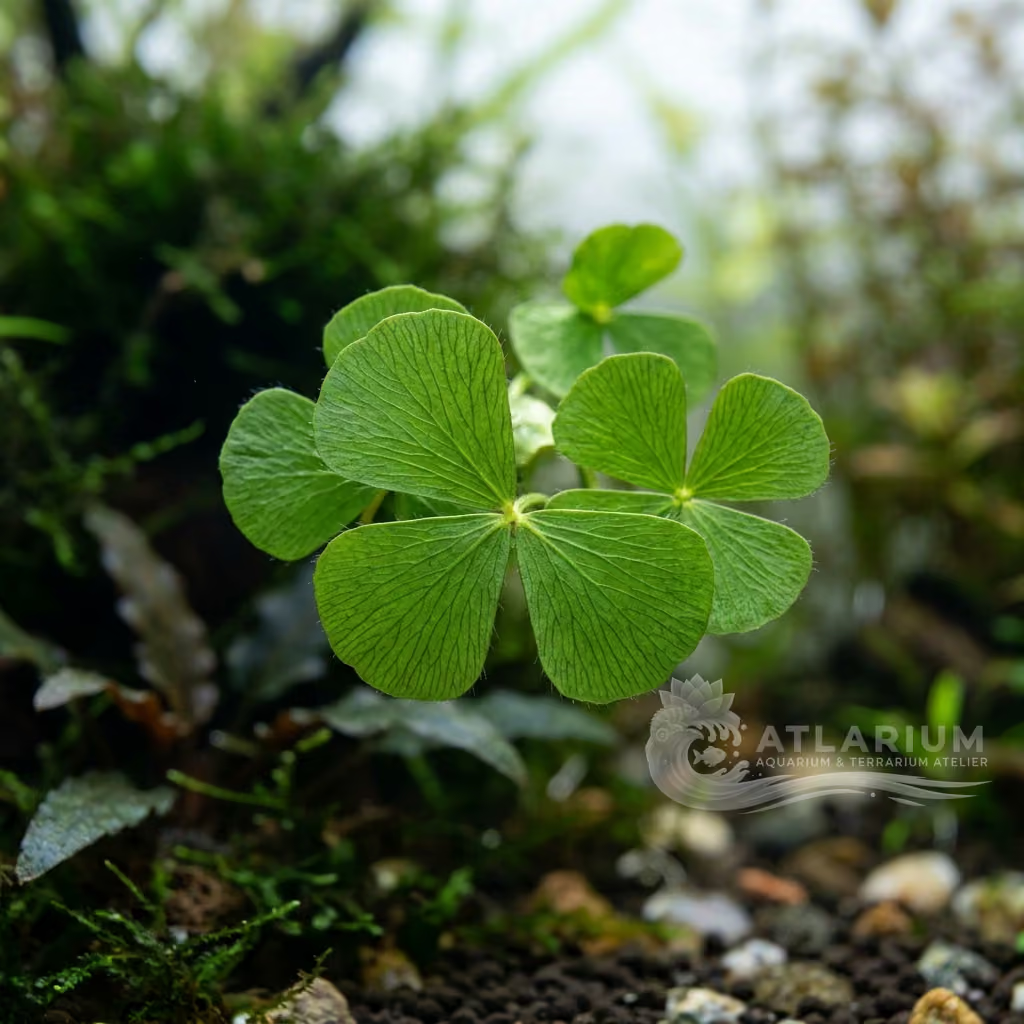
Littorella uniflora forms compact rosettes of rigid, fleshy leaves. Native to Europe, it thrives in oligotrophic waters with intense light and cold temperatures.
Temperatura da água
4 - 26 °C
Valor de pH
5 - 8
Tipo de água
Água doce
Luz
Alta
CO2
Alta
Altura esperada
7 cm
KH
0 - 14 dKH

Descrição da espécie
Geographical Origin and Habitat: Littorella uniflora is an aquatic plant native to northern and western Europe, extending to Iceland and parts of North America. It lives on the sandy or gravelly shores of oligotrophic lakes with clear, nutrient-poor waters, often in areas subject to significant water level fluctuations. In nature, it grows both submerged in shallow waters and emersed on damp sandy shores, where it tolerates harsh winters and very low temperatures.
Taxonomy & Genetics: It belongs to the Plantaginaceae family, a botanical group well represented terrestrially but with few adaptations to submerged aquatic life. The genetics of Littorella uniflora are geared toward survival in cold, oligotrophic waters, exhibiting exceptionally low growth rates and fleshy leaves adapted to minimize gas exchange while storing inorganic carbon in its root tissues.
Physical Structure: It features a compact rosette structure with needle-like, rigid, fleshy leaves of cylindrical or semi-cylindrical cross-section, growing vertically to a height of 5-10 cm. Beneath the surface, the plant develops an exceptionally robust root system, with thick white roots that penetrate deeply into sandy substrates for anchorage and nutrient uptake.
Color & Texture: The color of Littorella uniflora is a deep, uniform dark green, lacking visible venation. The leaf texture is extremely leathery, rigid, and waxy to the touch, almost resembling pine needles or small succulent leaves. This fibrous and robust structure makes it completely immune to the grazing of most herbivorous fish and freshwater snails.

Cuidado, criação e companheiros de tanque
Lighting & CO2: Requires intense lighting (high LED output) to maintain its compact rosette shape and prevent leaves from elongating excessively. CO2 is not mandatory but speeds up its otherwise very slow growth; in oligotrophic setups, CO2 dosing stimulates runner propagation.
Nutrition & Substrate: A sandy or fine-grained substrate enriched with root tabs rich in iron and phosphorus is essential, as the plant draws almost all its nutrients through its deep roots. Column fertilization has less impact but keeping traces of potassium is beneficial.
Water Chemistry: Prefers soft to moderately hard water, with pH between 5.0 and 8.0 and KH between 0 and 14 dKH. The optimal temperature ranges from 4°C to 26°C; it tolerates poorly stable tropical temperatures above 28°C, which cause rapid decay.
Space Management & Placement: Its ideal placement is in the foreground of the aquarium, where it can be planted to create lawns or small decorative groups resembling natural lakebeds. It must be positioned away from shade to ensure maximum light absorption.
Pruning: Does not require regular pruning due to its extremely slow growth. Simply remove older or damaged leaves at the base of the rosette using tweezers. Propagation is done by cutting and replanting the young plantlets that develop along underground runners.
Risks & Diseases: The main risk is prolonged high temperatures (above 26-28°C), which lead to leaf yellowing and crown rot. Due to its slow growth, the leaves can be colonized by green spot algae or black brush algae if phosphates or silicates are elevated in the water.

Origem e distribuição geográfica
Littorella uniflora is an aquatic plant native to northern and western Europe, extending to Iceland and parts of North America. It lives on the sandy or gravelly shores of oligotrophic lakes with clear, nutrient-poor waters, often in areas subject to significant water level fluctuations. In nature, it grows both submerged in shallow waters and emersed on damp sandy shores, where it tolerates harsh winters and very low temperatures.
Origem
Europa, Mediterrâneo e Ásia OcidentalAmérica do Norte

Perfil da planta
- Posicionamento
- Primeiro plano
- It is an ideal foreground plant due to its low, creeping growth habit. In nature, it often grows along the shores of lakes, making it perfect for creating a realistic, grass-like carpet. It should not be overshadowed by taller plants.
- Forma botânica
- Roseta
- It forms a distinct rosette of stiff, fleshy, needle-like leaves that are bright green. Unlike softer carpeting plants, its leaves are quite rigid and robust. It spreads via underground runners (stolons) to form a dense mat over time.
- Crescimento
- Lenta
- This plant has a very slow growth rate compared to most aquatic foreground plants. CO2 injection can slightly improve its pace, but patience is always required when establishing a carpet. Its slow growth means it requires very little maintenance.
- Substrato
- Alta
- Littorella uniflora strictly demands a deep, nutrient-rich substrate to support its unique rosette structure and extensive, fleshy root system. Because it is highly dependent on bottom feeding, an active aquatic soil or a sand bed heavily enriched with root tabs is absolutely essential for its survival. The substrate must be at least 3 inches deep to allow the thick roots to penetrate downwards and firmly secure the plant in place. Without a specialized, fertile bottom layer, this species will fail to spread its characteristic runners and maintain its stiff, needle-like leaves.
- Fertilização de coluna
- Recomendada
- While it can absorb some nutrients from the water, column fertilization should be kept moderate to avoid algae issues given its slow growth. A standard liquid fertilizer routine is sufficient if dosed conservatively. Rely more heavily on the substrate.
- Fertilização radicular
- Necessária
- A nutrient-rich substrate is absolutely essential for Littorella uniflora. It possesses a surprisingly large and deep root system that demands a fertile bed. Using root tabs or a high-quality aquasoil ensures it has the energy to produce runners.
- Corte
- Ocasional
- Trimming is rarely needed due to its slow, compact growth. If older leaves turn yellow or become covered in algae, they can be snipped off near the base. When the carpet becomes too dense, entire plants can be thinned out.
- Propagação
- Estolões
- Propagation occurs naturally as the plant sends out runners through the substrate. New plantlets will emerge a short distance from the mother plant. To manually propagate, simply cut the runner and replant the new rosette.
- Sensibilidade
- Moderada
- Its slow growth makes its stiff leaves highly susceptible to spot algae if lighting is too intense or nutrients are imbalanced. It prefers cooler water temperatures but adapts to standard tropical tanks. Ensure high water quality to keep it pristine.
- Função de layout
- group, Primeiro plano, Nano
- It is excellent for creating a unique, textured foreground that mimics a natural shoreline. Its rigid, fleshy leaves offer a stark contrast to fine, delicate carpets like Eleocharis. It works very well in minimalist or Iwagumi layouts.

Espécies relacionadas
Recomendações agrupadas por parentes próximos, escolhas de acompanhantes e cuidados semelhantes.