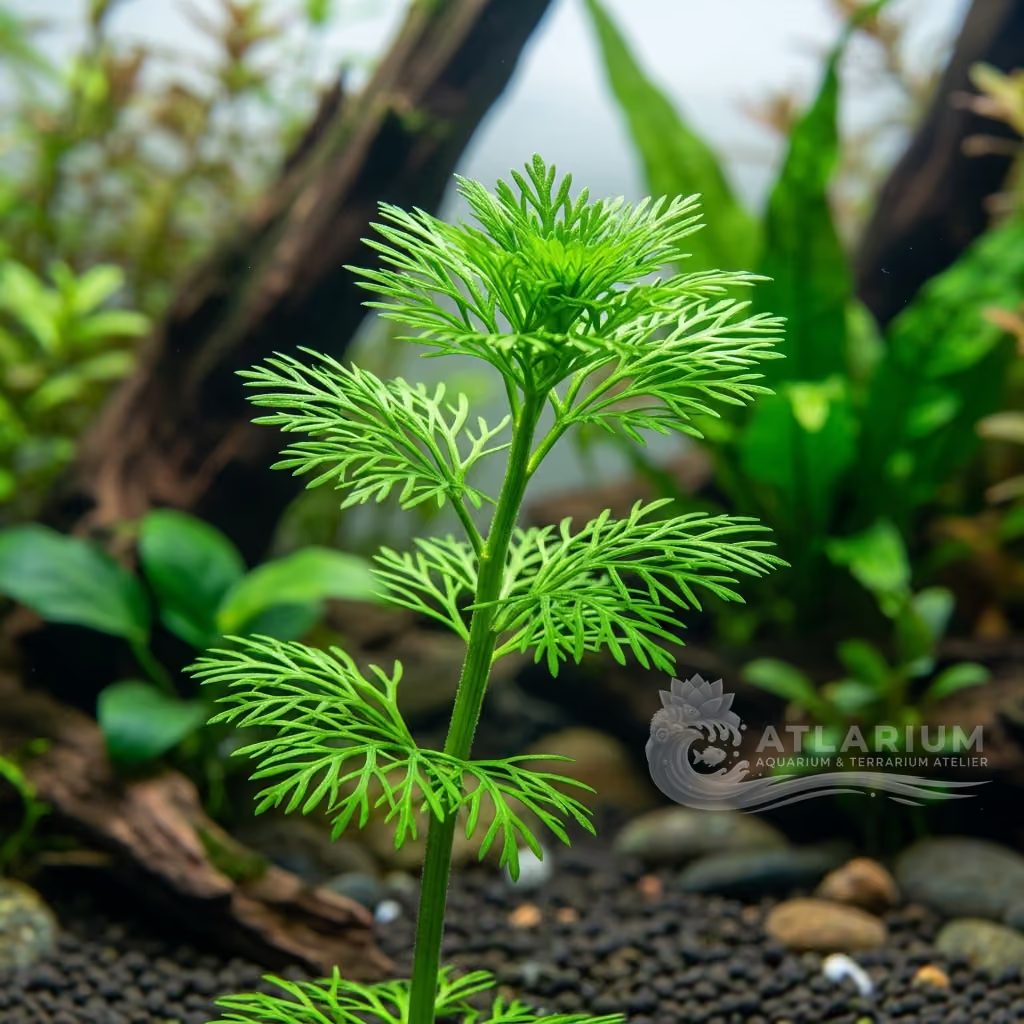
Gymnocoronis spilanthoides
Gymnocoronis spilanthoides
Massive South American helophyte with hollow stems and toothed leaves. An extremely fast grower that quickly absorbs water column nutrients.
Temperatura da água
15 - 28 °C
Valor de pH
6 - 8
Tipo de água
Água doce
Luz
Média
CO2
Baixa
Altura esperada
60 cm
Largura esperada
20 cm
GH
4 - 20 dGH
KH
0 - 14 dKH

Descrição da espécie
Geographical Origin and Habitat: Botanically known as the Senegal Tea Plant or "False Water Jasmine," *Gymnocoronis spilanthoides* is a voluminous helophyte plant (rooted in water, canopy in the air) native to the tropical river basins of South America (Brazil, Argentina, Peru, Paraguay). In its habitat, it stubbornly clings to the muddy banks of streams, lagoons, and lakes, invading the water's surface. It has transformed into a top-tier invasive alien species in Australia and New Zealand, where it destroys irrigation channels.
Taxonomy & Genetics: It is an interesting dicotyledon of the Asteraceae family (the aster family, the same biological family as the sunflower and the daisy). It possesses the rare gift, among aquatic plants, of developing massive stems with a hexagonal angular section, hollow inside (to allow floating). It is genetically programmed to creep like a green snake on the surface, producing opposite leaves at the axils and spectacular white, spherical floral heads (very similar to jasmine) if grown emersed.
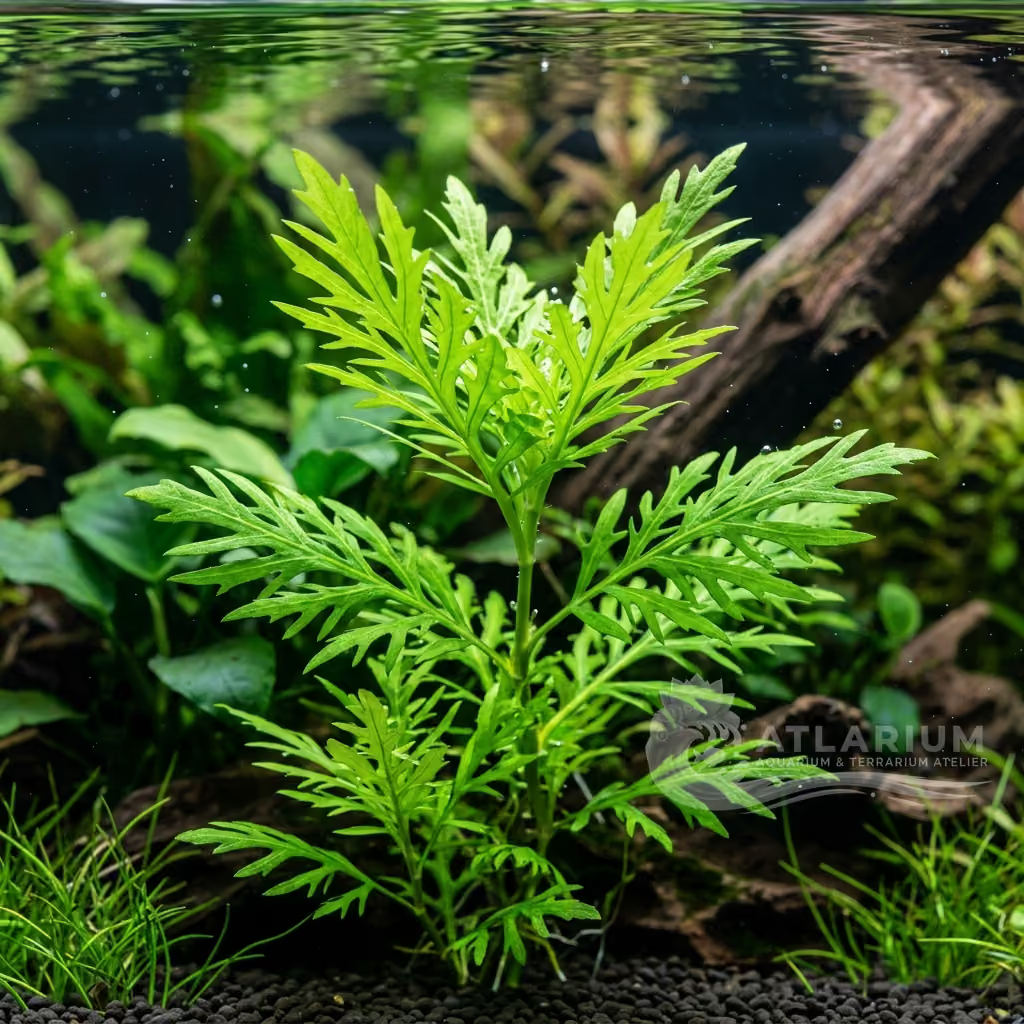
Physical Structure: In the submerged aquarium, the architecture is caulescent, thick, and imposing. The fleshy stems are true hollow trunks of pale green color, which rise mightily supporting opposite, decussate (crosswise), elliptic-lanceolate leaves, with conspicuously toothed and irregular margins, up to 15-20 cm long. It develops thick subterranean roots and formidable white aquatic adventitious roots that float in the water column by the dozens for each internode.
Color & Texture: The entire vegetative apparatus settles on a bright meadow green color, which fades to emerald green in the basal areas. It never takes on reddish or warm hues. The texture of the submerged leaf blade is smooth and very soft to the touch, contrary to the emersed one which is leathery and wrinkled. The wavy and serrated margins give it a wild and unmistakable appearance.

Cuidado, criação e companheiros de tanque
Lighting & CO2: Extremely adaptable. Tolerating a wide range of conditions, it survives easily in poorly lit tanks, although it will inexorably tend to escape the aquarium (elongating to protrude from the water) stripping itself in the lower part. Under medium-strong lighting, it produces closer and more compacted leaves. CO2 is not a necessary requirement for survival, but if inoculated it will transform it into a "monster" with frightening daily growth.
Nutrition & Substrate: An authentic biological vacuum cleaner of colossal proportions. Its impressive aquatic roots will empty the water column of phosphates (PO4), nitrates (NO3), and ammonium (NH4) in record time, infallibly preventing algal proliferations during the start-up of an aquarium. A fertile bottom accelerates rooting, but it can even be cultivated rooted in a piece of floating filter sponge.
Water Chemistry: Being an invasive helophyte weed, water parameters matter very little. It thrives in soft South American waters (pH 6.0), very hard alkaline tap waters (pH 8.5), and immense thermal ranges, from cold aquariums (15°C) to overheated discus tanks (30°C). It tends to heavily alkalize the water in the absence of carbon dioxide due to its massive diurnal carbon absorption.
Space Management & Placement: Its gargantuan dimensions rigidly confine it to the back corners (background) of tanks no smaller than 150-200 liters or, preferably, in huge open tanks or paludariums where it is allowed to surpass the water level to observe its magnificent white bloom. It is the ideal containment plant for aquariums with robust Cichlids, as its thick, hollow stems withstand formidable shocks and pulls.
Pruning: Cutting a finger-thick stem requires serious shears, not small aquascaping scissors. As soon as the plant touches the water surface (and it will do so quickly), intervene by cutting the stem horizontally above a low node (topping). The underlying stump will throw one or two very robust stems within three days. The removed stem, if replanted, will root lightning-fast in 48 hours.
Risks & Diseases: Aside from Potassium (K) deficiency, which manifests as pinpoint holes on old leaves, it is virtually indestructible. The greatest risk is ecological: NEVER release it into local waterways or down the drain. A tiny stem fragment with a single node will regenerate an entire floating forest, obstructing rivers and sparking biological disaster, making you punishable by law in many jurisdictions.

Origem e distribuição geográfica
Botanically known as the Senegal Tea Plant or "False Water Jasmine," *Gymnocoronis spilanthoides* is a voluminous helophyte plant (rooted in water, canopy in the air) native to the tropical river basins of South America (Brazil, Argentina, Peru, Paraguay). In its habitat, it stubbornly clings to the muddy banks of streams, lagoons, and lakes, invading the water's surface. It has transformed into a top-tier invasive alien species in Australia and New Zealand, where it destroys irrigation channels.
Origem
Amazônia, Orinoco e GuianasExtra-Amazônica América do Sul

Perfil da planta
- Posicionamento
- Fundo
- Due to its rapid growth and large leaf size, it belongs firmly in the background of the aquarium. It should be planted where it won't overshadow smaller, light-demanding plants. It also excels when allowed to grow out of the water in open-top tanks.
- Forma botânica
- Caule
- Features thick, sturdy, buoyant stems with large, bright green, opposite leaves. The leaves are somewhat spade-shaped with serrated margins. When grown emersed, the stems become woody, and it produces small, white, puffball-like flowers.
- Crescimento
- Rápida
- Exceptionally fast. Under good lighting and CO2, it can reach the water surface within a matter of days. This rapid growth makes it an excellent nutrient sponge, ideal for fighting algae during the setup phase.
- Substrato
- Baixa
- Gymnocoronis spilanthoides is an incredibly resilient, fast-growing stem plant that easily adapts to inert gravel, sand, or nutrient-rich aquasoils. It produces extensive networks of white, thick water roots from its nodes, meaning it heavily relies on the water column for nutrient absorption rather than strictly subsurface feeding. A substrate depth of 5 to 7 centimeters is highly recommended simply to mechanically anchor its massive, buoyant stems and prevent them from floating away.
- Fertilização de coluna
- Recomendada
- Highly reliant on water column dosing due to its fast growth. A comprehensive liquid fertilizer schedule is required to keep up with its metabolic demands. It quickly depletes nitrogen and potassium if not adequately supplemented.
- Fertilização radicular
- Nenhuma
- While it draws heavily from the water column, a rich substrate provides a vital secondary nutrient source. Root tabs will help anchor the buoyant stems and support robust, thick growth. Strong root systems develop quickly in nutrient-dense aquasoil.
- Corte
- Ocasional
- Requires frequent and severe trimming to keep it submerged and within bounds. To maintain its presence, simply cut the top off and replant the crown. The remaining bottom portion will quickly sprout new, vigorous side shoots.
- Propagação
- Estacas
- Propagation is as simple as snipping off a stem and sticking it in the substrate. Almost any piece with a node will develop roots and grow into a new plant. It is one of the easiest aquatic plants to multiply.
- Sensibilidade
- Moderada
- Incredibly hardy and tolerant of a wide range of water parameters. Its main vulnerability is simply outgrowing its space and shading itself or other plants. It is practically impervious to algae if healthy, due to its sheer growth speed.
- Função de layout
- Fundo
- Best used as a fast-growing background filler or as an emergent plant to bridge the gap between water and air. Its large, distinct leaves provide a tropical, jungle-like aesthetic. It is often used temporarily as a nutrient exporter in new setups.

Galeria de imagens
Imagens licenciadas vinculadas à espécie ou, quando marcadas, ao táxon representativo mais próximo.

Espécies relacionadas
Recomendações agrupadas por parentes próximos, escolhas de acompanhantes e cuidados semelhantes.