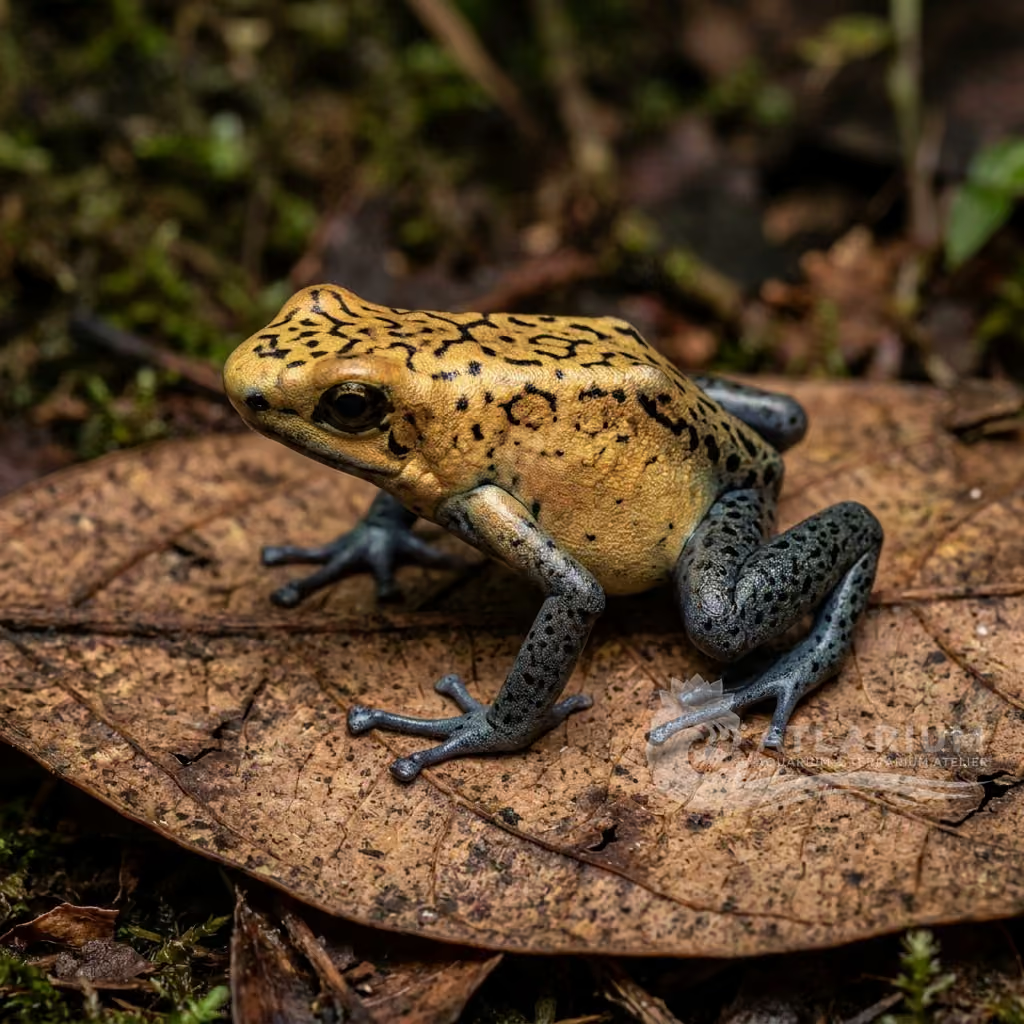
Gaboon Caecilian
Geotrypetes seraphini
The Gaboon Caecilian is a rare, worm-like limbless amphibian native to Central Africa, requiring high humidity and deep, organic soils in a fossorial setup.
Ambiente
Terrestre
Umidade
80 - 100 %
Temperatura diurna
25 °C
Temperatura noturna
21 °C
Temperatura ambiente
25 °C
Gabinete mínimo
>= 45 L

Descrição da espécie
Geographical Origin and Habitat: Geotrypetes seraphini is an amphibian native to West and Central Africa, with established populations in Gabon, Cameroon, Nigeria, Equatorial Guinea, and the Democratic Republic of Congo. It is a strictly fossorial (burrowing) species, inhabiting the moist soils of primary and secondary tropical rainforests, hidden under leaf litter, decaying logs, and humus-rich forest floors.
Taxonomy and Genetics: Belongs to the Gymnophiona order (limbless amphibians, or caecilians), family Dermophiidae, and genus Geotrypetes. Commonly known as the Gaboon caecilian. Genetically and phylogenetically, it represents an ancient lineage of amphibians that evolutionary adapted to a subterranean life by losing their limbs. No subspecies are currently recognized.
Behavior and Habits: Exhibits strictly nocturnal and subterranean habits. It spends its entire life digging tunnels in the damp soil using its highly ossified, robust skull. Its vision is extremely limited (eyes are vestigial and covered by skin and bone); instead, it senses the environment using pair of retractable, chemosensory tentacles located near the nostrils.
Morphology: Features an elongated, cylindrical, limbless body that closely resembles a giant earthworm or a small snake. Adults typically grow to lengths between 30 and 35 cm. The body is ringed with distinct folds called annuli. The base coloration is dark slate-grey to uniform dark blue, showing metallic iridescence under direct light.

Cuidado, criação e companheiros de tanque
Terrarium Setup: Requires a specialized fossorial setup. A minimum terrarium size of 80x40x40 cm is recommended for a pair. The most critical aspect is providing a deep substrate layer (at least 15-20 cm) of loose, organic soil, coco coir, peat moss, and leaf litter. Place flat pieces of cork bark on the surface to serve as entry shelters.
Lighting and Heating: Bright lighting is not required; low-level ambient light is sufficient as they spend most of their time underground. Maintain ambient temperatures between 24°C and 26°C. Use a low-wattage heating cable attached to the outside back or side of the enclosure (never under the entire floor) to prevent substrate drying.
Humidity and Hydration: Requires extremely high relative humidity levels, between 80% and 90%. The substrate must remain damp at all times, but never waterlogged or muddy to avoid root and skin rot. Mist the enclosure daily with dechlorinated water. Provide a shallow, fresh water dish on the surface.
Feeding and Supplementation: Strictly carnivorous, preying on underground invertebrates. The staple diet should consist of live earthworms (their preferred food), small crickets, roaches, and insect larvae. Dust prey items with a high-quality calcium and multivitamin supplement once a week, particularly for growing juveniles.
Compatibility: Best kept in a species-specific enclosure. They can be kept in small groups of their own species if space and substrate are sufficient. Never house them with other amphibian or reptile species, as they may be preyed upon, stressed, or exposed to dangerous pathogens.
Health and Common Diseases: Highly susceptible to health issues related to poor substrate management. Low humidity leads to rapid, fatal desiccation. Overly wet or unhygienic conditions cause bacterial dermatosis and fungal infections (such as Chytridiomycosis). Avoid handling as their skin is delicate and highly absorbent.

Origem e distribuição geográfica
Geotrypetes seraphini is an amphibian native to West and Central Africa, with established populations in Gabon, Cameroon, Nigeria, Equatorial Guinea, and the Democratic Republic of Congo. It is a strictly fossorial (burrowing) species, inhabiting the moist soils of primary and secondary tropical rainforests, hidden under leaf litter, decaying logs, and humus-rich forest floors.
Origem
África e Madagascar

Perfil anfíbio
- Dieta
- Carnivore
- The diet of Geotrypetes seraphini consists primarily of appropriately sized prey items found in its natural habitat. In captivity, they should be offered a varied selection of live insects, worms, or small invertebrates to ensure nutritional balance. It is important to gut-load the feeder insects and occasionally dust them with high-quality calcium and vitamin supplements. Monitoring their food intake helps prevent obesity and maintains optimal health. Fresh water must always be available to aid in digestion.
- Expectativa de vida
- 11-20 years
- Tamanho adulto
- 40 cm
- Estilo de vida/Microhabitat
- Fossorial
- Geotrypetes seraphini leads a specialized lifestyle adapted to the specific niches of its ecosystem, whether that involves climbing, burrowing, or swimming. Its daily routine is a delicate balance of thermoregulation, seeking out hydration, and avoiding predators. In a captive environment, replicating these microhabitats—such as providing ample climbing branches or deep substrate—is crucial for their well-being. They generally thrive when left undisturbed to carry out their natural routines. A proper setup dramatically improves their lifespan and overall vitality.
- Ciclo de atividades
- Nocturnal
- The activity pattern of Geotrypetes seraphini is heavily influenced by the specific light cycle and ambient temperatures of its native range. It may be primarily diurnal, nocturnal, or crepuscular, meaning its peak activity times align with the safest and most optimal conditions for survival. During these active periods, they can be seen exploring, hunting, or patrolling their territory. Careful regulation of the enclosure's lighting and heating schedules will help maintain these natural circadian rhythms. Disruptions to this pattern can cause significant stress or lethargy.
- Socialidade
- Solitary
- Geotrypetes seraphini is known for its fascinating and unique behavioral traits that reflect its evolutionary adaptations. Observers may notice periods of active foraging interspersed with long spells of resting or hiding. They interact with their environment carefully, using their specialized senses to navigate and detect both prey and potential threats. While some individuals can be quite shy and reclusive, others may exhibit bold and curious behavior when comfortable in their enclosure. Providing a complex habitat with plenty of enrichment is essential for expressing natural behaviors.
- Reprodução
- Viviparous
- Reproduction for Geotrypetes seraphini typically follows a seasonal pattern, often triggered by specific environmental changes such as temperature or humidity fluctuations. Mating behaviors can include complex courtship displays or specific vocalizations to attract a partner. After successful mating, the female will carefully deposit eggs or give birth, depending on the reproductive strategy of the species. Incubation or gestation periods require stable, precise conditions to ensure the healthy development of the offspring. Breeders must pay close attention to providing the right nesting environment.
- Toxicidade
- Harmless
- While they do not produce potent venoms, they secrete a mild, irritating mucus to deter soil predators. This secretion can be unpleasant if it comes into contact with human eyes or mucous membranes. Minimal handling is advised to prevent stressing the animal and to protect its delicate skin.
- Estágio de vida
- Adult only
- There is no aquatic larval stage for this species, as the young are born fully developed on land. They resemble miniature adults at birth and immediately begin a subterranean lifestyle. They grow slowly over several years until reaching sexual maturity as robust, legless amphibians.
- Tolerância de tratamento
- Display only
- Display only. Handling causes extreme stress and can damage their delicate skin and mucous layers.
- Brumação
- Native to tropical West Africa, they do not brumate and need consistent warmth and very high moisture levels year-round.
- Muda
- Periodic
- They shed underground. The substrate must remain continuously moist (without becoming a swamp) to allow for proper skin shedding.

Espécies relacionadas
Recomendações agrupadas por parentes próximos, escolhas de acompanhantes e cuidados semelhantes.