Freshwater hermit crab
Clibanarius fonticola
An extraordinary hermit crab from Vanuatu, notable as the only known species to live permanently in freshwater springs, completely independent of the ocean.
Température de l’eau
22 - 28 °C
Valeur du pH
7.2 - 8
Type d'eau
Eau douce
Type d'invertébré
Hermit crab
Taille adulte
3 cm
Groupe minimal
>= 3
GH
8 - 20 dGH
KH
4 - 10 dKH
TDS
150 - 300 ppm
Rôle écologique
Scavenger
Sensibilité au cuivre
High

Description de l'espèce
Geographical Origin and Habitat: This extraordinary species is endemic to Espiritu Santo island in the Vanuatu archipelago, located in the South Pacific. Unlike almost all other hermit crabs, it inhabits exclusively shallow, clear freshwater springs and streams, often near the coast but completely devoid of salinity, shelter under rocks or leaf litter.
Taxonomy: Belongs to the family Diogenidae and the genus Clibanarius. It is the only known species of hermit crab that completes its entire life cycle, including larval development, in a freshwater environment. This remarkable evolutionary transition from marine to freshwater is a unique subject of study in crustacean biology.
Social Behavior: Peaceful and highly social. In its natural habitat, it lives in dense aggregations in areas with mild water currents. It spends its time active during the day, scavenging the substrate. It is non-aggressive towards freshwater fish or dwarf shrimp, though it may compete with other scavengers for food or empty shells.
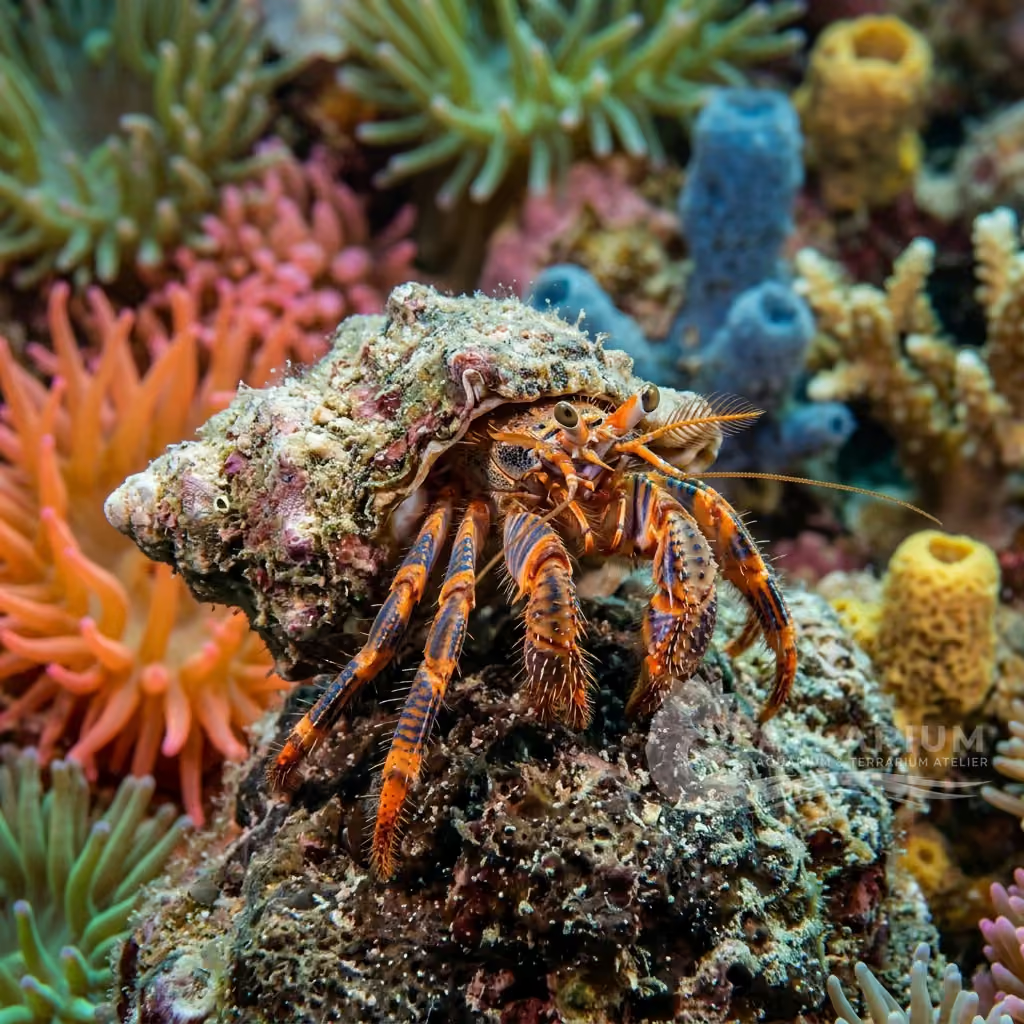
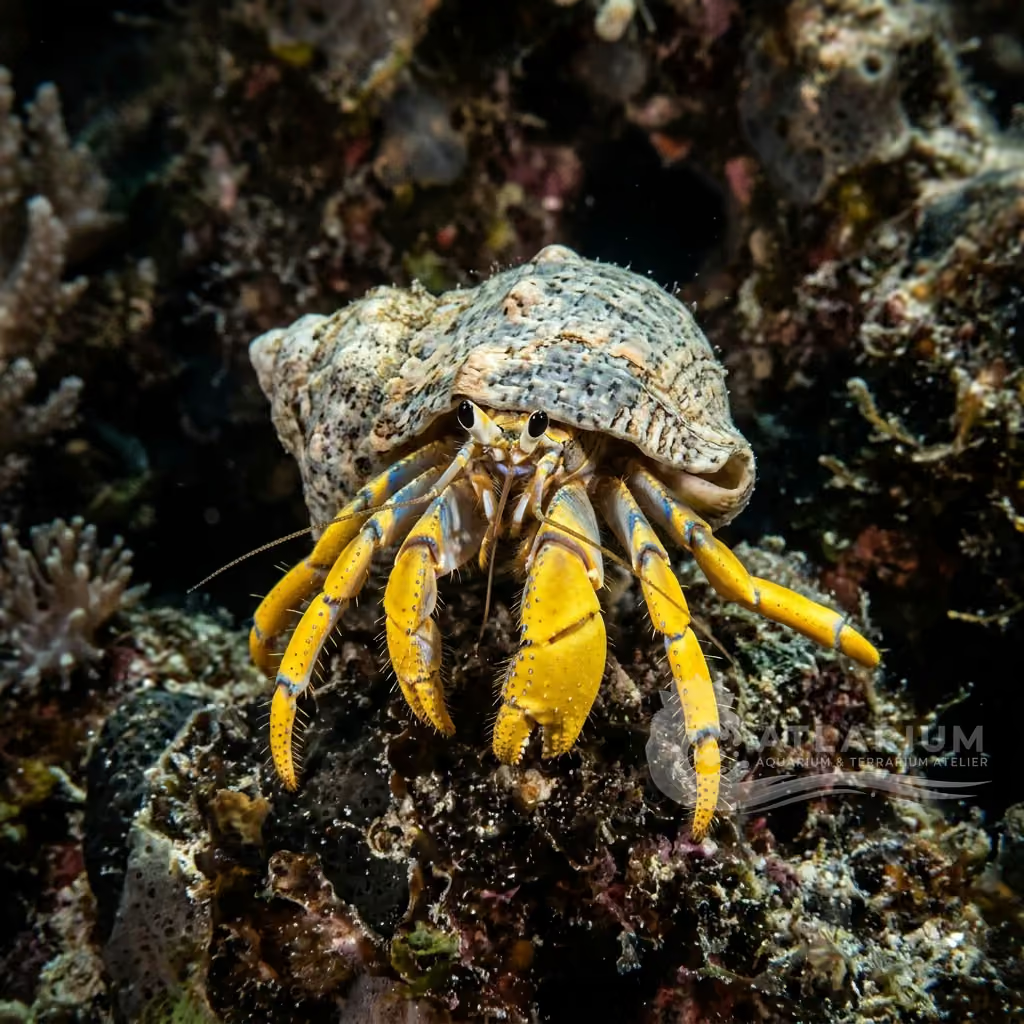
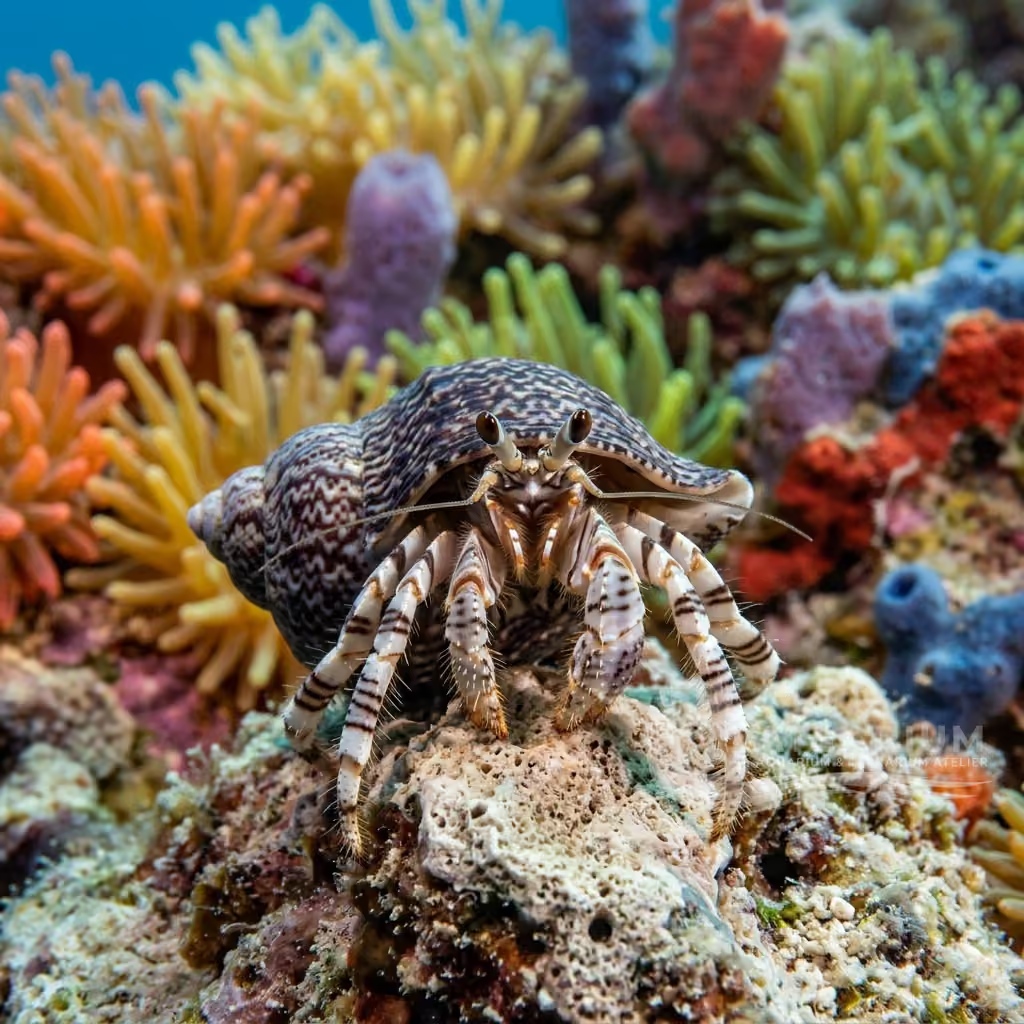
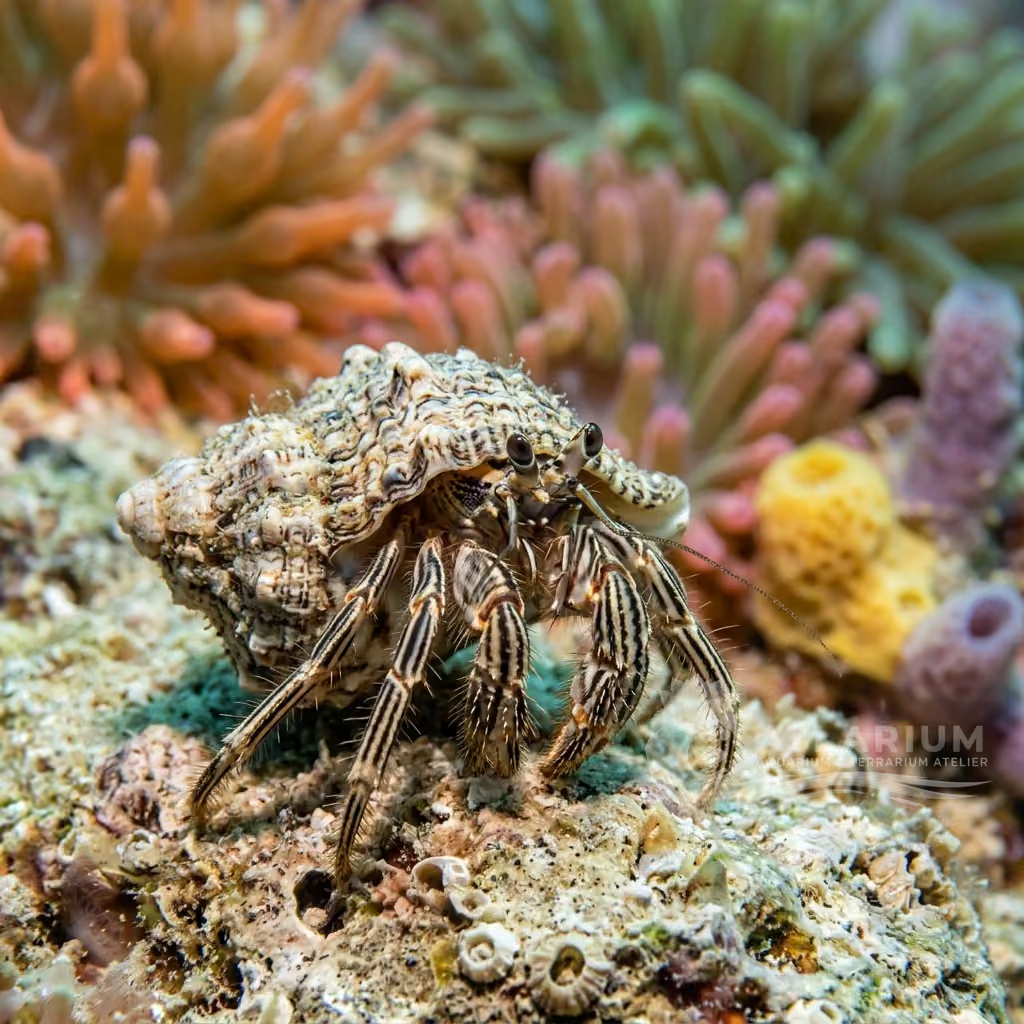
Coloration and Sexual Dimorphism: The body features a coloration of olive green, brownish, or dark grey, with striped or speckled walking legs. The claws are similar in size or slightly asymmetrical. It utilizes empty freshwater snail shells, such as Melanoides or Neritina. Sexual dimorphism is minimal; males can sometimes grow slightly larger than females.

Soins, reproduction et cohabitation
Tank Setup: Requires a freshwater aquarium of at least 30 to 40 liters (approx. 10 gallons). The substrate should consist of sand or fine gravel with rocks arranged to create hiding places. Most importantly, you must supply a large variety of empty freshwater snail shells (e.g., Melanoides, Neritina, Planorbidae) of various sizes to allow for natural shell growth.
Diet and Feeding: Omnivorous and detritivorous. In captivity, they readily eat leftover fish food, specialized shrimp pellets, blanched vegetables (zucchini, spinach), algae on rocks, and dried leaves (such as Indian Almond leaves / Catappa). They are harmless to live plants, eating only the algae and organic debris adhering to the leaves.
Water Quality: Demands stable freshwater parameters: temperature 22-26°C (72-79°F), pH 7.2-8.0, and moderate to high water hardness (GH 10-20, KH 6-12) to provide calcium necessary for exoskeleton molting. The water must be free of chlorine, ammonia, and nitrites. They are highly sensitive to copper-based chemicals and medications.
Compatibility and Tankmates: Perfect for freshwater community tanks with small, peaceful fish (tetras, guppies, rasboras) and dwarf shrimp (Neocaridina). Avoid large or aggressive tankmates, as well as snail-eating fish such as freshwater pufferfish (e.g., Pea Puffer), large cichlids, and loaches (such as Botia), which will crush and eat them.
Aquarium Breeding: Breeding in home aquariums is exceptionally difficult and rarely achieved. Although females carry fertilized eggs in freshwater, the newly hatched zoeae (larvae) require specific microbial food sources and are easily destroyed by standard aquarium filters before they can settle into shells.
Risks and Diseases: The primary risk is a lack of suitable replacement shells. Without larger shells, they cannot molt and will die, or they will attack each other to steal shells. Exposure to copper-based treatments or fertilizers is highly toxic. Ensure the filter intake is covered with a sponge to prevent small hermit crabs from getting trapped.

Origine et répartition géographiques
This extraordinary species is endemic to Espiritu Santo island in the Vanuatu archipelago, located in the South Pacific. Unlike almost all other hermit crabs, it inhabits exclusively shallow, clear freshwater springs and streams, often near the coast but completely devoid of salinity, shelter under rocks or leaf litter.
Origine
Australie, Nouvelle-Guinée et Océanie

Profil d'invertébré
- Régime alimentaire
- Omnivore
- Omnivorous scavenger. Feeds on detritus, algae, and will readily accept sinking pellets and vegetable matter.
- Rôle écologique
- Scavenger
- One of the extremely rare true freshwater hermit crabs, acting as a scavenger in its native stream habitats.
- Taille adulte
- 3 cm
- Risque de saut
- Yes
- May crawl out of the water if given the opportunity. Ensure a tight-fitting lid is present.
- Sensibilité aux chocs
- Medium
- Sensitive to uncycled tanks and sudden changes in pH or temperature.
- Calcium et minéraux
- High
- Requires calcium in the water or diet (like cuttlebone) to support proper shell growth and molting.
- Mue
- Yes
- Requires slightly larger empty aquatic snail shells (like Nerites) to transition into after molting.
- Reproduction
- Oviparous
- The only hermit crab known to spend its entire life cycle in freshwater, though captive breeding is rarely achieved.
- Compatibilité et compagnons
- Community
- Peaceful. Best kept in a species-only tank or with very peaceful, small freshwater fish and shrimp.

Espèces associées
Recommandations regroupées par proches parents, compagnons et soins similaires.