Eau douceExpert
©AI Generated·Proprietary
Ophthalmotilapia ventralis — Ventralis Cichlid (Featherfin)

Ventralis Cichlid (Featherfin)

Ophthalmotilapia ventralis

The Ophthalmotilapia ventralis is the most famous representative of the 'Featherfin Cichlids' group of Tanganyika. The name is due to the incredible and very long ventral fins of the adult male, which extend beyond the tail ending in yellow swellings similar to artificial eggs. Males in breeding dress explode in iridescent shades (cobalt blue, bright turquoise or golden depending on the variant), making them one of the most exotic spectacles in the aquarium. However, their hyperactivity, schooling swimmer behavior, and strict dietary requirements make them fish only for experts.

Température de l’eau

24 - 27 °C

Valeur du pH

8.2 - 9

Type d'eau

Eau douce

Niveau dans le bac

Surface et milieu

Taille adulte

15 cm

Volume minimal du bac

>= 500 L

Groupe minimal

>= 10

GH

12 - 25 dGH

KH

6 - 12 dKH

TDS

240 - 495 ppm

Conductivité

375 - 773 uS/cm

Description de l'espèce

Geographical Origin and Habitat: Endemic to Lake Tanganyika in East Africa. Populates the steeply sloping rocky drop-offs ("Sublittoral Rocky Habitat"). It hovers in open, brightly sunlit water at depths of 2 to 5 meters, but feeds by grazing and picking fine sediment and detritus directly off the massive boulders.
Taxonomy and Morphology: A highly prized "Featherfin" cichlid of Lake Tanganyika. Its morphology is unmistakable and almost alien: it boasts a highly elongated, hydrodynamic, streamlined body. Its mouth is incredibly under-slung and oriented downwards (for sediment grazing), and it has unusually large eyes (hence the genus *Ophthalmotilapia*). The iconic hallmark of the male is the presence of incredibly long, thread-like black ventral (pelvic) fins that terminate in bright yellow, fleshy "paddles" (egg-dummies or lappets) that literally drag on the sand when the fish swims. Reaches about 15 cm (6 inches).
Social Behavior: Physiologically split between two worlds. Females and juveniles form massive, tight-knit, synchronized schools in open water for defense against predators and for feeding. Dominant males, however, are solitary and fanatically territorial: they claim the flat summit of a large boulder, construct a gigantic crater-shaped nest out of sand on top of it, and violently drive away any other males with complex, intimidating shimmy-dances—though rarely causing severe physical harm.
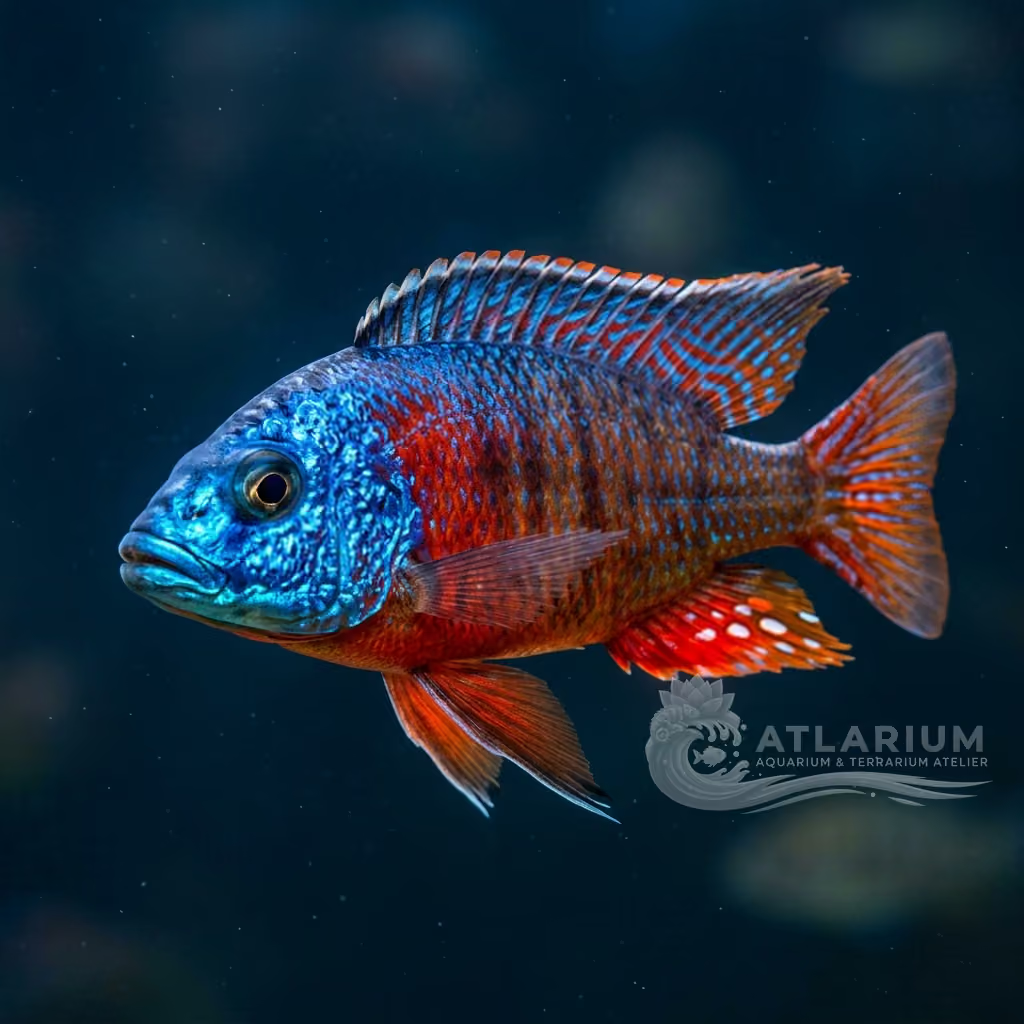
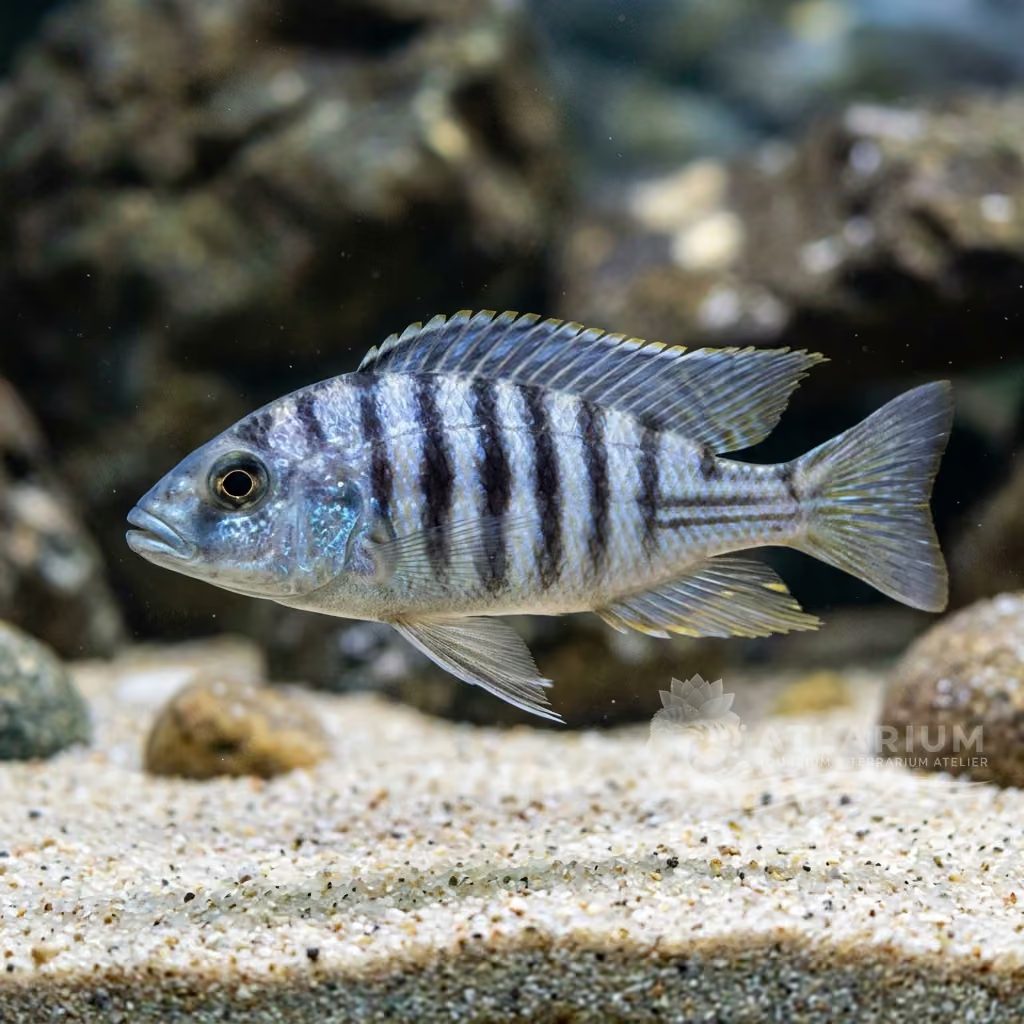
Coloration and Sexual Dimorphism: Spectacular sexual dichromatism. Lake Tanganyika is known for subtly colored fish, but this is the blinding exception. **Adult Male:** An electrifying, metallic "Powder Blue" or Cornflower Blue over the entire body, often flashing violet or jet-black across the scales, highlighted by the black and yellow ventral "lappets". **Females and Juveniles:** Pure camouflage coloration; a highly drab, extremely pale, ghost-like silvery-beige to hide from pelagic predators. The difference between sexes is total and absolute.

Soins, reproduction et cohabitation

Aquarium Setup: Demands exceptionally long and wide aquariums to accommodate both their open-water schooling and the male's immense nesting territory: minimum 150 cm (5 feet) long (400+ liters / 100+ Gallons). The layout MUST feature huge, open expanses of extremely fine, light-colored sand. It is critical to provide a couple of large, flat slates of rock (or overturned clay saucers) spaced far apart: the male will tirelessly haul mouthfuls of sand to construct his mastodontic "Nuptial Crater" (Bower) directly on top of the rock.
Diet and Feeding: In the wild, it is primarily a detritivore and "Aufwuchs" picker. It literally vacuums sand and sediment off rocks, chewing the detritus and spitting out the grit. In captivity, its immensely long intestinal tract requires a strict, high-quality, plant-based diet: Spirulina flakes and herbivore pellets are mandatory. Occasional feeding of cyclops or daphnia is acceptable, but absolutely NO heavy meaty foods like bloodworms or beefheart (which guarantees fatal "Tanganyika Bloat").
Water Quality: Lake Tanganyika parameters: the most extreme hard, alkaline freshwater environment on Earth. pH must be locked between 8.6 and 9.2 (impossible to maintain with standard tap water; commercial Tanganyika buffer salts are required). GH 12-20, KH exceedingly high. Temperature 24-26°C (75-79°F). Water must be hyper-oxygenated (violent surface agitation). Even minor accumulations of nitrates (above 20 ppm) immediately cause loss of the male's blue color and severe lethargy.
Compatibility and Cohabitation: A matriarchal schooling species. MUST be strictly kept in a "Colony/Harem": 1 or 2 males to an absolute minimum of 6-8 females. If there are too few females, the hyper-sexual blue male will literally chase and stress the females to death one by one. An excellent tankmate for Tanganyikan "Shell-Dwellers" (like Neolamprologus multifasciatus) on the bottom, or Cyprichromis in the upper water column, as they occupy entirely different niches and ignore each other completely.
Aquarium Breeding: A highly specialized, fascinating Maternal Mouthbrooder (Bower-builder). The male builds a giant sand volcano on a rock and dances furiously over it, displaying his flanks. The female lays a very small number of enormous eggs (often under 20) and inhales them instantly. The magic happens with the "lappets": the male drags his long black ventral fins with the yellow tips across the sand; the female mistakes the yellow tips for forgotten eggs, tries to "eat" them, and in doing so, inhales a mouthful of sperm, fertilizing the eggs in her throat. She broods and fasts for 3 weeks.
Risks and Diseases: 1. Female Slaughter: the death rate of females from "burn-out" or exhaustion due to the male's relentless pursuit is extremely high if the male/female ratio is unbalanced. 2. Intestinal Explosion (Bloat): a long, thin digestive tract completely inept at processing mammalian or heavy animal fats; feeding inappropriate food kills them blocked and bloated. 3. Glass impacts: highly skittish when the lights turn on suddenly.

Origine et répartition géographiques

Endemic to Lake Tanganyika in East Africa. Populates the steeply sloping rocky drop-offs ("Sublittoral Rocky Habitat"). It hovers in open, brightly sunlit water at depths of 2 to 5 meters, but feeds by grazing and picking fine sediment and detritus directly off the massive boulders.

Origine

Afrique et Madagascar

Profil de poisson

Tempérament
Territorial
While conspecific males can be aggressively territorial, the species is otherwise relatively calm. Males spend most of their time displaying their stunning colors to attract females. Providing visual barriers among rocks can help reduce tension between individuals.
Régime alimentaire
Planktivore
Their diet in the wild consists heavily of plankton and algae scraped from rocks. In the aquarium, provide high-quality spirulina flakes and vegetable-based pellets. Occasional treats of cyclops or brine shrimp can be offered cautiously.
Espérance de vie
5-8 years
Taille adulte
15 cm
Ratio des sexes
Harem
Males are distinctly more colorful and feature prominent, spoon-shaped lappets on their pelvic fins. Females are silvery and lack the elaborate fin extensions. It is highly advised to keep one male with a group of several females to disperse aggression.
Fréquence d'alimentation
2-3 times daily
Feed them two or three small meals a day. Frequent feeding matches their natural biology and prevents aggressive feeding frenzies. Ensure all food is consumed within minutes to avoid water spoilage.
Charge biologique
Medium to High
This species generates a moderate bioload. A highly efficient filtration system is necessary to handle their waste output. Keeping nitrates low through disciplined water changes is critical for their long-term health.
Courant
Strong
They prefer a moderate water current that ensures excellent oxygenation. Proper surface movement is vital for gas exchange in their tank. The flow should allow them to construct and maintain their sand nests without difficulty.
Risque de saut
Yes
Like many active cichlids, they are prone to jumping when startled or during courtship chases. A tight cover is required to prevent tragic losses. Dimming the lights gradually can help prevent sudden panic leaps.
Reproduction
Oviparous
They exhibit fascinating maternal mouthbrooding behavior. The male builds a sand bower, often on top of a flat rock, to entice females. The female carries the fertilized eggs in her buccal cavity until the fry are fully formed and free-swimming.
Compatibilité et compagnons
Verify
They are best kept in a Tanganyika biotope aquarium with other mid-water swimmers. Avoid housing them with aggressive bottom-dwelling cichlids that might disrupt their breeding. They are generally peaceful toward fish that do not threaten their territory.
Niveau dans le bac
Top/Middle
They are very active swimmers that utilize the mid to upper levels of the aquarium. Males will descend to the substrate to defend their specific breeding territories. A deep tank is recommended to give them adequate vertical swimming space.

Modèles et paramètres scientifiques

FishBase

Fenêtre sur les données scientifiques officielles de l’espèce

FishBase v25.04Données synchronisées le : 15/06/2026
Niveau trophique
2,2 ± 0,3 se
Résilience
Élevée (moins de 15 mois)
Singularité phylogénétique (PD50)
0.5625
Relation bayésienne longueur-poids
a = 0.01445, b = 2.99
VulnérabilitéVulnérabilité faible (10 / 100)