Nasuta Cichlid
Ophthalmotilapia nasuta
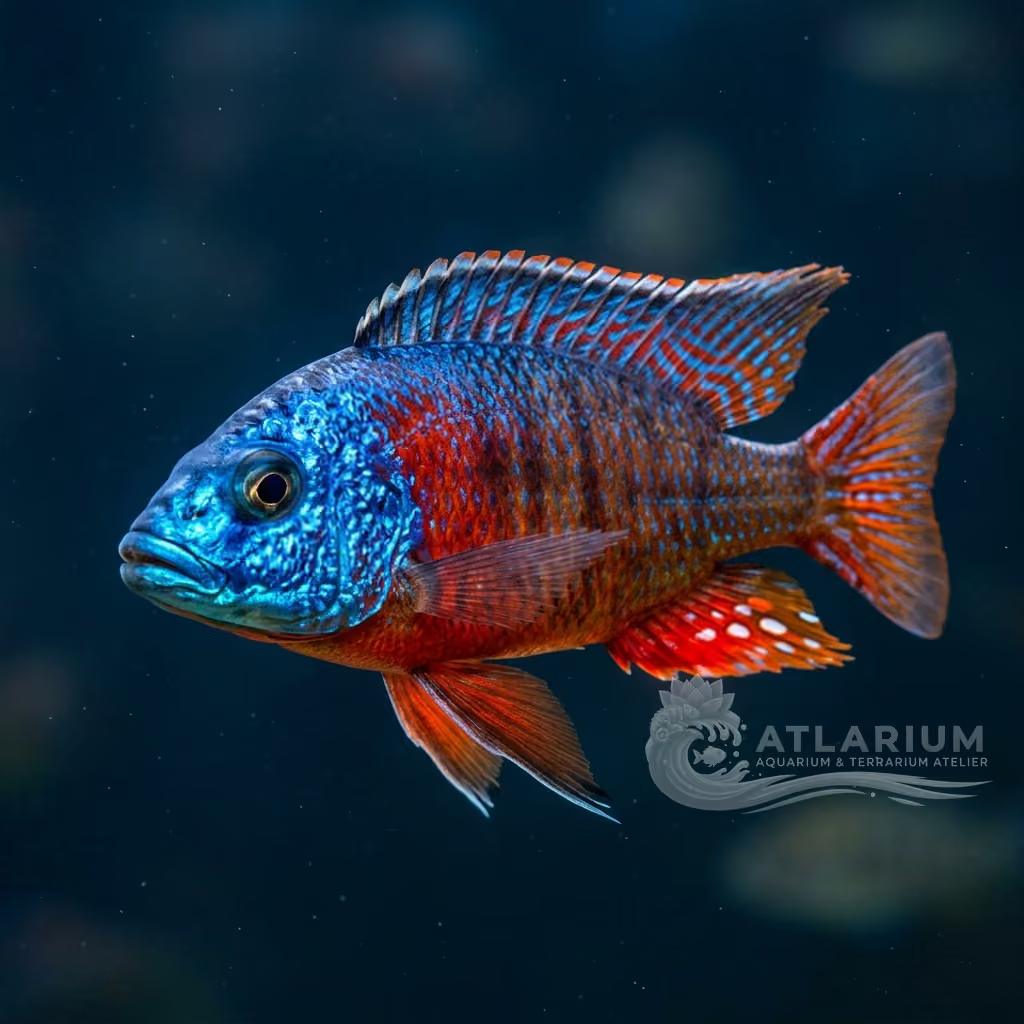
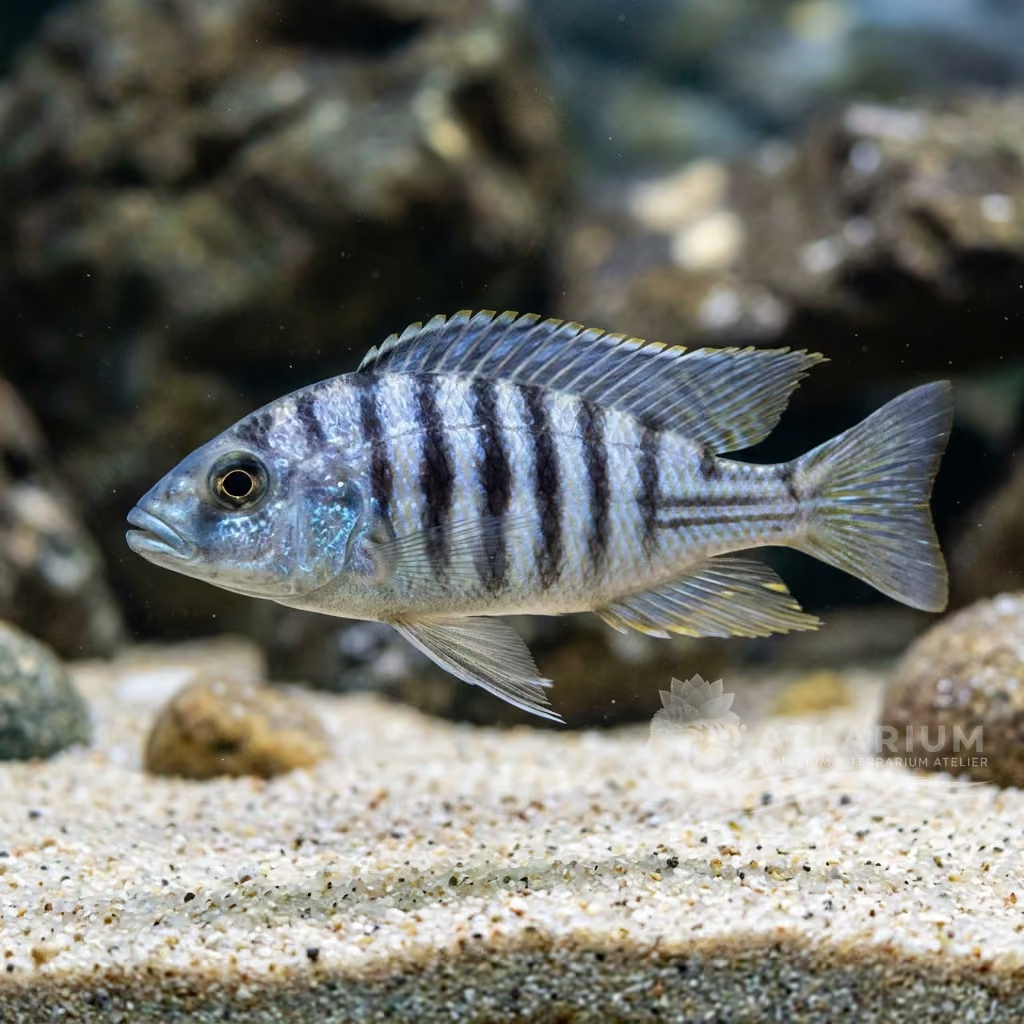
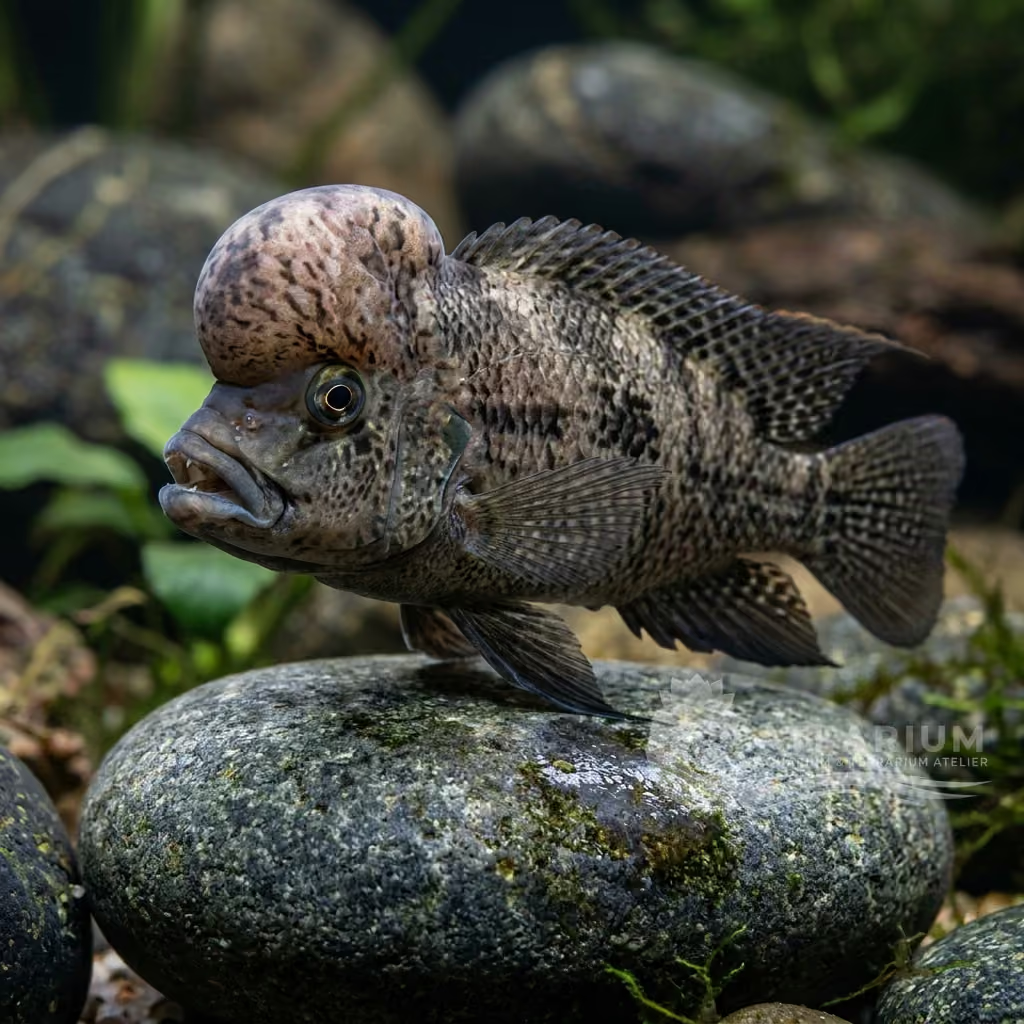
The bizarre 'Nasuta Cichlid' (18 cm). A mind-blowing Tanganyika fish: males possess a prominent bulbous nose similar to a beak and develop incredible pelvic fins (Featherfins) long up to the tail ending in fake golden buttons, used to seduce females in sand towers.
Température de l’eau
24 - 27 °C
Valeur du pH
8 - 9
Type d'eau
Eau douce
Niveau dans le bac
Fond
Taille adulte
18 cm
Volume minimal du bac
>= 180 L
Groupe minimal
>= 1
GH
10 - 25 dGH
KH
5 - 12 dKH
TDS
200 - 495 ppm
Conductivité
313 - 773 uS/cm

Description de l'espèce
Geographic Origin and Biotope: FishBase records Ophthalmotilapia nasuta from Lake Tanganyika at depths of 2–10 m. It records the species as tropical, freshwater and benthopelagic.
Taxonomy and Morphology: FishBase records a maximum length of 20 cm TL and a temperature of 24–26 °C for Ophthalmotilapia nasuta.
Social Behaviour: FishBase reports feeding on microorganisms from plankton clouds and that females mouthbrood the young.
Colouration and Sexual Dimorphism: This recovery makes no statement about colouration or sexual dimorphism.

Soins, reproduction et cohabitation
Verified source data: Ophthalmotilapia nasuta is freshwater and benthopelagic; FishBase records 2–10 m and 24–26 °C. It feeds on microorganisms drifting in plankton clouds, and females brood their young in the mouth.

Origine et répartition géographiques
Cette espèce provient de : Africa (Lago Tanganica).
Origine
Sélection et cultivarsAfrique et MadagascarAsie de l'Est

Profil de poisson
- Tempérament
- Semi-aggressive
- Males are highly territorial and will aggressively defend their spawning sites against rivals. Aside from breeding disputes, they are generally active and outgoing. Providing adequate space is crucial to manage their boisterous behavior.
- Régime alimentaire
- Omnivore
- They are specialized feeders that naturally graze on algae and aufwuchs from rocks. Their diet must be high in quality vegetable matter, such as spirulina flakes. Occasional offerings of mysis shrimp or daphnia can be provided, but avoid high-protein meaty foods.
- Espérance de vie
- 8-10 years
- Taille adulte
- 18 cm
- Ratio des sexes
- Harem
- Males are larger, display spectacular colors, and have elongated pelvic fins with specialized egg spots. Females are smaller and usually a drab silvery-brown. A harem structure of one male to at least three or four females is recommended.
- Fréquence d'alimentation
- Twice daily
- Feed them small amounts two to three times a day. This frequent feeding mimics their constant grazing behavior in the wild. Be careful not to overfeed, as they are susceptible to bloat.
- Charge biologique
- Medium to High
- This cichlid has a moderate bioload consistent with its size. Powerful canister or sump filtration is required to maintain excellent water quality. Frequent, large water changes are vital to keep nitrate levels minimal.
- Courant
- Stagnant
- They require well-oxygenated water with moderate flow. Good surface agitation is necessary to maintain high dissolved oxygen levels. The current should not be so strong that it prevents them from building their breeding bowers.
- Risque de saut
- Yes
- They have a moderate risk of jumping, particularly during territorial disputes. Males chasing females can quickly result in a fish leaping from the tank. A secure and tight-fitting lid is absolutely essential.
- Reproduction
- Oviparous
- They are maternal mouthbrooders, making reproduction interesting to observe. Males build impressive sand bowers to attract females and fertilize the eggs via complex courtship displays. The female will hold the eggs and fry in her mouth for several weeks.
- Compatibilité et compagnons
- Peaceful
- They are relatively peaceful for Lake Tanganyika cichlids but can be territorial during breeding. They should be housed with other Tanganyika species of similar size and temperament. Avoid keeping them with overly aggressive or very small fish.
- Niveau dans le bac
- Bottom
- They utilize the entire water column but focus their activities near the substrate during breeding. Males will vigorously defend their sand bowers on the bottom. Females and subdominant males will often school in the mid-water regions.

Modèles et paramètres scientifiques
FishBase
Fenêtre sur les données scientifiques officielles de l’espèce
FishBase v25.04Données synchronisées le : 15/06/2026
- Niveau trophique
- 2,1 ± 0,1 se
- Résilience
- Élevée (moins de 15 mois)
- Singularité phylogénétique (PD50)
- 0.5625
- Relation bayésienne longueur-poids
- a = 0.01445, b = 2.99
- VulnérabilitéVulnérabilité faible (10 / 100)

Espèces associées
Recommandations regroupées par proches parents, compagnons et soins similaires.