Bluebanded goby
Lythrypnus dalli
The Catalina Goby is a brilliantly colored marine fish from the cool Eastern Pacific. It strictly requires a temperate aquarium equipped with a water chiller, as it cannot survive in tropical reef temperatures.
Température de l’eau
16 - 22 °C
Valeur du pH
8 - 8.5
Type d'eau
Marin
Niveau dans le bac
Fond
Taille adulte
5 cm
Volume minimal du bac
>= 75 L
Groupe minimal
>= 1
KH
8 - 12 dKH

Description de l'espèce
Geographical Origin and Habitat: Lythrypnus dalli is native to the coastal Eastern Pacific Ocean. Its distribution extends primarily along the coasts of California (United States), including the Channel Islands, south to the southern tip of the Baja California peninsula and into the Gulf of California in Mexico. It lives in cold-temperate waters, inhabiting coastal rocky reefs, giant kelp forests, and shallow rocky ledges at depths between 1 and 76 meters. It is frequently found associated with vertical rock faces and crevices protected from heavy wave action.
Taxonomy and Morphology: It belongs to the class Actinopterygii, order Perciformes, family Gobiidae. It is a tiny fish, reaching a maximum adult length of about 5 centimeters. It features a cylindrical, elongated body typical of gobies, with eyes set high on the head. Its pelvic fins are fused to form a pelvic suction disc, which it uses to anchor itself firmly to vertical rock surfaces even in the presence of strong wave surge.
Social Behavior: It is a primarily sedentary, peaceful species that displays territoriality toward conspecifics of the same sex. It lives in small groups within restricted territories on rock faces. It spends the day perched on rocks or clinging vertically to walls, making quick darts to capture tiny planctonic prey. It exhibits a fascinating reproductive biology, being a bidirectional hermaphrodite capable of changing sex in response to the group's social structure.
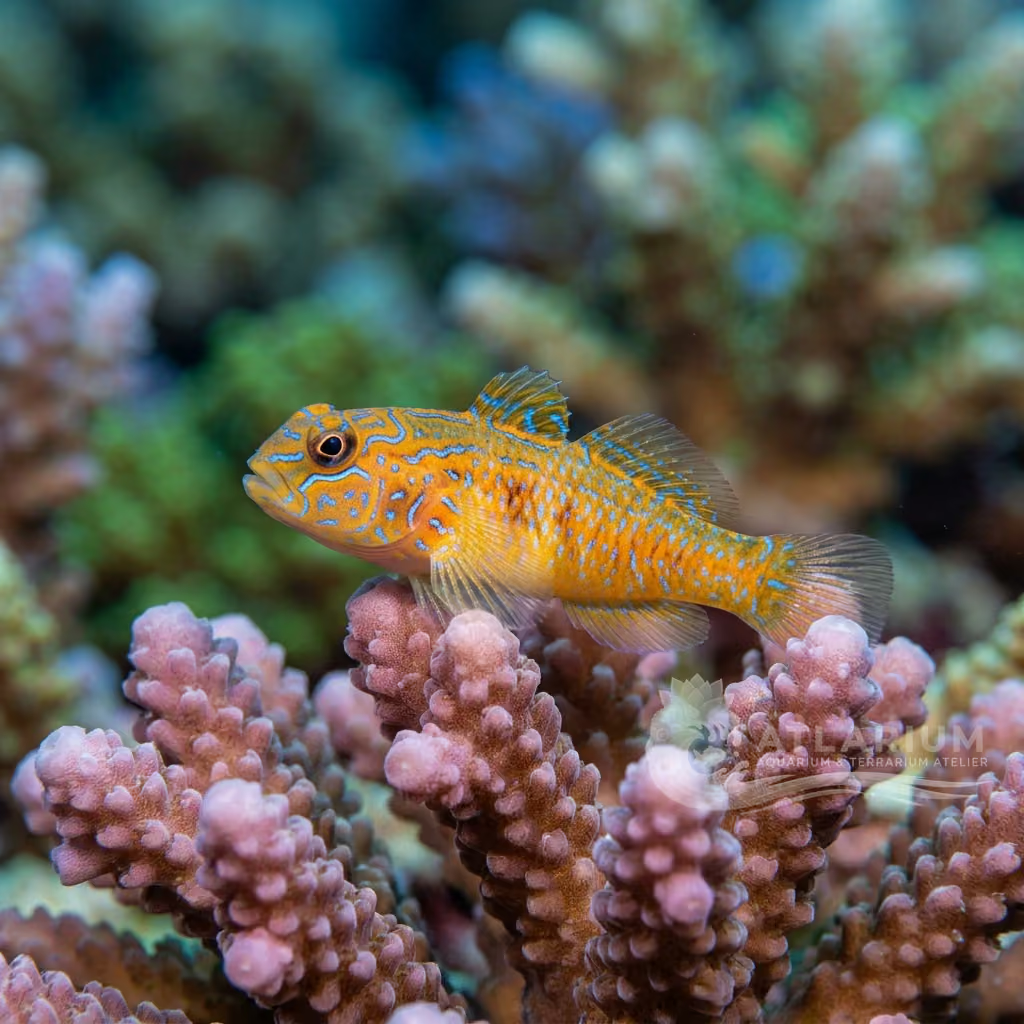
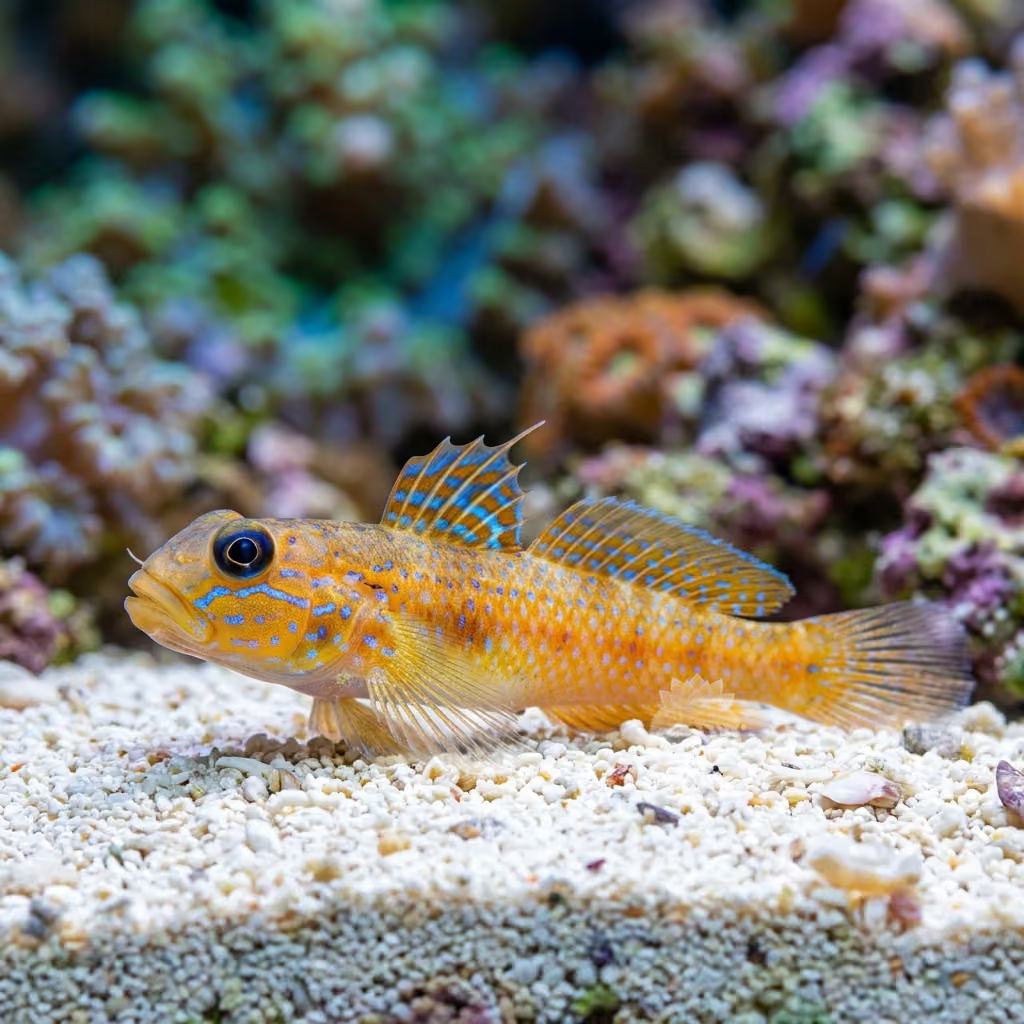
Coloration and Sexual Dimorphism: The coloration is extraordinarily beautiful: the body features a bright neon-orange or red-orange base color, vertically crossed by 4 to 9 iridescent electric-blue transverse bands, which also cover the head. Sexual dimorphism is visible mainly in adult breeding males, which develop a significantly taller and more elongated dorsal fin compared to females, along with an overall more intense blue coloration on the head.

Soins, reproduction et cohabitation
Aquarium Setup: It requires a specific cold-water (temperate) aquarium with a minimum capacity of 80 liters. The key element of the setup is a water chiller to maintain a consistently low water temperature, as this fish does not tolerate the tropical temperatures of traditional marine reef aquariums. The aquascape should feature a structure of live rock creating vertical walls with plenty of small holes and rock crevices. The bottom should be covered with fine sand. Moderate-to-strong water movement is recommended to replicate its reef habitat.
Diet and Feeding: It is a microphagous carnivore. In the aquarium, it must be fed high-quality small frozen or live foods, such as brine shrimp nauplii, cyclops, copepods, daphnia, and finely chopped mysis shrimp. It will also accept dry micro-pellets if patiently acclimated. It should be fed 2 or 3 times daily in small portions due to its active metabolism. Feeding foods enriched with vitamins helps to maintain the intensity of its red and blue colors.
Water Quality: The most critical parameter is water temperature, which must be strictly maintained between 14°C and 22°C (optimal 16-18°C). Temperatures above 23°C cause severe stress, weaken the immune system, and quickly lead to the animal's death. Salinity must be stable at typical marine values (specific gravity 1.023-1.025, pH 8.1-8.3). Filtration must be excellent, with minimal nitrate and phosphate levels.
Compatibility and Cohabitation: It can be kept in cold-water temperate marine aquariums. It coexists peacefully with other cold-water fish of similar size, small invertebrates, and non-predatory shrimps. In suitable tanks, it is possible to house a group consisting of one male and several females. Cohabitation with tropical fish (which require incompatible temperatures) and medium-to-large predatory fish that could easily swallow it must be strictly avoided.
Aquarium Breeding: Breeding in aquariums is possible and documented. The female deposits adhesive eggs inside a crevice or cave that the male has previously cleaned. The male fertilizes the eggs and jealously guards them, fanning them with his fins until they hatch. The newly hatched larvae enter a highly delicate planktonic stage and require live rotifers and specific phytoplankton to be raised successfully.
Risks and Diseases: The single greatest risk is hyperthermia (excessive water temperature), which causes rapid death. It is susceptible to common marine parasitic infections like Marine Ich (Cryptocaryon) and Velvet (Oodinium) if stressed by warm temperatures. It is also prone to bacterial infections if injured. Keeping the water chiller in perfect working condition is the key to preventing any health issues.

Origine et répartition géographiques
Lythrypnus dalli is native to the coastal Eastern Pacific Ocean. Its distribution extends primarily along the coasts of California (United States), including the Channel Islands, south to the southern tip of the Baja California peninsula and into the Gulf of California in Mexico. It lives in cold-temperate waters, inhabiting coastal rocky reefs, giant kelp forests, and shallow rocky ledges at depths between 1 and 76 meters. It is frequently found associated with vertical rock faces and crevices protected from heavy wave action.
Origine
Océans tropicaux et récifsAmérique du Sud hors AmazonieAmérique centrale et CaraïbesAmérique du NordAsie de l'Est

Profil de poisson
- Tempérament
- Territorial
- They are peaceful, cautious, and observant. They use the rockwork for safety. They become quite bold in a calm environment.
- Régime alimentaire
- Carnivore
- Lythrypnus dalli is a micro-carnivore. Feed them tiny frozen foods like baby brine shrimp. They will also hunt natural copepods.
- Espérance de vie
- 2 years
- Taille adulte
- 5 cm
- Ratio des sexes
- Harem
- Keep them in male-female pairs. Males can be territorial towards each other. A large tank is needed for multiple males.
- Fréquence d'alimentation
- Twice daily
- Feed them small portions twice a day. Target feeding is often necessary. Ensure they get enough food.
- Charge biologique
- Low to Medium
- Lythrypnus dalli produces a practically negligible bioload. Their tiny size results in very little waste. A standard nano reef filtration is sufficient.
- Courant
- Strong
- They prefer moderate to strong water currents. Good flow keeps the environment highly oxygenated. They will rest in sheltered rocky spots.
- Risque de saut
- Yes
- There is a moderate risk of jumping. Sudden scares can cause them to dart. A mesh lid is strongly recommended.
- Reproduction
- Oviparous
- They are cave spawners that lay adhesive eggs. The male fiercely guards the nest. Raising the tiny fry is challenging.
- Compatibilité et compagnons
- Peaceful
- They are completely reef-safe and peaceful. Keep them in a dedicated nano tank. Large predatory fish will easily eat them.
- Niveau dans le bac
- Bottom
- Lythrypnus dalli stays strictly on the bottom. They perch on live rock constantly. They need a complex rocky landscape with crevices.

Modèles et paramètres scientifiques
FishBase
Fenêtre sur les données scientifiques officielles de l’espèce
FishBase v25.04Données synchronisées le : 15/06/2026
- Niveau trophique
- 3,2 ± 0,33 se
- Résilience
- Élevée (moins de 15 mois)
- Singularité phylogénétique (PD50)
- 0.5
- Relation bayésienne longueur-poids
- a = 0.00955, b = 3
- VulnérabilitéVulnérabilité faible (10 / 100)

Espèces associées
Recommandations regroupées par proches parents, compagnons et soins similaires.