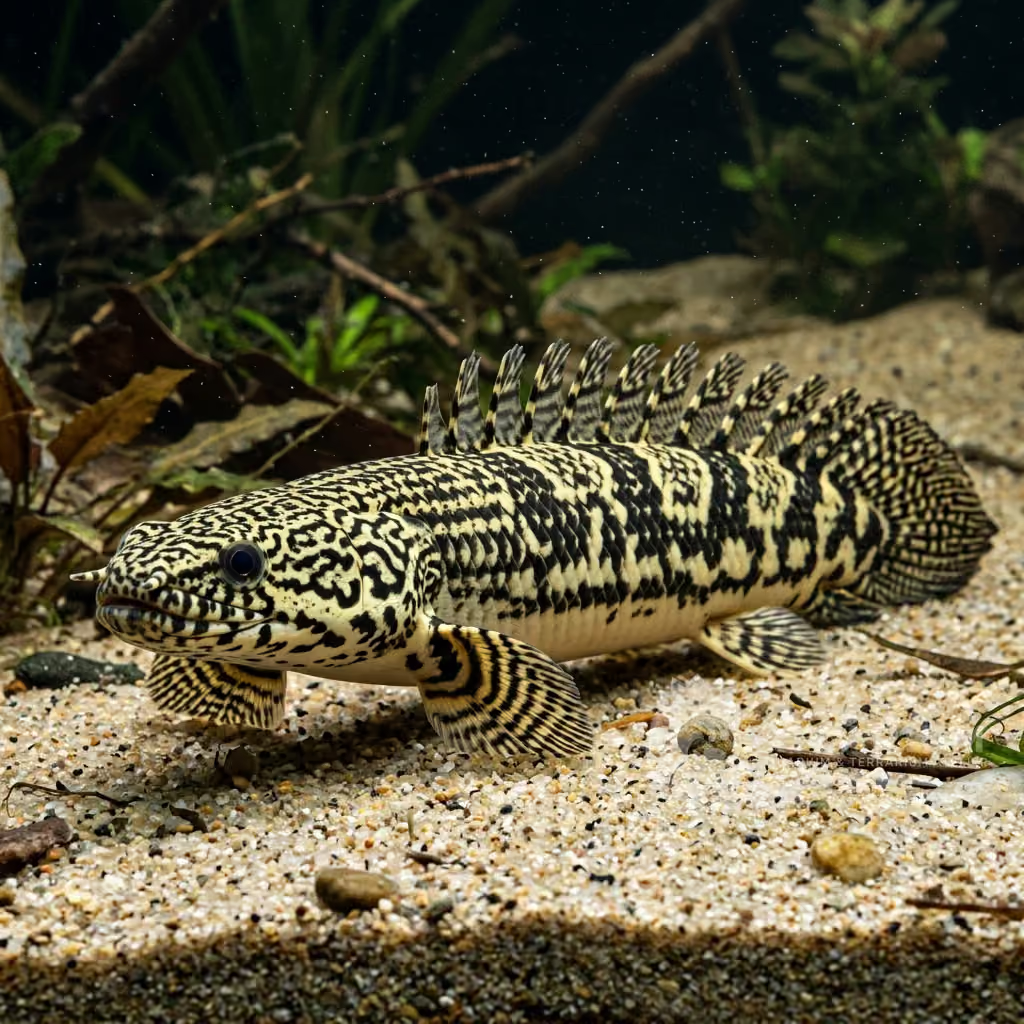
Reedfish / Ropefish
Erpetoichthys calabaricus
The Prehistoric Snake-Fish of Africa (30-40 cm / 12-15 inches). An incredibly slender, incredibly cute, and absolutely harmless living fossil that belongs to the same family as the massive, armored Bichirs. It looks and moves exactly like a thick shoelace or a swimming eel. It is totally blind, navigating the bottom by 'smelling' for worms using its tiny whiskers. It is extremely social and MUST be kept in groups. Its single, legendary flaw: It is the ultimate escape artist of the aquarium hobby, capable of squeezing its snake-like body out of the tiniest hole in a lid, only to die dried up on the floor.
22 - 28 °C
6 - 7.5
Eau douce
Fond
40 cm
>= 500 L
>= 1
5 - 15 dGH
2 - 7 dKH
95 - 295 ppm
148 - 461 uS/cm

Description de l'espèce

Soins, reproduction et cohabitation

Origine et répartition géographiques
Origine

Profil de poisson
- Tempérament
- Semi-aggressive
- Despite their snake-like, predatory appearance, they are remarkably peaceful, shy, and inquisitive. They are known to form resting 'piles' with other conspecifics in their favorite hiding spots. Once comfortable, they can become quite tame and will sometimes take food directly from tongs.
- Régime alimentaire
- Omnivore
- They are nocturnal carnivores requiring a diverse diet of meaty foods to thrive. Live or frozen bloodworms, blackworms, chopped earthworms, and small shrimp are eagerly accepted. Sinking carnivorous pellets can also be offered, but training them to accept dry foods takes patience.
- Espérance de vie
- 15-20 years
- Taille adulte
- 40 cm
- Ratio des sexes
- Group
- They are highly social creatures that thrive in groups and display fascinating communal behaviors. Keeping three or more individuals is highly recommended to encourage them to be more outgoing. The sex ratio is not critical, as they rarely exhibit any aggressive intraspecific behavior.
- Fréquence d'alimentation
- Twice daily
- Because of their nocturnal nature, it is best to feed them just before or after turning off the tank lights. Providing food once a day or every other day is usually adequate for healthy adults. Ensure that faster tank mates do not steal all the food before the Reedfish finds it.
- Charge biologique
- High
- The Reedfish produces a relatively high bioload due to its carnivorous diet and substantial adult length. Powerful canister filters are strongly recommended to process the large amount of waste efficiently. Strict adherence to weekly water changes is necessary to maintain pristine water conditions.
- Courant
- Stagnant
- They originate from slow-moving rivers and heavily vegetated swamps in West Africa. A gentle to moderate water flow is ideal to keep the environment clean without exhausting them. They do not appreciate strong, turbulent currents blowing across the bottom of the tank.
- Risque de saut
- Yes
- They are masterful escape artists, incredibly prone to slithering out of even the smallest openings. A tightly secured, heavy lid with absolutely no gaps around wires or tubes is completely mandatory. Many aquarists use tape or sponge to plug any potential escape routes.
- Reproduction
- Oviparous
- Captive breeding of the Reedfish in home aquaria is exceedingly rare and poorly documented. They require very specific seasonal triggers, such as massive water changes simulating the rainy season. They are egg-layers that scatter their eggs among dense vegetation.
- Compatibilité et compagnons
- With caution
- They are surprisingly peaceful predators that generally ignore fish too large to swallow. They can be safely kept with medium to large peaceful community fish like Congo tetras or severums. Avoid keeping them with small, torpedo-shaped fish that might easily become a midnight snack.
- Niveau dans le bac
- Bottom
- They are dedicated bottom dwellers, frequently seen slithering across the substrate or resting in tangled roots. Providing a soft, sandy substrate is crucial to protect their delicate undersides from abrasions. They deeply appreciate smooth PVC pipes or dense plant thickets for hiding.

Modèles et paramètres scientifiques
Fenêtre sur les données scientifiques officielles de l’espèce
- Niveau trophique
- 3,3 ± 0,4 se
- Résilience
- Faible (4,5 - 14 ans)
- Temps de génération
- 1,2 ans
- Singularité phylogénétique (PD50)
- 1.0002
- Relation bayésienne longueur-poids
- a = 0.00166, b = 3.02
- VulnérabilitéVulnérabilité faible (22 / 100)

Espèces associées
Recommandations regroupées par proches parents, compagnons et soins similaires.