Yellowtail Coris
Coris gaimard
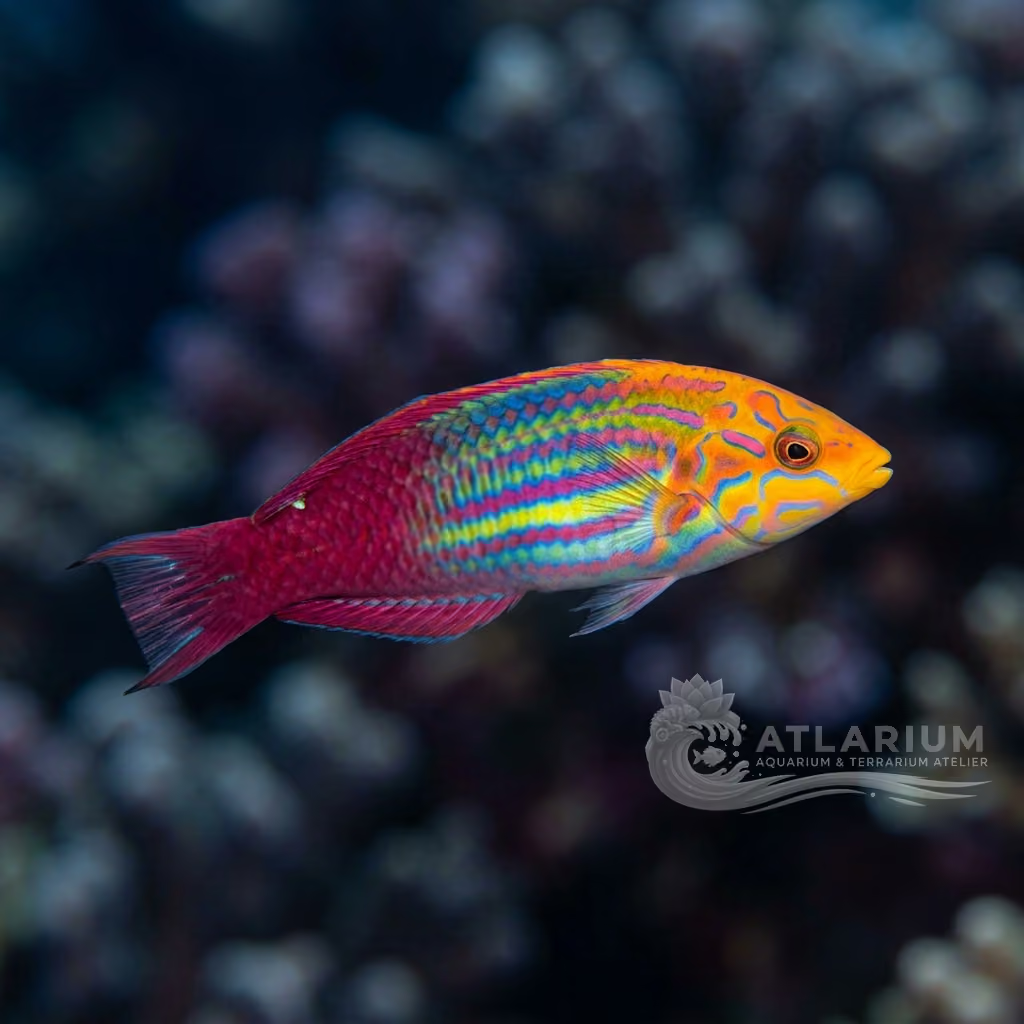
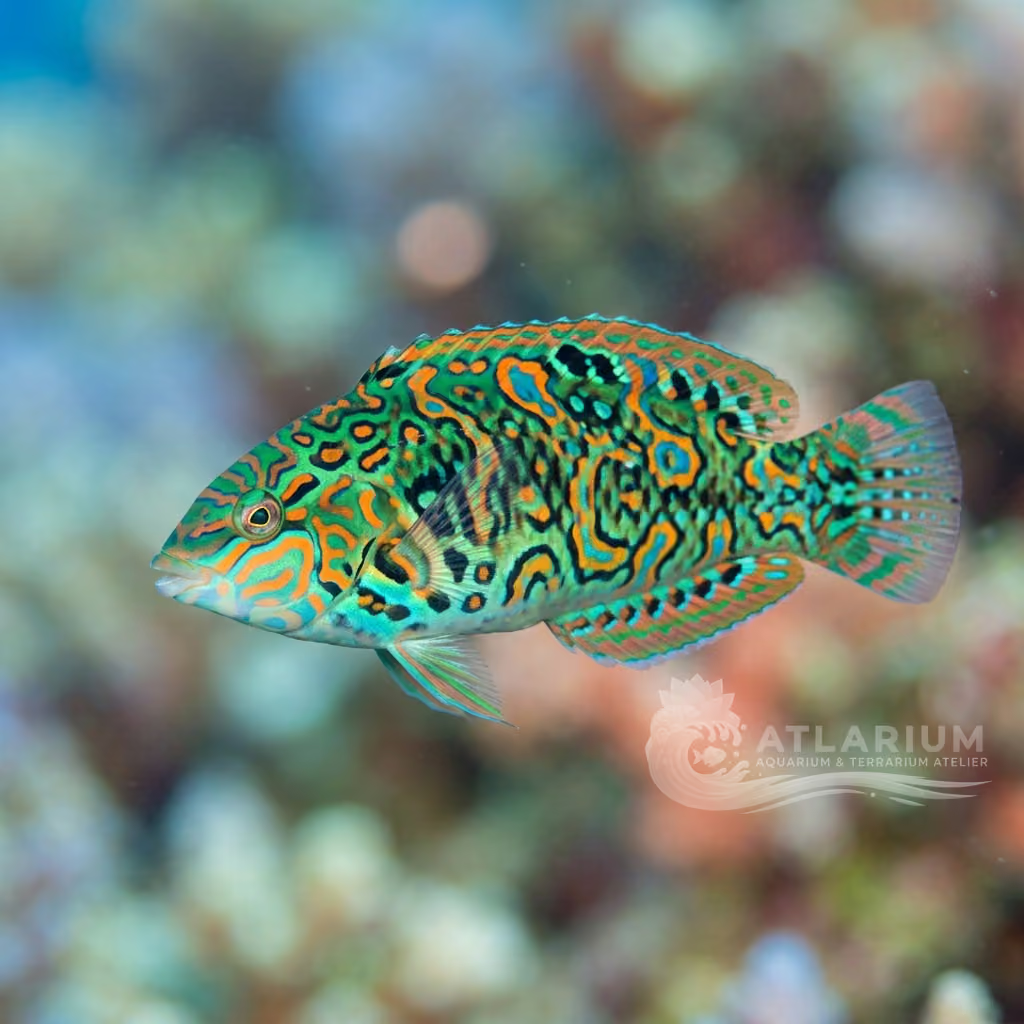
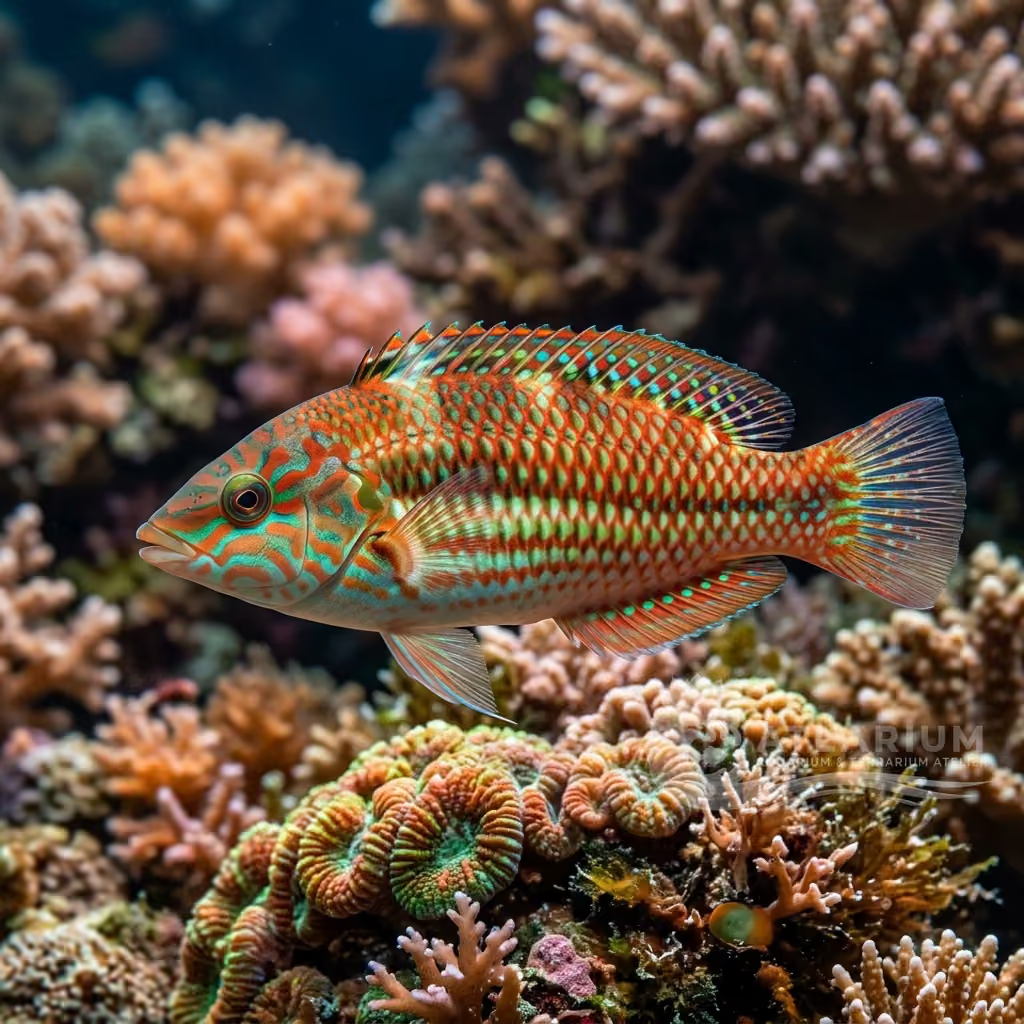
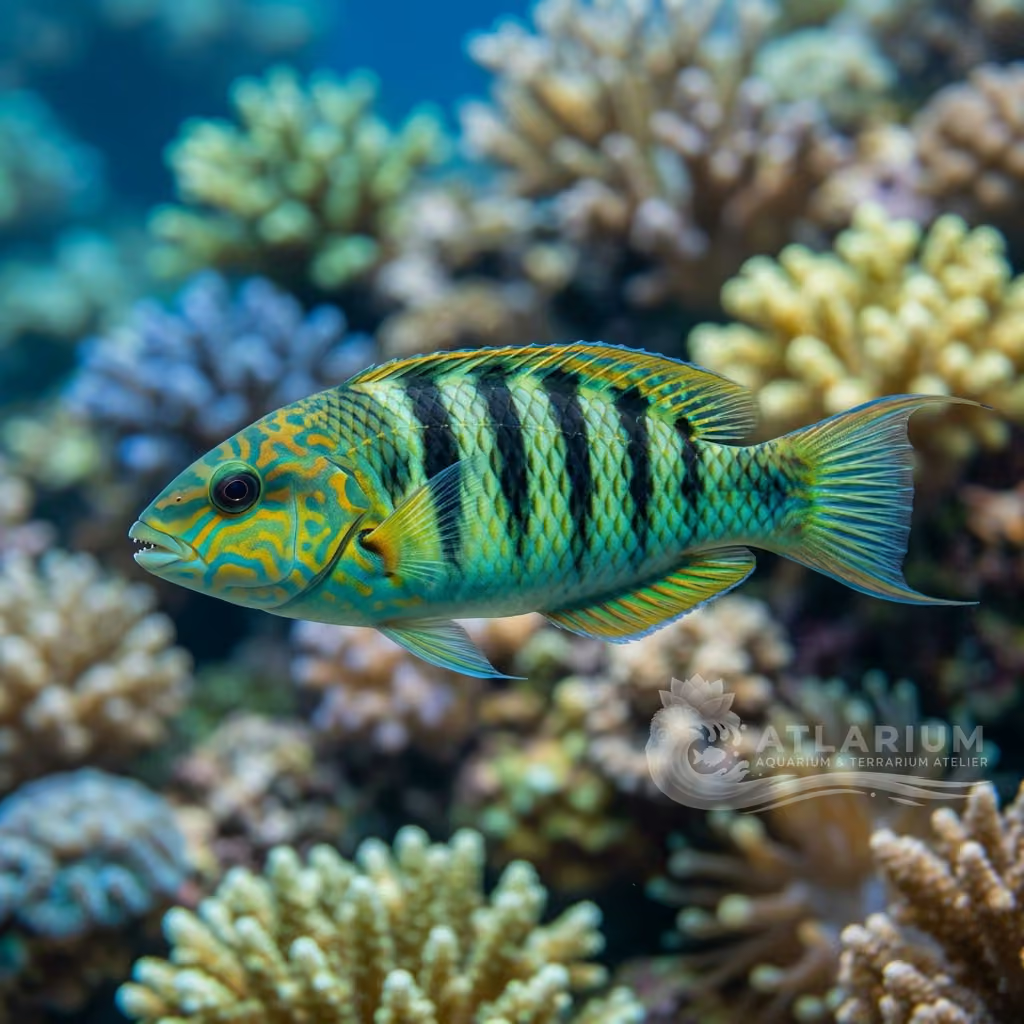
The yellowtail coris (Coris gaimard) is a vibrant, reef-associated wrasse from the tropical Pacific and Indian Oceans. It exhibits dramatic color shifts, maturing from a red-and-white spotted juvenile into a green-bodied adult with bright blue spots and a signature yellow tail. It feeds voraciously on mollusks and crabs.
Température de l’eau
22 - 27 °C
Valeur du pH
8 - 8.5
Type d'eau
Marin
Niveau dans le bac
Fond
Taille adulte
40 cm
Volume minimal du bac
>= 600 L
Groupe minimal
>= 1
KH
8 - 12 dKH

Description de l'espèce
Geographical Origin and Habitat: Tropical Indo-Pacific, from East Africa and the Seychelles to Hawaii, the Tuamotu Islands, and southern Japan. Inhabits sand-reef zones. Inhabits the warm tropical waters of the Indo-Pacific, commonly found on sandy areas of deep lagoons and seaward reefs down to a depth of about 50 meters.
Taxonomy and Morphology: Labridae family, genus Coris. Reaches 40 cm (16 inches). Elongated body. Juveniles have a bright orange livery with black-edged white saddles, completely different from adults. Features an elongated, flexible body typical of burrowing wrasses. Equipped with strong canine teeth designed to crush the shells of small benthic invertebrates.
Social Behavior: Large, active diurnal swimmer. Buries itself in the sand to sleep or escape danger. Known to flip small rocks and rubble to search for prey. Highly active diurnal fish that spends its day searching the substrate for food. At night or when threatened, it dives headfirst into the sand to sleep or hide.
Coloration and Sexual Dimorphism: Adults are dark greenish-brown with numerous bright blue spots on the body, a red head with green stripes, and a bright golden-yellow tail. Juveniles are orange and white. Undergoes a dramatic color transformation: juveniles are bright red-orange with black-edged white patches, whereas adults develop a dark blue-green body with blue spots and a bright yellow tail.

Soins, reproduction et cohabitation
Aquarium Setup: Requires a very spacious tank of at least 600 liters. A fine sand bed at least 8-10 cm (3-4 inches) deep is mandatory for burying. A secure, tight-fitting lid is essential. Requires a large tank of at least 450 liters (120 gallons) with a deep sand bed of fine, non-sharp substrate (8-10 cm deep) to allow natural burrowing behavior.
Diet and Feeding: Carnivorous. Feeds on hard-shelled invertebrates. Feed chopped whole shrimp, mussels, clams, krill, and premium dry pellets. Carnivorous diet. Feed a variety of meaty foods such as frozen mysis, brine shrimp, chopped krill, clams, and high-quality prepared dry pellets.
Water Quality: Temperature 22°C - 27°C, stable pH 8.0 - 8.5, salinity 1.020-1.025, KH 8-12, GH 15-25. Clean water with high oxygenation is required. Maintain high water quality with efficient filtration: temperature 24-27°C, pH 8.1-8.4, specific gravity 1.020-1.025, and low levels of dissolved organic compounds.
Compatibility and Cohabitation: Carnivorous. Feeds on hard-shelled invertebrates. Feed chopped whole shrimp, mussels, clams, krill, and premium dry pellets. Suitable for tanks with larger, semi-aggressive fish. Not reef-safe with small mobile invertebrates like shrimp, snails, and crabs, which are natural prey.
Aquarium Breeding: Semi-aggressive. Not reef-safe; will consume ornamental shrimp, crabs, hermit crabs, and small snails. Ignores corals but may knock them over while searching for food. Captive breeding has not been achieved. In the wild, they are pelagic spawners, releasing eggs and sperm into the water column where the larvae drift with currents.
Risks and Diseases: Extreme jump risk. When startled, it dives headfirst into the substrate; avoid placing rocks directly underneath the sand to prevent head injuries. Lack of a proper sand bed leads to extreme stress, physical injury, and bacterial infections. The tank must be tightly covered to prevent jumping.

Origine et répartition géographiques
Tropical Indo-Pacific, from East Africa and the Seychelles to Hawaii, the Tuamotu Islands, and southern Japan. Inhabits sand-reef zones. Inhabits the warm tropical waters of the Indo-Pacific, commonly found on sandy areas of deep lagoons and seaward reefs down to a depth of about 50 meters.
Origine
Océans tropicaux et récifsAfrique et MadagascarAsie du Sud et du Sud-EstAsie de l'Est

Profil de poisson
- Tempérament
- Territorial
- They exhibit a tireless and curious personality, characterized by the habit of flipping over small rock fragments in constant search of food. It is mandatory to provide a fine sand substrate at least 8-10 cm deep to allow for their fundamental biological need to burrow for sleeping or hiding. They can manifest strong territorial aggression toward similar species.
- Régime alimentaire
- Carnivore
- It is an active carnivore and efficient predator of benthic invertebrates, which it searches for by continuously turning over rocks and reef fragments. In the aquarium, it must receive a diet rich in meaty and protein foods, including mysis, krill, chopped shrimp, and fresh clam meat. Providing dry pellet foods formulated for marine fish helps enrich the overall nutritional intake.
- Espérance de vie
- 5-10 years
- Taille adulte
- 40 cm
- Ratio des sexes
- Group
- Single, compatible pair, or group depending on species
- Fréquence d'alimentation
- Twice daily
- It is recommended to feed them 2 to 3 times daily, paying close attention especially to the nutrition of young specimens. Having a fast metabolism and energetic behavior, they require a regular supply of food throughout the day. Consistent meals also reduce their tendency to harass aquarium invertebrates.
- Charge biologique
- High
- The red coris wrasse generates a heavy bioload due to its large adult size, fast metabolism, and predatory diet. As they consume copious amounts of crustaceans and meaty marine foods, their waste output is significant and constant. Additionally, their habit of flipping over heavy rubble and plowing through the sandbed releases large amounts of trapped organic matter into the water column. High-capacity protein skimming and excellent mechanical filtration are vital to keep the tank environment clean and stable.
- Courant
- Strong
- They prefer moderate to strong water currents, reproducing the dynamic movement of inner lagoons and oceanic coral reefs. A well-distributed flow ensures proper oxygenation of the tank and supports their general psychophysical well-being. It is recommended to arrange the wavemakers to cover all areas of the tank without creating excessive turbulence.
- Risque de saut
- Yes
- Wrasses are notorious jumpers, and the red coris wrasse is absolutely no exception, presenting a severe jump risk. They are easily spooked by sudden movements outside the tank, aggressive tank mates, or abrupt lighting changes, resulting in explosive vertical leaps. A tight, reinforced mesh screen or sturdy canopy is mandatory to prevent them from jumping to their deaths. Aquarists must ensure there are no gaps around overflow boxes or return pipes where they might squeeze through.
- Reproduction
- Rare / not documented
- Protogynous hermaphrodites where dominant females can change sex into terminal phase males in the presence of specific social conditions. Spawning is pelagic and occurs in mid-water through the combined release of gametes that will float carried by currents. There are no documented cases of successful reproduction in hobbyist aquariums due to the complexity of the larval cycle.
- Compatibilité et compagnons
- Territorial
- Absolutely not recommended for reef aquariums with ornamental shrimp, crabs, snails, and tube worms, which would only represent food. They associate excellently with large, robust, and equally lively marine fish, such as angelfish, tangs, and surgeons of appropriate size. Avoid fragile or very small-sized tankmates that would be overwhelmed or attacked.
- Niveau dans le bac
- Bottom
- This highly active wrasse utilizes the bottom and middle tiers of the aquarium, continuously scanning the environment for prey. Their behavior is deeply linked to the benthic zone, as they are relentless hunters of hard-shelled invertebrates hiding in the sand and rocks. A deep, fine sandbed is an absolute requirement, as they dive straight into the substrate to sleep at night or evade perceived threats. They generally avoid the open upper water column unless actively competing for introduced food.

Modèles et paramètres scientifiques
FishBase
Fenêtre sur les données scientifiques officielles de l’espèce
FishBase v25.04Données synchronisées le : 15/06/2026
- Niveau trophique
- 3,5 ± 0,2 se
- Résilience
- Moyenne (1,4 - 4,4 ans)
- Singularité phylogénétique (PD50)
- 0.5
- Relation bayésienne longueur-poids
- a = 0.00977, b = 3.07
- VulnérabilitéVulnérabilité faible à modérée (30 / 100)

Espèces associées
Recommandations regroupées par proches parents, compagnons et soins similaires.