Lubbock's fairy wrasse
Cirrhilabrus lubbocki
Lubbock's Fairy Wrasse is a highly social, peaceful marine fish with vibrant red, pink, and yellow hues. It is extremely active, reef-safe, and needs a covered aquarium.
Température de l’eau
24 - 27 °C
Valeur du pH
8.1 - 8.4
Type d'eau
Marin
Niveau dans le bac
Surface et milieu
Taille adulte
8 cm
Volume minimal du bac
>= 120 L
Groupe minimal
>= 1
KH
8 - 12 dKH

Description de l'espèce
Geographical Origin and Habitat: Cirrhilabrus lubbocki is native to the tropical Western Pacific Ocean, with key populations found in the Philippines, Indonesia, Palau, and the Ryukyu Islands of Japan. It inhabits outer reef slopes, sheltered lagoons, and rubble-rich zones with dense growths of stony corals, at depths of 4 to 45 meters. It forms large schools that swim close to the safety of the substrate.
Taxonomy and Morphology: Belonging to the family Labridae and the genus Cirrhilabrus (fairy wrasses). This species features a slender, elongated, and moderately compressed body. The eyes are large and equipped with a double cornea designed for viewing zooplankton. It reaches a modest adult size of 7-8 centimeters, making it suitable for medium-sized home aquariums.
Social Behavior: It is a peaceful, highly social, and active diurnal fish. It can be housed individually or in a haremic group containing one male and several females. It shows no aggression toward unrelated tankmates. At night, it retreats into rock crevices and secretes a protective mucus cocoon to sleep, which masks its scent from nocturnal predators.
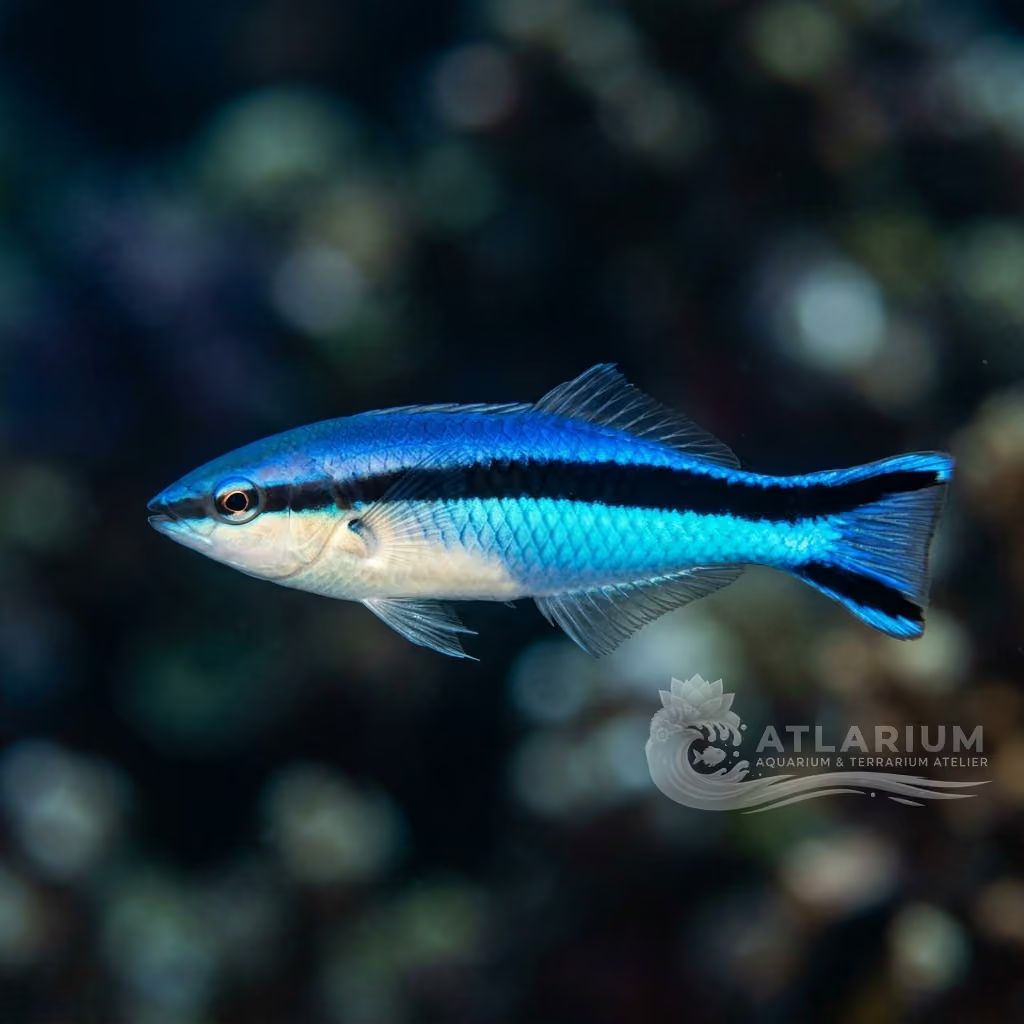
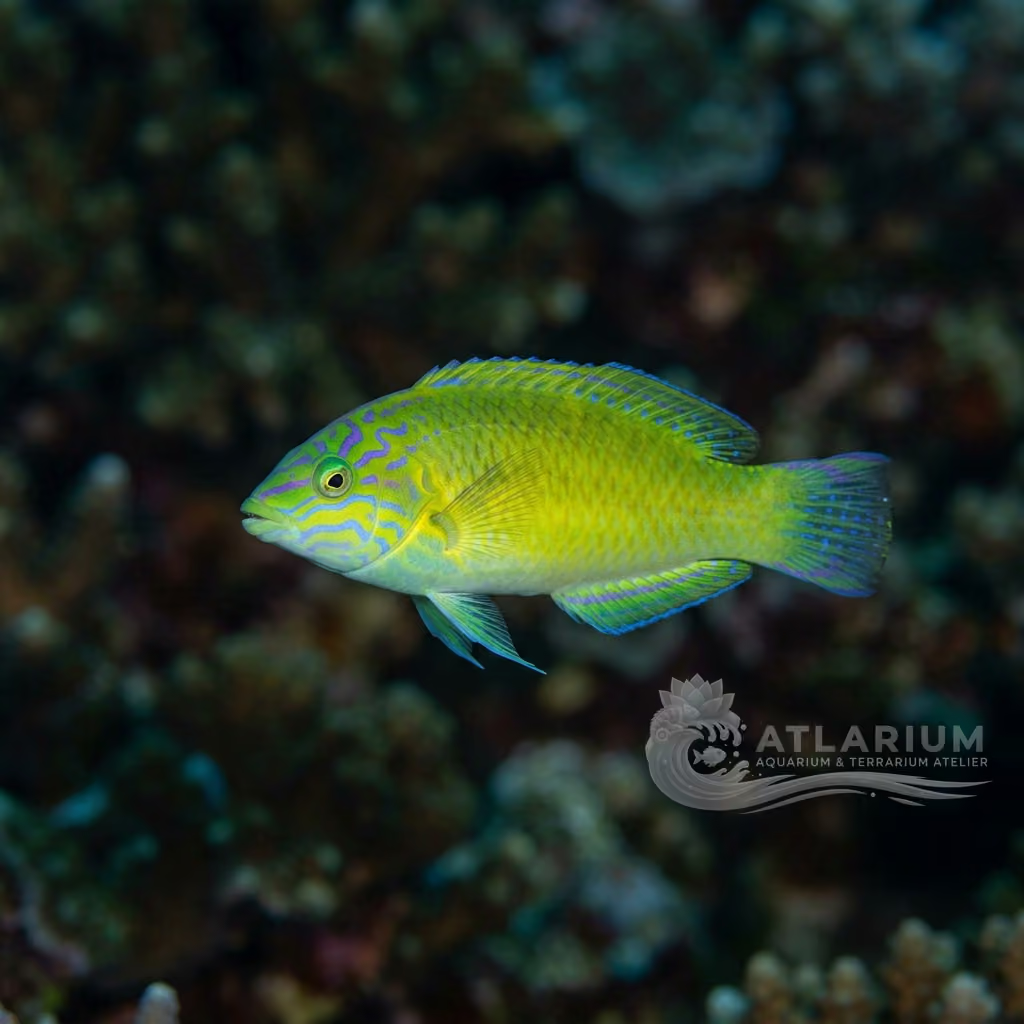
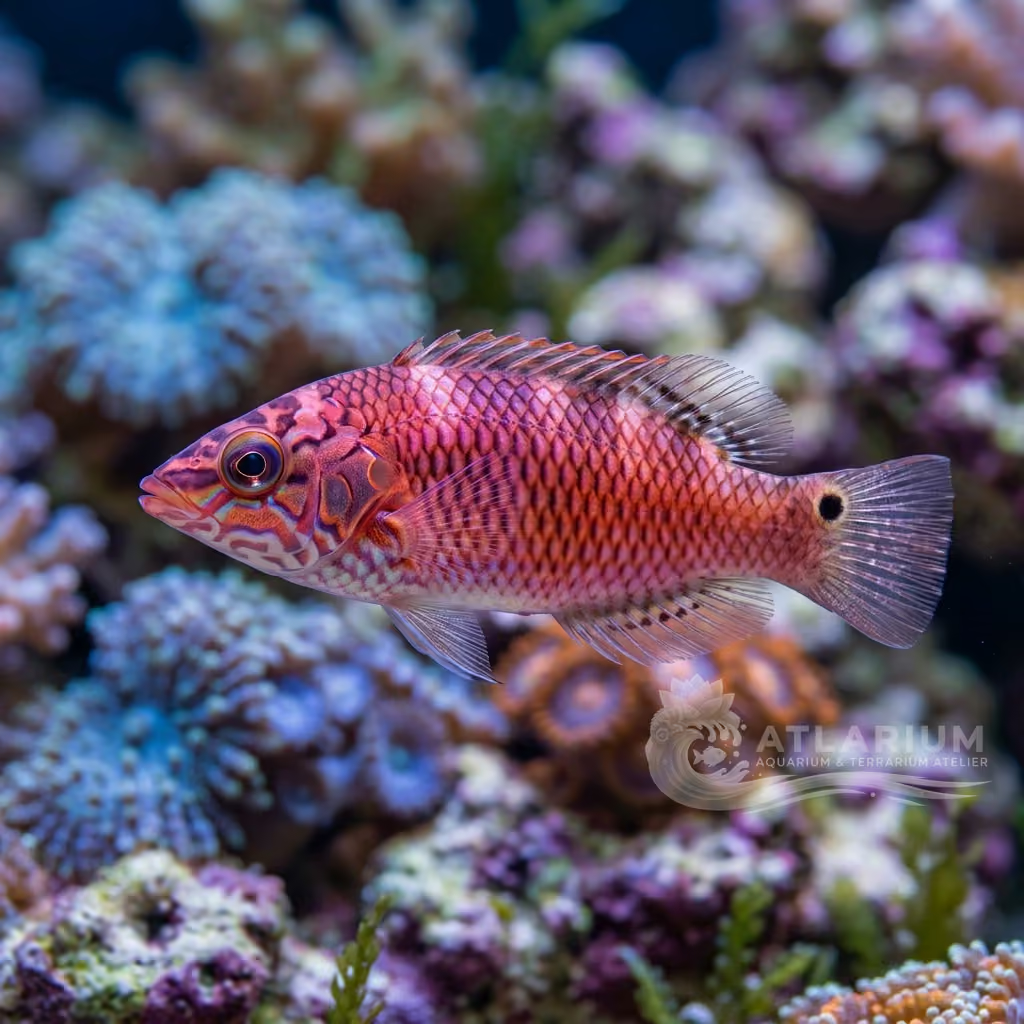
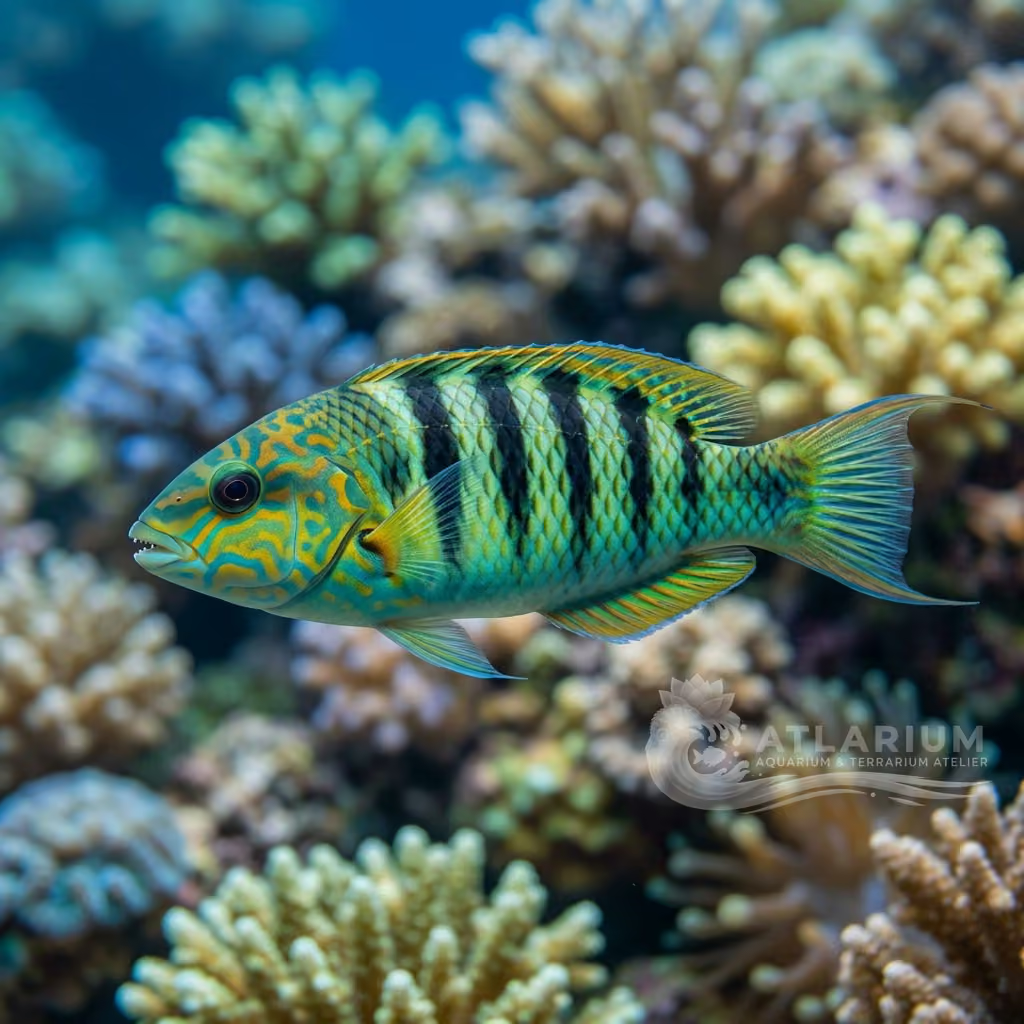
Coloration and Sexual Dimorphism: Displays extreme color variation and strong sexual dimorphism. Males feature a bright mix of red, pink, yellow, and neon blue highlights, with wavy patterns on the head and dark borders on the dorsal and anal fins. Females are mostly pinkish-red with a distinct small dark spot on the upper tail base and overall less intense coloration.

Soins, reproduction et cohabitation
Aquarium Setup: Requires an aquarium of at least 150 liters for a single fish, or 250 liters for a small group. The aquascape must feature plenty of live rock arranged into caves, channels, and hiding spots, while leaving the center open for active swimming. A tight-fitting lid or mesh cover is mandatory, as this species is a notorious jumper.
Diet and Feeding: A carnivorous planktivore. In captivity, feed a varied diet based on high-quality frozen foods like mysis shrimp, brine shrimp, calanus, and lobster eggs. They will readily accept high-quality marine flakes and micro-pellets. Feed twice daily in small portions to support their high activity levels and fast metabolism.
Water Quality: Demands stable parameters: water temperature between 24°C and 28°C, pH between 8.1 and 8.4, specific gravity between 1.023 and 1.025, and alkalinity between 8-12 dKH. Good filtration and bi-weekly water changes of 15% are recommended to keep nitrates below 15 ppm and ensure high dissolved oxygen levels.
Compatibility and Cohabitation: Excellent candidate for reef tanks and community aquariums. It coexists peacefully with clownfish, blennies, gobies, anthias, and small tangs. It is completely safe with all corals and ornamental invertebrates like cleaner shrimp. Avoid keeping with aggressive fish like dottybacks or large predatory groupers.
Aquarium Breeding: Breeding in home aquariums is extremely rare. They are protogynous hermaphrodites, meaning the dominant female will transition into a male if no male is present. Courtship involves active displays where the male flashes brilliant neon colors to attract the female. The eggs are pelagic and raising the fry is complex.
Risks and Diseases: While generally hardy, they are susceptible to common marine parasites like ich (Cryptocaryon) if stressed. The single greatest risk is death from jumping out of the tank due to a sudden fright. A fully enclosed mesh top is essential. Minor skin scrapes heal quickly in clean water conditions.

Origine et répartition géographiques
Cirrhilabrus lubbocki is native to the tropical Western Pacific Ocean, with key populations found in the Philippines, Indonesia, Palau, and the Ryukyu Islands of Japan. It inhabits outer reef slopes, sheltered lagoons, and rubble-rich zones with dense growths of stony corals, at depths of 4 to 45 meters. It forms large schools that swim close to the safety of the substrate.
Origine
Océans tropicaux et récifsAsie du Sud et du Sud-EstAsie de l'Est

Profil de poisson
- Tempérament
- Peaceful
- This wrasse is active, curious, and gentle, occupying the middle and upper levels of the aquarium. It establishes a peaceful social structure when kept in harems, under a dominant male. At night, it retreats into rock crevices and spins a protective mucus cocoon to mask its scent from predators. They are known to jump when startled, so a tightly fitting cover is a necessary requirement.
- Régime alimentaire
- Planktivore
- Lubbock's Fairy Wrasse is a carnivorous zooplanktivore that needs a high-protein, varied diet. In the aquarium, they eagerly feed on mysis shrimp, enriched brine shrimp, copepods, and finely chopped seafood. They also readily accept high-quality marine flakes and pellets that contain carotenoids to help maintain their coloration. Regular vitamin supplements support their immune health and keep them active.
- Espérance de vie
- 5-10 years
- Taille adulte
- 8 cm
- Ratio des sexes
- Harem
- Harem (1 male, multiple females)
- Fréquence d'alimentation
- 2-3 times daily
- Because of its active swimming style and fast metabolism, this wrasse should be fed two to three times daily. Small, frequent feedings help maintain their body weight and reduce feeding competition in community tanks. This matches their natural habit of grazing on zooplankton floating in water currents. Avoid dumping too much food at once to keep nitrate and phosphate levels low.
- Charge biologique
- Low to Medium
- Lubbock's Fairy Wrasse is a diminutive but hyperactive fish that requires multiple small feedings throughout the day to thrive. Although small, the compounding effect of these frequent meals leads to a moderate bioload impact. Strong mechanical and biological filtration will help keep the display tank pristine despite the continuous food inputs.
- Courant
- Strong
- Lubbock's Fairy Wrasse prefers moderate water flow, which simulates its natural shallow reef habitats in the Indo-West Pacific. Moderate flow keeps the water well-oxygenated and helps carry food to the fish, prompting their hunting instincts. The current should be strong enough to encourage active swimming but not so strong that it exhausts them. Providing areas of low flow near rock caves is important for their nightly rest.
- Risque de saut
- Yes
- Like all members of its genus, Lubbock's Fairy Wrasse is incredibly skittish and will reflexively dart towards the surface when panicked. They frequently jump from uncovered tanks due to aggression from other tankmates or during the lights-out transition. Installing a well-secured mesh or glass top is an absolute requirement for safely keeping this species.
- Reproduction
- Oviparous
- This species is a protogynous hermaphrodite and there are no documented cases of successful breeding in private aquariums. In the wild, males court females with spectacular nuptial displays, intensifying their coloration to attract a mate. Spawning is pelagic, with the pair releasing eggs and sperm simultaneously into the water column. The tiny, fragile larvae require microscopic live foods and stable conditions that are extremely difficult to provide in captivity.
- Compatibilité et compagnons
- Reef safe with caution
- Lubbock's Fairy Wrasse is a peaceful, community-friendly fish that is fully reef-safe. It can be kept singly or in groups, provided there is only one male and several females, introduced together. It is safe with corals and larger invertebrates, but tiny benthic organisms may be hunted. Avoid keeping them with aggressive species like dottybacks, damsels, or large predators that might harass them.
- Niveau dans le bac
- Top/Middle
- This active species can usually be found hovering and darting around the middle and upper levels of the water column. They love open swimming spaces where they can eagerly catch floating morsels of food. At night, they change their behavior entirely, retreating deep into the rockwork to sleep in safety.

Modèles et paramètres scientifiques
FishBase
Fenêtre sur les données scientifiques officielles de l’espèce
FishBase v25.04Données synchronisées le : 15/06/2026
- Niveau trophique
- 3,4 ± 0,45 se
- Résilience
- Élevée (moins de 15 mois)
- Singularité phylogénétique (PD50)
- 0.5
- Relation bayésienne longueur-poids
- a = 0.01072, b = 3.03
- VulnérabilitéVulnérabilité faible (10 / 100)

Espèces associées
Recommandations regroupées par proches parents, compagnons et soins similaires.