Solenostoma tetragonum
Solenostoma tetragonum
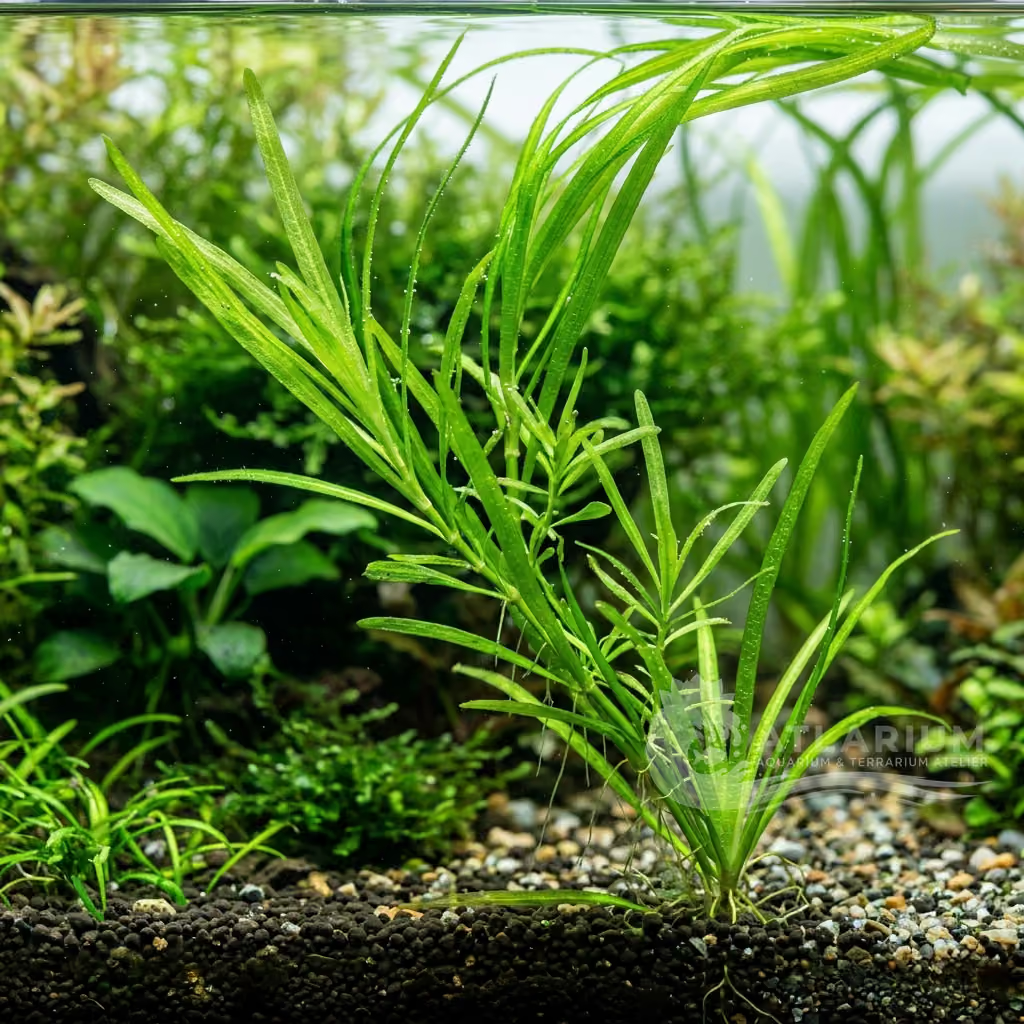
Solenostoma tetragonum is a very slow-growing aquatic liverwort, highly valued in aquascaping for its unique texture and compact growth habit. Ideal for midground placement, it contributes depth and intricate detail to any aquatic layout.
Water Temperature
18 - 28 °C
pH Value
4.5 - 7
Water type
Freshwater
Light
Medium to High
CO2
Low - High
Expected height
3 cm
Expected width
5 cm
KH
0 - 7 dKH

Species description
Geographical Origin and Habitat: Solenostoma tetragonum, like many aquatic liverworts, typically originates from habitats characterized by cool, clear, and often shaded flowing waters, thriving on moist rocky substrates or submerged wood. Its natural distribution is found in regions where stable environmental conditions and high atmospheric humidity support bryophyte growth. This species prefers well-oxygenated environments with consistent water movement, which helps prevent detritus accumulation and encourages its firm attachment to hardscape.
Taxonomy & Genetics: Belonging to the family Solenostomataceae, Solenostoma tetragonum is classified as a liverwort, a group of non-vascular plants representing one of the earliest evolutionary branches of terrestrial flora. Its simple structure, devoid of true stems, leaves, or roots, is characteristic of this botanical group. While specific nomenclature can vary in the aquarium trade, its identification as Solenostoma confirms its liverwort nature, distinguishing it from mosses or vascular aquatic plants.
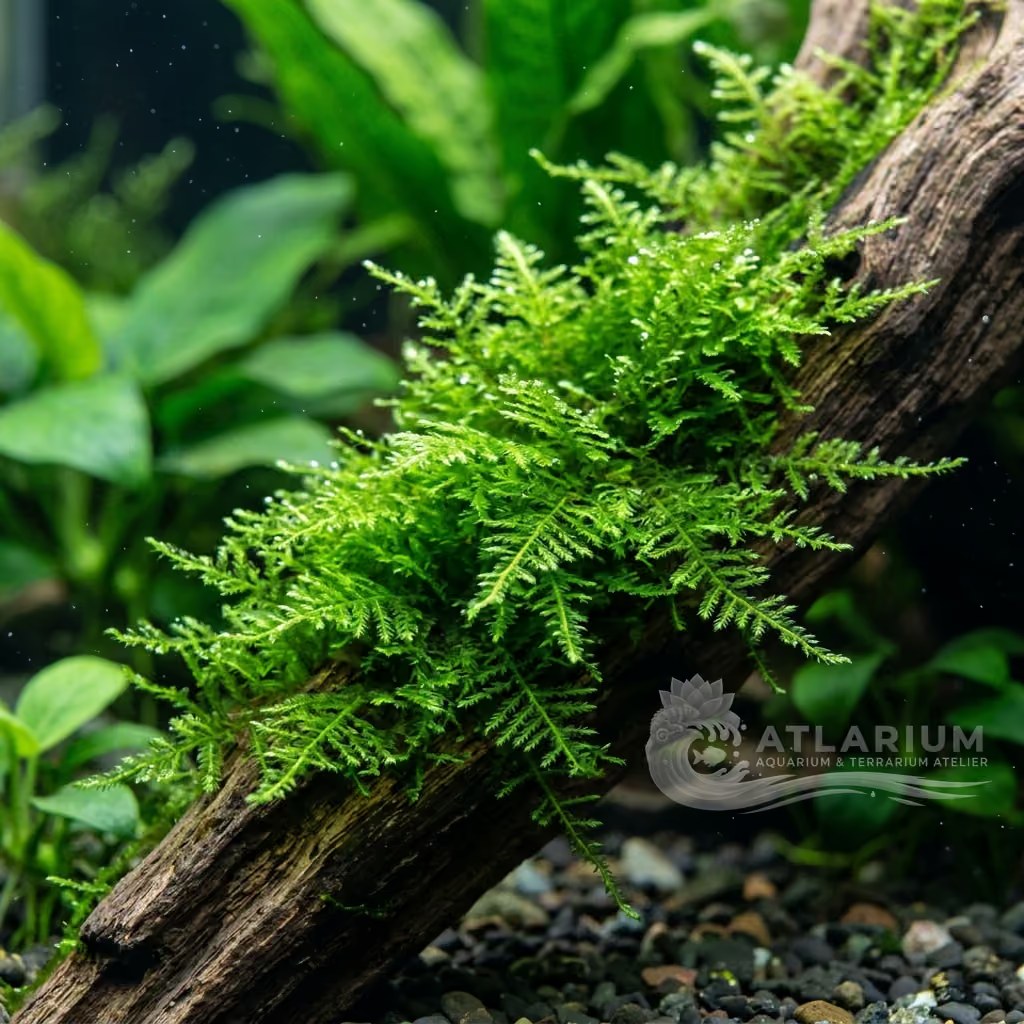
Physical Structure: The physical structure of Solenostoma tetragonum is defined by a dichotomously branching thallus that develops into a dense, cushion-like form. This undifferentiated thallus creates an intricate network of flat, thin lobes that tenaciously adhere to rocks, driftwood, or other substrates. The absence of a true root system is compensated by fine rhizoids, which serve primarily for anchoring rather than nutrient absorption, making it an epiphyte par excellence. Its compact habit allows it to form small, dense mats that add intricate textural detail to hardscape surfaces.
Color & Texture: Solenostoma tetragonum displays a bright to dark green coloration, which can intensify or vary subtly depending on light conditions and available nutrients. Its texture is delicate yet compact, creating a velvety or small-carpet-like effect when growing densely on hardscape surfaces. The thin, often translucent lobes contribute to a refined and natural appearance, making it a highly valued aesthetic element in the aquarium. Under strong lighting with adequate CO₂, the color becomes richer and more vibrant, while insufficient light may cause the plant to appear pale and leggy.

Care, breeding and tankmates
Lighting & CO2: For Solenostoma tetragonum, medium to high lighting is recommended to promote healthy growth and vibrant coloration, though the plant can survive under moderate light. Insufficient light may lead to stunted growth and faded color, while excessive light without adequate CO2 and nutrients can encourage algal growth. Carbon dioxide (CO2) supplementation is highly beneficial, accelerating its already slow growth and significantly enhancing the thallus's density and vitality, resulting in a more robust and lush appearance.
Nutrition & Substrate: As an epiphytic liverwort, Solenostoma tetragonum derives most of its nutrients directly from the
Water Chemistry: Solenostoma tetragonum thrives in a temperature range of 18.0 to 28.0 C, indicating good adaptability but a preference for stable waters without significant fluctuations. The water should be acidic to slightly acidic, with a pH between 4.5 and 7.0, and very soft to moderately soft carbonate hardness (KH) ranging from 0.0 to 7.0. Maintaining these parameters within the recommended values is crucial to prevent stress and melt, ensuring a clean and well-filtered aquatic environment.
Space Management & Placement: Given its compact habit and very slow growth, Solenostoma tetragonum is ideally positioned in the midground of the aquarium, where it can form decorative carpets or cushions on driftwood and rocks. It is essential to initially secure it with fishing line or cyanoacrylate glue, as its rhizoids take time to firmly anchor themselves. Its versatility allows for creating intricate details, soft transitions between different aquarium zones, or covering irregular surfaces, adding depth and visual interest to the layout. Ensure good water flow around the plant to prevent detritus accumulation within its dense growth.
Pruning: Pruning Solenostoma tetragonum is a relatively infrequent operation due to its extremely slow growth rate. When necessary, it can be thinned to control its shape and density, carefully removing older or overly dense portions with sharp scissors. This not only maintains the desired aesthetics but also prevents detritus accumulation within the moss cushions, which could suffocate the lower portions and encourage algae growth. The trimmed fragments can be reused to propagate the plant in other areas of the aquarium by tying or gluing them onto new surfaces.
Risks & Diseases: Solenostoma tetragonum is susceptible to algae growth, particularly filamentous and brush algae, which can settle among its delicate lobes and suffocate the plant if left unchecked. An imbalance between high light and insufficient CO₂ or nutrients is the primary cause of this issue. The plant may also suffer from melting or browning when subjected to sudden shifts in water parameters, particularly pH and temperature, or exposure to harsh chemicals such as glutaraldehyde-based algaecides. Maintaining stable parameters, balanced fertilization, and good water flow around the plant are the best preventive strategies for preserving its health.

Geographic origin and distribution
Solenostoma tetragonum, like many aquatic liverworts, typically originates from habitats characterized by cool, clear, and often shaded flowing waters, thriving on moist rocky substrates or submerged wood. Its natural distribution is found in regions where stable environmental conditions and high atmospheric humidity support bryophyte growth. This species prefers well-oxygenated environments with consistent water movement, which helps prevent detritus accumulation and encourages its firm attachment to hardscape.
Origin
South and Southeast Asia

Plant profile
- Placement
- Midground
- Place Solenostoma tetragonum in the midground or background of the aquarium. It needs enough space to avoid shading neighboring species. Proper placement ensures steady light exposure and water flow.
- Botanical form
- Epiphyte
- Solenostoma tetragonum features a distinct structural form with well-defined leaves. Its stem and root structures anchor firmly into the substrate. The overall appearance provides excellent visual texture underwater.
- Growth
- Very slow
- The growth rate of Solenostoma tetragonum is generally moderate under optimal conditions. Adding CO2 injection will significantly accelerate its development. However, it can adapt to slower growth in low-tech setups.
- Substrate
- None
- *Solenostoma tetragonum*, commonly known as Pearl moss, is a creeping liverwort that completely lacks true roots and has no substrate demand. It attaches itself to rocks, driftwood, and other hardscape surfaces using tiny rhizoids, absorbing all necessary nutrients and water directly through its delicate fronds. Planting this moss in soil or burying it will cause it to quickly suffocate and rot. It thrives best when tied or glued to porous surfaces in areas with good water flow, entirely bypassing the need for a substrate layer.
- Column fertilization
- Required
- Liquid fertilization is very beneficial for Solenostoma tetragonum. It absorbs dissolved minerals directly from the water column. Dosing a complete micronutrient fertilizer twice a week is recommended.
- Root fertilization
- None
- A nutrient-rich substrate strongly supports the root system of Solenostoma tetragonum. Adding root tabs near its base provides essential macronutrients. This promotes a stronger base and healthier overall growth.
- Trimming
- Occasional
- Regular trimming keeps Solenostoma tetragonum looking neat and prevents overgrowth. Cut the stems just above a node to encourage branching. Remove any decaying or yellowing leaves to maintain water quality.
- Propagation
- Cuttings
- Propagation of Solenostoma tetragonum is straightforward by taking stem cuttings. Replant the healthy cut portions directly into the substrate. They will develop new roots within a week or two.
- Sensitivity
- Moderate
- Solenostoma tetragonum is somewhat sensitive to sudden fluctuations in water parameters. It prefers stable temperatures and consistent CO2 levels. Algae can grow on its leaves if lighting is too intense.
- Layout role
- Epiphyte, Nano
- Solenostoma tetragonum plays a crucial role in creating depth in an aquascape. Its unique texture contrasts beautifully with fine-leaved plants. It works well as a focal point or a transition plant.

Related species
Recommendations grouped by close relatives, companion choices, and similar care.