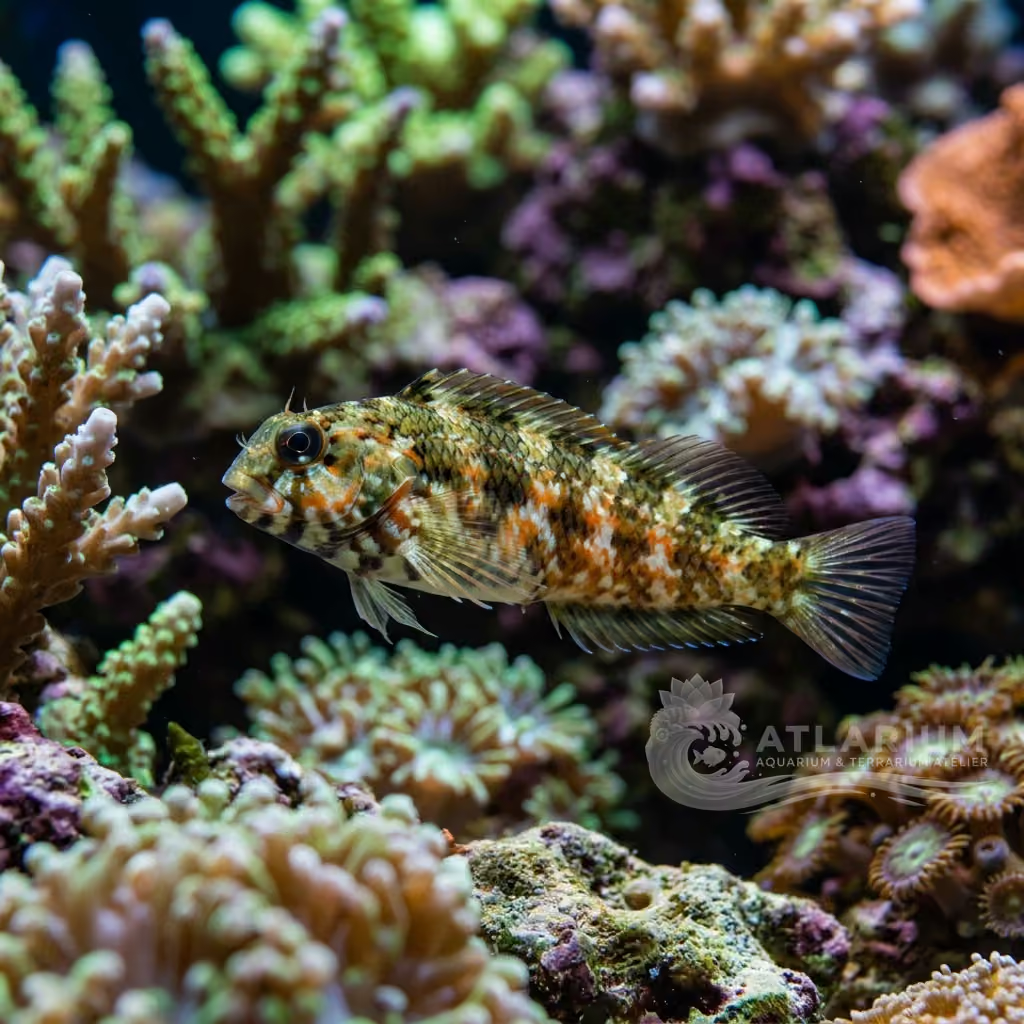
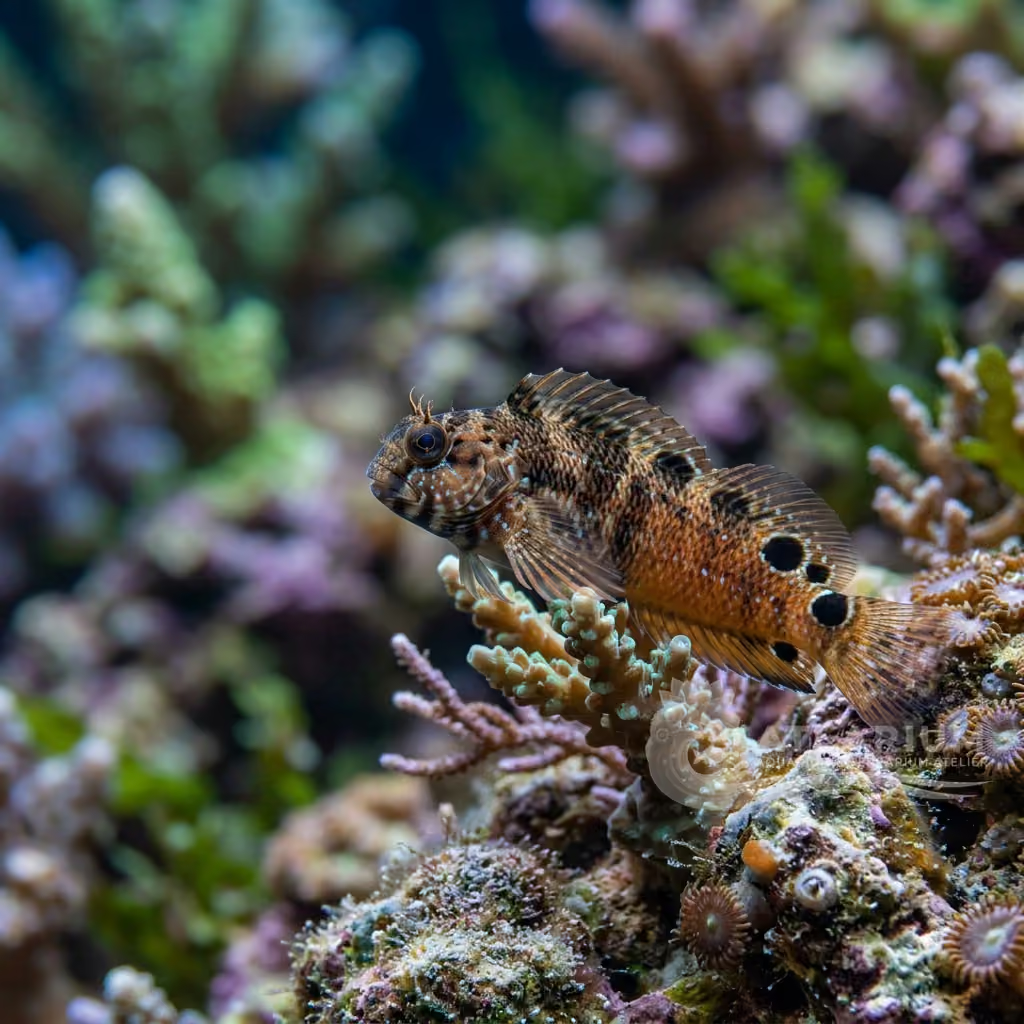
Brown Coral Blenny
Atrosalarias fuscus
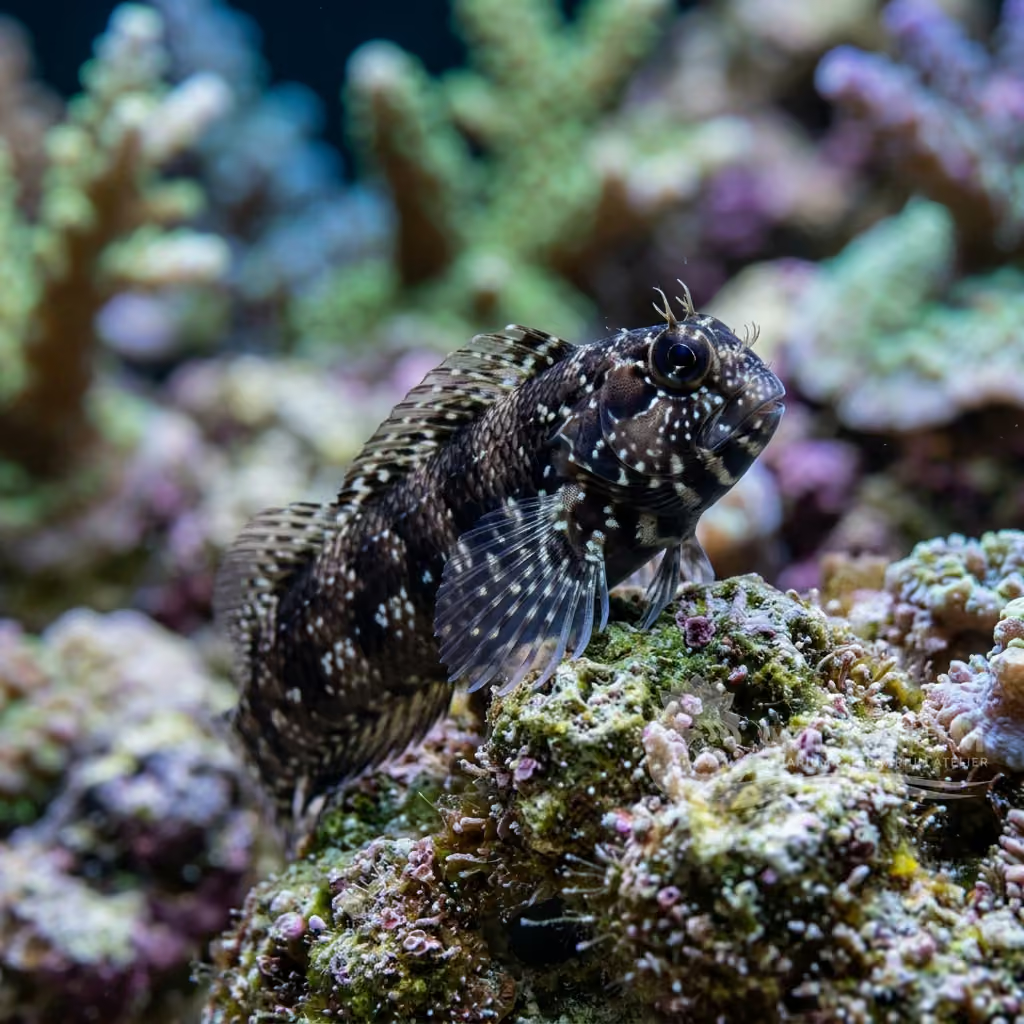
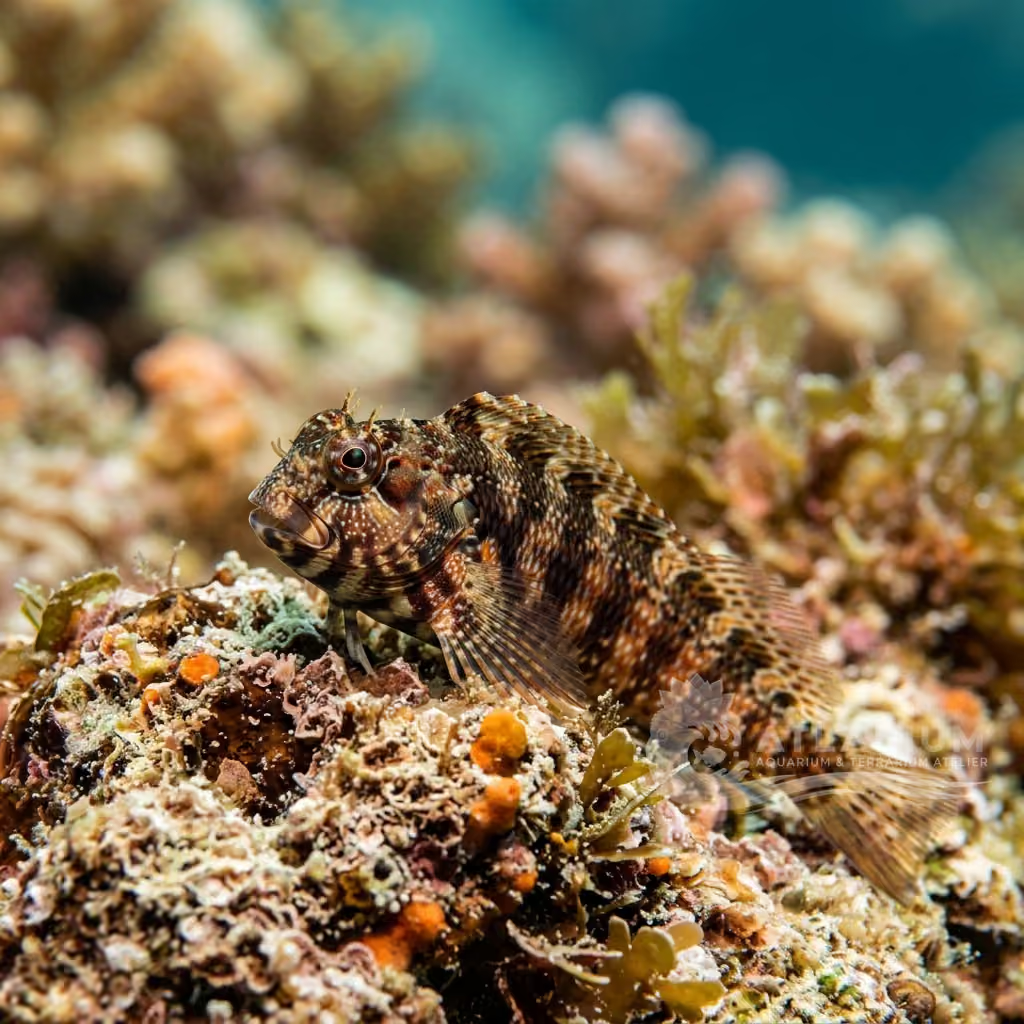
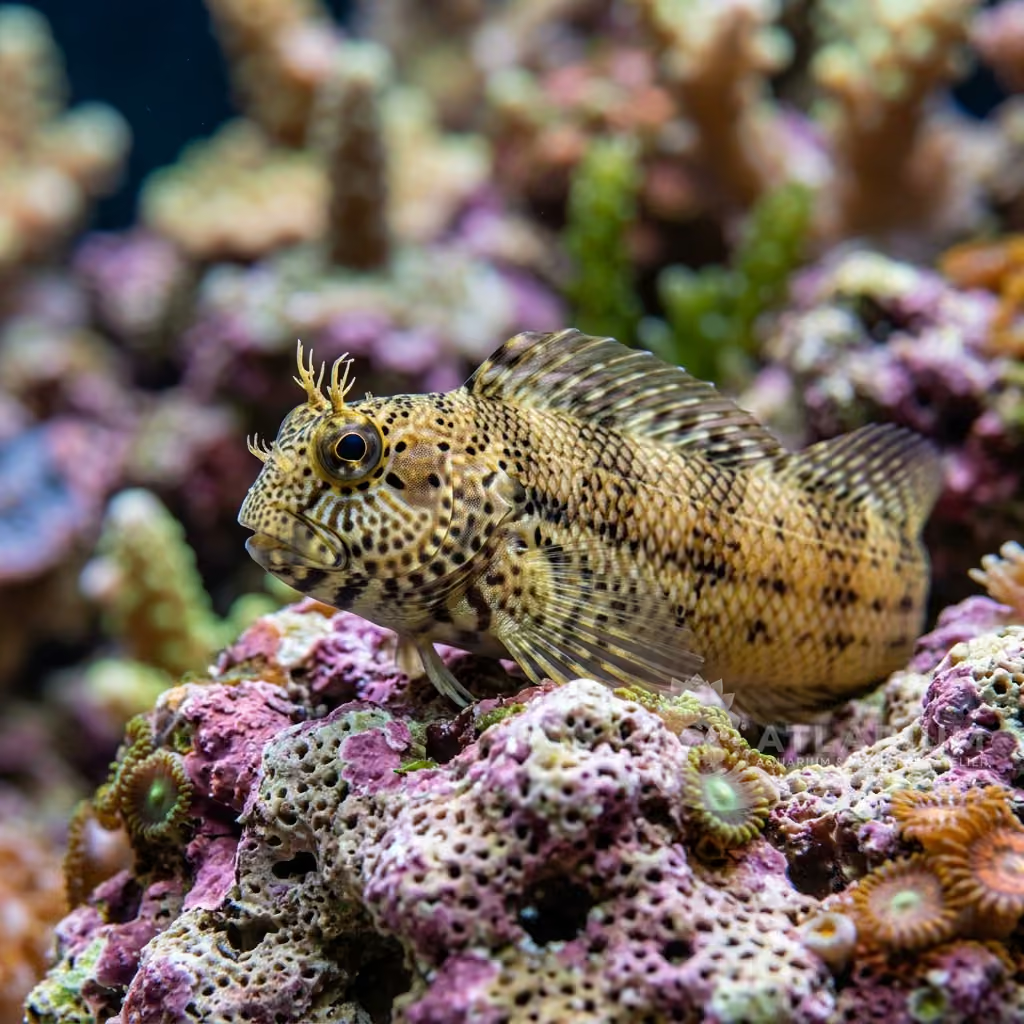
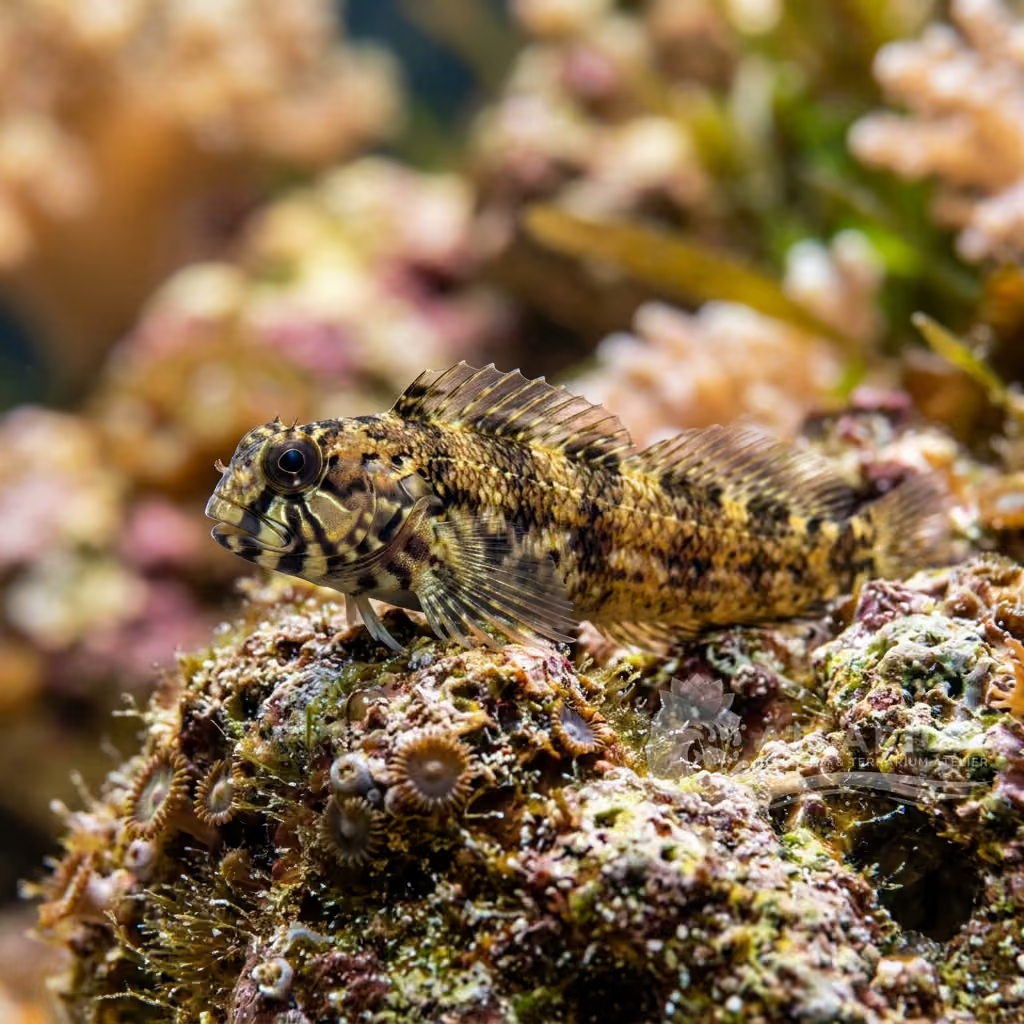
The Brown Coral Blenny is a specialized herbivorous reef fish. Known for perching on live rock, it requires a well-established aquarium with abundant natural algae growth for grazing.
Wassertemperatur
22 - 27 °C
pH-Wert
8 - 8.5
Wassertyp
Meerwasser
Tankfüllstand
Unten und in der Mitte
Erwachsenengröße
14 cm
Mindesttankvolumen
>= 150 L
Mindestgruppe
>= 1
KH
8 - 12 dKH

Artbeschreibung
Geographical Origin and Habitat: The brown coral blenny, Atrosalarias fuscus, is native to the warm tropical waters of the Indo-Pacific. Its distribution extends from the Red Sea and East African coast to the Society Islands, north to southern Japan, and south to the Great Barrier Reef of Australia. It inhabits shallow reef flats, sheltered lagoons, and rubble-rich areas at depths of 1 to 15 meters, living in close association with rocky substrates and dead coral branches.
Taxonomy and Morphology: Belonging to the class Actinopterygii, order Blenniiformes, family Blenniidae, and genus Atrosalarias. It features a laterally compressed body, a steep head profile, and large eyes positioned high on the head. A key distinguishing morphological feature is its exceptionally high and long dorsal fin, which is continuous and extends nearly to the caudal fin. Adults reach a maximum size of 10 to 11 cm.
Social Behavior: A solitary, benthic, and territorial species. It spends most of its time perched on rocks or dead coral branches using its pectoral fins for support, scanning the surrounding area for algae. It exhibits strong territorial behavior toward conspecifics or other herbivorous fish with similar feeding habits, defending its grazing territory vigorously.
Coloration and Sexual Dimorphism: Adult coloration is typically a uniform dark brown to jet black, sometimes showing faint yellowish or orange hues on the caudal fin or tail peduncle depending on geographic origin. Juveniles are often bright yellow or lighter brown. External sexual dimorphism is subtle, though mature males may possess slightly larger dorsal and anal fins.

Pflege, Zucht und Mitbewohner
Aquarium Setup: Requires a minimum tank size of 100-120 liters for a single specimen. The aquarium must feature a large amount of mature live rock arranged to create ledges, shelves, and caves. Having a well-established rockscape with natural algae growth is critical for the blenny's successful acclimation and long-term health.
Diet and Feeding: A specialized herbivore. In the aquarium, its diet should rely primarily on natural microalgae and filamentous algae growing on the rocks. Supplement this by offering high-quality spirulina-based flakes, pellets, and dried nori seaweed sheets attached to a clip. Meaty foods should only be offered occasionally and in very small quantities.
Water Quality: Maintain stable marine reef water parameters: temperature between 24°C and 28°C, pH between 8.1 and 8.4, and specific gravity of 1.021 to 1.025. Efficient filtration is needed to handle biological waste, although a small amount of phosphate and nitrate is beneficial to encourage the growth of the algae it feeds on.
Compatibility and Cohabitation: Reef-safe, as it does not bother corals or sessile invertebrates. It coexists peacefully with open-water fish (like clowns, damselfish, or small wrasses) but will display intense aggression toward other benthic, herbivorous species such as other blennies or algae-eating gobies. Keep only one specimen per tank.
Aquarium Breeding: Spawning in captivity is exceptionally rare. Like most blennies, they lay adhesive eggs in small caves or empty shells, which the male guards and aerates until hatching. The resulting pelagic larvae are extremely difficult to raise due to their tiny size and requirement for specialized live micro-plankton.
Risks and Diseases: The primary risk is starvation if introduced into a sterile, newly set-up aquarium lacking mature rockwork and algae. A healthy blenny should have a rounded abdomen; a pinched stomach indicates malnutrition. It is also sensitive to skin parasites if stressed by aggressive tankmates.

Geografische Herkunft und Verbreitung
The brown coral blenny, Atrosalarias fuscus, is native to the warm tropical waters of the Indo-Pacific. Its distribution extends from the Red Sea and East African coast to the Society Islands, north to southern Japan, and south to the Great Barrier Reef of Australia. It inhabits shallow reef flats, sheltered lagoons, and rubble-rich areas at depths of 1 to 15 meters, living in close association with rocky substrates and dead coral branches.
Ursprung
Tropische Ozeane und RiffeAfrika und MadagaskarOstasienAustralien, Neuguinea und Ozeanien

Fischprofil
- Temperament
- Semi-aggressive
- This blenny is generally peaceful toward unrelated tank mates and is an excellent addition to reef communities. However, they exhibit strong territorial behavior and will display aggression toward conspecifics or fish with similar shapes and feeding habits. They are active during the day, spending their time patrolling their territory and scraping algae off rocks. Providing plenty of hiding spaces will help minimize territorial disputes with other bottom-dwellers.
- Diät
- Herbivore
- Atrosalarias fuscus is a dedicated herbivore that feeds primarily on marine microalgae, filamentous algae, and detritus. A mature aquarium with plenty of natural algae growth on live rocks is crucial for their long-term survival. If the natural algae supply is insufficient, their diet must be supplemented with dried seaweed (nori), spirulina-based flakes, and high-quality herbivore pellets. They should not be kept in brand-new, sterile aquariums as they may starve.
- Lebenserwartung
- 3-5 years
- Erwachsenengröße
- 14 cm
- Geschlechterverhältnis
- 1:1 ratio
- It is highly recommended to keep Atrosalarias fuscus as a single specimen in the aquarium to prevent severe intraspecific aggression. Males are highly territorial and will fight aggressively with other males of the same or similar species. They can only be kept in pairs if they are a verified, compatible male-female mated pair introduced simultaneously. In very large aquariums with abundant rockwork, multiple specimens might coexist, but keeping them solitary is safest.
- Fütterungsfrequenz
- Twice daily
- In an aquarium with abundant natural algae, Atrosalarias fuscus will graze continuously throughout the day, requiring minimal supplementation. However, if the tank is very clean, they should be fed small amounts of prepared herbivore foods 1 to 2 times daily. Offering nori clipped to the glass or rubber-banded to a rock allows them to graze naturally over several hours. Monitoring their abdominal area is key; a sunken belly indicates they need more frequent feedings.
- Bioload
- Low
- Atrosalarias fuscus has a low biological waste footprint due to its relatively small size and predominantly herbivorous diet. They feed mainly on microalgae and organic film, which produces minimal solid waste compared to carnivores. Standard filtration with a quality protein skimmer and regular partial water changes is more than sufficient to maintain clean water. An established aquarium with live rock helps naturally process the minimal waste they produce.
- Fluss
- Strong
- This species prefers moderate to strong water flow in the aquarium, which mimics their natural shallow reef habitats. Strong currents help keep live rocks clean of sediment, facilitating the growth of the microalgae they feed on. Good water movement also ensures high dissolved oxygen levels, which is beneficial for their overall health. Avoid placing them in tanks with stagnant or very low flow, as this does not reflect their natural environment.
- Sprungrisiko
- Yes
- Atrosalarias fuscus has a very high jump risk, a trait common among the Blenniidae family. They are easily startled by sudden light changes or active tank mates and can dart upward out of the water. A tight-fitting lid or a secure mesh cover is absolutely essential to prevent them from jumping out. Any small gaps around cords or filtration equipment should be sealed to ensure their safety.
- Reproduktion
- Oviparous
- Reproduction in captivity is extremely difficult and rarely successful for hobbyists. Atrosalarias fuscus is an oviparous species, with females laying adhesive eggs in secluded caves or empty shells. The male then fertilizes the clutch and diligently guards and fans the eggs until they hatch into pelagic larvae. Rearing the microscopic larvae is the primary challenge, as they require specialized live microscopic foods and are sensitive to water quality.
- Kompatibilität & Tankkameraden
- With caution
- They are highly compatible with peaceful reef fish such as clownfish, cardinalfish, gobies, and small wrasses. They should not be housed with other blennies or similarly shaped algae-grazers unless the aquarium is exceptionally large with distinct territories. While they are generally reef-safe, hungry individuals may occasionally nip at small polyp stony (SPS) corals or clam mantles. Avoid keeping them with large, predatory tank mates that might view them as prey.
- Tankfüllstand
- Middle/Bottom
- This species is benthic and primarily occupies the bottom-middle zone of the aquarium. They spend most of their time perching on live rock, resting in small caves, or grazing on algae-covered surfaces. While they rarely swim in open water, they will occasionally crawl along the glass or jump between rock structures. Providing numerous rocky perches at various heights allows them to explore their preferred levels comfortably.

Wissenschaftliche Modelle & Parameter
FishBase
Zugang zu den offiziellen wissenschaftlichen Daten der Art
FishBase v25.04Daten synchronisiert am: 15.06.2026
- Trophäenniveau
- 2 ± 0 se
- Belastbarkeit
- Hoch (weniger als 15 Monate)
- Phylogenetische Einzigartigkeit (PD50)
- 0.625
- Bayessche Längen-Gewichts-Beziehung
- a = 0.00891, b = 3.01
- AnfälligkeitGeringe Anfälligkeit (10 / 100)

Verwandte Arten
Empfehlungen gruppiert nach nahen Verwandten, Auswahl von Begleitern und ähnlicher Betreuung.