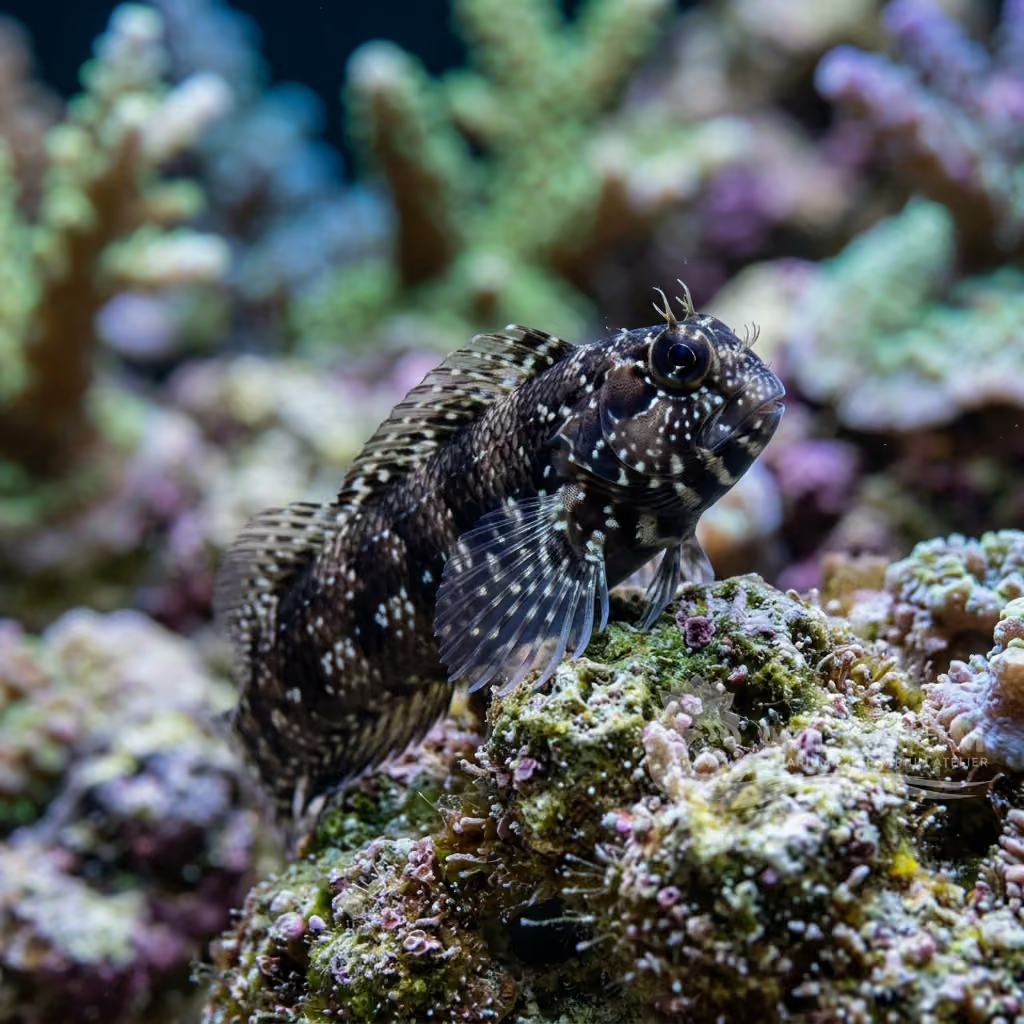
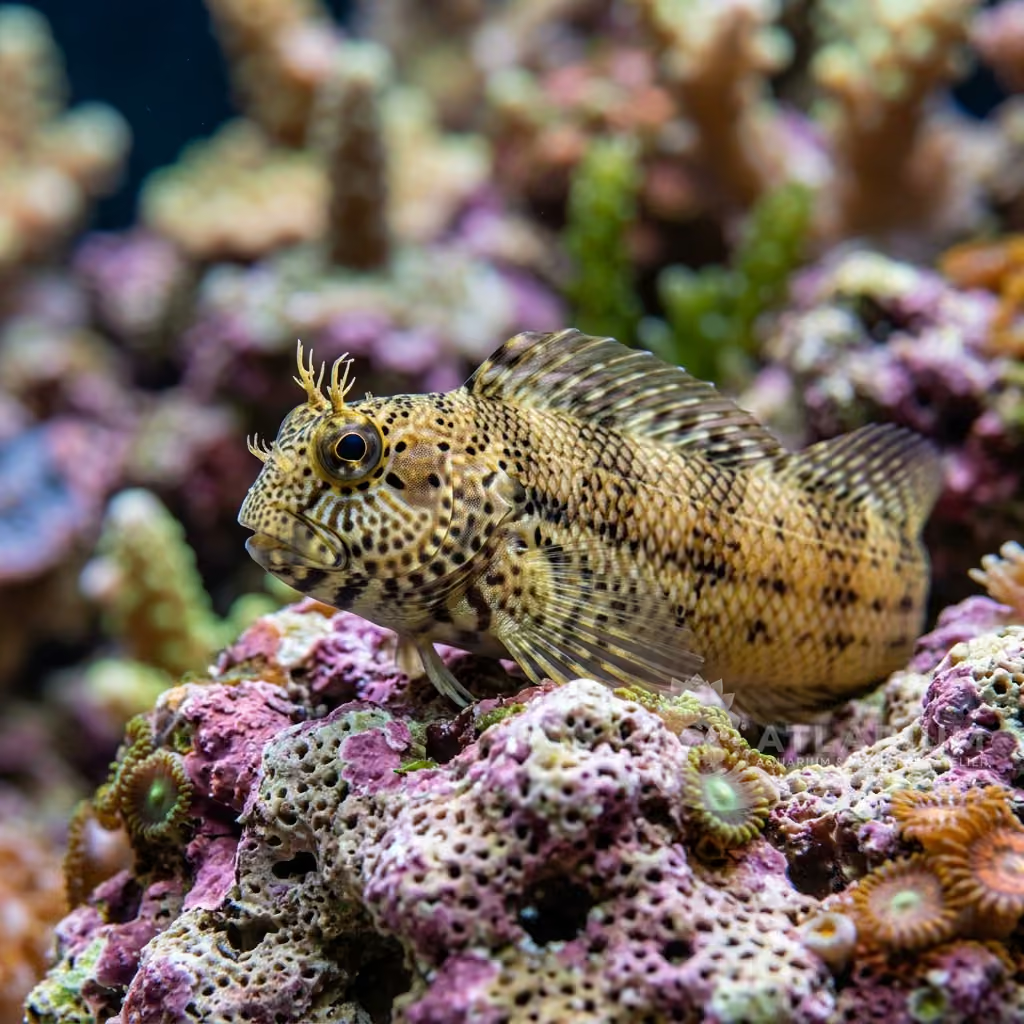
Forktail blenny
Meiacanthus atrodorsalis
The Forktail Blenny is an accomplished jumper from the Western Pacific. It needs a covered tank featuring live rock full of small crevices for shelter, while leaving sufficient open swimming space.
Wassertemperatur
23 - 28 °C
pH-Wert
8 - 8.5
Wassertyp
Meerwasser
Tankfüllstand
Alle Ebenen
Erwachsenengröße
11 cm
Mindesttankvolumen
>= 115 L
Mindestgruppe
>= 1
KH
8 - 12 dKH

Artbeschreibung
Geographical Origin and Habitat: The Forktail blenny is widely distributed across the Western Pacific Ocean, ranging from Bali in Indonesia to the Line Islands, north to southern Japan, and south to the Great Barrier Reef in Australia. It inhabits clear lagoons and seaward reefs, often seen hovering in mid-water near branching corals at depths between 1 and 30 meters.
Taxonomy and Morphology: Belonging to the family Blenniidae, Meiacanthus atrodorsalis is characterized by its slender, elongated body and a deeply forked caudal fin with long filaments. A unique biological feature is the presence of toxic canine teeth in the lower jaw, which it uses defensively to bite the inside of a predator's mouth if swallowed.
Social Behavior: Unlike most blennies that dwell on the substrate, this species is an active swimmer that spends a significant amount of time in the water column. It is generally peaceful, bold, and curious, coexisting well with most reef community fish. However, territorial conflicts may occur between males if housed in small aquariums.
Coloration and Sexual Dimorphism: The body coloration is highly striking, featuring a bright blue-gray anterior that blends into a vivid yellow-green posterior and tail. A prominent dark diagonal stripe runs through the eye. Males are typically larger than females and develop more pronounced, elongated extensions on their tail fin.

Pflege, Zucht und Mitbewohner
Aquarium Setup: An aquarium of at least 100 liters with a secure, tight-fitting lid is essential, as this species is an accomplished jumper. The tank layout should include plenty of live rock with small holes, crevices, and caves where the blenny can shelter at night or when startled, while leaving open space for swimming.
Diet and Feeding: Primarily a carnivore that feeds on zooplankton in the wild. In the aquarium, it easily acclimates to a wide range of foods, including frozen mysis shrimp, brine shrimp, and high-quality pellet or flake foods. Feeding small portions multiple times a day is recommended to sustain its active lifestyle.
Water Quality: Requires clean, well-oxygenated water with moderate flow. Keep water temperature stable between 22°C and 26°C, pH between 8.1 and 8.4, and salinity (specific gravity) within the range of 1.020 to 1.025. Regular water changes and efficient filtration are necessary to maintain low nitrate levels.
Compatibility and Cohabitation: Excellent candidate for reef tanks (completely reef-safe). It will not harm corals, clams, or ornamental invertebrates. It coexists peacefully with most non-aggressive reef fish. Avoid housing with large predatory species that might try to eat it, as the venomous bite is defensive.
Aquarium Breeding: Breeding in captivity has been achieved. They are demersal spawners, depositing adhesive eggs inside small crevices, caves, or empty shells. The male guards and fans the egg clutch until they hatch. Raising the tiny larvae requires a steady supply of live rotifers and microalgae.
Risks and Diseases: Generally hardy and disease-resistant. However, like all scaleless fish, they are sensitive to external parasites like marine ich and can be highly sensitive to copper-based medications. Handle with care, as their defensive bite can cause local pain and swelling in humans.

Geografische Herkunft und Verbreitung
The Forktail blenny is widely distributed across the Western Pacific Ocean, ranging from Bali in Indonesia to the Line Islands, north to southern Japan, and south to the Great Barrier Reef in Australia. It inhabits clear lagoons and seaward reefs, often seen hovering in mid-water near branching corals at depths between 1 and 30 meters.
Ursprung
Tropische Ozeane und RiffeAfrika und MadagaskarSüd- und SüdostasienOstasienAustralien, Neuguinea und Ozeanien

Fischprofil
- Temperament
- Territorial
- They are bold, active, and fascinating to watch as they constantly hover and swim in the open. While generally peaceful with other species, their venomous bite makes them completely fearless of larger fish. They will not hesitate to bite back if swallowed or attacked, often causing the predator to spit them out. They make a colorful, dynamic, and unique addition to a reef community.
- Diät
- Omnivore
- This species is an omnivorous planktivore that feeds from the water column rather than grazing on rocks. They eagerly accept frozen foods like mysis shrimp, brine shrimp, and finely chopped seafood. High-quality marine flakes and micro-pellets are also usually taken with enthusiasm. A varied diet that includes some marine algae or spirulina will keep their colors bright and their immune systems strong.
- Lebenserwartung
- 3-5 years
- Erwachsenengröße
- 11 cm
- Geschlechterverhältnis
- Flexible
- It is highly recommended to keep only one individual per aquarium unless they are a proven, mated pair. Conspecifics or even similarly shaped blennies will engage in vicious, often fatal, combat. In very large tanks with abundant rockwork, multiple individuals might coexist, but the risk remains high. For the vast majority of home aquarists, keeping a single specimen is the safest choice.
- Fütterungsfrequenz
- Twice daily
- They should be fed two to three times daily with small amounts they can quickly snatch from the water column. Since they have relatively small stomachs, frequent feeding mimics their natural continuous foraging behavior. They are quick and enthusiastic eaters that will aggressively compete for food. Automated feeders dispensing small sinking pellets are highly beneficial for them.
- Bioload
- Low
- The Forktail Blenny produces a minimal bioload making them suitable for smaller marine aquariums. They do not significantly impact nitrate or phosphate levels if fed correctly. Standard marine filtration and regular, modest water changes are entirely sufficient to maintain excellent water parameters. They are quite hardy and resilient to minor fluctuations in water chemistry.
- Fluss
- Strong
- They appreciate moderate water flow that suspends food particles in the water column. Good flow encourages them to stay active and visible in the open water. Ensure there are calmer areas near the rockwork where they can retreat and rest when desired. Too much turbulent flow can exhaust them, as they constantly swim rather than perch.
- Sprungrisiko
- Yes
- They are known to be significant jumper risks, particularly when newly introduced to an aquarium. A tight-fitting lid, canopy, or mesh screen is absolutely mandatory to keep them safely inside. They often dart toward the surface when chased or spooked by sudden movements outside the tank. Do not underestimate their ability to find even the smallest escape route.
- Reproduktion
- Oviparous
- They are demersal spawners; the male courts the female and she lays adhesive eggs inside a tight crevice or empty shell. The male fiercely guards and aerates the egg clutch until they hatch. Captive breeding is very possible and happens regularly in well-established aquariums. Rearing the very small larvae, however, requires specialized cultures of rotifers and copepods.
- Kompatibilität & Tankkameraden
- Community
- They are generally peaceful and completely reef safe, paying no attention to corals or invertebrates. However, they possess venomous fangs which they use defensively, meaning aggressive tank mates will learn to leave them alone. They can be safely kept with a wide variety of peaceful community fish. Avoid keeping them with other fang blennies, as they will fight aggressively over territory.
- Tankfüllstand
- All levels
- Unlike many blennies that perch on the substrate, they spend most of their time actively swimming in the mid-water regions. They will utilize the upper rockwork as a base to dart out and catch passing plankton. They require small caves or crevices in the live rock where they can sleep securely at night. They are very visible fish that utilize open swimming space extensively.

Wissenschaftliche Modelle & Parameter
FishBase
Zugang zu den offiziellen wissenschaftlichen Daten der Art
FishBase v25.04Daten synchronisiert am: 15.06.2026
- Trophäenniveau
- 3,5 ± 0,41 se
- Belastbarkeit
- Hoch (weniger als 15 Monate)
- Phylogenetische Einzigartigkeit (PD50)
- 0.5
- Bayessche Längen-Gewichts-Beziehung
- a = 0.00575, b = 3.06
- AnfälligkeitGeringe Anfälligkeit (10 / 100)

Verwandte Arten
Empfehlungen gruppiert nach nahen Verwandten, Auswahl von Begleitern und ähnlicher Betreuung.