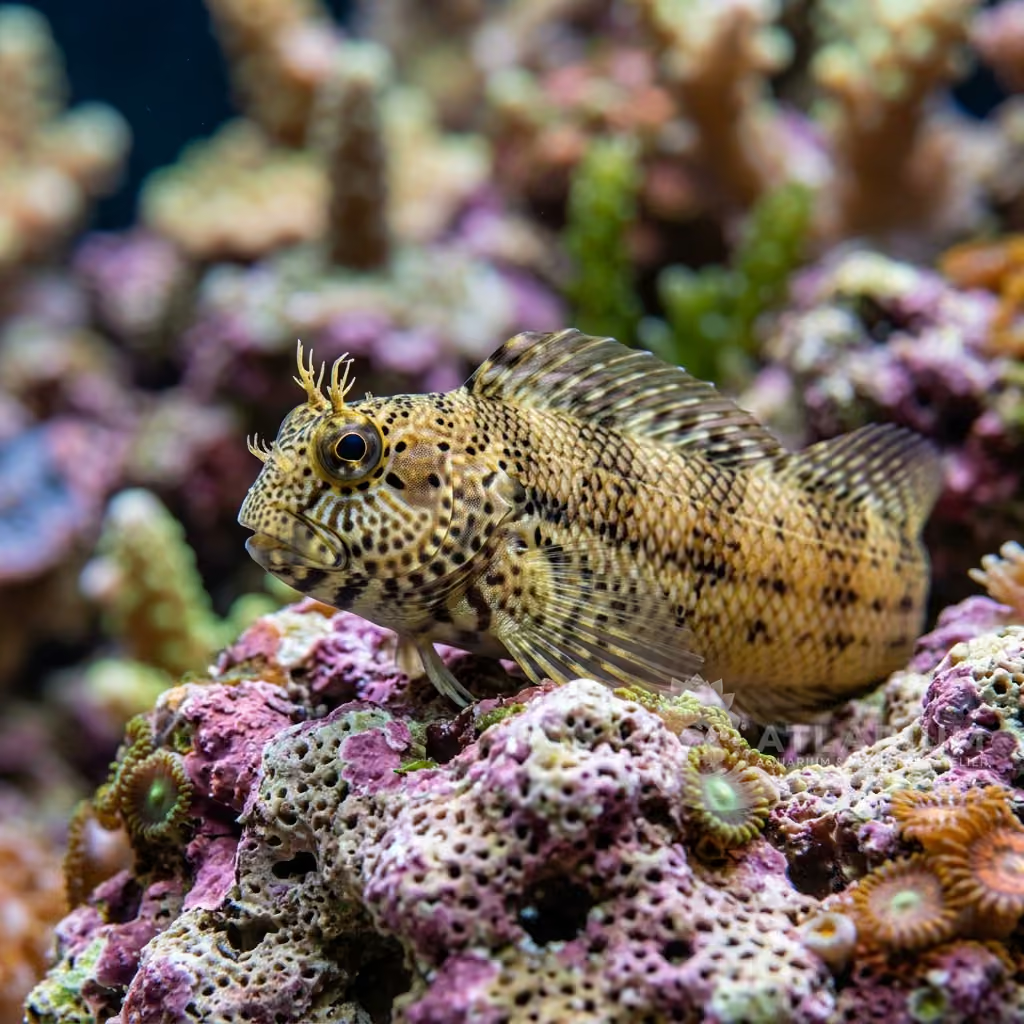
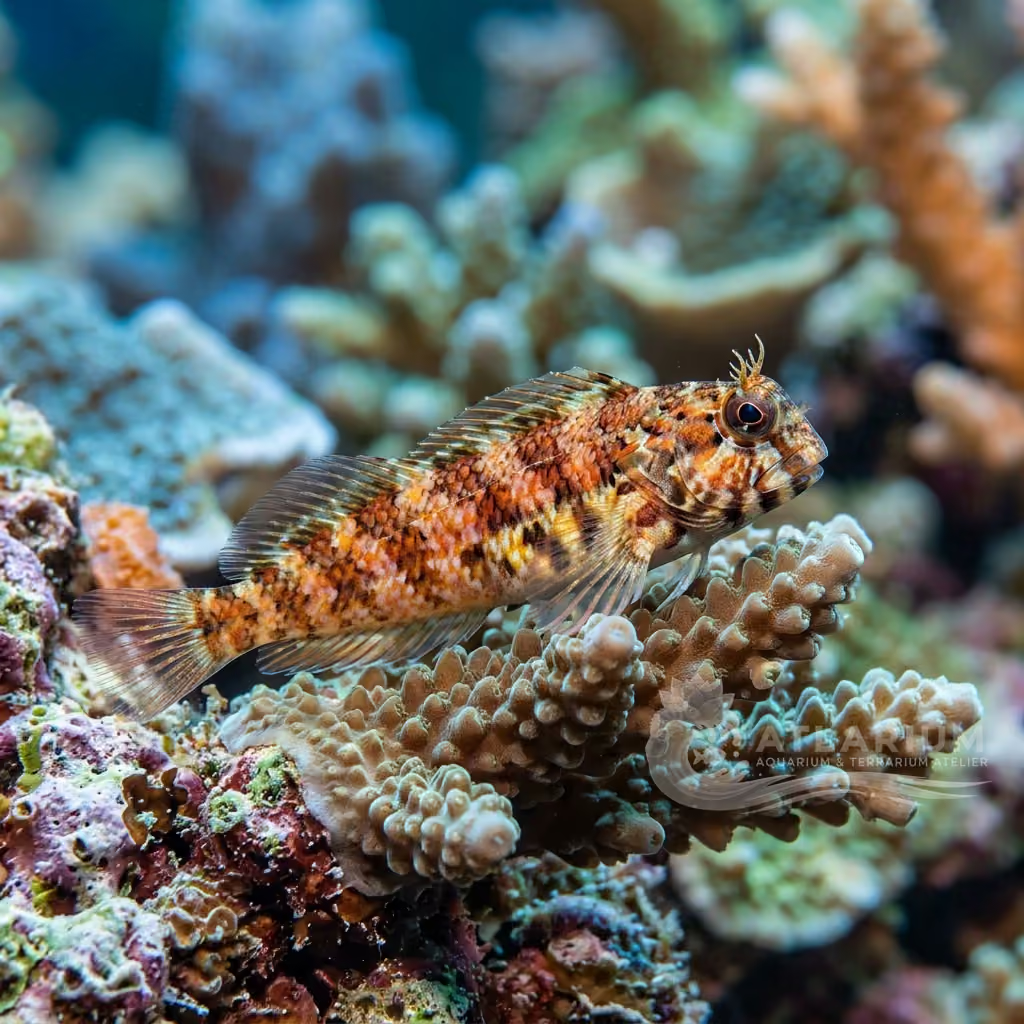
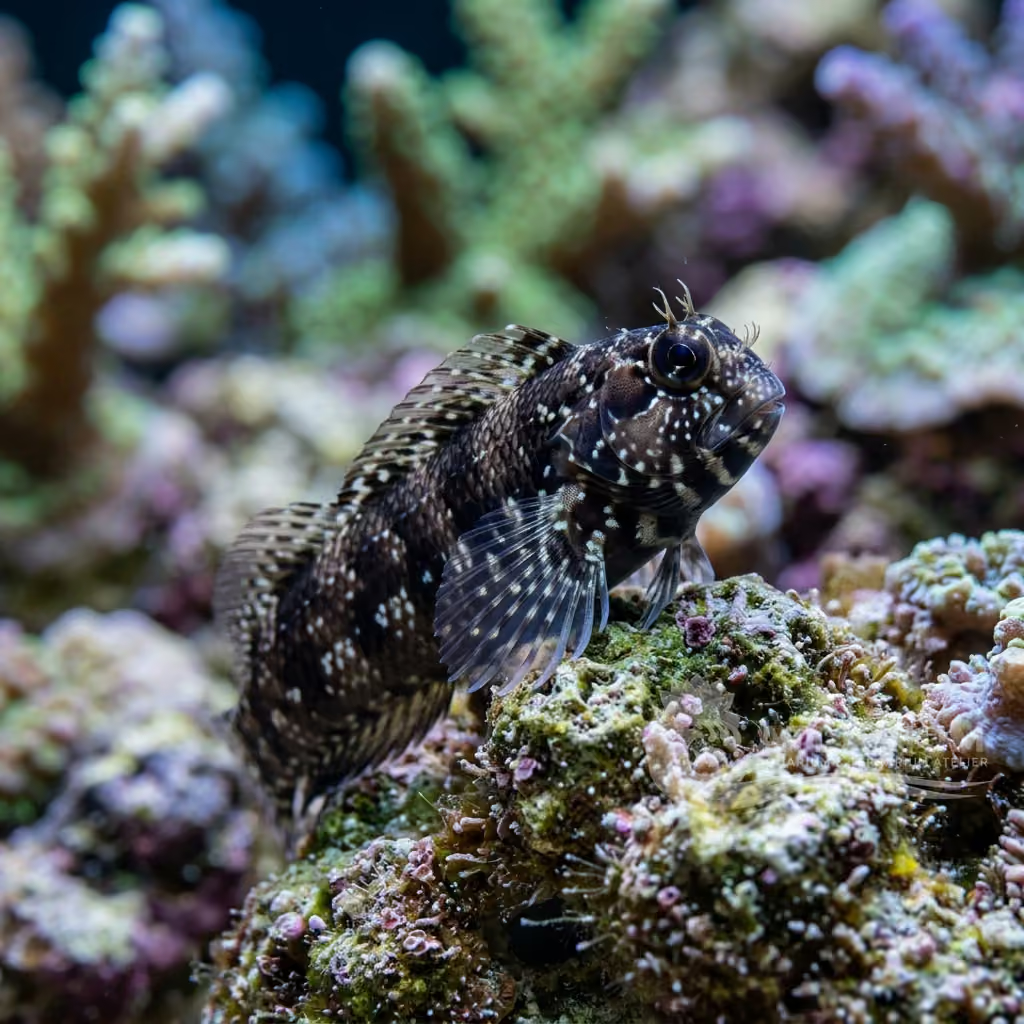
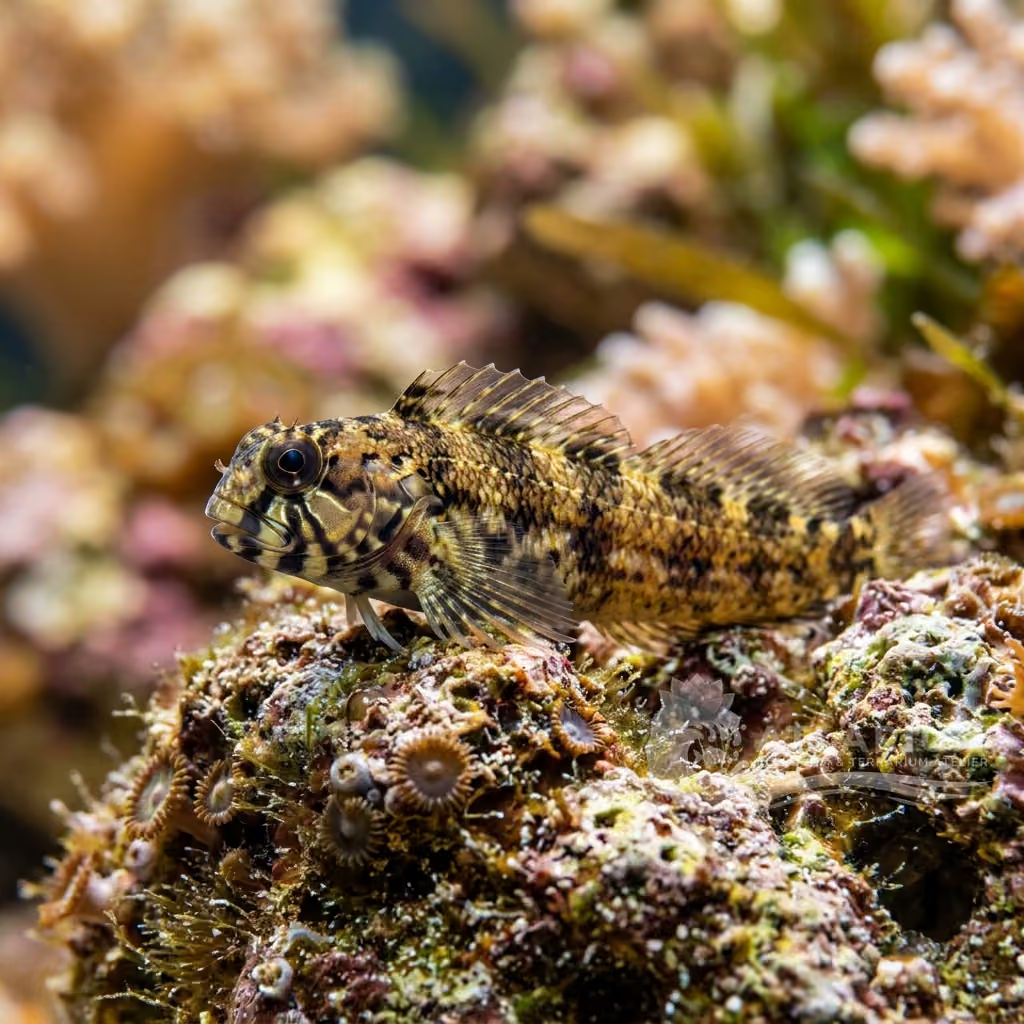
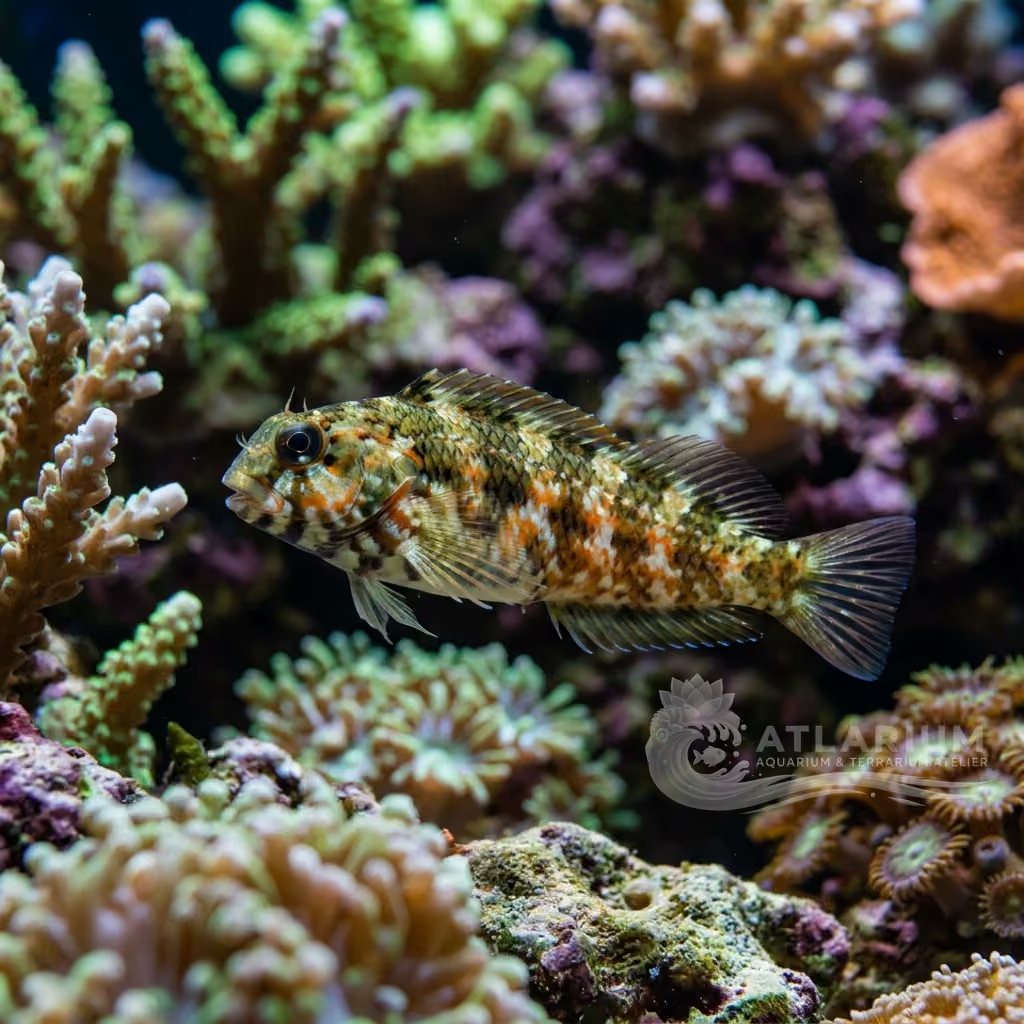
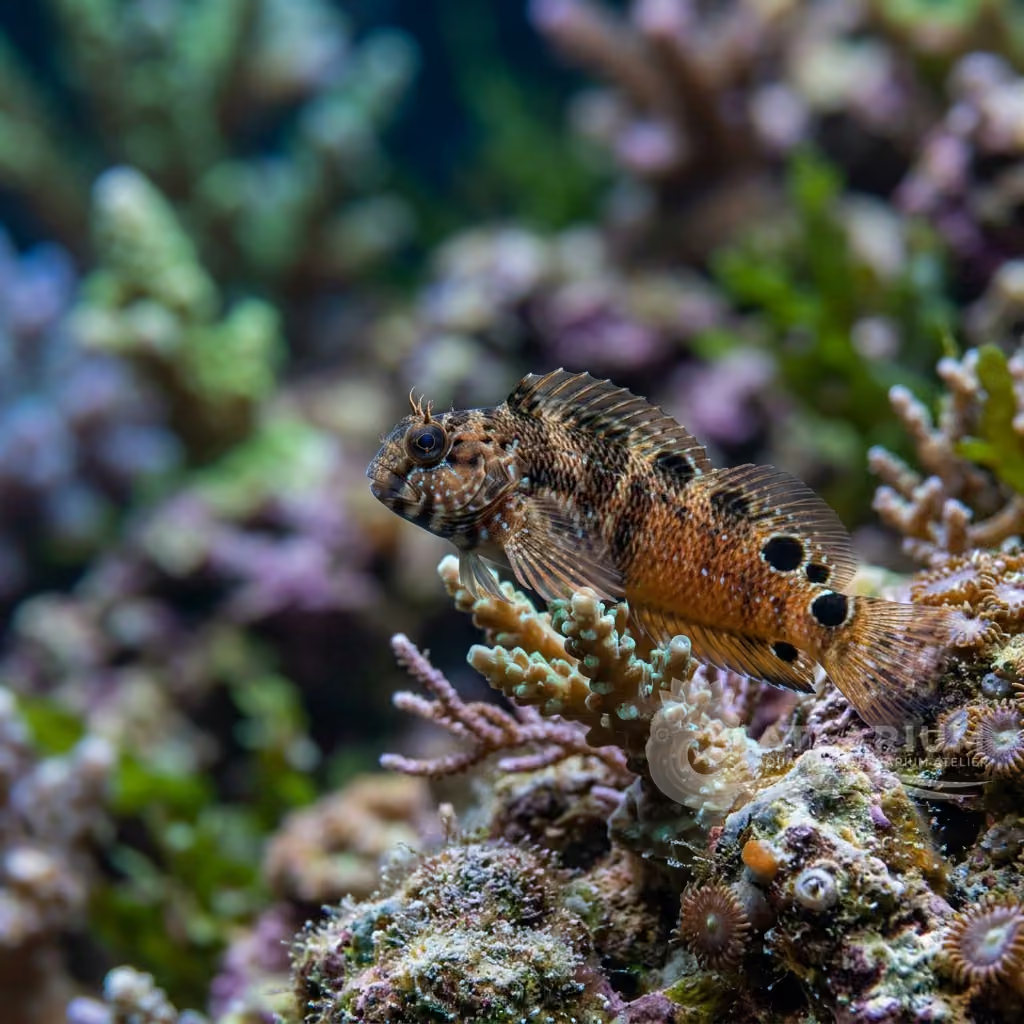
Patzner's Blenny
Salarias patzneri
A captivating benthic marine fish recognized for its outstanding algae-grazing capabilities and highly entertaining, curious rock behavior.
Wassertemperatur
22 - 26 °C
pH-Wert
8.1 - 8.4
Wassertyp
Meerwasser
Tankfüllstand
Unten und in der Mitte
Erwachsenengröße
5,5 cm
Mindesttankvolumen
>= 100 L
Mindestgruppe
>= 1
KH
8 - 12 dKH

Artbeschreibung
Geographical Origin and Habitat: Salarias patzneri is a benthic fish native to the warm waters of the Western Indo-Pacific, with populations primarily located throughout the Indonesian archipelago, the Philippines, and Micronesian reefs. It inhabits shallow coastal coral reefs, lagoons, and sun-lit rubble zones at depths ranging from 1 to 8 meters.
Taxonomy and Morphology: It belongs to the family Blenniidae. It features an elongated, cylindrical, and scale-less body covered in protective mucus. The head is large with high-set eyes that move independently and branched supraorbital cirri. It reaches a maximum adult length of about 7-8 centimeters in captivity, making it ideal for average tanks.
Social Behavior: It is a benthic and territorial fish that spends most of its time perched on live rock or inside small crevices it claims as its territory. It uses its pelvic fins to prop itself up and hop across the substrate. It displays strong territorial behavior towards conspecifics and other blennies of similar shape and size.
Coloration and Sexual Dimorphism: The coloration is highly cryptic, dominated by mottled shades of gray, brown, and white that allow it to blend seamlessly with the rocky environment. The eyes are mobile and expressive. There is no obvious external sexual dimorphism, except for minor differences in the anal fin spine structure of adult males.

Pflege, Zucht und Mitbewohner
Aquarium Setup: Requires a mature marine aquarium of at least 100 liters with a large amount of live rock. The rocks must be arranged to create numerous caves, perches, and crevices where the blenny can establish territories and rest. High-intensity lighting is highly recommended to promote the growth of natural microalgae.
Diet and Feeding: Diet is primarily herbivorous. In the wild, it feeds on microalgae and detritus (aufwuchs) which it scrapes off the rocks using its comb-like teeth. In the aquarium, it must be offered algae-based foods, spirulina flakes, dried nori sheets, and sinking herbivore pellets. It may occasionally accept frozen mysis or brine shrimp.
Water Quality: Maintain stable water parameters: temperature 24-28°C, pH 8.1-8.4, and specific gravity 1.020-1.025. Good water movement and efficient biological filtration are required to prevent nitrate buildup. Establish a regular photoperiod to ensure a continuous food source of algae on the glass and rocks.
Compatibility and Cohabitation: It is peaceful towards open-water swimming fish and is 100% reef-safe as it does not harm corals or sessile invertebrates. However, it will fight with other blennies or similarly shaped fish in small to medium tanks. It may also chase away fish that compete for the same natural algae food source on the rocks.
Aquarium Breeding: Reproduction in the home aquarium is extremely difficult. They are oviparous; the female deposits adhesive eggs in a rocky crevice or empty shell. The male guards the nest until the eggs hatch into planktonic larvae. Rearing these delicate larvae in captivity is rarely successful due to feeding difficulties.
Risks and Diseases: The primary risk is starvation if introduced into an aquarium that is too clean, sterile, or lacking natural algae growth on the rockwork. Additionally, when startled or pursued by aggressive tankmates, it may jump out of the aquarium, so a tight-fitting lid or mesh screen is essential.

Geografische Herkunft und Verbreitung
Salarias patzneri is a benthic fish native to the warm waters of the Western Indo-Pacific, with populations primarily located throughout the Indonesian archipelago, the Philippines, and Micronesian reefs. It inhabits shallow coastal coral reefs, lagoons, and sun-lit rubble zones at depths ranging from 1 to 8 meters.
Ursprung
Tropische Ozeane und RiffeSüd- und Südostasien

Fischprofil
- Temperament
- Semi-aggressive
- It is a docile and hard-working algae eater. It shows great curiosity and often watches the aquarist. It becomes aggressive only when defending its grazing territory from competitors.
- Diät
- Herbivore
- They are dedicated herbivores requiring copious amounts of microalgae. They need established live rock to forage throughout the day. Dried seaweed and spirulina flakes can be offered as supplements.
- Lebenserwartung
- 2-4 years
- Erwachsenengröße
- 5.5 cm
- Geschlechterverhältnis
- Solitary
- Keep only one specimen per aquarium to avoid severe territorial disputes. Only extremely large tanks can support more than one. Mixing with different species of blenny is also discouraged.
- Fütterungsfrequenz
- Twice daily
- They graze almost constantly on the aquarium glass and rocks. If supplemental feeding is necessary, offer food once daily. Observe their belly to ensure they are getting enough to eat.
- Bioload
- Low
- Patzner's blenny has a minimal bioload suitable for standard reef setups. Routine protein skimming manages their waste efficiently. Weekly water changes ensure a stable environment.
- Fluss
- Moderate
- They enjoy moderate to high water flow typical of reef environments. Strong currents help simulate their natural shallow-water habitats. They will cling to rocks in areas of high flow.
- Sprungrisiko
- Yes
- They possess a moderate risk of jumping out of the aquarium. It is highly recommended to use a mesh lid. They may become startled and leap from the surface.
- Reproduktion
- Oviparous
- Captive breeding is nearly impossible for the average aquarist. They are cavity nesters that produce pelagic larvae. Supplying the microscopic food for fry is the main hurdle.
- Kompatibilität & Tankkameraden
- Reef safe
- They are peaceful with most community reef fish. However, they are highly intolerant of other blennies and similar grazing fish. They will not bother corals or decorative invertebrates.
- Tankfüllstand
- Middle/Bottom
- This fish is completely bottom-dwelling and rock-perching. It moves by short, hopping swimming motions along the substrate. It rarely leaves the safety of the rockwork.

Wissenschaftliche Modelle & Parameter
FishBase
Zugang zu den offiziellen wissenschaftlichen Daten der Art
FishBase v25.04Daten synchronisiert am: 15.06.2026
- Trophäenniveau
- 2 ± 0 se
- Belastbarkeit
- Hoch (weniger als 15 Monate)
- Phylogenetische Einzigartigkeit (PD50)
- 0.5001
- Bayessche Längen-Gewichts-Beziehung
- a = 0.00776, b = 3
- AnfälligkeitGeringe Anfälligkeit (10 / 100)

Verwandte Arten
Empfehlungen gruppiert nach nahen Verwandten, Auswahl von Begleitern und ähnlicher Betreuung.