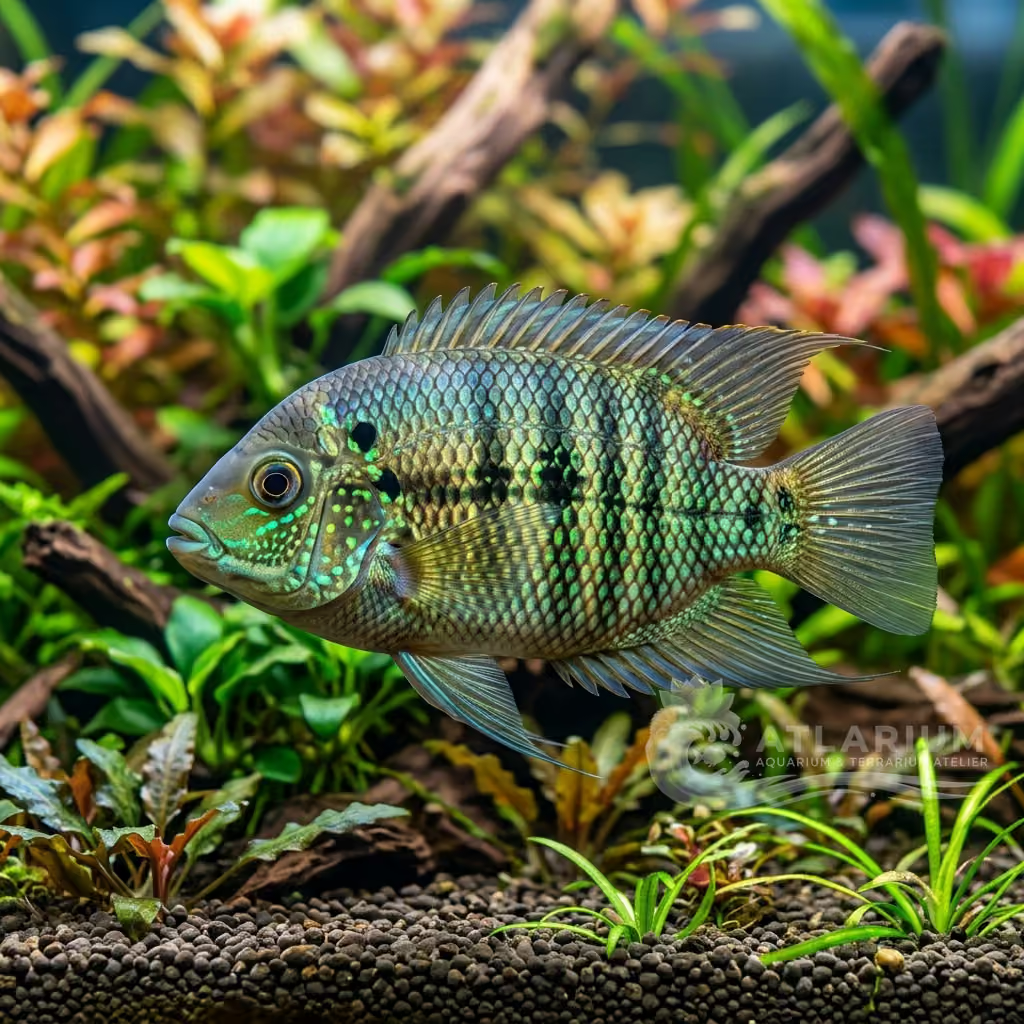
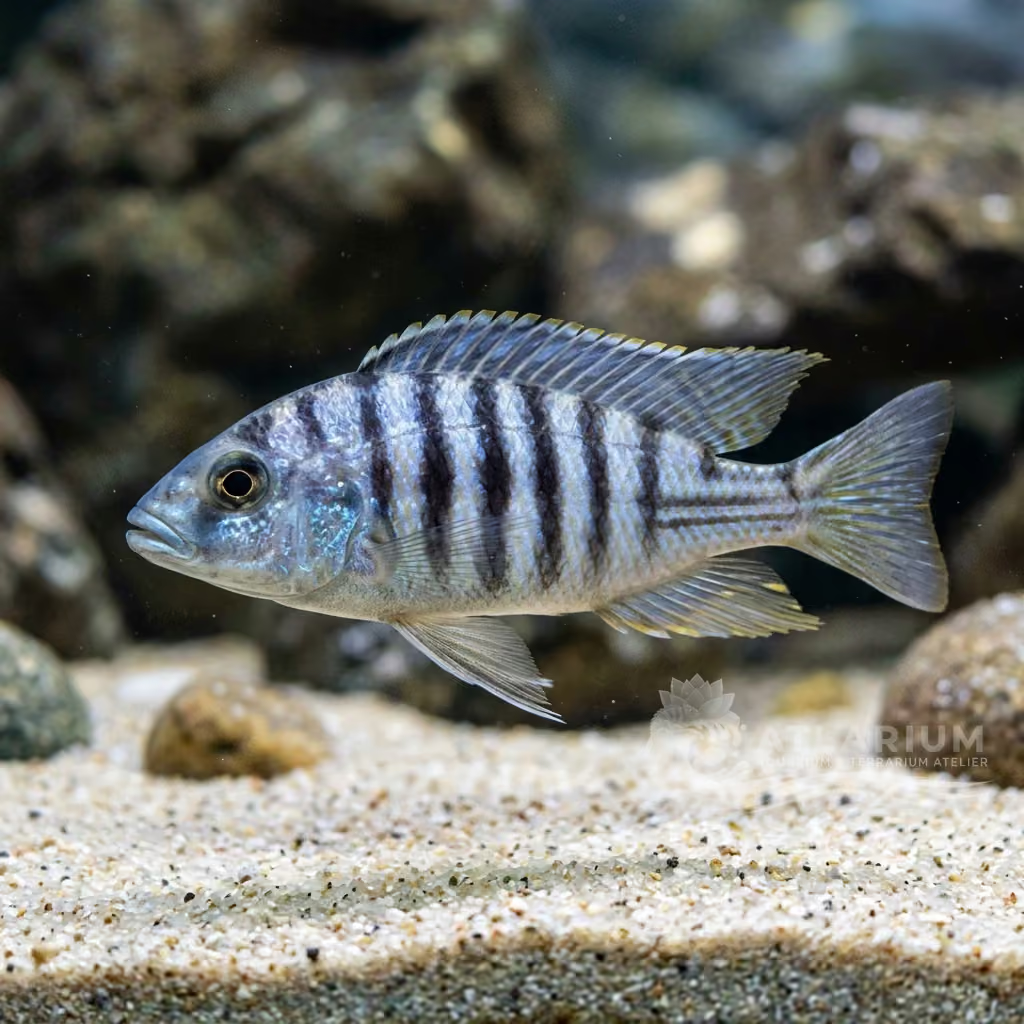
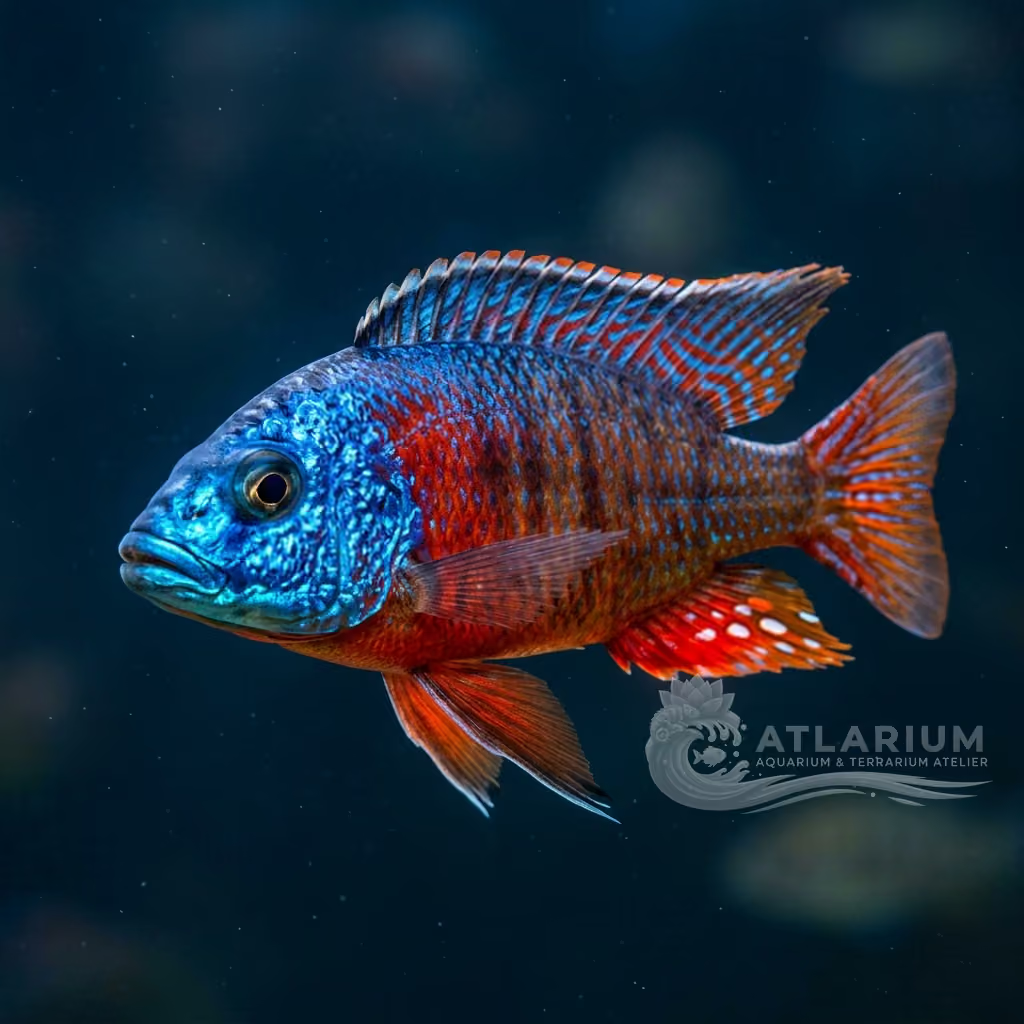
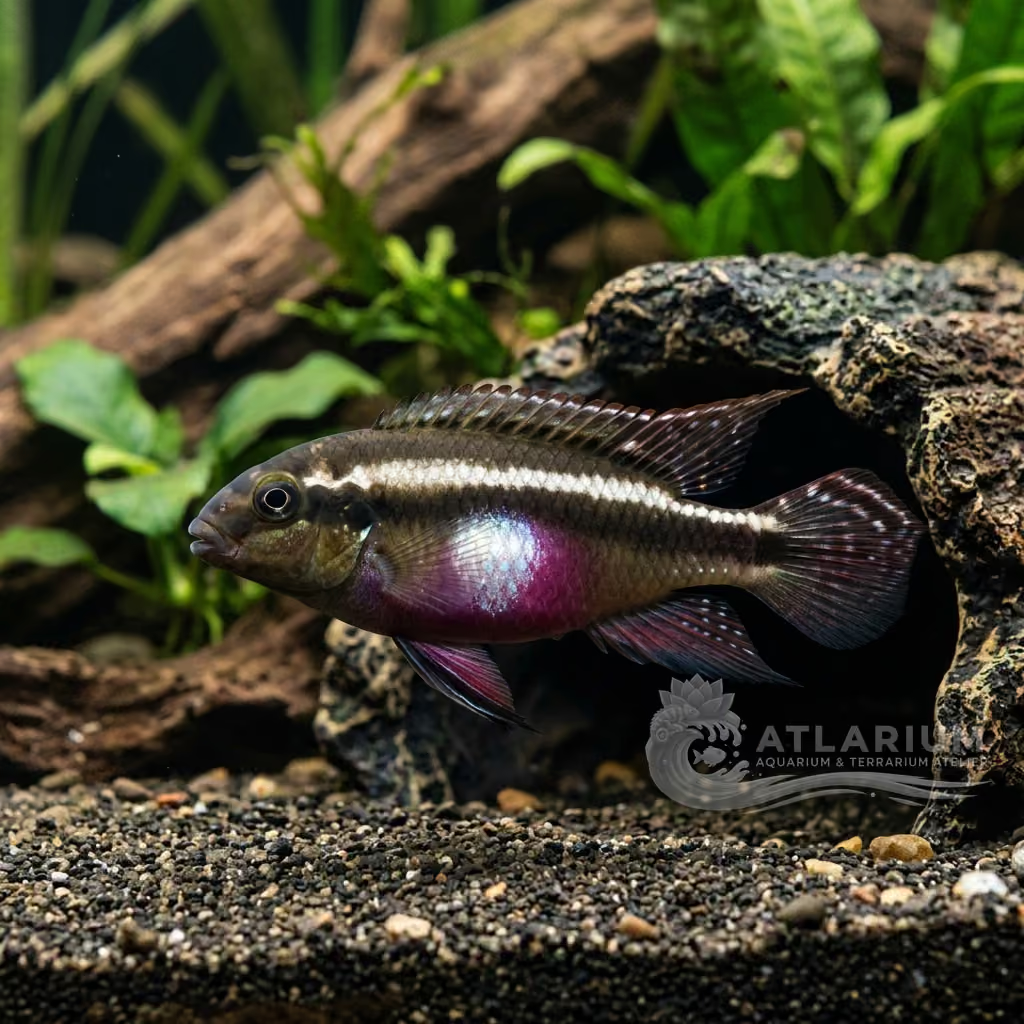
Walter's Cichlid
Neolamprologus walteri
A slender "Fairy Cichlid" from Lake Tanganyika featuring a subtle gray body with pointed fins. Known for exponential population explosions, it requires a spacious, rock-heavy tank.
Temperatura da água
23 - 26 °C
Valor de pH
7.5 - 9
Tipo de água
Água doce
Nível do tanque
Parte inferior
Tamanho adulto
6,5 cm
Volume mínimo do tanque
>= 250 L
Grupo mínimo
>= 1
GH
12 - 25 dGH
KH
10 - 20 dKH
TDS
280 - 575 ppm
Condutividade
438 - 898 uS/cm

Descrição da espécie
Geographical Origin and Habitat: Endemic to the southern extremes of Lake Tanganyika, Africa. This beautiful "Fairy Cichlid" selectively occupies highly structured, deeply vertical rocky reefs and submerged underwater cliffs, retreating into the pitch-black fissures of massive limestone formations at depths generally ranging from 10 to 25 meters (30-80 feet).
Taxonomy and Morphology: An extremely rare, highly aristocratic member of the famous brichardi complex (Fairy Cichlids) within the Neolamprologus genus. The walteri boasts the majestic morphology of its family: an exquisitely sleek, hydrodynamic, torpedo-shaped body, graced by the iconic "Lyretail". The extreme trailing tips of its caudal (tail), dorsal, and anal fins taper off into unbelievably long, delicate, flowing filaments. Fully grown, they hit around 8-9 cm (3.5 inches).
Social Behavior: It shares the hypnotic, highly advanced social instincts of its cousins. The walteri is a strict "Cooperative Breeder," naturally forming massive, dense, and utterly impenetrable multi-generational family colonies. The entire family unit (from older juveniles to fully grown adults) works together with terrifying military precision to zealously defend their rock wall, violently driving off any non-family intruder that dares approach the bunker.
Coloration and Sexual Dimorphism: The diagnostic key (separating it from N. brichardi and pulcher) is entirely chromatic: the base body is a delicate, pale pearlescent-gray or dark beige, but its flanks are intensely studded and speckled with a stunning, glowing golden-orange and icy-blue iridescence that flashes violently under the light. It noticeably lacks the thick, distinct black parenthesis or chevron gill markings of its cousins. Every single sweeping fin filament is edged in brilliant snow-white or neon blue. **Indistinguishable Dimorphism:** Males and females are completely identical to the naked eye; only the elderly Alpha male boasts outrageously exaggerated, trailing lyretail streamers.

Cuidado, criação e companheiros de tanque
Aquarium Setup: Due to the guaranteed exponential population explosion of the colony, the permanent minimum footprint is 120 cm long (4 feet / 65+ Gallons). The aquascape MUST be a solid, impenetrable, towering limestone fortress: dozens of pounds of stacked rocks reaching the water surface, creating a maze of deep, blind tunnels and crevices. A deep sand bottom is mandatory, as the family meticulously excavates defensive trenches at the base of the rocks. Plants are unnecessary. Excellent, crisp lighting is required to bring out their intricate, speckled iridescence.
Diet and Feeding: Intense micro-predators (zooplanktivores). In the water column surrounding the rocks, they methodically pick off microscopic organisms. Captive diets must fuel rapid, non-stop breeding: heavy, daily doses (while monitoring waste) of live baby brine shrimp (Artemia nauplii), premium frozen Mysis shrimp, cyclops, and high-end sinking carnivore micro-pellets. Avoid entirely vegetarian diets, which offer insufficient protein for colony growth.
Water Quality: Cast-iron Tanganyikan chemistry is mandatory: extreme mineral hardness (GH 15-20) and a pH permanently bolted between 8.3 and 9.0 (the generous use of crushed coral or aragonite sand is critical). Maintain a stable tropical temperature of 24-26°C (75-79°F). The sheer biomass of an exploding colony generates a horrific organic waste load: oversized biological canister filters and titanic, weekly water changes are your only absolute defense against a total colony wipeout via nitrate asphyxiation.
Compatibility and Cohabitation: A "Species-Only Tank" (N. walteri exclusively), starting with a young group of 6, is the only ethical and logical path. Inserting any other rock-dwelling cichlid (like Julidochromis) is a guaranteed death sentence for the intruder, who will be relentlessly mobbed and beaten to death by the entire coordinated walteri family. In massive tanks (150+ cm / 5+ feet), they will only ignore open-water, ultra-fast pelagic schools like Cyprichromis, provided they stay near the water surface.
Aquarium Breeding: A biological marvel (Secretive Cave Spawner). The bonded Alpha pair glues dozens of tiny eggs to the ceiling of a hidden crevice. The true miracle is the "layered nursery": you will witness 3mm microscopic fry fiercely guarded not only by the parents but by a standing army of older, 1-inch teenage "helpers" (older siblings) from previous spawns. Within a few months, the tank population will effortlessly double or triple.
Risks and Diseases: 1. The Catastrophic "Decor Shake-up": The most fatal mistake an owner can make is rearranging the rocks during cleaning. Moving a rock shatters the family's invisible, memorized territorial borders. Total chaos erupts: the fish fail to recognize each other, and a bloody civil war ensues, brutally decimating the 50-fish colony overnight. 2. Chemical Collapse: A pH crash below 7.8 violently destroys their osmoregulatory system, killing them in 24 hours. 3. Overcrowding Stunting: A tank saturated with 100 fish, if not actively thinned (sold/traded), will skyrocket nitrates, permanently halting the physical growth and causing bone deformities in all newborn fry.

Origem e distribuição geográfica
Endemic to the southern extremes of Lake Tanganyika, Africa. This beautiful "Fairy Cichlid" selectively occupies highly structured, deeply vertical rocky reefs and submerged underwater cliffs, retreating into the pitch-black fissures of massive limestone formations at depths generally ranging from 10 to 25 meters (30-80 feet).
Origem
África e Madagascar

Perfil de peixe
- Temperamento
- Semi-aggressive
- Relatively peaceful compared to larger cichlids, but fiercely territorial around their specific cave. They will boldly defend their tiny territory against much larger fish. Providing visual barriers between caves helps minimize disputes with neighbors.
- Dieta
- Carnivore
- A micro-predator that requires small, protein-rich foods. Offer a staple of crushed high-quality flakes alongside cyclops, daphnia, and baby brine shrimp. They will continuously graze on micro-fauna found on rocks and substrate.
- Expectativa de vida
- 5-8 years
- Tamanho adulto
- 6.5 cm
- Proporção sexual
- Pair
- Best kept in dedicated male-female pairs to ensure harmony. Two males in a small tank will fight fiercely over limited cave real estate. Buying a group of six and letting them pair off naturally works perfectly.
- Frequência de alimentação
- Twice daily
- Requires small, frequent feedings, about two to three times a day. Their small stomachs cannot process large meals efficiently. Remove any uneaten food quickly to maintain the pristine water conditions they need.
- Carga biológica
- Low to Medium
- A small species that contributes minimally to the overall bioload of the aquarium. Even so, pristine water quality is a strict requirement for their longevity. Routine water maintenance and good biological filtration are non-negotiable.
- Fluxo
- Stagnant
- Prefers a gentle to moderate current that ensures high oxygen levels without blowing them around. A sponge filter or a canister filter with a spray bar is ideal. They often seek refuge in calm rocky crevices to rest.
- Risco de salto
- Yes
- They are prone to darting upwards and jumping when startled by abrupt lighting changes. A secure cover is highly recommended to keep them safe. Dimming the lights slowly can help reduce startling behavior.
- Reprodução
- Oviparous
- Cave and crevice spawners that form tight pair bonds. The female will typically stay with the eggs and larvae while the male aggressively defends the outer perimeter. The fry are extremely small and need powdered fry food initially.
- Compatibilidade e companheiros de tanque
- With caution
- Ideal for a Tanganyikan community tank featuring other small to medium, relatively peaceful species. They do well alongside Cyprichromis or small shell-dwellers. Large, aggressive cichlids will easily outcompete and possibly prey upon them.
- Nível do tanque
- Bottom
- Strictly bottom dwellers that associate closely with rocks and shells. They will rarely venture into the upper half of the water column. Elaborate rockwork forming numerous small caves is essential for their well-being.

Modelos e parâmetros científicos
FishBase
Acesso aos dados científicos oficiais da espécie
FishBase v25.04Dados sincronizados em: 15/06/2026
- Nível trófico
- 3,4 ± 0,5 se
- Resiliência
- Alta (menos de 15 meses)
- Unicidade filogenética (PD50)
- 0.5
- Relação bayesiana comprimento-peso
- a = 0.01905, b = 3.01
- VulnerabilidadeVulnerabilidade baixa (10 / 100)

Espécies relacionadas
Recomendações agrupadas por parentes próximos, escolhas de acompanhantes e cuidados semelhantes.