Microsorum pteropus 'Crisped Leaves'
Microsorum pteropus 'Crisped Leaves'
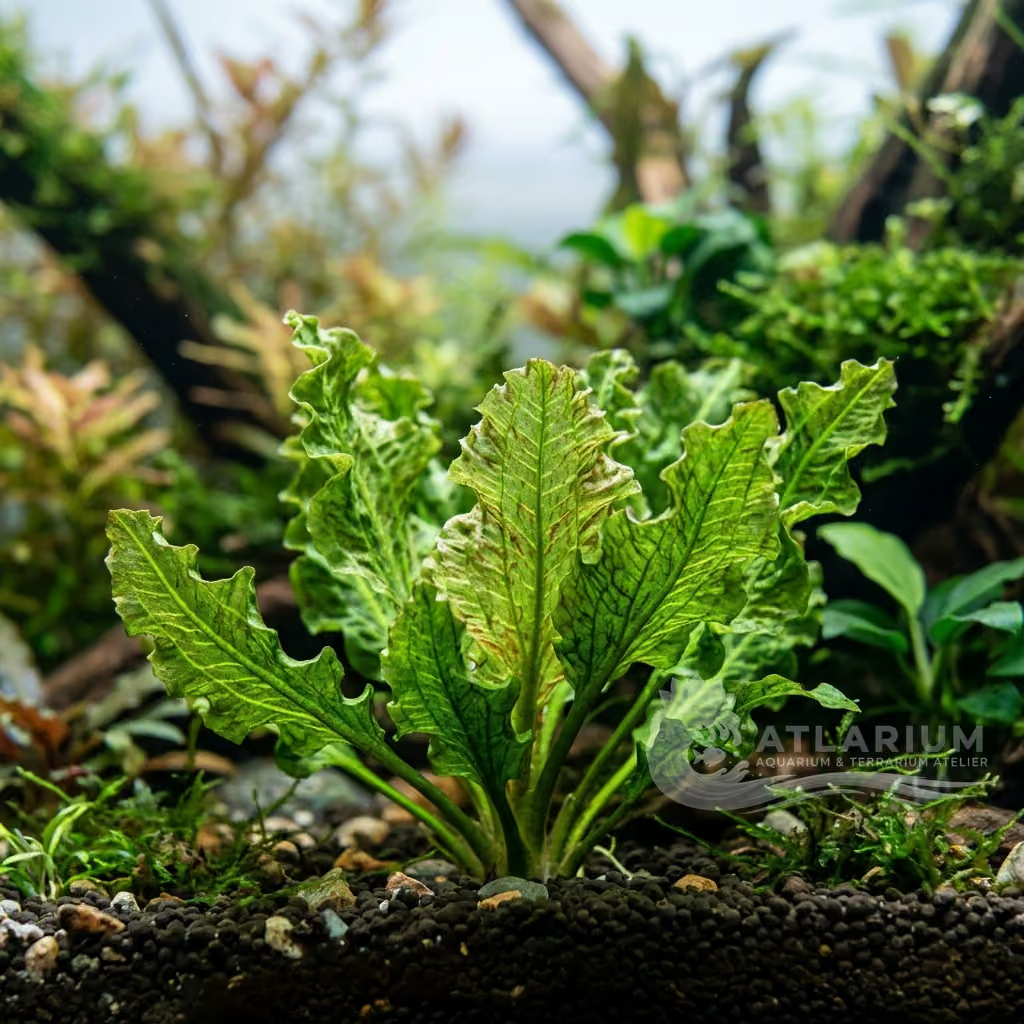
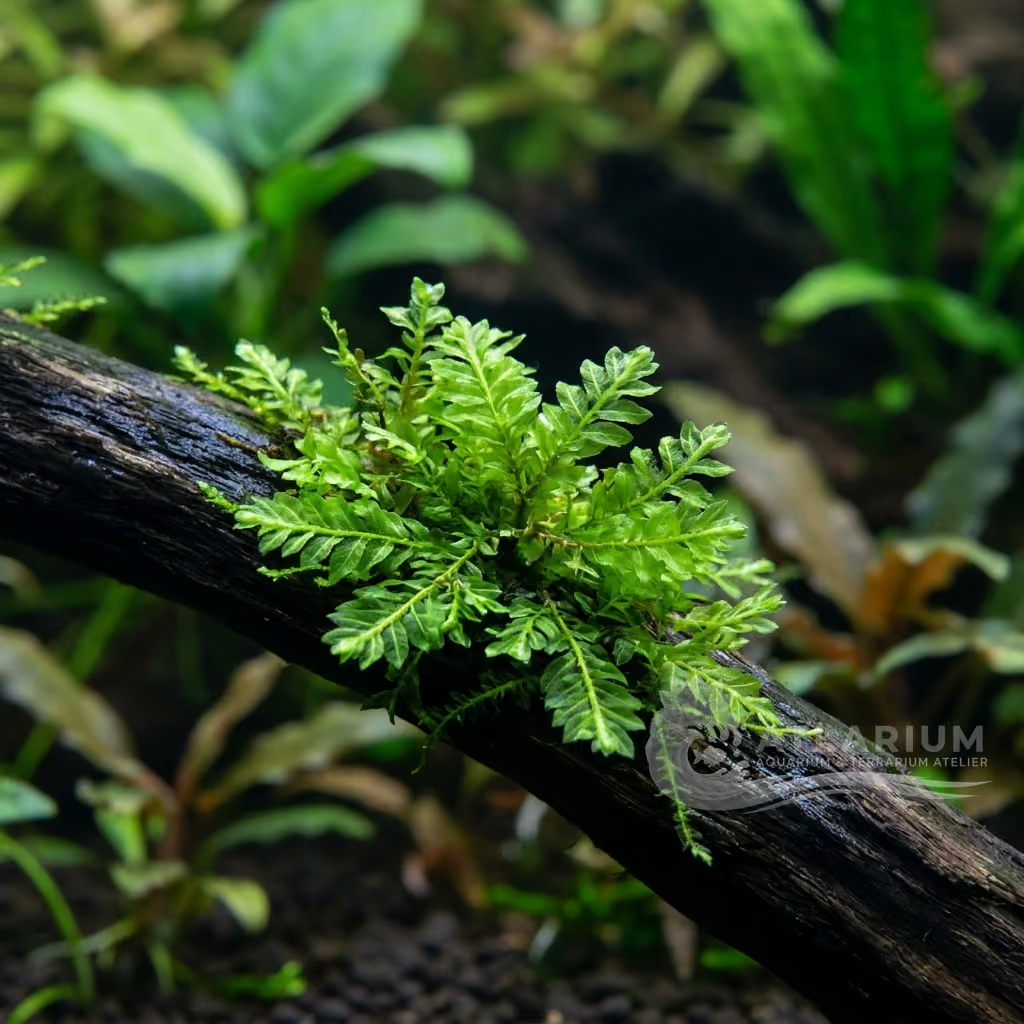
Microsorum pteropus 'Crisped Leaves' is a captivating variant of the Java Fern, cherished for its distinctively ruffled foliage that introduces unique texture to any aquarium. This robust and undemanding plant is an excellent choice for aquarists of all skill levels, providing both an attractive decorative element and functional structure in the midground.
Température de l’eau
22 - 28 °C
Valeur du pH
6 - 7.5
Type d'eau
Eau douce
Lumière
Moyenne - Élevée
CO2
Moyenne - Élevée
KH
2 - 10 dKH

Description de l'espèce
Geographical Origin and Habitat: While the parent species, Microsorum pteropus, originates from Southeast Asia, growing epiphytically on wood and rocks along waterways, the 'Crisped Leaves' variety is a horticultural cultivar developed through selective breeding. Nevertheless, it thrives in conditions that mimic its ancestral habitat, preferring slow-moving, nutrient-rich water. Its epiphytic nature makes it perfectly suited for attachment to hardscapes rather than being buried in the substrate.
Taxonomy & Genetics: Microsorum pteropus 'Crisped Leaves' belongs to the Polypodiaceae family, a large group of ferns known for their resilience and adaptability. This specific cultivar stands out due to a genetic mutation that causes the curling and undulation of the leaf margins, giving it a distinctive appearance. Its classification underscores its close relationship with other Java Fern variants while maintaining unique morphological traits.
Physical Structure: This Java Fern variety features a creeping rhizome from which its leaves emerge, capable of reaching considerable sizes depending on aquarium conditions. The leaves are lanceolate and characterized by strongly wavy or ruffled margins, a defining feature that gives it its name. Like all Microsorum, it develops small adventitious plantlets directly on older or damaged leaves, offering a natural and visually interesting method of propagation.
Color & Texture: The leaf color ranges from bright light green to deep dark green, with new leaves often displaying a lighter hue before maturing. The texture is notably corrugated and crinkled, especially along the edges of the leaf blades, creating a three-dimensional effect and a strong visual contrast compared to smooth-leaved plants. This irregular surface also provides excellent refuge for fry and beneficial microorganisms.

Soins, reproduction et cohabitation
Lighting & CO2: Microsorum pteropus 'Crisped Leaves' adapts well to medium lighting, typical of a well-maintained aquarium, although it can also tolerate lower light conditions. Excessive light intensity can promote algae growth on its leaves, compromising its aesthetics and health. While not strictly necessary for survival or decent growth, CO2 supplementation can significantly accelerate its growth rate and promote lusher, more robust foliage.
Nutrition & Substrate: As an epiphytic plant, Microsorum pteropus 'Crisped Leaves' absorbs nutrients primarily from the
Water Chemistry: This fern is remarkably tolerant of a wide range of water parameters, making it suitable for many community aquariums. It prefers temperatures between 20 and 28 C, with a slightly acidic to neutral pH (6.0-7.5) and carbonate hardness (KH) between 2 and 12. Stability of parameters is more important than specific values, and extreme fluctuations should be avoided to maintain plant health.
Space Management & Placement: Due to its epiphytic nature, Microsorum pteropus 'Crisped Leaves' should be anchored to driftwood, rocks, or other decorations, preferably in the midground where its ruffled leaves can create a focal point. It is advisable to allow sufficient space around it for the leaves to expand without excessively shading other plants below. As it grows, it can form dense clumps, offering shelter and structural enrichment to the aquatic environment.
Pruning: Pruning Microsorum 'Crisped Leaves' is relatively straightforward and necessary to maintain the desired shape and prevent excessive density. It primarily involves removing older, damaged, or yellowing leaves by cutting them at the base of the rhizome. This practice also encourages the growth of new, healthier, and more vigorous leaves, improving the overall appearance of the plant and preventing debris accumulation.
Risks & Diseases: Microsorum are generally resilient but can suffer from "Java Fern Disease" or melting, characterized by leaves becoming translucent and disintegrating, often linked to stress or poor water conditions. Another risk is excessive algae growth on leaves under conditions of too intense light or nutrient imbalances. The rhizome should never be buried, as this inevitably leads to rot and the plant's demise.

Origine et répartition géographiques
While the parent species, Microsorum pteropus, originates from Southeast Asia, growing epiphytically on wood and rocks along waterways, the 'Crisped Leaves' variety is a horticultural cultivar developed through selective breeding. Nevertheless, it thrives in conditions that mimic its ancestral habitat, preferring slow-moving, nutrient-rich water. Its epiphytic nature makes it perfectly suited for attachment to hardscapes rather than being buried in the substrate.
Origine
Asie du Sud et du Sud-EstSélection et cultivars

Profil de plante
- Emplacement
- Plan intermédiaire
- It is ideally placed in the midground or background, attached to rocks, driftwood, or decorations. Its distinct leaf shape provides an excellent focal point or contrasting texture. Over time, it will form dense clusters that offer great hiding spots for aquatic life.
- Forme botanique
- Rhizome, Épiphyte
- It is an epiphytic fern characterized by a thick horizontal rhizome and distinct elongated leaves with highly crinkled, crisped edges. The root system consists of dark, hair-like roots designed primarily for anchoring. This specific variant has a uniquely textured appearance due to its ruffled margins.
- Croissance
- Moyenne
- Like most epiphytic ferns, it has a slow growth rate. Leaves develop gradually from the creeping rhizome over weeks and months. This slow pace makes it a low-maintenance choice that requires very infrequent pruning.
- Substrat
- Aucun
- This plant should never be planted directly into the substrate. The rhizome must remain exposed to the water column, otherwise it will rot and the plant will die. It is best attached to hardscape materials where its roots can anchor onto rough surfaces.
- Fertilisation de la colonne d'eau
- Recommandée
- Water column fertilization is the primary method of feeding this plant. A light, regular dose of a complete liquid fertilizer is usually sufficient for optimal health. Being a slow grower, it does not rapidly deplete nutrients from the water.
- Fertilisation racinaire
- Aucune
- Root fertilization is completely unnecessary and ineffective for this species. Because it is an epiphyte and not planted in the soil, it cannot access nutrients in the substrate. All feeding should be done via liquid fertilizers.
- Taille
- Occasionnelle
- Maintenance is simple and involves removing dead or declining leaves at the base. Avoid cutting the leaves themselves, as they will not regrow from the cut. Removing older leaves stimulates the production of new growth.
- Propagation
- Division
- Propagation is very easy and occurs naturally through two methods. The rhizome can be cut into smaller pieces, each with at least a few leaves, and reattached elsewhere. Alternatively, small plantlets will naturally develop on the tips or undersides of older leaves and can be detached when roots form.
- Sensibilité
- Modérée
- It is very adaptable and hardy, handling various water conditions with ease. In strongly lit aquariums, its slow-growing leaves can become a magnet for algae. Ensure good flow to keep detritus from settling on the textured leaves.
- Rôle dans le décor
- Épiphyte, Plan intermédiaire
- It adds incredible texture and detail to the midground of an aquascape. The wavy leaves break up the monotony of straight-edged plants. It is highly valued for creating a wild, natural look on wood and stone.

Espèces associées
Recommandations regroupées par proches parents, compagnons et soins similaires.