Plagiochila integerrima
Plagiochila integerrima
Plagiochila integerrima is a very slow-growing aquatic liverwort, ideally placed in the midground of an aquascape, where it contributes to intricate and detailed layouts. Its delicate structure and modest light requirements make it suitable for naturalistic designs that prioritize stability and subtle textures.
Température de l’eau
22 - 28 °C
Valeur du pH
6 - 7.5
Type d'eau
Eau douce
Lumière
Low to Medium
CO2
Moyenne - Élevée
KH
2 - 10 dKH

Description de l'espèce
Geographical Origin and Habitat: Plagiochila integerrima, like many species within the Plagiochila genus, typically originates from humid tropical and subtropical environments where it thrives under high moisture conditions. It is often found as an epiphyte or epilith, adhering to damp tree trunks, rocks, and mineral substrates near water bodies, waterfalls, or within dense rainforests. This natural habitat indicates its preference for stable, clean aquatic conditions in an aquarium, mimicking the oligotrophic and well-oxygenated waters of its native regions.
Taxonomy & Genetics: Belonging to the family Plagiochilaceae, Plagiochila integerrima is classified as a "leafy liverwort," a group of bryophytes distinguished from true mosses by their simpler organization and the absence of true stems and differentiated leaves. Liverworts are non-vascular plants that reproduce via spores and fragmentation, exhibiting a life cycle dominated by the gametophyte stage. Its classification highlights an ancient and distinct evolutionary lineage within the plant kingdom, specifically adapted to moist environments.
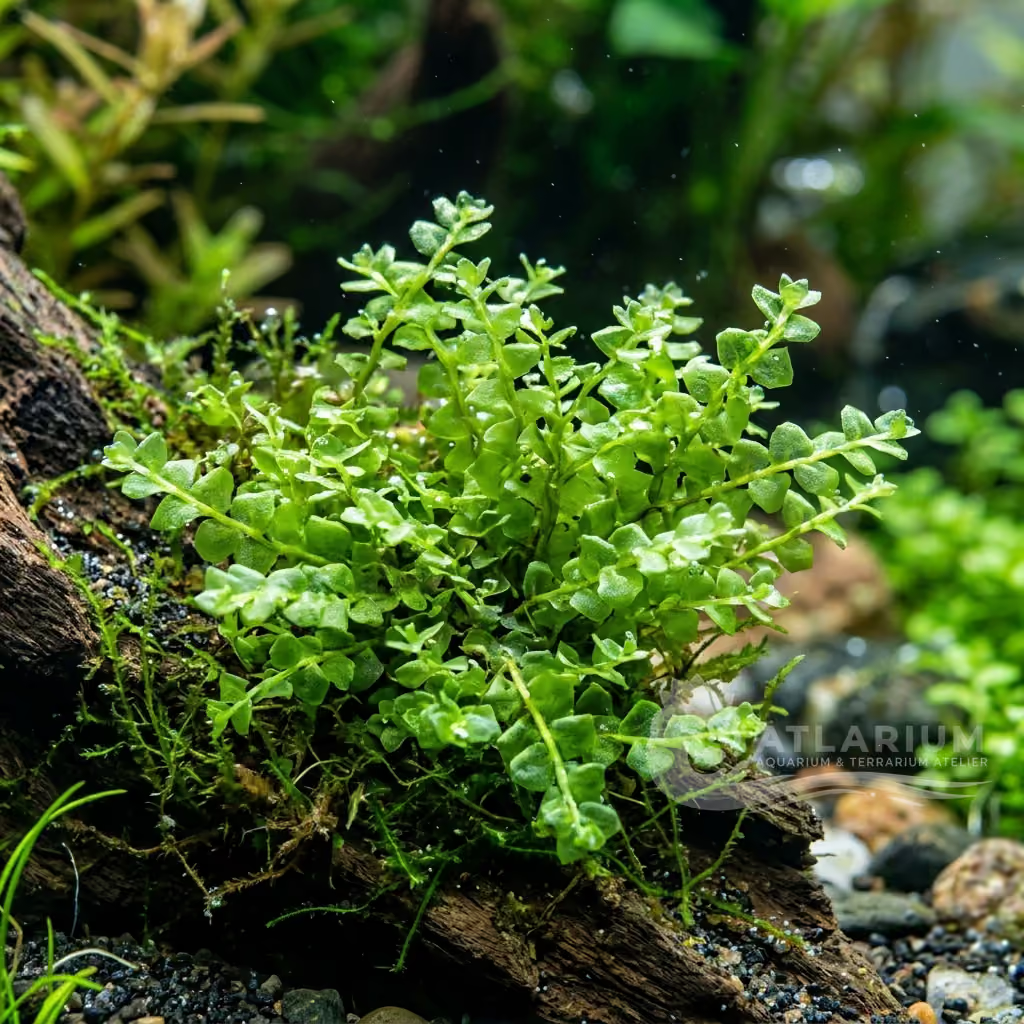
Physical Structure: The physical structure of Plagiochila integerrima is characterized by small "leaves" (more accurately, lobes) that develop laterally along a thin, creeping or erect thallus, creating a delicate and feathery appearance. These lobes are often imbricated and feature smooth margins, distinctive of its epithet "integerrima." Unlike vascular plants, it does not possess a true root system but attaches to surfaces using filamentous rhizoids that primarily serve an anchoring function, absorbing nutrients directly from the surrounding water across the entire thallus surface.
Color & Texture: This liverwort typically displays a bright green or slightly translucent coloration, which can vary in intensity depending on lighting conditions and the plant's overall health. Its texture is exceedingly fine and delicate, giving it a soft, velvety appearance underwater. The compact growth and finely structured lobes create a visual effect of density and depth, making it an excellent choice for naturalistic detailing in an aquascape.

Soins, reproduction et cohabitation
Lighting & CO2: Plagiochila integerrima thrives under low to medium lighting conditions, making it an excellent choice for aquariums with less intense light requirements or for shaded areas within the layout. Excessive light can inhibit its growth or promote algal development on its surface, compromising its health. While CO2 injection is not strictly necessary for its survival given its very slow growth rate, a gentle supply can encourage more efficient metabolism and more vigorous growth, especially in densely planted tanks.
Nutrition & Substrate: As an aquatic bryophyte without a true root system, Plagiochila integerrima absorbs all nutrients directly from the
Water Chemistry: This liverwort prefers stable and clean water conditions. Maintaining the temperature between 20 and 28 degrees Celsius is ideal for its growth, although it tolerates brief fluctuations. Carbonate hardness (KH) values should be kept within the 2-12 range, while the optimal pH is between 6.0 and 7.5, reflecting its preference for slightly acidic to neutral waters. Stability in these parameters is more critical than specific values at the extremes of the range, as bryophytes are sensitive to abrupt changes in their aquatic environment.
Space Management & Placement: Plagiochila integerrima is excellent for foreground or midground placement in the aquarium, where its very slow growth can be utilized to create delicate details and a sense of depth. It can be attached with thin fishing line or cyanoacrylate glue to rocks and driftwood, where it will naturally adhere over time. Its small size and controlled growth make it ideal for small to medium-sized layouts, allowing it to add texture and visual complexity without rapidly overgrowing surrounding areas.
Pruning: Given its very slow growth rate, pruning of Plagiochila integerrima is rarely necessary and usually limited to removing old, damaged, or overly long sections to maintain the desired shape. Light trimming can be performed to encourage denser, more compact growth. It is important to use sharp scissors to avoid damaging the plant's delicate tissue and to only remove portions that interfere with the overall aquascape aesthetics or show signs of deterioration.
Risks & Diseases: Primary risks for Plagiochila integerrima include excessive algae growth, especially under too intense light or unbalanced nutrients, which can smother the plant. It is also susceptible to "melting" if exposed to abrupt changes in water conditions or harsh chemicals. Lack of specific nutrients, particularly micronutrients, can lead to faded coloration or stunted growth, highlighting the importance of a regular and balanced fertilization regimen.

Origine et répartition géographiques
Plagiochila integerrima, like many species within the Plagiochila genus, typically originates from humid tropical and subtropical environments where it thrives under high moisture conditions. It is often found as an epiphyte or epilith, adhering to damp tree trunks, rocks, and mineral substrates near water bodies, waterfalls, or within dense rainforests. This natural habitat indicates its preference for stable, clean aquatic conditions in an aquarium, mimicking the oligotrophic and well-oxygenated waters of its native regions.
Origine
Afrique et Madagascar

Profil de plante
- Emplacement
- Plan intermédiaire
- This plant is highly versatile and is best placed in the foreground or midground areas. Attaching it to wood or stone creates a very natural, mature aesthetic in the aquascape. Careful placement in areas with gentle to moderate flow prevents debris accumulation. It can also be used to soften harsh transitions between hardscape elements.
- Forme botanique
- moss / liverwort or fern prothallium
- Botanically, Plagiochila integerrima is characterized by delicate, leaf-like structures on creeping stems. It develops a complex network of branching shoots that form a visually appealing cushion. Its fine texture provides an excellent contrast to broader-leaved species. This dense structure also offers ideal hiding spaces for shrimp and fry.
- Croissance
- Very slow
- The growth rate is generally slow to moderate, depending heavily on light intensity and CO2 availability. With supplemental CO2 and strong lighting, it will form dense, thick clumps much faster. In lower tech setups, it grows steadily but requires far less maintenance. Periodic thinning is beneficial to ensure light reaches the underlying layers.
- Substrat
- Aucun
- As an epiphyte, Plagiochila integerrima does not depend on a nutrient-rich substrate for survival. It prefers to be attached directly to hardscape materials such as porous rocks or driftwood. If placed on the substrate, ensure it is resting on the surface rather than buried, as burying will cause severe rot. A coarse surface allows its rhizoids to anchor securely.
- Fertilisation de la colonne d'eau
- Recommandée
- Column fertilization is the primary method of delivering essential nutrients to Plagiochila integerrima. Since it lacks a true root system, it absorbs all required elements through its leaf surfaces. A comprehensive liquid fertilizer containing potassium, trace elements, and moderate nitrates is ideal. Consistent dosing yields the most stable and attractive growth.
- Fertilisation racinaire
- Aucune
- Root tabs and nutrient-rich substrates provide absolutely no benefit to this specific plant. It is entirely incapable of extracting nutrients buried within the soil. Do not attempt to bury it with fertilizer tabs. All nutritional focus should remain strictly on the water column.
- Taille
- Occasionnelle
- Trimming Plagiochila integerrima requires a careful approach to encourage bushy and attractive regrowth. Use sharp aquascaping scissors to make clean cuts just above a healthy set of leaves or nodes. Regular pruning prevents the lower portions from becoming shaded and bare. The cuttings can often be replanted to propagate the species further.
- Propagation
- Boutures
- Propagation is incredibly straightforward and relies on simple mechanical division. By carefully tearing or cutting a clump into smaller sections, you create multiple new plants. These new pieces can be tied or glued to new hardscape locations. Under favorable conditions, the separated clumps will rapidly attach and resume their outward growth.
- Sensibilité
- Modérée
- Plagiochila integerrima can be somewhat sensitive to sudden fluctuations in water parameters, particularly large pH or temperature swings. Algaecides and certain chemical treatments should be used with extreme caution. It requires a stable environment with consistent CO2 levels to prevent melting. Maintaining excellent water quality through regular changes is essential for its well-being.
- Rôle dans le décor
- Épiphyte, Nano
- In terms of aquascaping, Plagiochila integerrima plays a vital role as a structural or accent element. Its liverwort nature and translucent green appearance make it perfect for creating focal points or softening hardscape lines. By grouping several stems or patches together, you can achieve a dense and visually striking effect. It seamlessly bridges the gap between different zones in the aquarium.

Espèces associées
Recommandations regroupées par proches parents, compagnons et soins similaires.