Microsorum pteropus "Red"
Microsorum pteropus "Red"
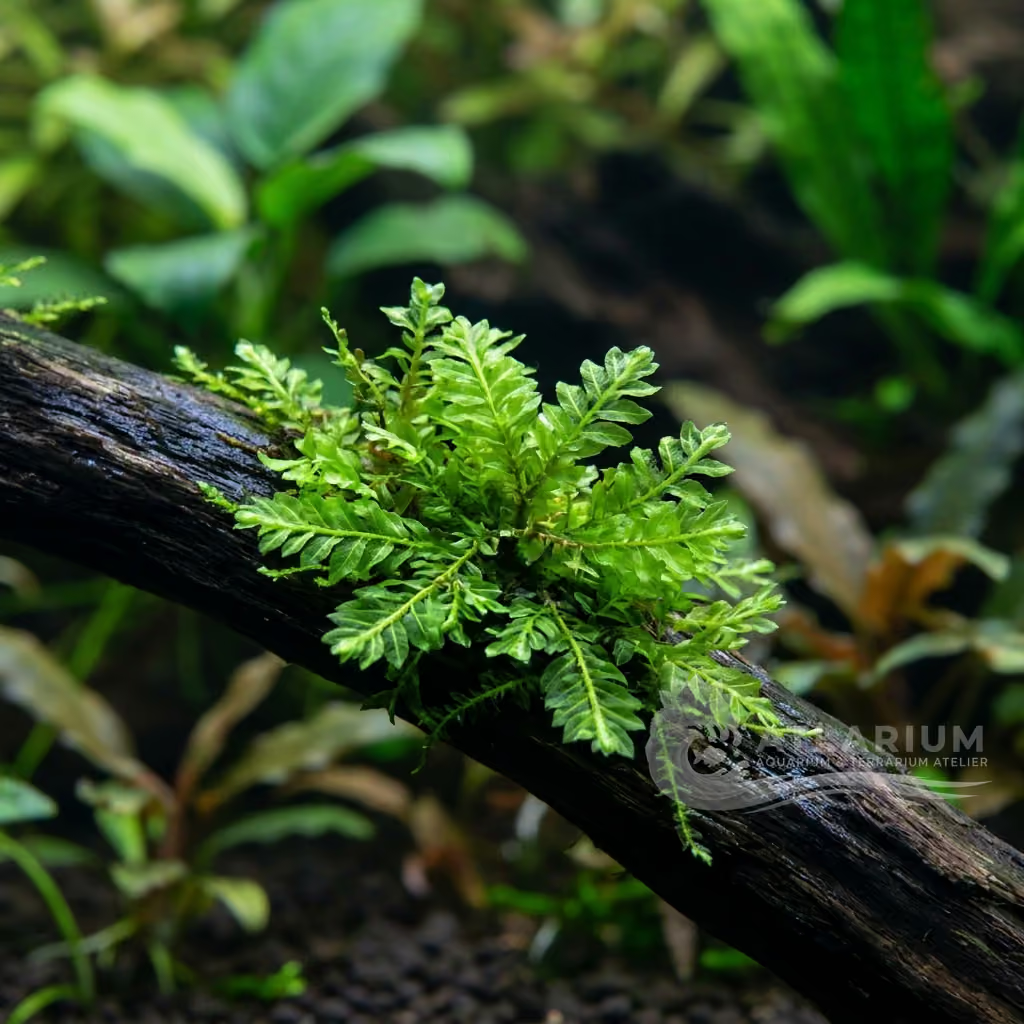
Microsorum pteropus "Red" is a slow-growing, robust fern ideal for midground placement, renowned for its unique reddish hues under optimal conditions. As an epiphyte, it thrives when attached to hardscape, adding distinct texture and color to any aquascape.
Température de l’eau
4 - 30 °C
Valeur du pH
5 - 8
Type d'eau
Eau douce
Lumière
Low to High
CO2
Élevée
KH
0 - 14 dKH

Description de l'espèce
Geographical Origin and Habitat: Microsorum pteropus "Red", while a cultivated variety, originates from the wild species Microsorum pteropus, indigenous to Southeast Asia, particularly regions like Thailand, Malaysia, and Indonesia. In its natural habitat, this fern typically grows as a rheophyte, clinging firmly to submerged or partially submerged rocks and driftwood along streams and rivers. These environments are characterized by flowing water and high humidity, conditions that have shaped its remarkable resilience and adaptability, even in an aquarium setting.
Taxonomy & Genetics:
Physical Structure: The physical structure of Microsorum pteropus "Red" is typical of Java Ferns, characterized by a creeping, often dark and robust rhizome, from which leaves and roots primarily used for anchoring emerge. The leaves are lanceolate or spatulate, with a leathery texture and a prominent central vein extending along the entire length of the blade. Plantlets, tiny miniature ferns, can form on the margins or undersides of mature leaves, serving as a natural mechanism for vegetative propagation.
Color & Texture: The distinguishing feature of Microsorum pteropus "Red" lies in its coloration, which can range from deep green on mature leaves to reddish, bronze, or coppery hues, especially on new growth or under more intense lighting and good iron availability. This chromatic variation offers a unique visual contrast compared to traditional Java Ferns, making it particularly valued in aquascaping. The leaf texture is typically smooth and slightly leathery, conferring significant resistance to physical damage.

Soins, reproduction et cohabitation
Lighting & CO2: Microsorum pteropus "Red" thrives across a broad range of lighting, from low to high, but it is under more intense illumination and an appropriate spectrum that its distinctive reddish tones tend to be most pronounced. Providing medium light is generally recommended to encourage healthy growth and prevent excessive algae growth on its leaves, to which the plant might be susceptible under very high light and nutrient imbalances. While not strictly required, CO2 supplementation significantly enhances growth rate, overall health, and the intensity of leaf coloration, making the plant more vigorous and resilient.
Nutrition & Substrate: As an epiphyte, Microsorum pteropus "Red" does not draw nutrients from the substrate but absorbs them directly from the
Water Chemistry: Microsorum pteropus "Red" is remarkably tolerant of a wide range of water parameters, making it suitable for almost all freshwater aquariums. The ideal water temperature ranges from 4.0 to 30.0 °C, though it prefers stable, moderately warm conditions. It can adapt to pH values from 5.0 to 8.0 and carbonate hardness (KH) between 0.0 and 14.0. However, as with all aquatic plants, parameter stability is more critical than absolute values, and sudden fluctuations should be avoided to prevent stress.
Space Management & Placement: Microsorum pteropus "Red" is an excellent choice for midground placement in the aquarium, where its unique leaves can create an interesting focal point. As an epiphyte, it must be anchored to decorative elements such as driftwood or rocks, rather than being planted in the substrate. This can be achieved by tying it with nylon thread or using cyanoacrylate glue until its roots firmly attach themselves. Its slow growth makes it ideal for long-term layouts that require minimal maintenance.
Pruning: Pruning Microsorum pteropus "Red" is a simple and infrequent process, given its slow growth rate. It primarily involves removing old, damaged, or yellowing leaves, which should be cut at the base of the rhizome using sharp, clean scissors. This practice not only maintains the plant's aesthetic but also prevents the spread of potential diseases or algae. It is also possible to propagate the plant by dividing the rhizome, cutting it into sections, each with at least a few leaves and a portion of root, to be reattached elsewhere.
Risks & Diseases: Although Microsorum pteropus "Red" is generally robust, it can be susceptible to certain issues. The most common is "Java Fern Disease," which manifests as black spots on leaves followed by decomposition, often triggered by stress, chemical imbalances, nutrient deficiencies, or poor water circulation. Another risk is excessive algae growth on its leaves, especially under high light conditions and nutrient imbalances, which can suffocate the plant. Ensuring the rhizome is not buried is crucial to prevent rot and subsequent decline.

Origine et répartition géographiques
Microsorum pteropus "Red", while a cultivated variety, originates from the wild species Microsorum pteropus, indigenous to Southeast Asia, particularly regions like Thailand, Malaysia, and Indonesia. In its natural habitat, this fern typically grows as a rheophyte, clinging firmly to submerged or partially submerged rocks and driftwood along streams and rivers. These environments are characterized by flowing water and high humidity, conditions that have shaped its remarkable resilience and adaptability, even in an aquarium setting.
Origine
Asie du Sud et du Sud-EstSélection et cultivars

Profil de plante
- Emplacement
- Plan intermédiaire
- Should be attached to rocks or driftwood using thread, fishing line, or specialized plant glue. It fits beautifully in the midground where its unique colors can be easily observed. Never bury the horizontal rhizome, as doing so will cause it to perish.
- Forme botanique
- Rhizome
- Distinguished by the reddish-brown to copper coloration of its newly emerging leaves, which eventually mature into a standard deep green. The leaves are broad and robust, featuring the classic leathery texture of Java ferns. It forms dense, colorful clusters that add a unique visual element to the tank.
- Croissance
- Lente
- Grows quite slowly, meaning it requires very little maintenance over the long term. Patience is needed, as it can take several weeks for it to acclimate and start producing new foliage. Growth can be moderately boosted by the addition of CO2 and appropriate lighting.
- Substrat
- Aucun
- Microsorum pteropus "Red" is an epiphytic fern that thrives when attached to hardscape rather than being planted in soil. Its rhizome must remain fully exposed to the water column to prevent decay and promote healthy development. The plant utilizes its robust, clinging roots exclusively for structural grip on wood or stones, drawing its nourishment entirely from dissolved nutrients in the water.
- Fertilisation de la colonne d'eau
- Recommandée
- Relies almost exclusively on nutrients dissolved in the water column to sustain its growth. Regular dosing of a complete liquid fertilizer rich in micronutrients and potassium is highly recommended. Iron supplementation can help intensify the red coloration of the new fronds.
- Fertilisation racinaire
- Aucune
- Substrate fertilizers are not useful for this epiphyte, as it does not absorb nutrients through a buried root system. The dark, wiry roots are designed for attachment rather than feeding. All nutritional needs should be met via liquid dosing.
- Taille
- Occasionnelle
- Maintenance involves snipping off any old, decaying, or excessively green leaves to make room for new red growth. Always trim at the base of the stem near the rhizome using sharp aquascaping scissors. Regular selective pruning keeps the plant looking tidy and vibrant.
- Propagation
- Boutures
- Propagates simply by cutting the rhizome into pieces, ensuring each section has at least a couple of leaves. The plant also reproduces by developing small adventitious plantlets on the undersides or tips of older leaves. These plantlets can be carefully detached and replanted once they have a few roots.
- Sensibilité
- Modérée
- Highly resilient, but it will suffer if the rhizome is suffocated in the substrate. Intense lighting may encourage the red hues but can also lead to algae issues if nutrients are not balanced. It adapts well to a wide range of temperatures and pH levels.
- Rôle dans le décor
- Épiphyte, Plan intermédiaire, Arrière-plan
- Serves as a superb accent plant in the midground to break up monotonous green textures. The reddish new leaves provide a subtle yet beautiful contrast against standard green ferns and mosses. It works exceptionally well in shaded areas of the aquarium where other colorful plants might fail.

Espèces associées
Recommandations regroupées par proches parents, compagnons et soins similaires.