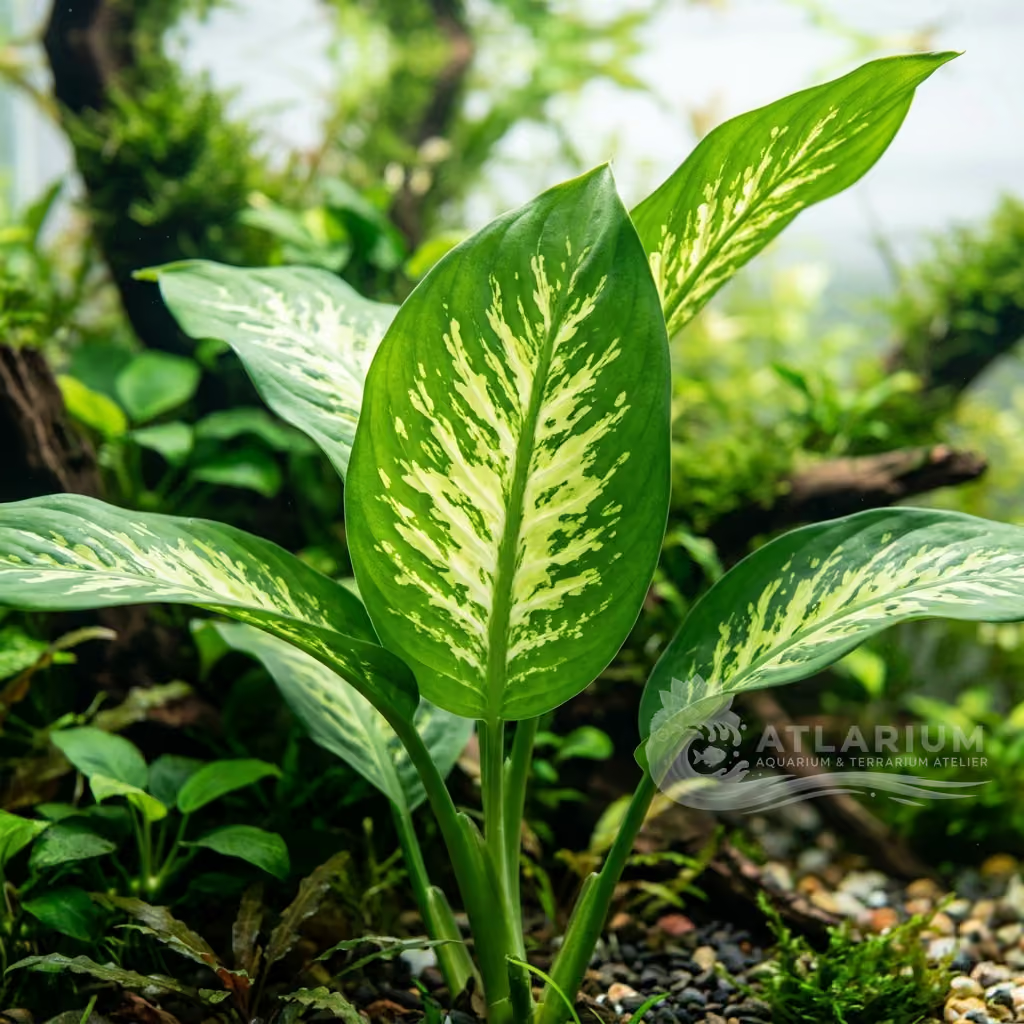
Cabomba palaeformis 'Rotbraun'
Cabomba palaeformis 'Rotbraun'
A Central American variety known for its reddish-brown hues. Hardier than other Cabombas, it tolerates hard, alkaline waters well. High light and CO2 are needed to develop its signature coloration.
Température de l’eau
20 - 33 °C
Valeur du pH
6 - 8
Type d'eau
Eau douce
Lumière
Medium to High
CO2
Faible - Élevée
Hauteur attendue
45 cm
Largeur attendue
15 cm
KH
7 - 21 dKH

Description de l'espèce
Geographical Origin and Habitat: Cabomba palaeformis 'Rotbraun' is a geographic variety native to Central America, particularly Mexico and Guatemala. It grows in warm ponds, lakes, and slow-moving rivers, which are often characterized by limestone-rich soils and hard water conditions under intense tropical sunlight.
Taxonomy & Genetics: Belonging to the family Cabombaceae, the 'Rotbraun' (reddish-brown) variant is a natural selection valued for its distinct dark pigmentation. Genetically, it is far more tolerant of alkaline and hard water conditions than other members of the Cabomba genus, making it highly adaptable.
Physical Structure: It features long, flexible, and heavily branching stems. The submersed leaves are arranged in opposite pairs along the stems and are finely divided into fan shapes, giving a soft, cloudy look. Under optimal light, it forms shorter internodes than standard Cabomba aquatica.
Color & Texture: The foliage displays a striking color range from olive green to reddish-brown and purple, which is most intense at the growing tips near the light source. The texture is extremely fine, silky, and feather-like, creating a wonderful contrast to broad-leaved green species.

Soins, reproduction et cohabitation
Lighting & CO2: High to moderate light is needed to develop its signature reddish-brown coloration; low light will cause the plant to turn green and stretch out. CO2 injection (15-25 mg/L) is highly beneficial, supporting its rapid growth and encouraging a denser leaf structure.
Nutrition & Substrate: Regular liquid fertilization is crucial since the plant absorbs nutrients primarily through its fine leaves. Dosing iron and micronutrients supports the red pigments. A soft, nutrient-rich substrate helps the root system anchor, though foliar feeding remains primary.
Water Chemistry: Unlike most Cabomba species, it tolerates hard, alkaline water with a pH range of 6.0 to 8.0 and KH between 7 and 21. It thrives in warm temperatures from 20°C to 33°C, making it suitable for warm tropical setups, including Discus aquariums.
Space Management & Placement: Best suited for the background or midground of the layout. Plant individual stems 2-3 cm apart to prevent them from shading each other out, which causes the lower leaves to decay. Plant in clusters for the best visual impact.
Pruning: Trim regularly when stems reach the surface. Cut the stem with sharp shears above a leaf node. The severed top can be stripped of its bottom leaves and replanted to propagate, while the original stem will branch out from the cut site.
Risks & Diseases: Despite its hardiness, low light will cause leggy stems and leaf drop. The fine foliage easily traps suspended organic particles, making it susceptible to hair algae. An efficient mechanical filter is highly recommended to keep the leaves clean.

Origine et répartition géographiques
Cabomba palaeformis 'Rotbraun' is a geographic variety native to Central America, particularly Mexico and Guatemala. It grows in warm ponds, lakes, and slow-moving rivers, which are often characterized by limestone-rich soils and hard water conditions under intense tropical sunlight.
Origine
Amérique centrale et Caraïbes

Profil de plante
- Emplacement
- Plan intermédiaire
- This stem plant is best utilized as a striking background specimen in larger aquariums, where it has room to grow vertically. Its fine, feathery leaves provide excellent contrast against broad-leafed plants like Echinodorus or Anubias. Ensure it is not shaded by other plants, as it requires direct, intense light to thrive.
- Forme botanique
- Tige
- It features delicate, finely divided, fan-shaped leaves arranged in opposite pairs along a central, somewhat fragile stem. Under intense lighting and good iron availability, the foliage takes on a beautiful reddish-brown hue. The plant's feathery appearance makes it an excellent refuge for small fish and fry.
- Croissance
- Rapide
- Under optimal conditions of high light and CO2 injection, Cabomba palaeformis 'Rotbraun' exhibits an incredibly rapid growth rate. It can easily grow several inches per week, requiring frequent trimming to maintain its shape and prevent it from shading neighboring plants. Frequent pruning actually encourages bushier, denser growth.
- Substrat
- Faible
- A nutrient-rich aquasoil is highly recommended for cultivating Cabomba palaeformis 'Rotbraun' successfully. While it can draw many nutrients directly from the water column, a fertile substrate promotes a more robust and stable root system. Avoid inert substrates like plain sand or gravel unless they are heavily supplemented with root tabs.
- Fertilisation de la colonne d'eau
- Recommandée
- A complete liquid fertilizer containing nitrogen, phosphorus, potassium, and trace elements should be dosed regularly. Pay special attention to iron and micronutrients to maintain the red-brown coloration. Deficiencies in the water column will quickly manifest as stunted growth or pale, translucent leaves.
- Fertilisation racinaire
- Aucune
- Although it heavily relies on water column nutrients, this plant greatly benefits from supplemental root fertilization. Placing root tabs rich in iron and macronutrients near the base of the stems can significantly improve overall health and coloration. This ensures the plant never runs out of essential elements during rapid growth phases.
- Taille
- Occasionnelle
- Trim by cutting the stem at the desired height, just above a node. The lower portion will produce side shoots, making the plant bushier over time. Replant the cut tops to propagate and create denser groupings.
- Propagation
- Boutures
- Propagation is straightforward and involves taking cuttings from the top portion of healthy stems. Simply cut the stem just above a leaf node, and carefully replant the top cutting into the substrate. The original bottom section will typically sprout new side shoots from the cut area.
- Sensibilité
- Modérée
- Sensitive to sudden changes in water parameters and poor water quality. Requires clean water with regular water changes to prevent algae growth on its fine leaves. Prefers slightly acidic to neutral pH and soft to medium-hard water.
- Rôle dans le décor
- Plan intermédiaire, Arrière-plan
- Serves as an excellent background plant, providing contrast with its reddish-brown color and feathery texture. Ideal for creating dense, colorful thickets in planted aquariums. Can also be used to hide aquarium equipment effectively.

Espèces associées
Recommandations regroupées par proches parents, compagnons et soins similaires.